Local dimming zone count affects how tightly an LCD monitor can place bright HDR highlights beside dark areas. More zones usually mean cleaner highlights, deeper blacks, and less haloing, but panel contrast, dimming speed, tone mapping, and calibration determine whether those zones actually look precise.
Is a bright crosshair, subtitle, starfield, or neon sign glowing into the darkness instead of staying sharp? On a strong Mini-LED monitor, moving from low-zone edge dimming to hundreds or thousands of full-array zones can visibly reduce that glow and make HDR scenes feel more controlled. You’ll learn what zone count really changes, where the limits are, and how to choose settings or a monitor that delivers precise highlights without crushing detail.
What Local Dimming Zones Actually Do
An LCD monitor does not light each pixel by itself. It uses a backlight behind the LCD layer, and the LCD panel blocks or passes that light to form the image. The problem is simple: when the backlight stays bright across the whole screen, black areas can look gray, especially in a dark room.
Local dimming divides the backlight into separately controlled regions, or zones. When a torch appears in a dark game corridor, the monitor can brighten the zone behind the torch while dimming zones around it. That gives HDR its punch: bright highlights can stand out without lifting the entire black floor.

Zone count is the number of these controllable backlight regions. An edge-lit display might have a small number of vertical dimming bands. A full-array local dimming display places LEDs behind the panel in a grid. A Mini-LED monitor uses much smaller LEDs, making it possible to fit hundreds or thousands of zones into a 27-inch or 32-inch screen.
Why More Zones Improve HDR Highlight Precision
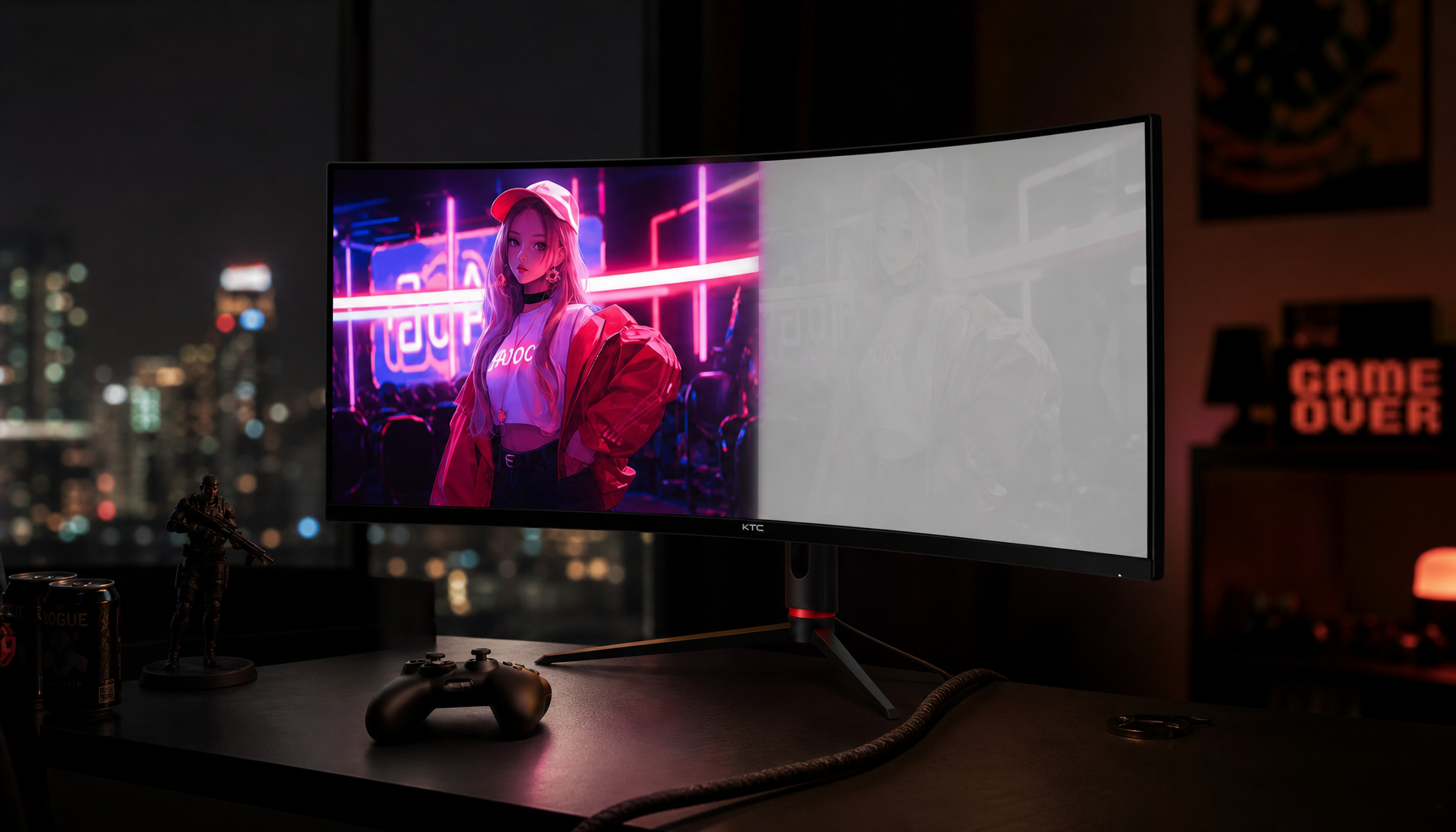
HDR highlight precision is about control. A bright object should appear bright only where the image calls for brightness. If the dimming zone is much larger than the object, the whole zone lights up, and nearby dark pixels receive extra light. That visible glow is blooming, also called haloing.
Displays with more backlight zones generally show less visible blooming because each zone covers a smaller area. Imagine a white mouse cursor on a black desktop. On a low-zone monitor, the cursor may light a large block of the screen. On a high-zone Mini-LED display, the bright area can be confined more closely around the cursor, so the surrounding black remains darker.

This matters most in small-highlight HDR scenes. Stars, sparks, subtitles, weapon glints, HUD elements, city lights, and flashlight beams all test zone precision. A bright explosion that fills a quarter of the screen is easy for most HDR displays to manage. A single bright moon against a black sky is much harder.
Zone approach |
Highlight precision |
Typical weakness |
Best fit |
Global dimming |
Very low |
Whole screen rises or falls together |
Basic power saving and mild contrast improvement |
Edge-lit local dimming |
Low to moderate |
Vertical bands and obvious halos |
Thin displays and budget HDR claims |
Full-array local dimming |
Good |
Cost, thickness, heat, possible blooming |
Stronger HDR gaming and movies |
Mini-LED full-array dimming |
Very good |
Algorithm quality becomes critical |
Premium gaming, creative work, bright-room HDR |
OLED or emissive pixels |
Pixel-level |
Lower sustained brightness on many models, burn-in concerns for static UI |
Dark-room HDR and halo-free small highlights |
Zone Count Is Not the Whole HDR Story
More zones are valuable, but raw zone count is not a guarantee. A monitor with 1,152 well-tuned zones can look cleaner than a monitor with more zones but weaker processing. The dimming algorithm has to decide how bright each zone should be, how quickly it should respond, and how much shadow detail it should preserve.
Mini-LED gaming monitors are often promoted for higher sustained brightness and finer local dimming, but dimming algorithm quality still matters. In practical use, aggressive dimming can make highlights pop but may create pumping, flicker, or crushed shadow texture. Conservative dimming can reduce halos but make HDR look flatter.
Panel type also changes the outcome. A VA LCD panel usually blocks unwanted backlight better than an IPS LCD panel, so blooming may appear less obvious at the same zone count. IPS often brings faster response and wider viewing angles, which is valuable for gaming and office work, but its lower native contrast makes local dimming precision and tuning more important.
For a simple mental model, think of zone count as the hardware resolution of the backlight. Tone mapping, panel contrast, and firmware are the software and optical control systems. You need both.
The Practical Zone Count Thresholds That Matter
For HDR monitor shopping, low-zone local dimming should be treated carefully. A monitor can advertise HDR and local dimming yet still produce broad halos, raised blacks, or distracting brightness shifts. Zone count is a useful filter because it tells you whether the backlight has enough physical control to attempt precise HDR.
Full-array HDR displays commonly sit far above simple edge-lit designs because the LEDs are arranged behind the panel rather than only along the edges. That is why a 384-zone full-array monitor usually has a better chance at convincing HDR than a 16-zone edge-lit display, even before considering brightness or color.
For a 27-inch to 32-inch gaming or productivity monitor, hundreds of zones can be a meaningful entry point for HDR. Around 500 zones or more is where Mini-LED starts to become interesting for mixed desktop and gaming use. Around 1,000 zones and above is a stronger target for cinematic games, HDR movies, and content work where small highlights and dark backgrounds appear often.
Still, do not stop at the zone number. Look for credible HDR certification, peak brightness near or above 1,000 nits for high-impact HDR, usable sustained brightness, wide color gamut, and review evidence showing low blooming in real scenes. HDR quality depends on dynamic range, not brightness alone, so a 1,000-nit highlight can still look weak if the surrounding blacks rise to gray.
Gaming: When Zone Count Helps and When It Can Hurt
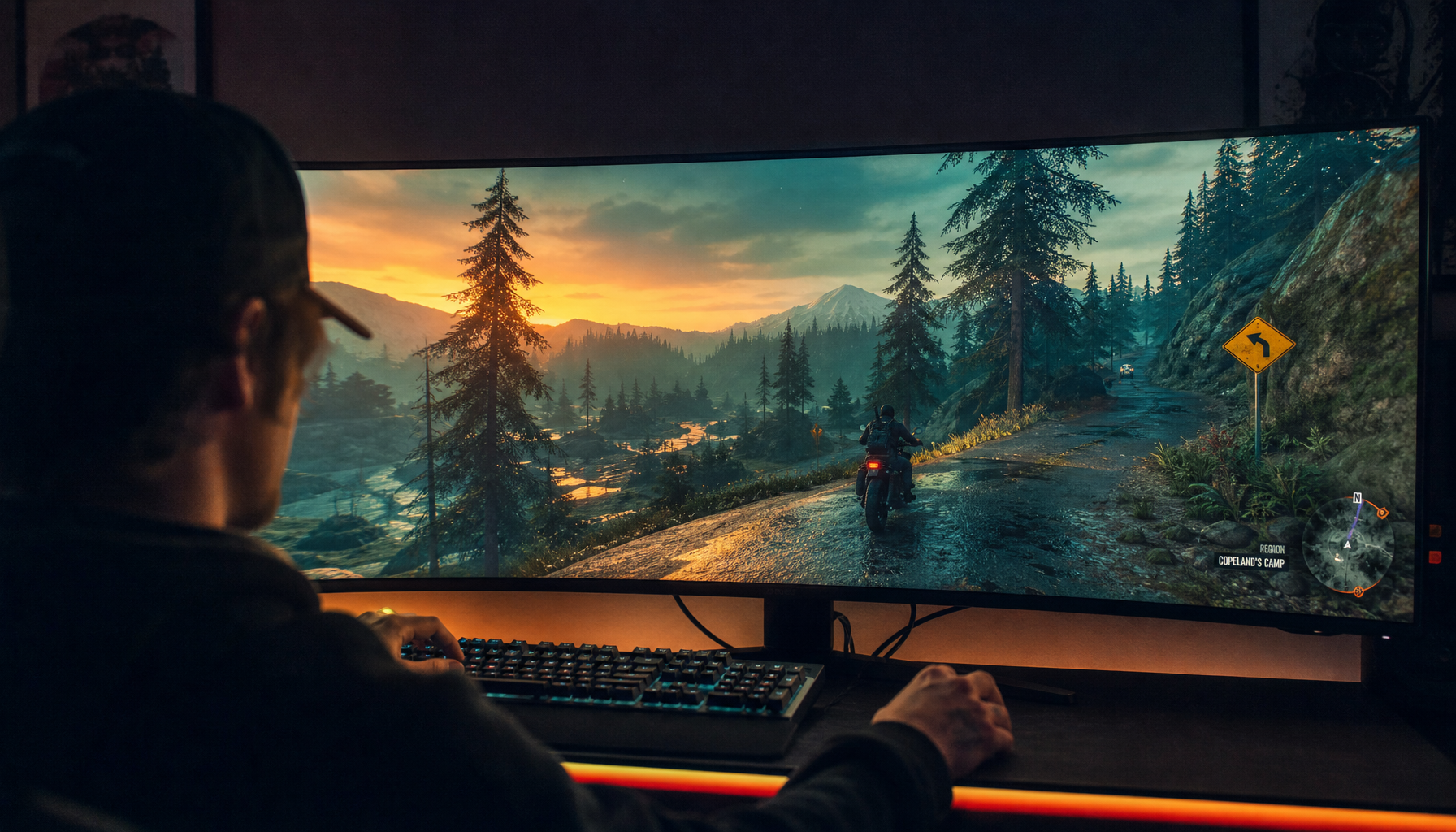
In cinematic HDR games, more dimming zones can make night scenes, explosions, reflections, and spell effects feel more dimensional. A racing game with sunlight flashing off wet pavement or an RPG with torches in a cave benefits directly from finer backlight control. The highlight stays bright while the environment keeps depth.

In competitive games, the value is more conditional. Better local dimming can make enemies easier to separate from dark map areas, but unstable brightness behavior can become distracting. If the monitor’s local dimming reacts slowly, a fast-moving bright object may leave a light trail. If the algorithm is too strong, it may hide low-contrast shadow detail that players rely on.
For esports-first use, prioritize refresh rate, response time, input lag, and predictable visibility. Then enable HDR and local dimming only if the game, monitor, and room lighting produce a stable result. For hybrid players who split time between ranked matches and single-player HDR titles, a high-refresh Mini-LED monitor with user-adjustable dimming modes is the most flexible route.
Office Productivity and Creative Work
For office productivity, local dimming is often less useful than people expect. White documents, dark UI panels, browser windows, and static taskbars can cause zone transitions that feel uneven. A spreadsheet beside a dark app panel may make one area of the screen glow or shift brightness as windows move.
SDR office, web, and desktop use is usually better with local dimming disabled and HDR content is usually better with it enabled. That matches real desk experience: uniform brightness is usually better for reading, writing, coding, and multitasking, while local dimming earns its keep in HDR video, HDR games, and visual review.
For photo and video work, the decision gets more demanding. HDR photography workflows benefit from high peak brightness, strong black levels, and accurate factory calibration, but haloing can mislead your judgment around bright edges. If you edit HDR images with lamps, windows, snow, reflections, or night city lights, a higher-zone Mini-LED display can help, but only if it has predictable tone mapping and calibration support.
How to Test Highlight Precision Yourself
A good test does not require lab equipment. Use a dark room, set the monitor to its HDR mode, and open scenes that combine tiny bright details with large black areas. Subtitles on a dark movie, a starfield, a white cursor on a black background, a neon sign at night, and a flashlight in a cave will reveal the monitor’s real behavior quickly.

The local dimming test is useful because it exposes blooming with moving shapes, brightness changes, and black backgrounds. Run it full screen, then watch the edge around the bright object. A precise display keeps the glow tight. A weaker implementation creates a visible cloud, band, or delayed brightness trail.
Also test your normal content. If you play dark shooters, use the maps you actually play. If you work in an image editor, test high-contrast images and UI panels. If you watch movies, test subtitles and night scenes. Laboratory patterns reveal the ceiling; real content reveals whether the monitor’s tradeoffs bother you.
Settings That Improve HDR Highlight Control
Start with the signal chain. On a computer, HDR depends on the display, cable, GPU, driver, app, and system settings working together. For setup, confirm HDR support in display settings, use capable display connections where possible, and keep graphics drivers current.
Once the signal is correct, tune the monitor. For HDR content, enable local dimming and try each dimming strength. A high setting usually deepens blacks and boosts contrast but may make halos, black crush, or brightness pumping more visible. A medium setting often gives the best balance for gaming because it preserves more shadow texture while still improving highlight separation.
Room lighting matters too. In a bright room, reflections raise the perceived black level, making local dimming less effective. In a dark room, blooming becomes easier to see. A soft rear bias light can reduce eye strain and make black levels feel steadier without washing the screen from the front or side.
Pros and Cons of High Zone Counts
Higher zone counts give LCD monitors a real HDR advantage. They reduce blooming, improve perceived contrast, allow brighter highlights beside darker shadows, and help Mini-LED compete with OLED in bright rooms. They are especially useful for HDR gaming, movie watching, and creative review where small highlights carry visual meaning.
The tradeoffs are cost, complexity, heat, firmware dependence, and occasional artifacts. More zones require more processing, and poor tuning can still produce halos or crushed blacks. OLED remains superior for pixel-level highlight precision because every pixel controls its own light, but Mini-LED remains compelling for high sustained brightness, static desktop use, and users concerned about burn-in from taskbars, HUDs, or productivity layouts.
FAQ
Is 1,000 Local Dimming Zones Enough for Good HDR?
For many 27-inch and 32-inch monitors, around 1,000 zones is a strong practical target, especially when paired with high brightness and good tuning. It is not automatically better than every lower-zone monitor, but it gives the backlight enough control to handle many small-highlight HDR scenes convincingly.
Why Do Subtitles Bloom on Some Mini-LED Monitors?
Subtitles are bright, sharp, and usually placed over dark content. If each dimming zone covers an area larger than the subtitle stroke, the monitor brightens nearby pixels too, creating a glow. More zones can reduce the effect, but the dimming algorithm and panel contrast also matter.
Should Local Dimming Stay On All the Time?
For HDR games and movies, yes, local dimming is usually worth enabling. For SDR desktop work, office apps, web browsing, and document editing, turning it off often gives more consistent brightness and fewer distractions.
Final Word
Local dimming zone count is the backlight’s precision tool: more zones usually mean tighter HDR highlights and less blooming. Use zone count as a starting filter, then judge the full display by brightness, black level, panel contrast, dimming behavior, calibration, and the scenes you actually care about.