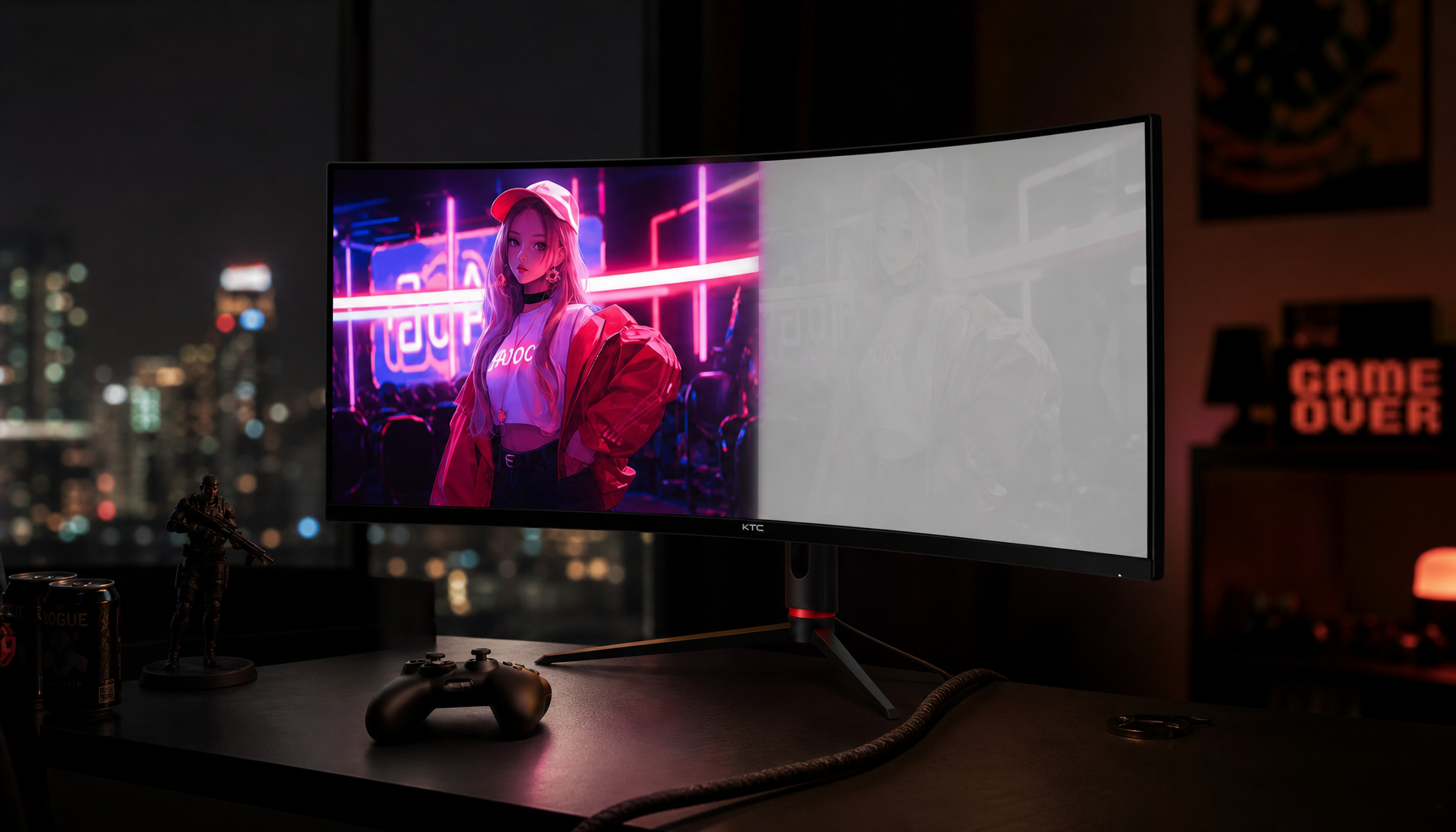
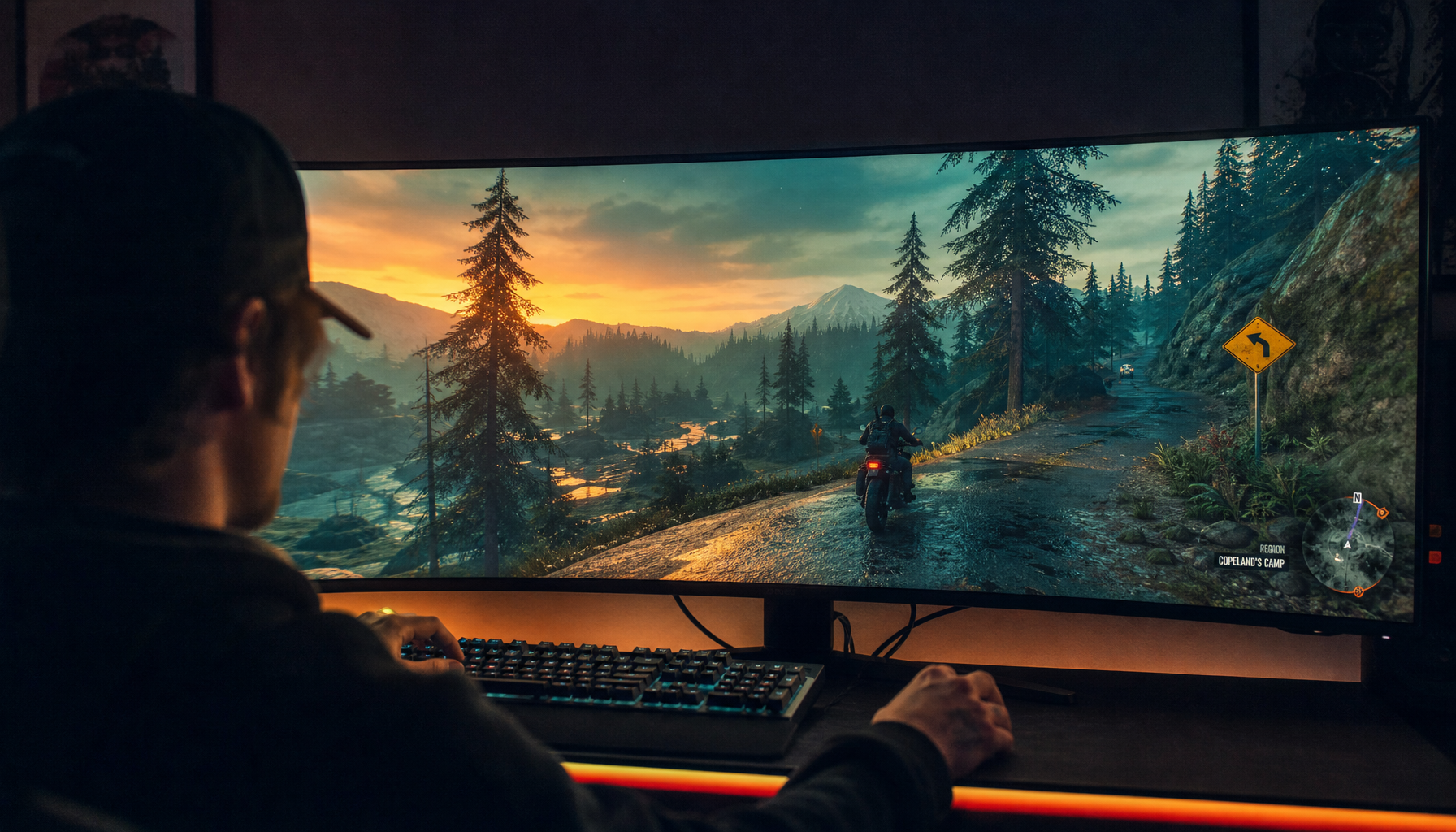
Local dimming flicker usually appears only in certain apps because those apps change brightness patterns, HDR behavior, refresh timing, or power states in ways that trigger the monitor’s backlight-zone algorithm.
Does your Mini-LED monitor look steady in a game, then pulse or shimmer in a browser, spreadsheet, video player, or desktop app? A practical settings pass can usually separate normal local-dimming behavior from a cable, refresh-rate, or hardware fault in under 10 minutes. You’ll learn why the flicker is app-specific, what settings to change first, and when the symptom points to a real display problem.
The Short Version: It Is Usually Not the App Alone
Local dimming is not a simple brightness slider. It is a real-time control system that divides an LCD backlight into zones and raises or lowers those zones depending on what is shown on screen. A monitor with local dimming can make dark areas deeper while keeping bright highlights visible, which is why the feature matters for HDR gaming, movies, and high-contrast scenes.
The catch is that apps do not present the same visual workload. A dark HDR game with torches, neon, and explosions gives the algorithm a clear contrast target. A productivity app with white backgrounds, black text, blinking cursors, moving windows, and small UI highlights can make the dimming zones chase tiny changes. That zone adjustment can look like brightness flicker, especially on Mini-LED monitors with aggressive local dimming enabled.

What Local Dimming Is Actually Doing
Zones, Not Pixels
Mini-LED and full-array local dimming monitors use groups of LEDs behind the LCD panel. Each group controls a region of the screen, not each individual pixel. Some Mini-LED monitors use many small LEDs and local dimming zones to improve contrast beyond traditional LCD backlights, with certain models reaching up to 1,152 zones.
That is powerful, but it is still coarse compared with per-pixel lighting. If a white cursor moves across a black coding editor, the monitor may brighten one zone, then another, then dim the previous one. If the algorithm reacts quickly, you may see a pulse. If it reacts slowly, you may see blooming or a trailing brightness change.
Flicker Is Light Changing Over Time
Flicker is not always a broken panel. The Department of Energy defines flicker broadly as changes in light output over time and notes that perception depends heavily on modulation frequency. Visible flicker is generally associated with lower-frequency changes, while higher-frequency modulation can create effects such as strobing or phantom images during motion through temporal light artifacts.
On a monitor, light output over time can come from several layers at once: the backlight driver, PWM dimming, refresh behavior, VRR timing, HDR tone mapping, ambient-brightness automation, or the local dimming algorithm itself. That is why the same display can behave differently in a spreadsheet, browser, video player, and game.
Why It Happens Only in Specific Applications
SDR Desktop Apps Expose Zone Pumping
Office apps are often the worst case for local dimming. A white document, dark toolbar, small black text, and moving mouse pointer create a mix of large bright areas and tiny high-contrast edges. In SDR, most users do not need dramatic backlight contrast; they need stable brightness, clean text, and uniform whites.
That is why gaming-monitor setup guidance often recommends turning local dimming off for SDR desktop work and using brightness uniformity instead. The reason is practical: a spreadsheet should not behave like a dark HDR movie scene. If your monitor flickers only in a word processor, spreadsheet, browser, or PDF viewer, the most likely fix is to disable local dimming for SDR and save local dimming for HDR games or video.
HDR Apps Trigger a Different Brightness Pipeline
HDR changes the monitor’s behavior. The display has to preserve dark detail, map bright highlights, and decide how much backlight power to allocate to each zone. A monitor that merely accepts HDR metadata is not guaranteed to deliver convincing HDR; meaningful HDR depends on peak brightness, black-level control, color volume, and tone mapping.
KTC research notes capture the buying lesson clearly: HDR10 support is only signal compatibility, while stronger HDR needs local dimming or per-pixel lighting. In real use, that means an HDR video app can look stable while a desktop browser in forced HDR looks unstable because the monitor is being asked to treat ordinary UI elements like high-dynamic-range content.
Low Brightness Can Reveal Backlight Control Issues
Many flicker complaints appear at low brightness because some displays control brightness by rapidly modulating the backlight. One explanation frames screen flicker as rapid brightness changes, including screens turning on and off hundreds of times per second in screen flicker. That does not prove every monitor uses the same method, but it explains why lower brightness settings can make modulation more noticeable to sensitive users.
Community reports describe low-brightness flicker that becomes more noticeable during CPU-heavy work or on bright white pages, with some users reducing the issue by increasing brightness. The useful takeaway is that brightness level, power mode, and app workload can interact.
How to Tell Local Dimming Flicker from a Real Fault
Use a Controlled Test, Not a Guess
Start with one monitor, one cable, native resolution, and the monitor’s rated refresh rate. Open a full-screen solid gray image, then a full-screen white image, then a dark screen with a small white object such as a cursor or window. If flicker appears only when the small bright object moves over dark content, local dimming is the prime suspect. If flicker appears on every solid screen, even with local dimming off, the issue may be refresh timing, cable bandwidth, power stability, or panel hardware.

LCD troubleshooting guidance separates flicker into low-frequency flicker, high-frequency PWM or refresh jitter, and localized brightness changes. It also recommends checking power stability, cables, contacts, refresh rate, and backlight condition when diagnosing screen flickering.
Symptom |
Most Likely Cause |
First Setting to Try |
Flicker only in SDR office apps |
Local dimming reacting to UI contrast |
|
Flicker only in HDR games or movies |
Aggressive zone transitions or tone mapping |
Lower local dimming strength |
Flicker at very low brightness |
Backlight modulation or dimming behavior |
Raise brightness slightly |
Flicker when moving windows or scrolling |
Refresh, VRR, or hardware acceleration interaction |
Test a fixed refresh rate |
Flicker in one screen area |
Backlight zone, cable, or panel issue |
Test another input and cable |
Check App-Specific Graphics Paths
Some applications use hardware acceleration, overlays, HDR presentation modes, or variable refresh differently than the desktop. A browser playing video, a game in exclusive fullscreen, and a design app using GPU acceleration can all send frames differently. If flicker appears only in one app, turn off that app’s hardware acceleration, restart it, and test again. Then test the same content in another app.
This is especially important for portable smart screens and USB-C displays. A thin cable that is fine for 1080p office work may become unstable at higher refresh rates, HDR, or 4K output. If the monitor flickers only when a laptop is driving a second display, swap to a certified higher-bandwidth USB-C, HDMI, or DisplayPort cable before blaming the panel.
Best Settings for Gaming, Office Work, and Video
For Competitive Gaming
For esports and fast shooters, motion consistency matters more than dramatic HDR. Use the monitor’s native resolution, highest stable refresh rate, adaptive sync if it behaves cleanly, and a local dimming level that does not pulse during HUD movement. If the health bar, crosshair, or scoreboard causes brightness pumping, reduce local dimming strength or use SDR for competitive sessions.
For Cinematic HDR Gaming and Movies
This is where local dimming earns its keep. Keep HDR enabled, use full-array or Mini-LED local dimming, and tune the strength so dark scenes retain texture. Maximum dimming can create deeper blacks, but it may crush shadow detail or produce visible zone transitions around subtitles, stars, muzzle flashes, and bright UI prompts.
A quick real-world test is a dark scene with a small bright object. If the bright object looks punchy but the surrounding black area flashes as it moves, the setting is too aggressive. If the entire scene looks gray, local dimming is too weak or disabled.
For Office Productivity
For documents, spreadsheets, dashboards, coding, and long browser sessions, prioritize stable luminance over theatrical contrast. Turn local dimming off in SDR, enable brightness uniformity if your monitor offers it, and set brightness to match the room. A monitor that looks spectacular in HDR can still be a poor productivity display if white backgrounds pulse during scrolling.
When Flicker Is Not a Local Dimming Problem
Local dimming is a common cause, but not the only one. Ambient light sensors can make a display brighten or dim as room lighting changes, especially near windows, moving blinds, or flickering lamps. Support notes describe intermittent dimming, brightening, or flickering as normal behavior when an ambient light sensor adjusts the screen based on surrounding light, though those notes point specifically to BIOS-level ALS controls rather than a universal system setting.

Power quality can also matter. Electrical-system flicker refers to rapid, small voltage variations that can cause visible lighting fluctuations, with short-term and long-term metrics used for measurement. If your monitor flickers at the same time as room lights, speakers buzz, or other electronics dim, the issue may involve power delivery rather than the display’s local dimming algorithm. Persistent whole-room flicker deserves an electrician, especially if there are warm outlets, burning smells, breaker trips, or buzzing.
Panel and backlight faults remain possible. Community troubleshooting notes describe a laptop where flicker appeared above roughly 40% brightness, persisted on battery and AC power, and continued even without the graphics driver. That pattern points away from a simple app setting and toward hardware, firmware, or backlight regulation.
Practical Fix Sequence
Change one variable at a time so you can trust the result. First, turn local dimming off in SDR and retest the app that flickers. Next, keep local dimming on only for HDR content and reduce its strength if your monitor offers levels or custom values. Then disable automatic brightness, ambient light sensing, dynamic contrast, eco mode, and any smart brightness feature.
After that, lock the monitor to its native refresh rate and test with VRR off, then on. If the issue is tied to a browser, video player, or creative app, toggle hardware acceleration and compare. Finally, replace the cable, test a different input, and try the monitor on another computer. If flicker remains in the same physical screen area or appears on the monitor’s own menu, stop tuning software and treat it as a display-service issue.

Bottom Line
Local dimming is a performance feature, not a universal better switch. Use it where it adds immersion: HDR games, movies, and high-contrast visuals. For office work and portable productivity, stable brightness wins; the best display setup is the one that lets your eyes stay locked on the task instead of the backlight.