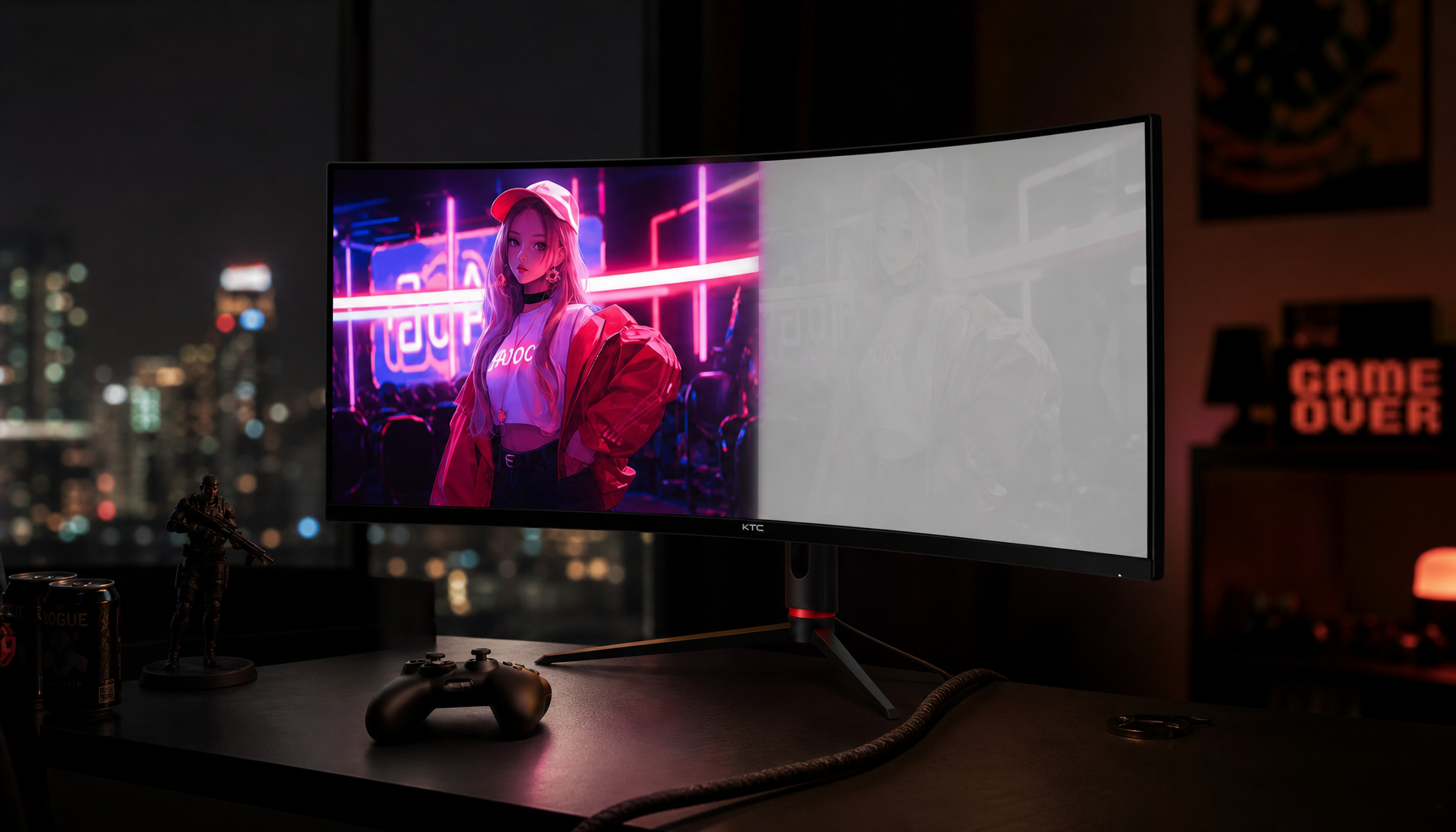
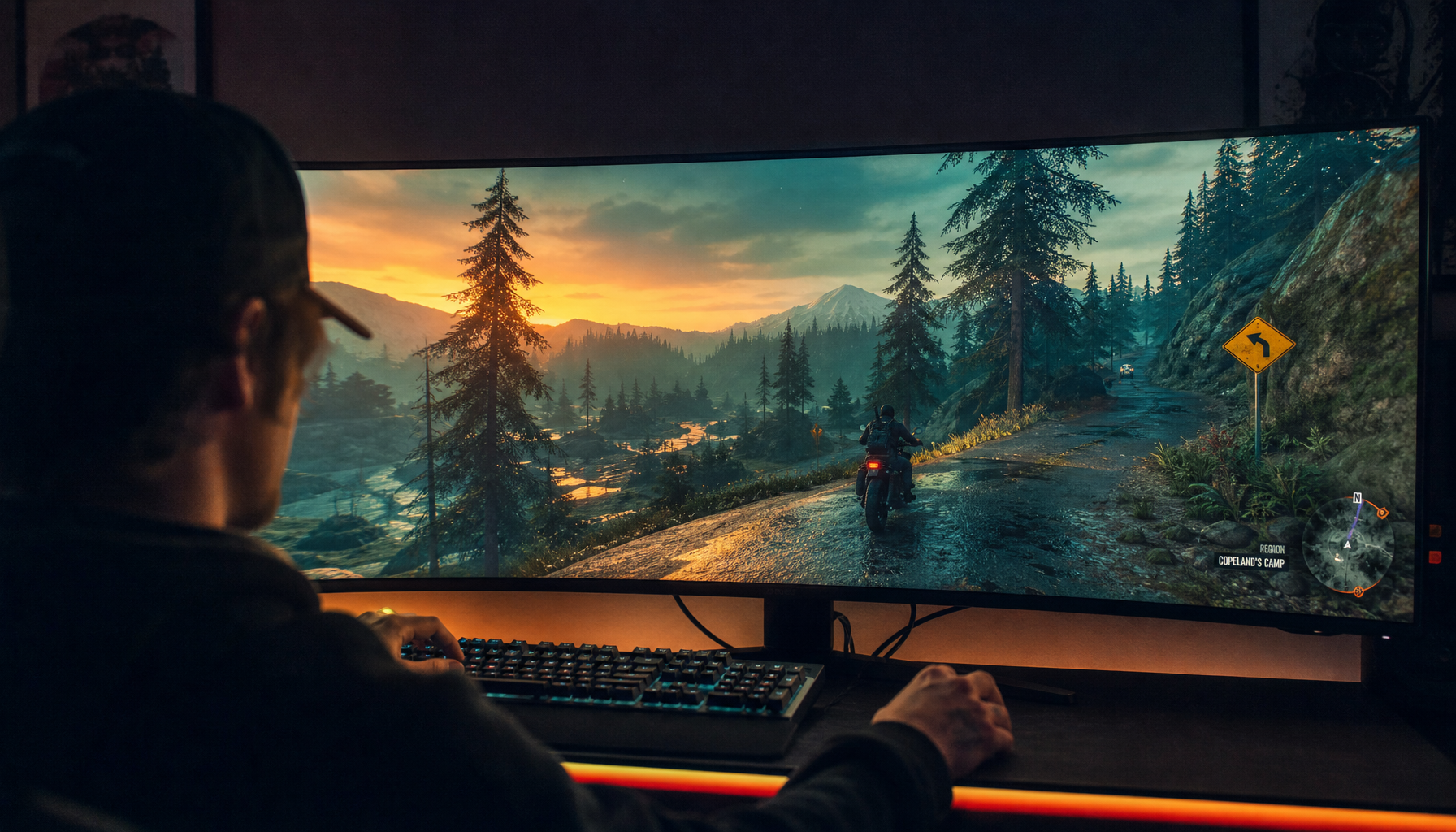
KTC mini LED monitor buyers should expect better HDR impact, not automatic OLED-like perfection. The real difference comes from how many zones the backlight uses, how hard the panel can push bright highlights, and how well the dimming algorithm balances contrast against blooming. In practice, the best pick depends on your room, your games, and how much haloing you will tolerate in dark scenes.

Mini-LED HDR in Plain English
Mini-LED HDR is easiest to think of as a smarter backlight. Instead of lighting the whole screen the same way, the monitor splits the backlight into zones and dims them separately. That is why a KTC mini LED monitor can look punchier in games and movies than a standard monitor, especially when bright effects sit against dark backgrounds.
The catch is that HDR ratings do not tell the whole story. VESA's DisplayHDR criteria require at least 1400 nits of peak brightness, local dimming, true 10-bit color, and high contrast targets, but that still does not guarantee the same real-world image from one monitor to the next. The tuning matters.
A useful decision sentence: if you want stronger highlight pop and more depth in supported HDR content, Mini-LED is a real upgrade; if you mainly want perfect blacks with no halo risk, it is still not the same as self-emissive OLED.
For a related breakdown of why two certified displays can still look different, see Why HDR Highlights Look Different on Monitors With the Same Certification. That is the right follow-up if you are trying to separate badge value from actual picture quality.
Zones, Brightness, and Blooming
For most buyers, zone count is the first spec to check because it tells you how finely the backlight can react to the image. More zones usually mean tighter control over bright and dark areas, which can improve black-level precision and reduce the size of visible halos. It does not erase them.

Peak brightness changes the other half of the picture. Higher brightness makes sunlight, reflections, sparks, and HDR UI elements stand out more clearly. That is the part people often notice first in trailers and cinematic games. But brightness by itself does not fix backlight bleed or haloing.
Blooming is the visible glow around bright objects on dark backgrounds. More zones and better algorithms reduce the effect, but they do not eliminate it when a bright object is much smaller than the backlight zone behind it.
What this means is simple: if your room is dark and you notice HUDs, subtitles, or crosshairs easily, you will care more about local dimming tuning than a marketing badge alone. If you mostly watch bright content in mixed lighting, the halo issue may bother you less than you expect. See What Causes Blooming Around Bright Objects on Mini-LED Monitors? for deeper detail.
HDR 1000 Versus HDR 1400
HDR 1400 is the more aggressive option on paper because it gives the monitor more headroom for bright peaks. That usually translates to stronger sparkle in specular highlights, more intense sun glints, and a more dramatic look in supported content. The gain is most obvious when the scene actually uses that extra headroom.
HDR 1000 can still be a strong choice when the local dimming is well tuned. In that case, the image may feel a little less extreme, but also a bit more restrained and easier to live with in darker scenes. The badge is not a full picture-quality score.
Here is the practical rule: choose HDR 1400 if you want the most visible wow factor from HDR, but choose HDR 1000 if you care more about value and you do not want to pay extra for brightness headroom you may not use often.
HDR 1400 targets higher peak luminance than HDR 1000, but both still rely on local dimming. That is why the brighter badge is not automatically the better-looking monitor in every room.
| Factor | HDR 1000 | HDR 1400 | What It Means For You |
|---|---|---|---|
| Highlight intensity | Strong | Stronger | HDR 1400 usually looks more dramatic in bright scenes |
| Shadow comfort | Often a little easier to live with | More dependent on tuning | HDR 1000 may feel less aggressive in dark rooms |
| Blooming control | Mostly about algorithm quality | Mostly about algorithm quality | More brightness does not solve haloing by itself |
| Best fit | Value-focused HDR buyers | Buyers chasing maximum HDR impact | Pick based on how much visual punch you want, not the badge alone |
For a model-level comparison, M27T6 is the easier buy if you want the stronger badge in a 1440p Mini-LED format, while M27T6S makes more sense when speed and value matter a bit more than peak brightness headroom.
Where the Differences Matter Most
Dark-room gaming is where Mini-LED behavior is easiest to judge. In a dim room, halos around HUD elements, subtitles, and loading screens stand out more because the contrast is higher. That is why a monitor can look excellent in daytime use and only average in a blacked-out room.
Streaming and movies are the next useful test. If highlights stay punchy while shadows still hold detail, the local dimming is doing a good job. If bright objects look washed into the background, the tuning is too soft. If subtitles glow too much, the zones are too coarse or the algorithm is too aggressive.
Competitive play is different. Motion clarity and input feel matter more than HDR drama, so a Mini-LED upgrade is usually secondary if your main goal is fast FPS play. In that use case, the HDR badge should not distract you from refresh rate, response behavior, and desk comfort.
Mixed home lighting changes the trade-off again. With more ambient light, blooming is often less visible, so the higher HDR tier may feel worth paying for only if you actually watch cinematic content or play story-heavy games often.
Room lighting and content type strongly influence perceived blooming and highlight pop on Mini-LED displays.
How to Judge a Mini-LED Spec Sheet
Use this order when you compare models.
- Check zone count first. It is the clearest proxy for backlight control, which affects black-level precision and halo behavior.
- Read the HDR badge second. Treat HDR 1000 or HDR 1400 as brightness headroom, not a total score.
- Confirm panel type and refresh rate. If you play a lot of competitive games, motion performance may matter more than the HDR jump.
- Compare the price gap. If the upgrade cost is close to a better non-Mini-LED gaming monitor, the value case gets weaker.
A good not-a-fit filter is this: if you only care about fast motion and rarely use HDR content, Mini-LED may not be the best place to spend extra money. If you mostly play cinematic titles, stream movies at night, or want a brighter console setup, the trade-off makes more sense.
The category pages can help you browse the rest of the range: All-Mini-LED Monitors is the direct Mini-LED browsing path, and Gaming Monitor is better if you want to compare Mini-LED against other gaming panels first.
What to Expect From KTC Models
KTC's Mini-LED lineup is mostly a question of which compromise you want to make. The 1440p models are the easier entry point if you want strong HDR without paying 4K pricing. The 4K model is the better fit if desktop sharpness and console-ready detail matter as much as HDR punch.
That difference matters in real use. A 27-inch 1440p Mini-LED display can feel like the sweet spot for most PC gamers because it keeps the load lighter while still delivering strong contrast. A 4K Mini-LED model makes more sense if you split time between gaming, creator work, and sharp-text desktop use.
Here is the practical read on the current KTC mini LED monitor options: M27T6 is the value-leaning HDR1400 pick for 1440p gaming, M27T6S is the speed-leaning HDR1000 pick, and M27P6 is the 4K Mini-LED step-up for buyers who want the most resolution and a stronger HDR tier.
| Model | Best For | Why It Fits |
|---|---|---|
| M27T6 | 1440p HDR value | Strong HDR tier without moving to 4K |
| M27T6S | 1440p speed and value | Faster feel and lower HDR tier pricing pressure |
| M27P6 | 4K HDR mixed use | More desktop detail and a premium HDR target |
If you want the store-side category view, All-Mini-LED Monitors is the cleanest place to compare the current mini-LED options. If you want to see more non-Mini-LED alternatives first, the broader Gaming Monitor collection is the better filter.
FAQs
Q1. How Does Mini-LED HDR Compare to OLED for Gaming?
Mini-LED usually wins on peak brightness, which is why it can look more forceful in bright HDR scenes and hold up better in brighter rooms. OLED still has the edge in pixel-level black depth. If you play mostly at night and care most about black purity, OLED is the tougher comparison. If you want brightness and no burn-in concern, Mini-LED is often the easier fit.
Q2. What Does a Higher Zone Count Actually Improve?
A higher zone count can improve how tightly the backlight follows the image, which usually helps black-level precision and reduces halo size around bright objects. It does not make blooming disappear. The algorithm, panel behavior, and room lighting still decide how clean the picture looks in real scenes. See How Does Local Dimming Zone Count Actually Affect Black Level Quality? for more.
Q3. Can HDR 1000 Still Look Good on a Mini-LED Monitor?
Yes. HDR 1000 can look very good if the local dimming is tuned well and the content actually supports HDR. The difference versus HDR 1400 is usually about extra brightness headroom and stronger highlight punch, not a full-picture transformation.
Q4. Why Does Blooming Show Up More in Dark Rooms?
Dark rooms make the contrast between bright objects and the background much easier to see, so halos stand out more. The same monitor can look cleaner in mixed lighting because ambient light reduces the visibility of dimming transitions. That is why viewing conditions matter as much as the spec sheet.
Q5. Which KTC Mini-LED Model Makes the Most Sense for 1440P Gaming?
If you want the stronger HDR tier, the 1440p HDR1400 model is the cleaner pick. If you want higher refresh-rate headroom and a lower-contrast-value trade-off, the 1440p HDR1000 model is easier to justify. For buyers who want sharper desktop detail, the 4K Mini-LED model is the better branch.
The Short Version for Buyers
A KTC mini LED monitor delivers stronger HDR impact and highlight pop than standard gaming displays when zone count, tuning, and room lighting align. It is not the best choice if you expect perfect black levels or halo-free dark scenes every time. Compare zones and HDR tier against your actual content and setup before buying.