Yes, but only in the right monitor size and gaming setup. For most players, 1080p is still sharp enough on smaller high-refresh-rate gaming monitors, while 1440p makes a clearer case once you move up in screen size.
If you have ever sat down in front of a 27-inch monitor and thought the game looked a little soft even though your frame rate was excellent, that is the exact 2026 buying problem. A 24-inch 1080p panel still lands at about 93 PPI, while a 27-inch 1080p panel drops to about 82 PPI, and that difference is easy to notice at normal desk distance. This breakdown will help you decide when 1080p is still the smart buy, when 1440p is worth the extra GPU load, and how refresh rate, screen size, and monitor tuning change the answer.
Sharpness Depends on More Than Resolution
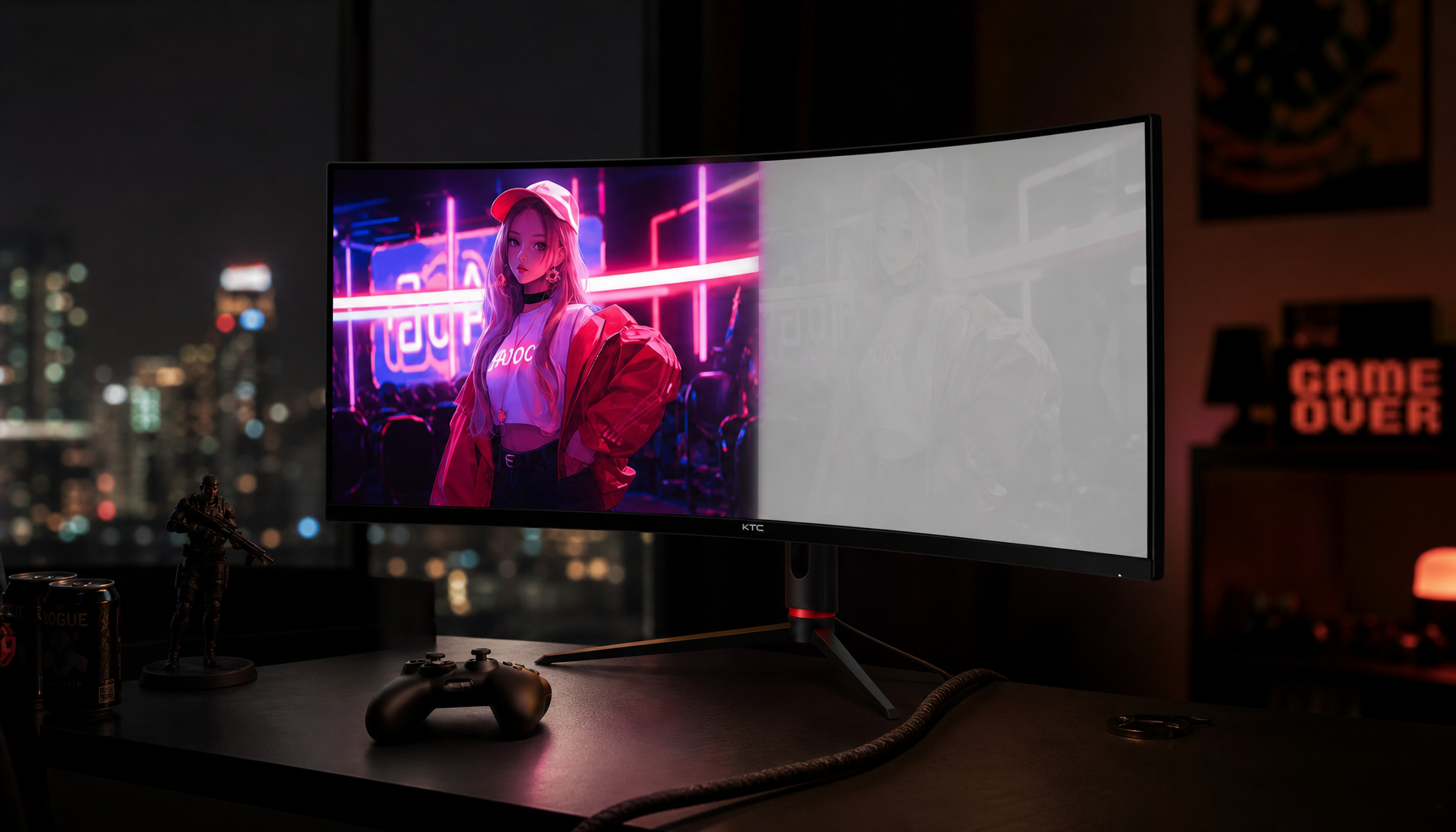
Pixel density affects perceived sharpness, not just the number stamped on the box. A 1920 x 1080 image spread across a smaller gaming monitor packs pixels more tightly than the same image on a larger screen, so edges, HUD text, and thin map lines look cleaner.
Viewing distance also changes what your eyes register as crisp. Perceived sharpness depends strongly on viewing distance, and monitor ergonomics research puts typical desktop use around 20 to 30 inches from the screen. In practice, that means a 24-inch 1080p monitor at about 24 inches away can still look quite clean in fast shooters, while a 27-inch 1080p display at the same distance starts to reveal softer text and less defined fine texture detail.

What 1080p Looks Like at Common Monitor Sizes
a publication’s screen-size and PPI comparisons make the tradeoff clear: 1080p is about 93 PPI on a 24-inch display and about 82 PPI on a 27-inch display. By comparison, 1440p reaches about 109 PPI on a 27-inch monitor, which is why that combination is often the sweet spot for mixed gaming and desktop use.
That is the core buying rule for 2026: 1080p still looks sharp enough on 24 to 25-inch gaming monitors, usually looks acceptable on some 24-inch portable monitors, and starts to look compromised on most 27-inch panels unless you sit farther back or care more about speed than image detail.
When 1080p Is Still the Smarter Gaming Choice
1080p remains common in competitive gaming in 2026 because it keeps frame rates high and makes 240 Hz and higher refresh tiers easier to reach on mid-range hardware. In the same guide, the example performance spread is dramatic: 144 fps at 1080p, 80 fps at 1440p, and 45 fps at 4K in the same game and settings.
That trade is not theoretical on a gaming desk. If you mainly play competitive shooters, the jump from 144 Hz to 240 Hz often feels more immediate than the jump from 1080p to 1440p. Motion looks cleaner, tracking is easier, and input feels more direct when your GPU can actually feed the monitor at high frame rates.

Refresh Rate vs. Resolution for Different Players
Higher refresh rates improve motion smoothness and responsiveness, especially from 120 Hz upward. For competitive multiplayer, 144 Hz is the practical minimum in 2026, 240 Hz is a strong target, and 360 Hz or higher is mostly for players chasing every last latency and motion advantage.
That is also why so many esports-focused monitors stay in the 24 to 25-inch range. a publication notes that smaller screens are common in esports because the whole image fits more easily in view at close range, and those models are still heavily concentrated in 1080p and 240 Hz-plus classes.
Where 1080p Starts to Fall Short
1080p is best suited to 24 to 26-inch displays at typical desk distance. Once you go above 27 inches, the lower pixel density becomes harder to ignore in menu text, browser tabs, strategy-game UI, and detailed single-player environments.
That matters even more if your monitor has to do double duty. a company’s resolution guidance points out that 24-inch 1080p still has decent text clarity, but larger 1080p screens do not look as sharp as 1440p. If you spend half your day in spreadsheets, a platform, web browsers, or editing tools, that softer desktop experience becomes more annoying than it does in a pure gaming setup.
Why 1440p Has Become the New Default Upgrade
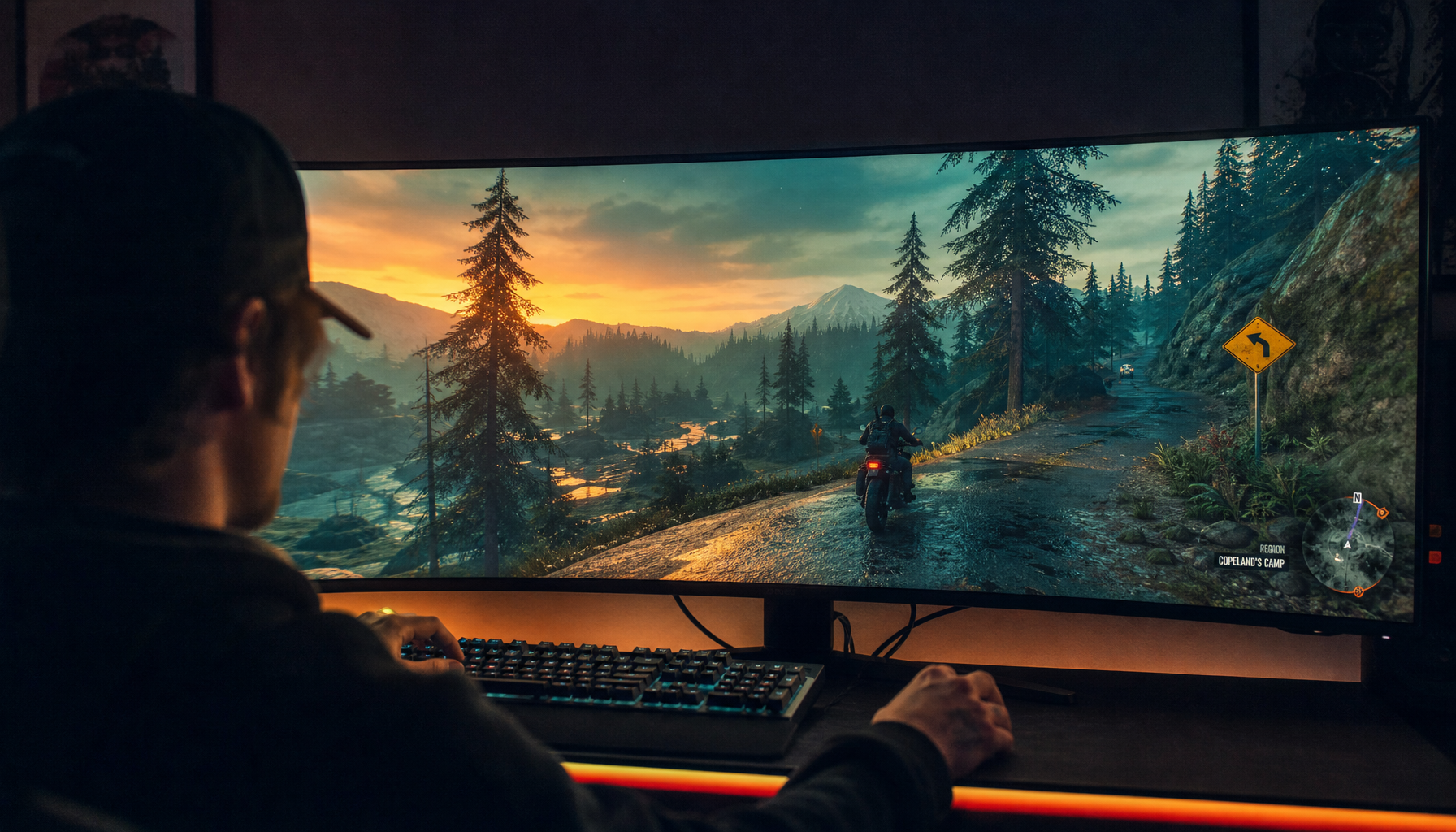
1440p carries about 78% more pixels than 1080p, which is why it looks noticeably cleaner on 27 to 32-inch monitors. It gives you more usable desktop space, clearer text, and more defined fine detail in open-world and cinematic games.
The cost is rendering load. A system that feels effortless at 1080p may need lowered settings, upscaling, or a stronger GPU at 1440p. That is why 1440p is the better buy for mid-range to high-end PCs, while 1080p still makes more sense for lower-cost builds or players who prioritize very high refresh rates.
Monitor Settings Can Change Perceived Sharpness, but Not Native Detail
Monitor “sharpness” is a post-processing control, not a magic upgrade to native resolution. It works by enhancing edges and altering nearby pixel relationships, which can make a game look crisper at first glance, especially in titles with softer image processing.
That matters because two 1080p monitors can look different out of the box. Some gaming displays apply stronger default sharpening, some expose controls like Sharpness or a picture-enhancement setting, and some barely let you adjust anything. A sharper-looking 1080p monitor is not necessarily showing more real detail; it may simply be applying stronger edge enhancement.
What Sharpness Controls Are Actually Good For
a publication’s notes on several monitor-brand options show how uneven these controls are across brands. Some models rely on picture presets, while others offer separate sharpness sliders that can materially change how text and enemy outlines look.
Use those controls carefully. Mild sharpening can help with UI clarity or visibility in some shooters, but aggressive sharpening often creates halos, jagged edges, and a processed look. It can improve the feel of a 1080p monitor, but it cannot turn a soft 27-inch 1080p panel into a genuinely crisp 27-inch 1440p display.

1080p vs. 1440p vs. 4K for Gaming Monitors in 2026
Resolution and GPU demand scale together, so the best monitor choice is really a balance of screen size, refresh target, and the kinds of games you play. The table below is the practical buying view.
Resolution |
Best Monitor Size |
Typical Strength |
Main Tradeoff |
Best For |
1080p |
24 to 25 inches |
Easier 240 Hz+ gaming, lower GPU load, lower cost |
Softer on 27 inches and above |
Esports, budget builds, secondary gaming setups |
1440p |
27 to 32 inches |
Better text clarity, sharper image, stronger all-around balance |
Higher GPU demand than 1080p |
Mixed gaming, single-player, mid-range to high-end PCs |
4K |
27 inches and above |
Highest detail and desktop sharpness |
Very heavy GPU load, especially above 60 Hz |
Premium single-player and high-end display setups |
What About Upscaling and Running Lower Resolutions?
Modern upscaling methods work better when the computer reconstructs to the monitor’s native resolution. That is important if you buy a 1440p monitor but occasionally need more frame rate. Running a game at native 1080p on a 1440p panel can look worse than native 1080p on a true 1080p monitor, while GPU-side upscaling usually produces a cleaner result.
AI-assisted upscaling methods have also changed the equation in 2026. It makes higher-resolution monitors more practical than they used to be, but it does not erase the basic logic: if your main goal is maximum refresh rate for competitive play, native 1080p is still the easier and often smarter target.
How to Choose the Right 1080p Monitor in 2026
A typical monitor viewing distance of about 20 to 30 inches is the easiest place to start. If you sit close, a smaller panel preserves perceived sharpness better. If you sit farther back, a 27-inch panel becomes more forgiving, but that is not how most competitive gaming desks are set up.
The safest 1080p recommendation in 2026 is still a 24 to 25-inch, 144 Hz to 240 Hz gaming monitor with good motion performance and sensible image controls. A model like the a brand’s 24” FHD 165Hz/180Hz 1000R Curved Gaming Monitor fits that format if you care more about keeping frame rates high than moving up to 1440p. If you want one screen for gaming, productivity, and media, 27-inch 1440p is usually the cleaner long-term choice. If you are shopping for portable monitors, 1080p remains highly practical because the smaller panel size naturally increases pixel density.
Action Checklist
- Measure your actual viewing distance before choosing screen size.
- Pick 24 to 25 inches if you want 1080p to look clean at a normal desk setup.
- Prioritize 144 Hz or 240 Hz over extra resolution for competitive shooters.
- Move to 1440p if you want a 27-inch monitor for mixed gaming and desktop work.
- Test sharpness settings carefully, but do not use them as a substitute for pixel density.
- Plan around your real GPU performance, not just the monitor spec sheet.
FAQ
Q: Is 1080p still good enough for a 24-inch gaming monitor in 2026?
A: Yes. At 24 inches, 1080p is still sharp enough for most gamers, especially at normal desk distance and especially if the monitor delivers strong motion clarity at 144 Hz or 240 Hz.
Q: Does 1080p look bad on a 27-inch monitor?
A: Not always, but it is much easier to notice softness on a 27-inch 1080p panel. Text, HUD elements, and fine texture detail usually look less crisp than they do on 24-inch 1080p or 27-inch 1440p.
Q: Should I buy 1080p 240 Hz or 1440p 144 Hz?
A: For competitive FPS gaming, 1080p 240 Hz is often the better buy because the motion and responsiveness gains are immediate. For mixed use, story-driven games, and a 27-inch screen, 1440p 144 Hz is usually the more balanced choice.
Final Takeaway
1080p is still sharp enough for gaming in 2026 when you keep the monitor small, the viewing distance reasonable, and the use case focused on speed. It remains one of the best values in high-refresh-rate gaming monitors, especially at 24 to 25 inches.
The moment you want a 27-inch display, cleaner text, more desktop room, or a better all-around panel for work and play, 1440p becomes the better buy. Resolution has not stopped mattering; it just matters in context with screen size, refresh rate, and the kind of gamer you are.
References
- a platform: monitor sharpness and display processing
- a publication: viewing distance and perceived sharpness
- a company: monitor resolution and pixel density
- a company: refresh rate for gaming monitors
- a platform: 1080p vs. 1440p vs. 4K in 2026
- a platform: viewing distance and monitor ergonomics
- a company glossary: monitor resolution tradeoffs
- a platform: 1080p vs. 1440p buying concerns
- a platform: 1080p and 1440p pixel-count discussion
- a publication: high refresh rate monitor size and usage trends