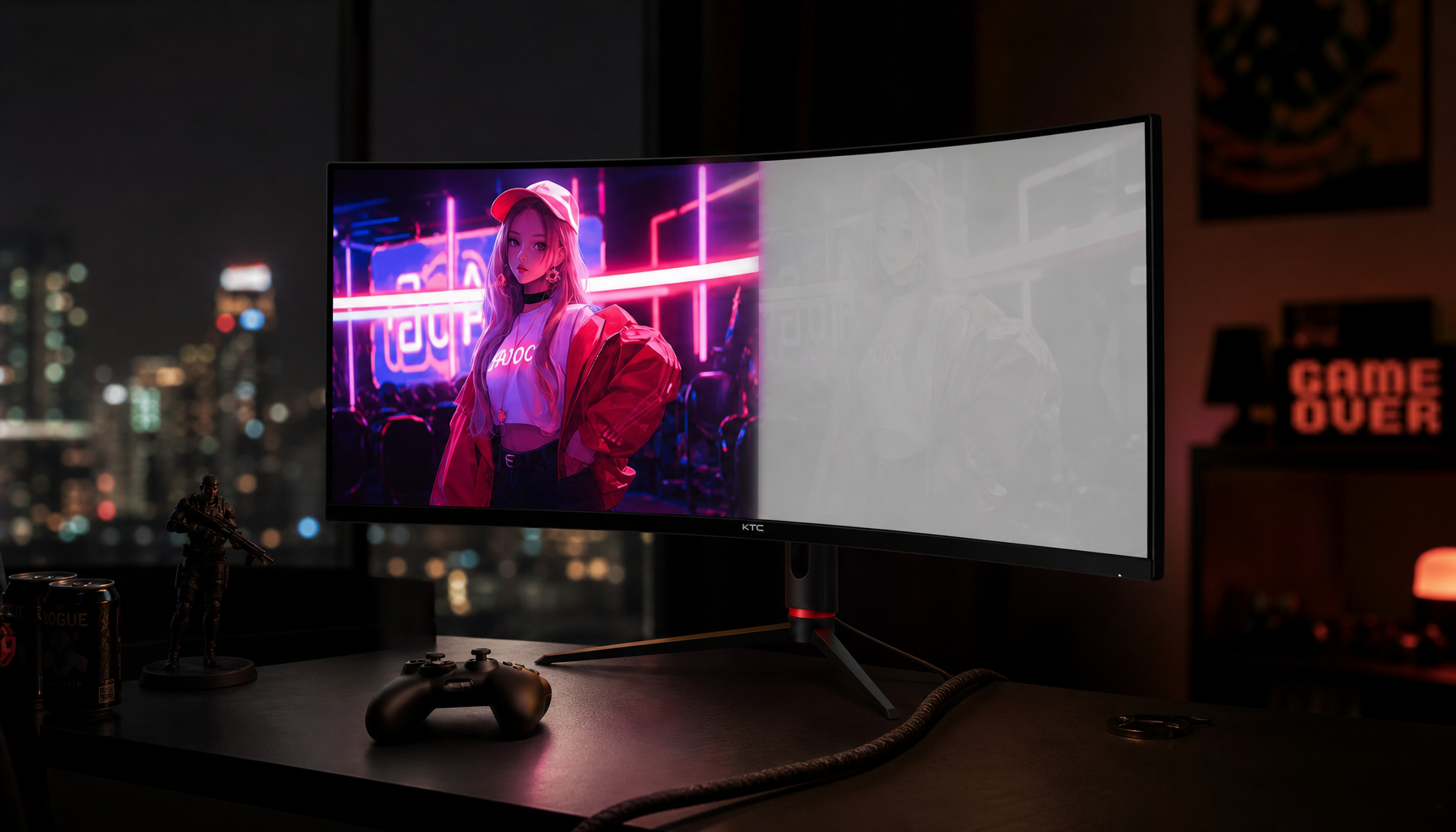
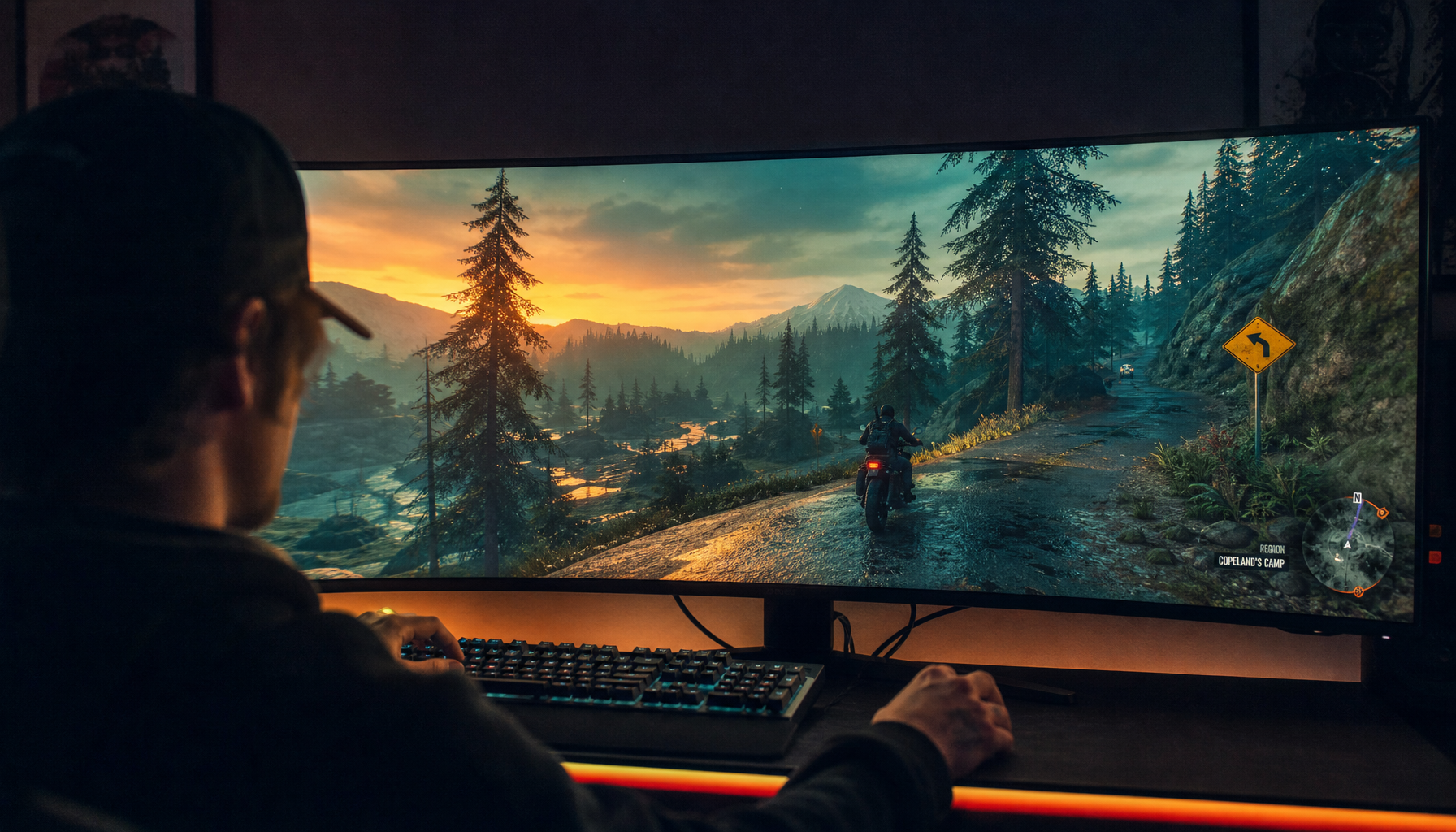
Some IPS panels look sharper in motion because their pixels are driven harder with faster voltage changes, stronger overdrive, and tighter refresh timing. The tradeoff is overshoot, inverse ghosting, or a “too snappy” look in high-contrast motion.
IPS Is Consistent, But Not Identical
IPS is known for wide viewing angles and stable color, which is why it works well for both competitive displays and productivity screens. But “IPS” describes the panel behavior, not the full motion system behind it; two IPS monitors can feel very different even at the same refresh rate.
A 144Hz IPS screen refreshes about every 6.94 ms, while a 60Hz screen refreshes every 16.67 ms. That faster scanout gives pixels less time to settle, so manufacturers often use stronger transition tuning to keep motion clear. This is why higher refresh rates can expose both the strengths and weaknesses of pixel response.
For gamers, the goal is controlled speed. For office users, the goal is comfort and text stability. For portable smart screens, the balance often leans toward lower power and cleaner visuals rather than maximum overdrive.
The Main Driver: Overdrive Tuning
Overdrive sends extra voltage to help a pixel reach its target color faster. When tuned well, it reduces blur in fast camera pans, scrolling text, and esports motion.
When tuned too aggressively, the pixel can overshoot the target shade, creating bright or dark trails around moving objects. That is the classic “inverse ghosting” effect: instead of a soft blur behind motion, you see a sharp halo or colored edge.

This is why monitor display settings matter. Many gaming displays include response-time modes such as Normal, Fast, Faster, or Extreme, and the most extreme option is not always the best. Competitive players often get cleaner results from a middle setting because response-time modes can change the balance between clarity and artifacts.

A practical rule: if white text on a dark background leaves a glowing trail while scrolling, the transition is probably being pushed too hard.

Panel Generation, Voltage Control, And Refresh Rate
Not every IPS panel has the same liquid crystal material, backlight behavior, controller quality, or factory calibration. Newer fast IPS and gaming-focused variants are usually built to handle quicker gray-to-gray shifts than older office IPS panels.
Refresh rate also changes the workload. At 240Hz, each frame window is only about 4.17 ms, so the panel has much less time to complete a transition than it does at 144Hz. If the panel cannot keep up naturally, stronger overdrive may be used to make motion look sharper.
Contrast transitions are especially revealing. Moving from medium gray to light gray is easier than jumping from near-black to near-white. Because perceived image depth depends heavily on contrast ratio, aggressive tuning is more noticeable in dark scenes, crosshair movement, and interface elements with hard edges.
Published response-time numbers rarely tell the whole story because they often highlight best-case transitions, not every shade-to-shade change you actually see.
How To Choose The Right Feel
For gaming, prioritize a monitor with multiple response-time modes, strong refresh-rate handling, and low overshoot at your actual frame rate. A display that looks clean at 165Hz but messy at 60Hz may feel inconsistent in story games or console use.
For productivity, avoid chasing the fastest advertised response time. Text clarity, stable brightness, and comfortable motion during scrolling matter more over a full workday.

Quick checks before settling on a mode:
- Start with the middle overdrive mode.
- Test dark backgrounds with bright moving objects.
- Check scrolling text, not only game footage.
- Match overdrive to your usual refresh rate.
- Turn down Extreme modes if halos appear.
IPS remains a strong all-around choice because it blends color accuracy, viewing comfort, and motion potential. The best IPS panels do not just transition fast; they transition with control, giving you sharper motion without turning speed into visual noise.