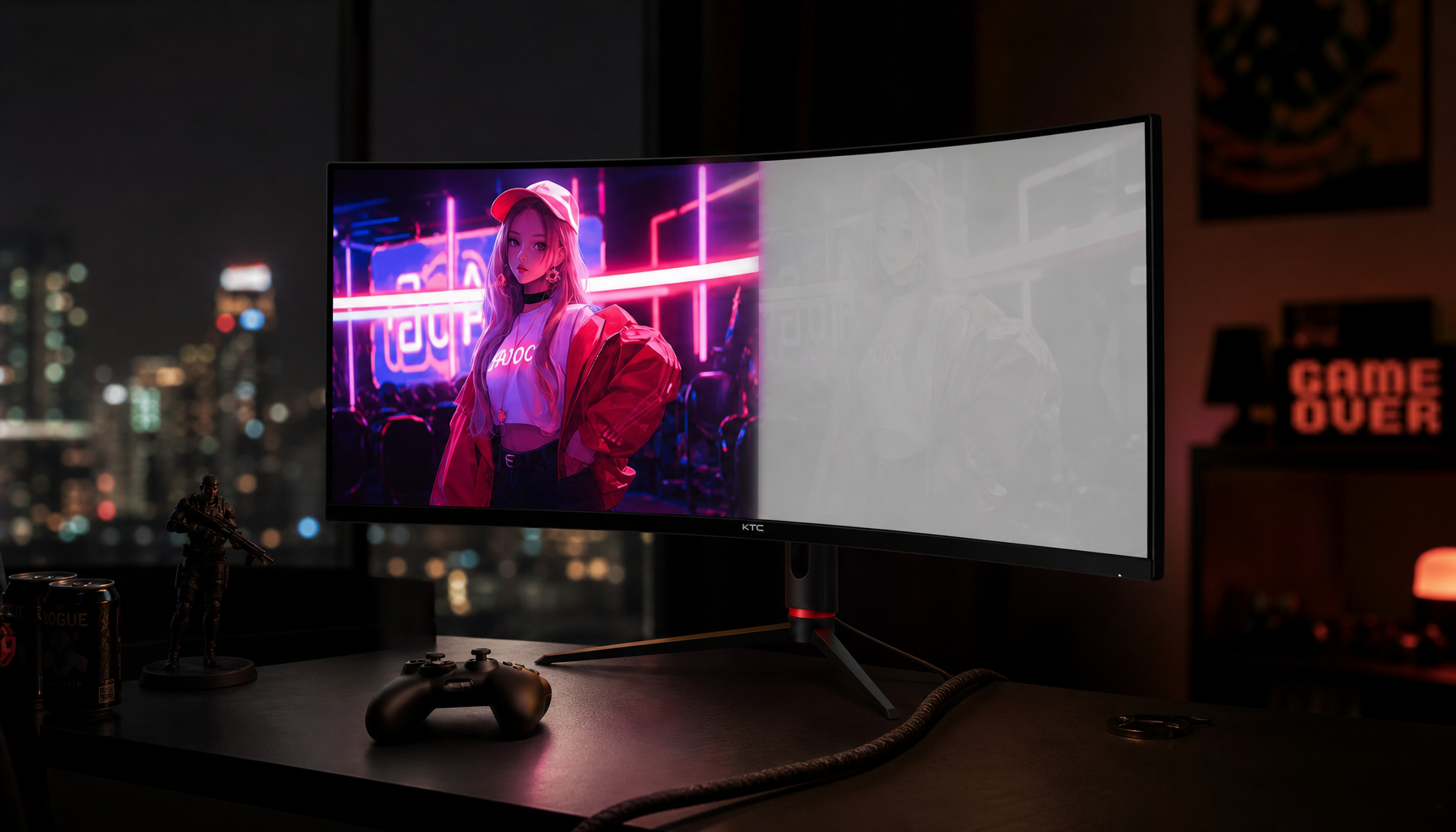
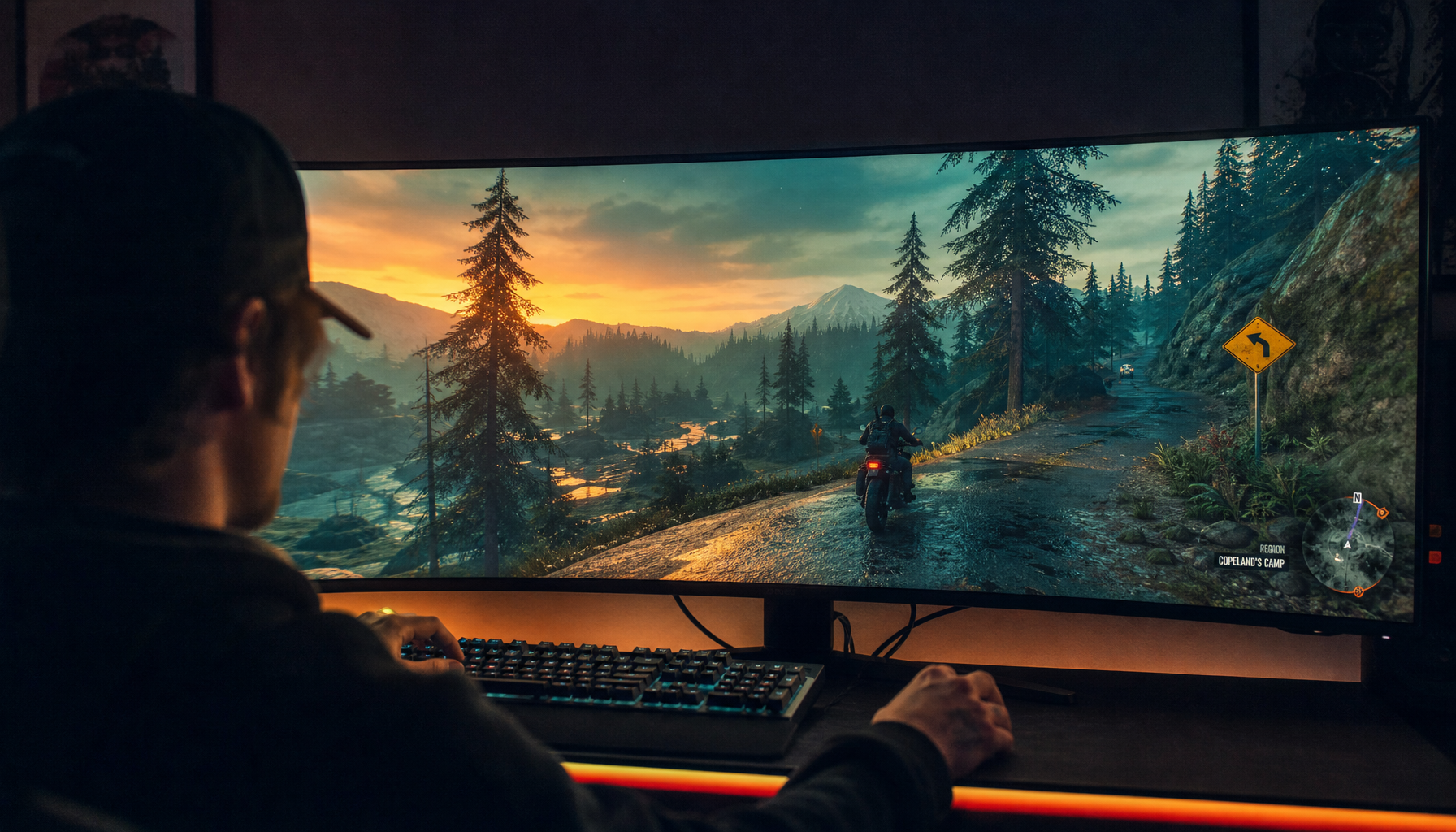
HDR can increase monitor power draw and heat, especially during bright scenes, high peak-brightness modes, and long sessions on OLED or Mini-LED displays. The GPU impact is usually less dramatic than heavy rendering features, but display-side energy use can be very real.
Is your gaming monitor getting noticeably warmer after a few hours of HDR raids, racing, or open-world play? Display testing has found that HDR power use can vary sharply with content brightness, and some picture modes use about 30% more power than lower-processing modes during comparable HDR playback. Here is when HDR is worth the extra heat, when SDR is smarter, and how to tune your setup for immersive visuals without wasting power.
Why HDR Changes the Power Equation
HDR, or high dynamic range, expands brightness and color beyond standard dynamic range so bright highlights, dark shadows, and saturated colors can appear more lifelike. On a capable display, a sunlit skybox, neon sign, muzzle flash, or reflective wet road can hit much higher luminance than SDR. That extra luminance is not free.
A strong HDR monitor needs real hardware behind the label: high brightness, deep blacks, wide color, effective local dimming, and proper tone mapping. HDR content commonly uses wider color spaces and at least 10-bit color depth, while weak “HDR-ready” monitors may only accept the signal and then show a flat or washed-out image. From a power standpoint, the decisive factor is not the HDR badge. It is how much light the panel is actually producing over time.
Think of a 27-inch OLED or Mini-LED display running a dark horror game versus a snow-covered open-world map. The horror game may show a few bright highlights over mostly dark scenes, while the snow map may keep much of the screen bright for minutes at a time. The second scenario usually asks the display to work harder, which is where power draw and heat rise.

Display Power Depends on Brightness, APL, and Picture Mode
The biggest display-side driver is average picture level, which means how bright the image is across the whole screen. A tiny HDR sparkle is different from a full-screen desert, stadium, or white menu. OLED panels light pixels individually, so bright full-screen scenes can push more panel current and trigger brightness limiting. Mini-LED LCDs rely on a backlight, so large bright areas can drive more backlight output and heat.

HDR power-saving research tested real HDR video sequences across sports, drama, and nature content on OLED and LCD HDR TVs. Its central finding was that brighter videos consume more power, and brightness-reduction algorithms cut power by up to 18% in some cases with minimal visible loss. For gaming, the lesson is practical: HDR power is content-dependent, so “HDR on equals X watts more” is too simplistic.
Picture mode also matters. In OLED testing, Standard mode with extra processing was linked to about 30% higher power use than an equivalent filmmaker-style mode. Gaming monitors use different labels, but the pattern carries over. A vivid HDR preset with boosted highlights, dynamic contrast, and aggressive processing may run hotter than a calibrated HDR gaming mode that respects the panel’s limits.
Heat During Long Gaming Sessions
Heat is the physical result of electrical energy that does not become useful light. During a short benchmark, you might only notice the monitor warming slightly. During a six-hour session, that heat can build up around the panel, power supply, desk surface, and the air behind the display.
OLED and Mini-LED handle this differently. OLED delivers pixel-level black and excellent contrast, but many OLED monitors limit full-screen brightness to manage heat and protect the panel. Independent display measurements show some OLED monitors reaching very high small-highlight brightness while dropping much lower on full-screen brightness, which illustrates why OLED and well-implemented Mini-LED displays behave differently under sustained bright content. Mini-LED can sustain larger bright areas better in some models, but the backlight system and local dimming zones can still generate meaningful heat.
For a real-world gaming setup, imagine playing an HDR shooter at night with the monitor set to HDR1000, room lights off, and the in-game brightness slider pushed high. The panel may only hit peak brightness in flashes, but the HUD, menus, explosions, sky, and reflections keep cycling high-output elements for hours. If the rear casing feels hot, fan noise changes, or brightness seems to dim during bright scenes, the display may be managing thermal load.
Does HDR Increase GPU Power Too?
HDR can add some processing overhead because the game, operating system, GPU, and monitor must handle wider color, tone mapping, metadata, and output format. However, for most players, HDR is not in the same performance-cost category as ray tracing, path tracing, higher resolution, or heavy anti-aliasing. Forum questions about whether HDR reduces frame rate are useful as user concerns, but they are not controlled benchmark data.
The more reliable answer is this: HDR may slightly change GPU workload, but the larger power and heat shift often happens at the display. If you enable HDR and also raise in-game brightness, switch to a higher peak-brightness mode, increase resolution, or enable ray tracing at the same time, you may blame HDR for power changes caused by several settings moving together.
A clean test is simple. Keep resolution, refresh rate, frame cap, graphics preset, and ray tracing unchanged. Play the same 10-minute scene in SDR, then HDR, while watching GPU board power and monitor brightness behavior. If the GPU barely changes but the monitor gets warmer, you have your answer.
HDR400, HDR1000, OLED, and Mini-LED: What Changes?
HDR modes are not equal. HDR400 or “True Black 400” modes generally target lower peak brightness than HDR1000 modes, while HDR1000 can allow brighter highlights and stronger impact on capable hardware. The display has to provide that light somehow, so HDR1000 can increase power and heat when content actually uses those highlights.
Setup Choice |
Power and Heat Tendency |
Best Use Case |
SDR at moderate brightness |
Lowest and most predictable |
Competitive play, desktop work, long mixed-use sessions |
HDR400 or True Black 400 |
Moderate, often easier on OLED panels |
Dark-room gaming with controlled highlights |
HDR1000 |
Higher when scenes are bright |
Cinematic games, HDR showcases, short high-impact sessions |
Mini-LED HDR |
Can sustain larger bright areas, may run warm |
Bright rooms, HDR RPGs, racing, open-world play |
OLED HDR |
Excellent blacks; heat depends heavily on bright pixel area |
Dark rooms, cinematic games, contrast-first immersion |
The buying nuance is that “supports HDR” is not the same as “good HDR.” Many monitors can decode HDR but lack the brightness, contrast, or local dimming needed to show it well. Community discussions often point out that poor HDR can look worse than SDR, and many monitors advertised as HDR-capable do not have the hardware to reproduce HDR accurately. If HDR looks gray, muddy, or overexposed, turning it off can improve both image quality and efficiency.
Practical Settings to Reduce Power and Heat
Start with brightness discipline. Use HDR for games that benefit from it, such as story-driven titles, racing, flight, RPGs, horror, and visually rich single-player games. For esports titles where clarity, frame consistency, and input feel matter more than cinematic highlights, SDR at a controlled brightness is often the better value.
Use the monitor’s real HDR gaming mode, not a fake SDR-to-HDR effect. Simulated HDR modes can lift brightness without using true HDR metadata, which may waste power while damaging shadow detail. Display testing warns that SDR “HDR Effect” modes can make images overly bright, washed out, or crushed, so avoid monitor modes that merely simulate HDR.
Calibrate HDR instead of maxing every slider. Set black level so dark scenes retain shadow detail without turning gray, then set peak brightness according to your display’s actual capability. A 600-nit monitor trying to map 1,000-nit content needs tone mapping; if the game and monitor both overcorrect, the image can become dimmer, hotter, or less accurate than expected.
Limit unnecessary full-screen brightness during long sessions. Lower the SDR content brightness slider when HDR is enabled on the desktop, disable HDR when browsing or working, and use the system HDR shortcut if available. This is especially useful for OLED owners who alternate between gaming and static productivity windows.
Ventilation matters more than many setups admit. Leave open air behind the monitor, avoid pressing the rear panel against a wall, and keep power bricks off soft surfaces. If your room is warm, lowering peak brightness one step may preserve image consistency better than letting the panel heat-soak and auto-dim later.

Eye Comfort and Session Quality
Power and heat are not the only long-session concerns. HDR can make highlights intense, and a bright monitor in a dark room can increase eye strain even when the image looks impressive. Eye-care research notes that modern displays, including 4K HDR screens, expose users to light conditions that can contribute to discomfort during extended use, and blue light filtering technology can reduce exposure without necessarily ruining image quality.
The practical move is balance, not fear. Keep ambient light low but not pitch-black, reduce peak brightness for marathon sessions, and treat HDR as a performance mode rather than a permanent desktop setting. A display tuned for comfort will feel faster and cleaner after hour four than one running at showroom brightness.
The Efficiency Angle for Serious Setups
A single monitor’s HDR power increase may seem minor, but gaming energy use scales across long sessions, multiple displays, consoles, PCs, and households. A lifecycle assessment of gaming’s environmental impact estimates global gaming energy consumption at 120 to 180 TWh per year, with operational energy use as one important part of a larger hardware and supply-chain footprint. That broader context makes choosing efficient hardware and avoiding unnecessary upgrades more than a utility-bill issue.
For a value-oriented setup, the best HDR monitor is not always the brightest one on the spec sheet. It is the display that delivers convincing contrast at the brightness you actually use, sustains performance without distracting heat or dimming, and fits your mix of gaming, office work, and media.
Practical Guidance
Use HDR when it improves the game, calibrate it to the panel instead of chasing maximum nits, and switch back to SDR for desktop work or competitive sessions where efficiency and consistency matter more. The best extended-session setup is not the hottest or brightest screen in the room; it is the one that keeps immersion high, heat controlled, and performance reliable hour after hour.