HDR can help productivity when work depends on visual judgment, bright-room visibility, or HDR content creation, but SDR remains more predictable for everyday office tasks.
Does your monitor look impressive in a game, then strangely washed out when you open a document, spreadsheet, or browser? A practical setup can deliver strong HDR for video, gaming, and creative review while keeping everyday text crisp and consistent. Here is how to decide when HDR earns its place on your desk and when SDR is the smarter mode.
What HDR Actually Changes on a Monitor
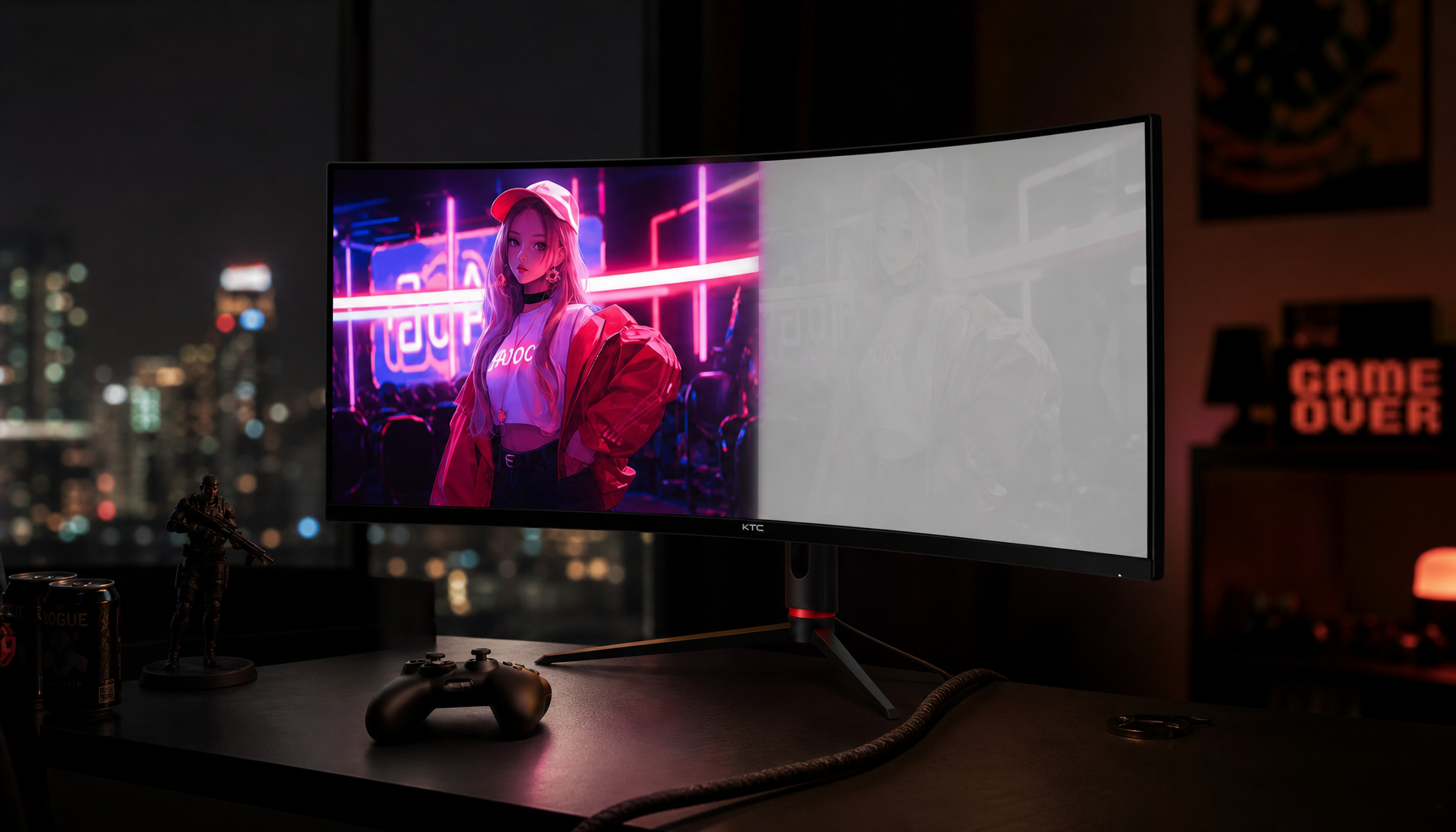
HDR, or High Dynamic Range, changes how brightness and color are represented on screen. Compared with SDR, HDR can carry brighter highlights, deeper shadow detail, and a wider color range when the display and content can reproduce it; high dynamic range is built around that expanded luminance and color workflow.
The key point for productivity is that HDR is not just “make the screen brighter.” It is a different signal chain. The operating system, graphics hardware, cable, monitor firmware, app, and content all need to agree on how brightness and color should be mapped. If one part of that chain behaves poorly, the desktop can look dull, oversaturated, gray, or inconsistent.
That is why a monitor with an HDR logo may still disappoint. HDR10 support means the display can accept a common HDR signal, while certification systems add more measurable requirements around brightness, color, black level, and response behavior. The HDR output setup process is useful because it focuses on confirming that the operating system is actually outputting HDR to the intended display, not just showing an HDR badge in the spec sheet.
Does HDR Help Office Productivity?
For pure office productivity, HDR is usually optional. If your day is built around email, documents, spreadsheets, task dashboards, coding, browser tabs, and video calls, SDR often gives you more stable text contrast, predictable white backgrounds, and fewer color-management surprises.
That does not mean HDR is useless at work. In a bright office, a strong HDR-capable monitor can offer more brightness headroom and better contrast, which can make mixed content easier to read. Commercial display guidance often separates the decision by content type: SDR is enough for text-heavy screens and simple graphics, while HDR is more useful for premium imagery, high-resolution photos, and visually rich presentations; text-heavy screens are specifically where SDR remains practical and cost-effective.
A real-world example is a dual-use desk. If you spend six hours in spreadsheets and one hour reviewing product photography, keep SDR as your default desktop mode, then switch HDR on for the review session. You get reliable document whites during the workday and the expanded highlight range when it actually changes the decision.

Where HDR Clearly Helps Productive Work
Photo, Video, and Visual Review
HDR becomes much more valuable when your productivity work includes images, video, design review, or content approval. Bright signage mockups, product renders, travel footage, game captures, and social video edits can all benefit from extra highlight detail and richer color, provided the monitor has real brightness, contrast, and color volume.
For photography, the newer meaning of HDR is not the heavy, overprocessed look people remember from older tone-mapped images. It is the ability to show more captured light on a display that can actually produce it. Modern HDR displays can reduce the need for aggressive tone compression and can be especially useful for sunsets, cityscapes, concerts, and scenes where highlight color matters; highlight color is most compelling when the light itself is part of the image.
For a practical test, open a high-contrast image with a bright sky, reflective metal, or neon signage. In SDR, you may need to pull highlights down until the whole image looks flatter. In HDR, a capable display can keep the scene grounded while letting bright details stay bright.

Presentations, Sales, and Client Demos
HDR can also support productivity when the screen is used to persuade, inspect, or demonstrate. A portable smart screen at a trade show showing product footage, a client review monitor for a real estate walkthrough, or an office display looping campaign visuals can benefit from stronger contrast and better highlight separation.
The value calculation is simple. If the content is mostly text, charts, and UI screens, HDR adds little. If the content needs to make glass, metal, fabric, lighting, food, or outdoor footage look convincing, HDR can change the perceived quality of the presentation.
Gaming, Simulation, and Immersive Workflows
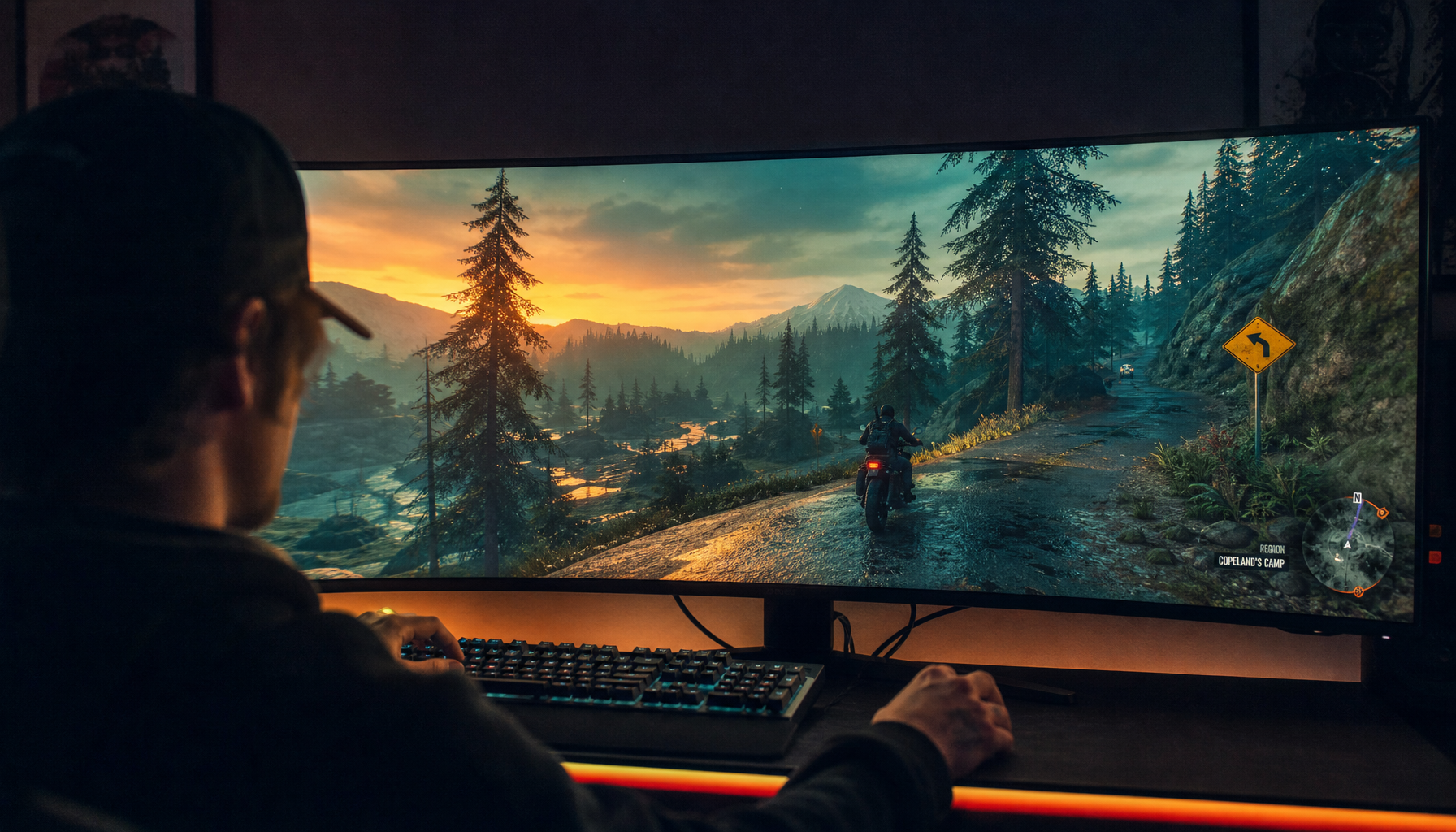
For pro gaming monitors, HDR matters when the game or simulation has native HDR support and the panel has the hardware to show it. Story-driven games, racing titles, flight simulation, and open-world environments benefit more than competitive esports menus or low-contrast desktop tools. Automatic HDR conversion can help older SDR games, but it may also oversaturate colors or add inconsistency, so it is best treated as a per-game setting rather than a permanent upgrade.
Why HDR Can Look Bad on the Desktop
Desktop HDR has improved, but it still asks SDR apps to live inside an HDR output mode. Many office apps and web pages are designed around SDR assumptions, so white backgrounds, app icons, and color accents can shift in ways that feel wrong. The problem is not that HDR is bad; it is that much of the productivity software stack was built for SDR.
Calibration is another trap. SDR ICC profiles do not always translate cleanly into HDR behavior because the monitor may use a different brightness curve, gamut mapping, or processing path in HDR mode. KTC’s calibration guidance recommends maintaining separate modes for SDR work, HDR cinema or reference viewing, HDR gaming, and creative HDR work because HDR calibration is difficult across inconsistent content and display behavior.
This is where many users lose confidence. They turn on HDR globally, notice that an online document editor looks gray or a brand color looks too saturated, and assume the monitor is defective. Often the better fix is mode discipline: SDR for office accuracy, HDR for HDR material.
HDR vs SDR for Productivity Decisions
Workload |
Better Default |
Why It Usually Wins |
Documents, spreadsheets, email, coding |
SDR |
Predictable whites, sharp text, fewer color shifts |
Web browsing and dashboards |
SDR |
Most web UI is still designed around SDR behavior |
Photo and video review |
HDR, when calibrated |
Better highlight detail and richer visual judgment |
HDR video editing |
HDR |
Required to evaluate HDR output honestly |
Client demos and product visuals |
HDR, if the panel is strong |
More impact for premium imagery and bright scenes |
Competitive gaming between tasks |
Usually SDR or selective HDR |
Refresh rate, latency, and consistency often matter more |
Cinematic gaming and streaming |
HDR |
Higher immersion when the game or movie is mastered well |
How to Set Up HDR Without Hurting Productivity
Start by checking the full chain. The monitor must support HDR, the graphics hardware and cable must support the needed bandwidth, the operating system must have HDR enabled for the correct display, and the monitor’s on-screen menu may need its HDR mode turned on. The basic HDR check is straightforward: open display settings, select the HDR-capable monitor, and confirm that HDR games and apps are enabled.
Next, create separate habits instead of one universal setting. Use SDR for daily office work, especially if you care about document whites, brand colors, or long reading comfort. Switch to HDR when launching HDR games, HDR movies, HDR photo workflows, or video review. A keyboard shortcut is often the fastest way to toggle HDR without digging through menus.

Then judge the monitor by real HDR capability, not the box label. A basic HDR400-class display may accept HDR but show only a mild improvement over SDR. Stronger HDR usually needs meaningful peak brightness, sustained brightness, good black levels, wide color gamut, and local dimming or OLED-style pixel control. Practical monitor guidance makes the same point: HDR10 support alone does not guarantee impressive picture quality.
Finally, tune brightness for the room. HDR often looks best in a controlled or dimmer environment because highlights have room to stand out. In a sunlit office, an overly dim HDR mode can feel worse than a bright, clean SDR mode. The performance-driven answer is not to worship the format; it is to choose the mode that makes the task easier and the output more trustworthy.
Pros and Cons of HDR for Productivity
HDR’s strongest productivity advantage is visual headroom. It can reveal highlight detail, improve image realism, make premium media more convincing, and help creators review HDR content on a display that approximates the final experience. It also pairs well with modern OLED and Mini LED monitors, where contrast and local light control make the improvement easier to see.
The downside is consistency. SDR is still the stable baseline for most office software, websites, and business documents. HDR can introduce dull desktop whites, unexpected color shifts, awkward brightness jumps, and more complicated calibration. It can also cost more, and low-quality HDR may look less balanced than a good SDR mode.
Buying Advice for a Productivity-First HDR Monitor
If productivity comes first, prioritize text clarity, ergonomic brightness control, panel uniformity, resolution, refresh rate, ports, and reliable SDR color before chasing an HDR badge. For a 27-inch or 32-inch desk monitor, 4K can improve text and layout density more reliably than weak HDR. HDR becomes worth paying for when the monitor also has strong contrast, wide color coverage, meaningful brightness, and separate SDR/HDR modes.
For a portable smart screen, be more selective. HDR can help with client demos, video playback, and product visuals, but many portable displays lack the brightness and battery headroom for dramatic HDR. If the main job is spreadsheets beside a laptop, SDR quality and USB-C reliability matter more.
For a pro gaming monitor that doubles as a work display, the sweet spot is a display that lets you move cleanly between modes. Use SDR for the desktop, HDR for cinematic games and HDR video, and keep competitive settings separate so input response and visual consistency stay predictable.
The Practical Answer
HDR is not only for media consumption, but media and visual work are where it delivers the clearest return. For productivity, HDR is a specialist tool: powerful for image judgment, video review, immersive gaming, and premium presentation, but unnecessary for most text-heavy work.
A reliable display setup is not about leaving the most advanced feature on all day. It is about matching the screen mode to the job: SDR for precision and comfort, HDR for light, depth, and impact when the content is built to use it.