HDR can make afterimages more visible because it drives brighter highlights, stronger contrast, and more heat through parts of the panel, especially when static UI elements stay in one place. On most IPS and VA LCD monitors, this is usually temporary image retention; on OLED, static high-brightness content carries a higher risk of permanent burn-in.
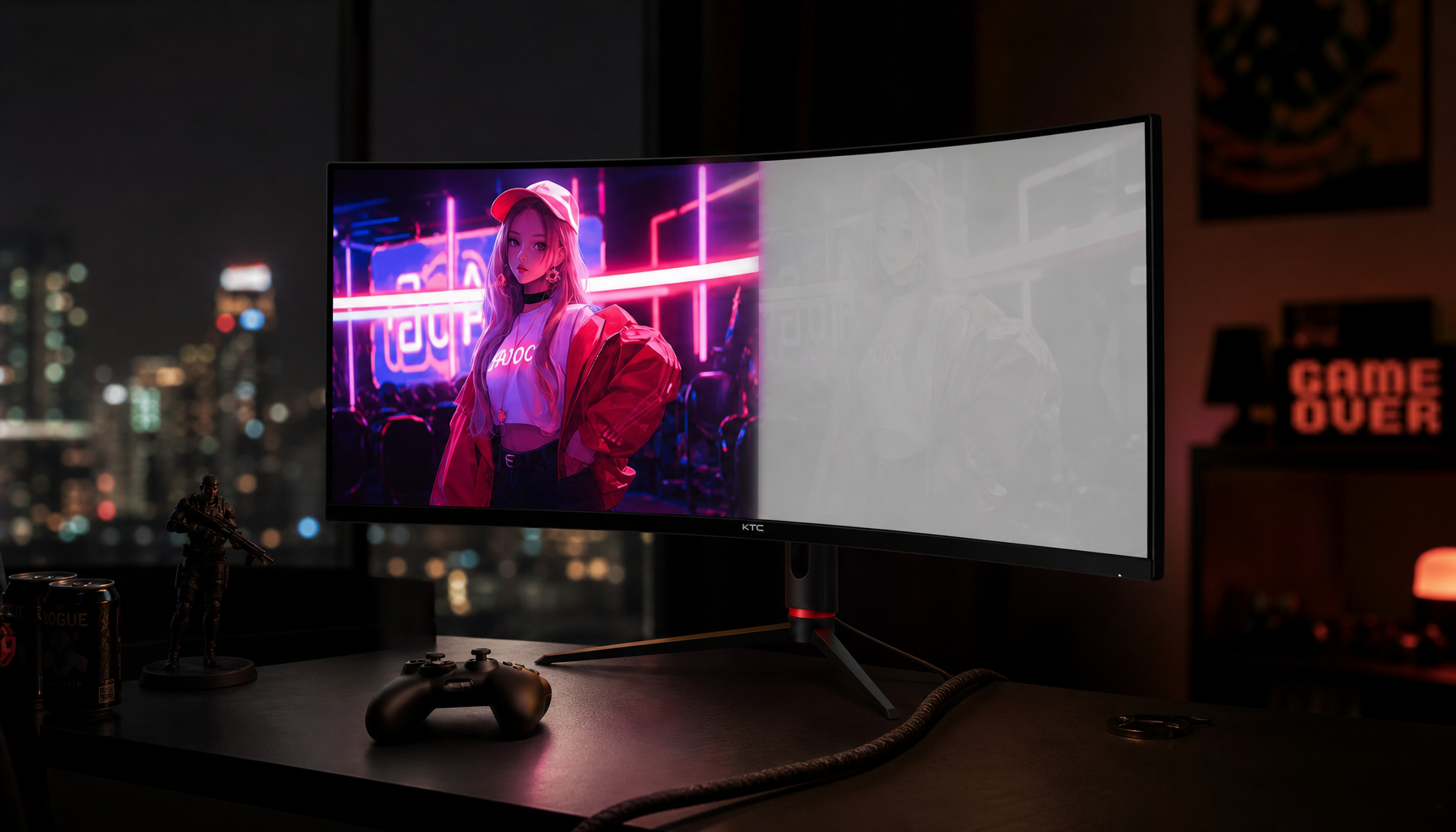
Ever finish an HDR gaming session and still see a faint health bar, taskbar, scoreboard, or subtitle box on a gray screen? A practical recovery test is simple: if varied full-screen video, color cycling, or powering the display off makes the mark fade, you are probably dealing with temporary persistence rather than permanent panel damage. The key is understanding why HDR exposes the issue, which panels are most vulnerable, and how to tune your display without giving up the immersive punch you bought it for.
HDR Is Usually the Stress Multiplier, Not the Root Cause
HDR content does not burn an image into a monitor by itself. More accurately, HDR raises the display’s operating intensity. Bright static highlights, fixed game HUDs, taskbars, spreadsheet grids, video player controls, score bugs, and creator-tool sidebars can hold the same panel regions in a high-output state for long stretches.
On LCD monitors, especially IPS and VA, many visible afterimages are linked to temporary charge buildup or slow liquid-crystal relaxation rather than permanent pixel wear. IPS LCD panels use liquid crystals to modulate a shared backlight, which is why IPS LCD panels generally do not suffer OLED-like burn-in. In practice, that distinction matters: a faint spreadsheet grid after a long workday is handled differently from an OLED news ticker that has aged the same pixels unevenly for months.
HDR makes the symptom easier to trigger because bright UI elements can sit at higher luminance than they would in SDR. If a game’s minimap stays pinned in the corner for 3 hours, HDR may push that corner harder than SDR while darker regions nearby remain less stressed. The result can be a temporary outline visible on flat gray, white, or dark test screens.
Image Retention, Burn-In, and Ghosting Are Not the Same Thing
Image retention is a temporary afterimage from previous static content. Burn-in is permanent uneven wear or discoloration. Motion ghosting is different again: it is a trailing smear behind moving objects, usually tied to response time, refresh behavior, overdrive settings, cables, or drivers.
This distinction prevents expensive overreaction. If a faint desktop outline fades after an overnight power-off, that is not the same failure mode as permanent OLED logo burn-in. If a fast-moving enemy in a shooter leaves a dark trail, that is more likely response-time ghosting than HDR persistence; monitor ghosting is a display artifact tied to motion trails, not static-image memory.
Symptom |
Most Likely Issue |
Typical Cause |
First Check |
Faint taskbar or HUD remains on solid gray |
Image retention |
Static high-contrast content, brightness, heat |
Run varied full-screen content or power off |
Logo or UI mark never fades |
Burn-in |
Uneven pixel or backlight aging |
Test after days of varied content |
Moving objects smear or trail |
Motion ghosting |
Slow response time, overdrive, refresh mismatch |
Use a motion test and adjust overdrive |
For example, imagine a 32-inch HDR productivity monitor used for 8 hours with a bright white spreadsheet, fixed ribbon bar, and static taskbar. If a pale band appears where the toolbar sat, the first move is not panic. Switch to varied video, lower brightness, and let the panel rest. If the band fades, the panel retained a temporary state.
Why IPS LCDs Can Show HDR Persistence
IPS is one of the best panel choices for productivity because it handles viewing angles, text clarity, and static layouts well. That does not make it immune to temporary retention. When subpixels hold nearly constant voltages for long periods, the liquid crystals may not immediately return to a neutral state. IPS image retention is typically temporary and can fade within minutes, hours, or sometimes days, while most cases users notice are temporary image retention.
HDR increases the odds when it combines bright static content with heat. A creator editing HDR footage may keep scopes, toolbars, and timeline markers in fixed positions while the preview window changes. The video looks dynamic, but the interface around it is not. In that scenario, the bright timeline ruler or panel border can become the retained shape, not the movie frame.
The upside is reliability. IPS remains a strong choice for coding, dashboards, spreadsheets, trading terminals, and control rooms because permanent burn-in is rare under normal use. The tradeoff is that you should not run HDR brightness at maximum all day for static office work. For everyday indoor productivity, a moderate brightness level is more sensible than treating a 1,000-nit peak-capable panel as if it needs to run at full output for email.

Why VA Panels May Look Worse in Dark HDR Scenes
VA LCD panels often deliver stronger native contrast than IPS, which helps HDR movies and atmospheric games look deeper. The drawback is that VA panels can have slower pixel transitions, especially in dark tones. That can make black smearing or motion ghosting appear alongside temporary persistence, which complicates diagnosis.
If the mark follows moving objects, tune response time or overdrive. If the mark stays fixed where the scoreboard or HUD used to be, treat it as retention. VA panels can be excellent value for cinematic immersion, but if your daily mix is competitive gaming plus fixed overlays, test your specific model’s overdrive modes instead of assuming the highest setting is best. Aggressive overdrive can introduce inverse ghosting, where bright halos replace dark trails.
Why OLED Needs More Caution With HDR Static Elements
OLED is different because each pixel emits its own light. That gives OLED its elite contrast and near-instant pixel response, but it also means static HDR elements can age specific pixels faster than surrounding pixels. Display-care research consistently separates OLED burn-in from LCD retention: LCD afterimages are often temporary, while OLED burn-in is tied to irreversible organic emitter wear.
For a gaming setup, the risk pattern is easy to understand. A racing game with a fixed lap timer, a shooter with a bright ammo counter, or a sports broadcast with a static scoreboard repeatedly drives the same OLED pixels. HDR makes those UI elements brighter, so the aging imbalance can accumulate faster if the content is repeated for many hours over many days.
OLED is still outstanding for cinematic, varied, dark-room content. The smarter buying decision is workload-based. If your screen spends most of its life showing varied games, films, and full-screen media, OLED can be worth the care routine. If it spends 10 hours a day on spreadsheets, code editors, trading charts, or dashboards, IPS is usually the more reliable long-term tool.

Heat, Brightness, and Static Time Form the Risk Triangle
Temporary afterimages become more likely when three conditions overlap: bright output, fixed imagery, and elevated temperature. Industrial display guidance emphasizes that continuous static UI, maximum brightness, 24/7 operation, and high ambient temperature increase retention risk, and that thermal design helps keep panels stable.

That matters for portable smart screens and compact HDR monitors. A thin portable display sitting behind a warm laptop, running USB-C power, HDR brightness, and a static app layout has less thermal headroom than a desktop monitor with better ventilation. If you use a portable screen for console gaming in HDR, avoid leaving the game paused on a bright menu while you step away.
For office displays, the simplest calculation is time on the same pixels. A static taskbar for 1 hour is rarely meaningful. A fixed dashboard for 12 hours a day, 5 days a week, at high brightness is a different operating profile. Even if the panel never truly burns in, visible retention can become a recurring annoyance.
How to Confirm Whether HDR Caused Temporary Persistence
Start with a neutral test screen. Solid gray is useful because faint outlines show up more clearly than they do on busy wallpaper. White and mid-tone colors can also reveal taskbars, browser tabs, window borders, or game HUD shapes.
Then change the panel state. Play varied full-screen video for 30 to 60 minutes, run a color-cycling pattern, or power the display off for several hours. If changing video makes the ghost image disappear, the issue is likely temporary persistence rather than permanent burn-in. For a stubborn case, an overnight power-off is a better test than repeatedly staring at the mark.
If the artifact appears only during motion, run a motion test and adjust overdrive, refresh rate, and cable path. HDR persistence is about where content used to sit. Motion ghosting is about how pixels transition while content moves.
Practical Settings That Reduce HDR Afterimages
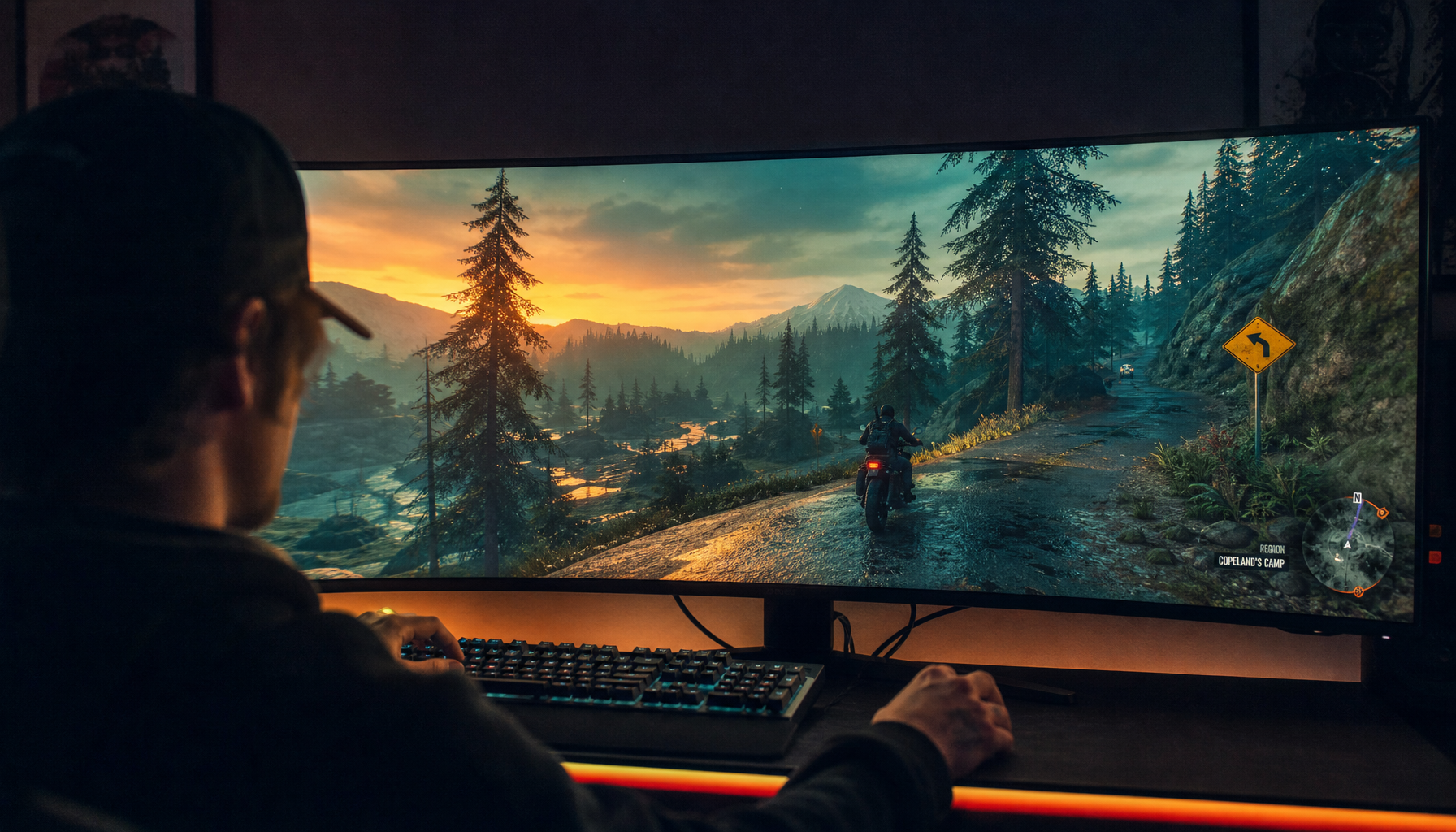
For gaming, keep HDR enabled where it genuinely improves the experience, but reduce static stress. Lower HUD brightness or opacity when the game allows it. Move HUD elements if the game supports layout customization. Avoid leaving HDR games paused on menu screens, especially with bright logos or high-contrast UI panels.
For productivity, use SDR for static office work unless HDR is needed for content review. Auto-hide the taskbar, use darker themes, rotate window layouts, and let the monitor sleep when idle. Prevention steps include screen savers, display sleep timers, varied content, taskbar changes, and reducing brightness, which is one of the highest-value adjustments because it lowers visual stress, heat, and eye fatigue at the same time.
For portable smart screens, be more conservative. Keep airflow open, avoid direct sun through a window, and do not trap the screen against fabric while running high brightness. A portable HDR display used as a second monitor for chat, tools, or static controls should have a shorter sleep timer than your main screen.
For digital signage or 24/7 dashboards, design the content to move. Rotate layouts, shift logos, alternate color themes, schedule rest periods, and use built-in pixel shifting or panel maintenance tools where available. Prolonged static images, high brightness, heat, and long operating hours are major risk factors, so static content is the pattern to design against.
When to Worry and When to Keep Working
Do not worry if a faint outline fades after varied content or rest. That is annoying, but it is usually manageable. Do worry if the image remains equally visible after days of varied use, appears as permanent discoloration, or worsens rapidly under normal settings. At that point, document it with solid-color photos, note your brightness and HDR usage, and contact support while warranty coverage is still available.
For buyers, match panel type to workload. IPS is the value-oriented choice for static-heavy productivity and professional dashboards. VA can be compelling for contrast-rich entertainment if you tolerate some motion tuning. OLED delivers the most immersive blacks and HDR impact, but it deserves more discipline around static UI.
FAQ
Does turning off HDR prevent all afterimages?
No. Static SDR content can still cause temporary retention, especially at high brightness or over long periods. HDR simply raises the stress level when bright fixed elements stay onscreen.
Can a screensaver still help modern monitors?
Yes. A moving screensaver or automatic sleep timer reduces the time fixed elements sit on the same pixels. That is useful for LCD retention and even more important for OLED care.
Is a temporary afterimage a sign my monitor is defective?
Not always. Mild retention that fades can occur on otherwise functional panels. A strong afterimage after short use, retention that lasts for days, or marks that never fade should be treated as a support issue.
HDR should make the screen feel more alive, not make you babysit it. Use the panel for its strengths, keep static brightness under control, let the display rest, and choose IPS, VA, or OLED based on the content you actually leave on-screen.