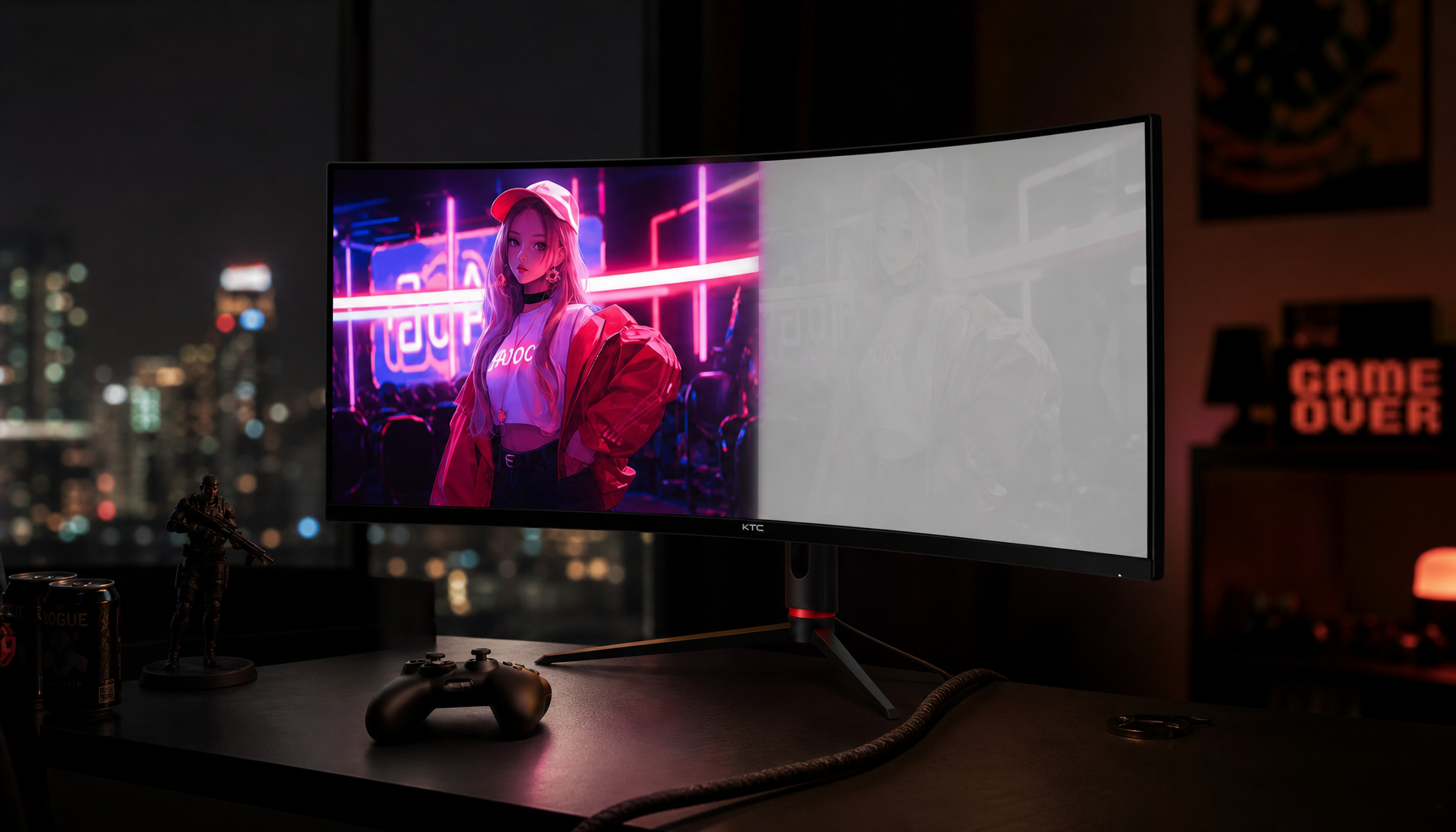
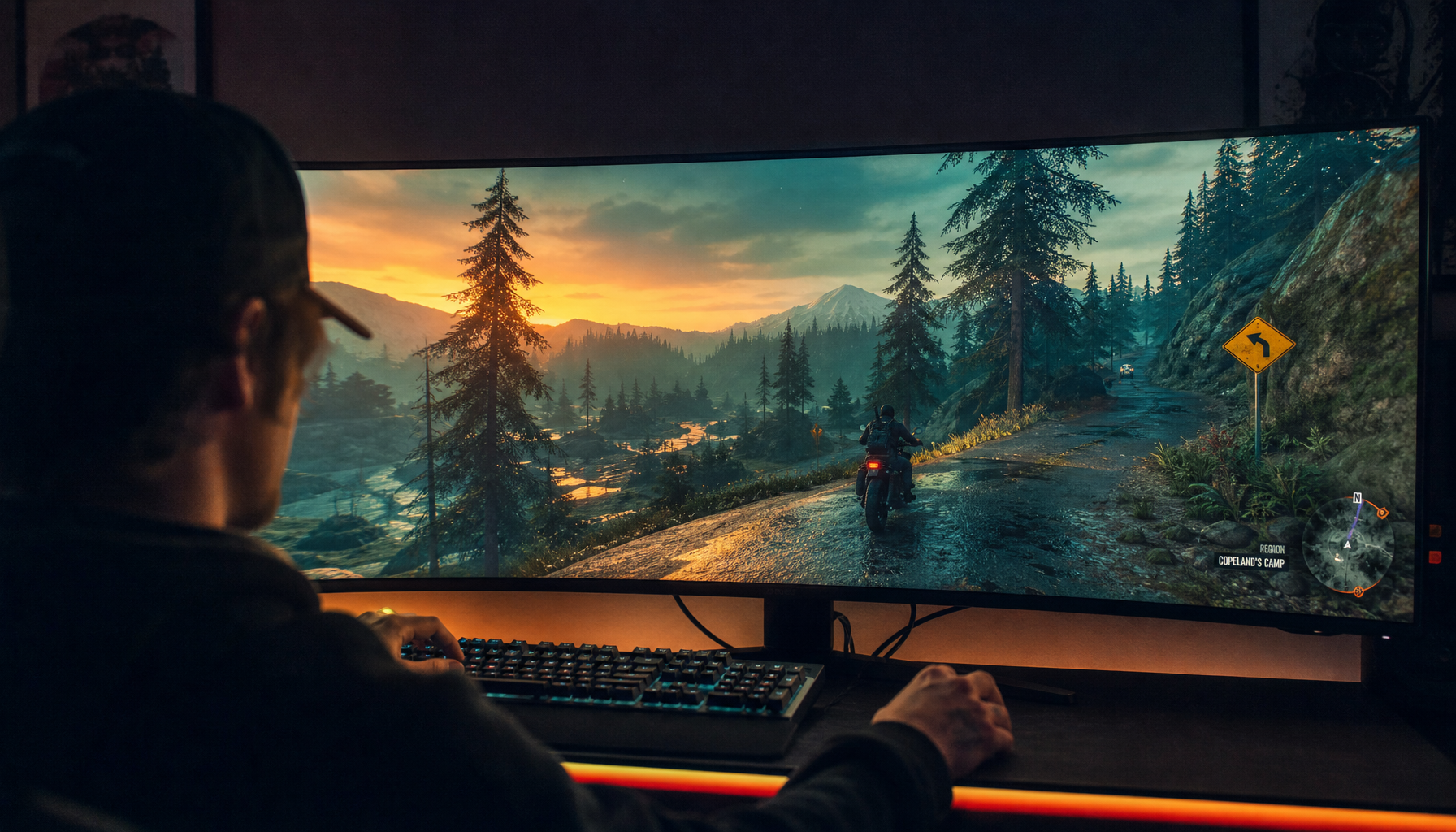
Yes, but only if you separate brighter shadows from raised blacks. The goal is to reveal near-black detail while keeping true black anchored, so caves, night maps, and horror scenes stay readable without turning gray.
Why Dark Detail Disappears
Black crush happens when dark gray tones collapse into pure black, erasing texture, enemy silhouettes, and environmental cues. In visual terms, crushed blacks are shadow areas where image information is lost rather than merely dim.

For gaming, that loss can come from the monitor, the game’s gamma curve, or the room. A display set too dim may hide the first few shadow steps; a game set too dark may render them below visibility; a pitch-black room can make your eyes fight the screen.
The fix is not to crank brightness blindly. That often lifts the whole image, making blacks look washed out while still failing to separate the darkest usable details.
Start With Brightness, Contrast, and Gamma
Use your monitor’s physical OSD first. Brightness usually controls backlight output on LCD monitors, while contrast affects how bright whites and upper tones appear; pushing either too far can clip detail.
A practical baseline is to set the monitor to its native resolution, use a neutral color temperature near 6500K, and keep contrast in a moderately high range. Gaming setup advice often recommends brightness around 250-350 nits, then lowering it in dark rooms for comfort.
Gamma is the precision tool. Brightness shifts the screen’s light output; gamma changes how midtones and shadows are distributed. If a game has a gamma slider, adjust it until the darkest logo or test symbol is barely visible, not obvious.

Quick calibration pass:
- Set monitor brightness for room comfort.
- Keep contrast below clipping levels.
- Use in-game gamma before GPU filters.
- Check a dark scene with texture, not a menu.
- Revisit settings after enabling HDR.
Choose the Right Panel for Shadow Control
Panel type matters because black level and contrast define how much shadow separation you can see. VA panels typically deliver stronger native contrast than IPS, while OLED can switch pixels fully off for deep blacks.
That does not mean OLED is automatically perfect. Some OLED displays can hide very near-black steps depending on gamma, brightness behavior, and processing; user testing has shown that near-black shadow detail can vary by setup.
IPS remains strong for color, viewing angles, and office use, but in a dark room its raised blacks or glow can make shadows look cloudy. VA can be excellent for dark RPGs and atmospheric shooters, though slower models may show dark smearing. OLED and QD-OLED offer elite contrast and response, but buyers should consider price, burn-in management, and room lighting.
For most players, a 27-inch 1440p display is the value-performance sweet spot: sharp enough for texture detail, easier to drive than 4K, and widely available in IPS, VA, Mini-LED, and OLED options.
Room Lighting Can Save Shadow Detail
A totally dark room feels immersive, but it is not always the best environment for seeing detail. High contrast between a bright screen and a dark room can increase visual discomfort, and gaming eye-care guidance recommends soft overall room lighting instead of playing in darkness.
Bias lighting behind the monitor is especially useful for IPS and Mini-LED screens. It improves perceived contrast, reduces eye strain, and can make glow or blooming less distracting without forcing you to raise black levels.

Keep the light behind the screen, not shining across it. Front or side lighting can reflect off glossy panels and may lift perceived blacks on some QD-OLED displays.
Competitive visibility settings can help you spot enemies, but aggressive black equalizers often trade cinematic depth for tactical readability.
The Reliable Dark-Scene Setup
The best setup preserves intent and performance: native resolution, correct refresh rate, adaptive sync, restrained contrast, calibrated gamma, and room lighting that supports your eyes.
Do not chase one universal setting. Brightness scales are arbitrary across monitors, and dark-scene performance depends on panel type, coating, HDR behavior, and the game engine. A monitor buying checklist should weigh panel type and contrast alongside refresh rate and resolution.
For immersive gaming, prioritize contrast and HDR quality. For competitive play, use a mild black equalizer only after basic calibration. For mixed office and gaming use, choose a monitor that stays readable in spreadsheets by day and shadow-rich at night.
Dark detail is not about making black less black. It is about giving every shadow step its own place on screen.