Firmware updates can change how aggressively a display brightens, dims, suppresses halos, and follows moving highlights. The result may be better HDR contrast, fewer distracting blooms, or new tradeoffs such as crushed shadow detail, dimmer highlights, flicker, or slower zone transitions.
Is a white mouse cursor suddenly glowing on a black desktop, or did your favorite HDR game become darker after an update? A careful firmware pass can make Mini-LED and full-array monitors feel more controlled by improving dimming logic, zone timing, and preset behavior without replacing the panel. You’ll learn what actually changes, how to test it, and when an update is worth installing.

Why Firmware Matters for Local Dimming
Local dimming is not just a hardware spec. The LED backlight zones, LCD panel contrast, video processor, HDR tone mapping, and firmware algorithm all work together. A monitor with 1,000 zones can still show halos if the dimming map reacts too broadly, while a display with fewer zones can look cleaner if its transitions are tuned well.
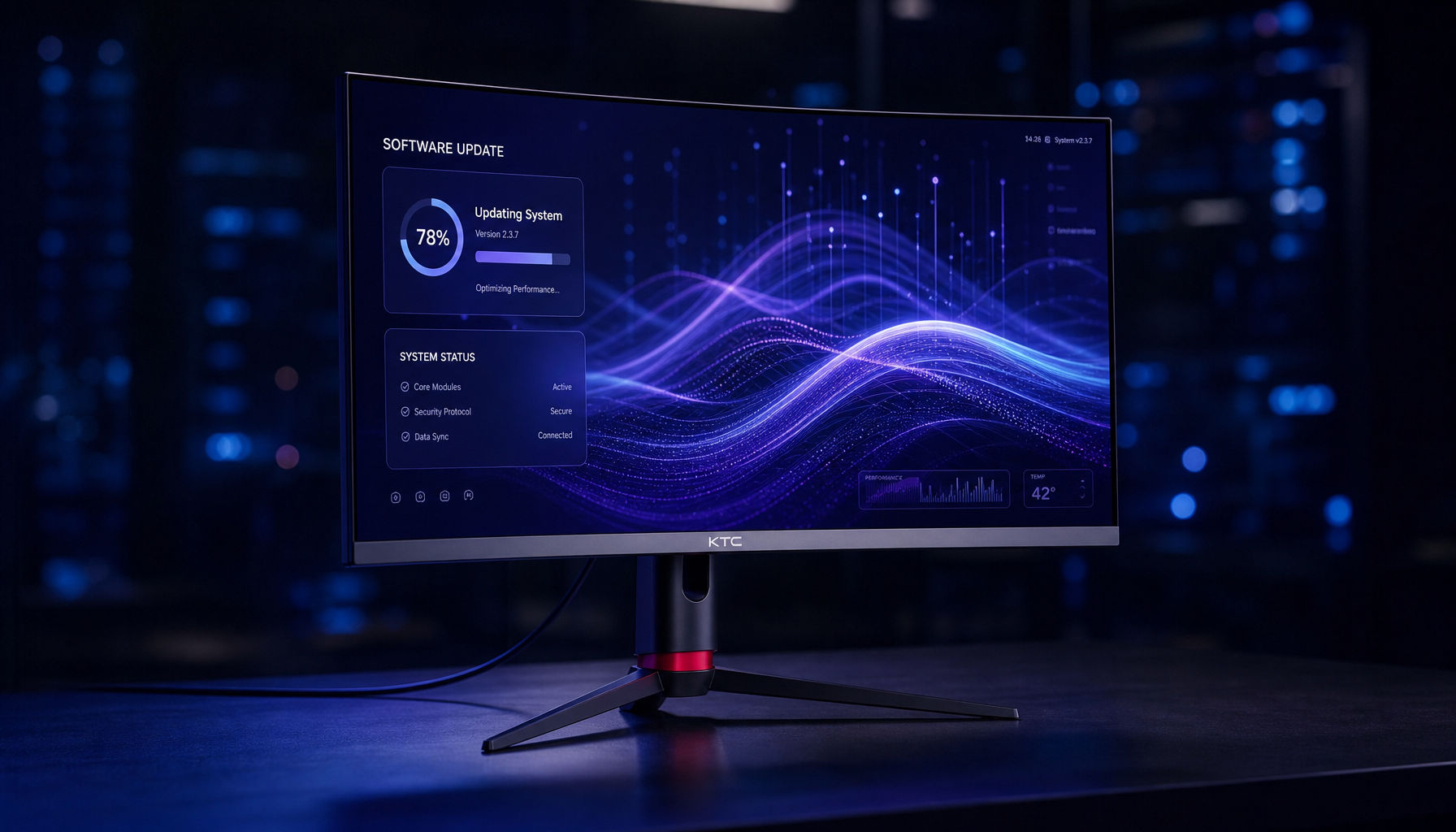
A firmware update changes the monitor’s internal control software. On modern gaming and productivity displays, that software may control HDR brightness tables, local dimming strength, halo suppression, USB-C behavior, refresh-rate compatibility, OSD presets, and power management. One manufacturer describes monitor firmware as built-in software that controls hardware behavior, with official upgrade tools used to improve features and refine monitor configuration.
The key point for buyers and owners is simple: local dimming behavior is partly programmable. The LED array is fixed, but the way it is driven can change.
What Actually Changes After a Firmware Update?
Zone Brightness Curves Can Become More or Less Aggressive
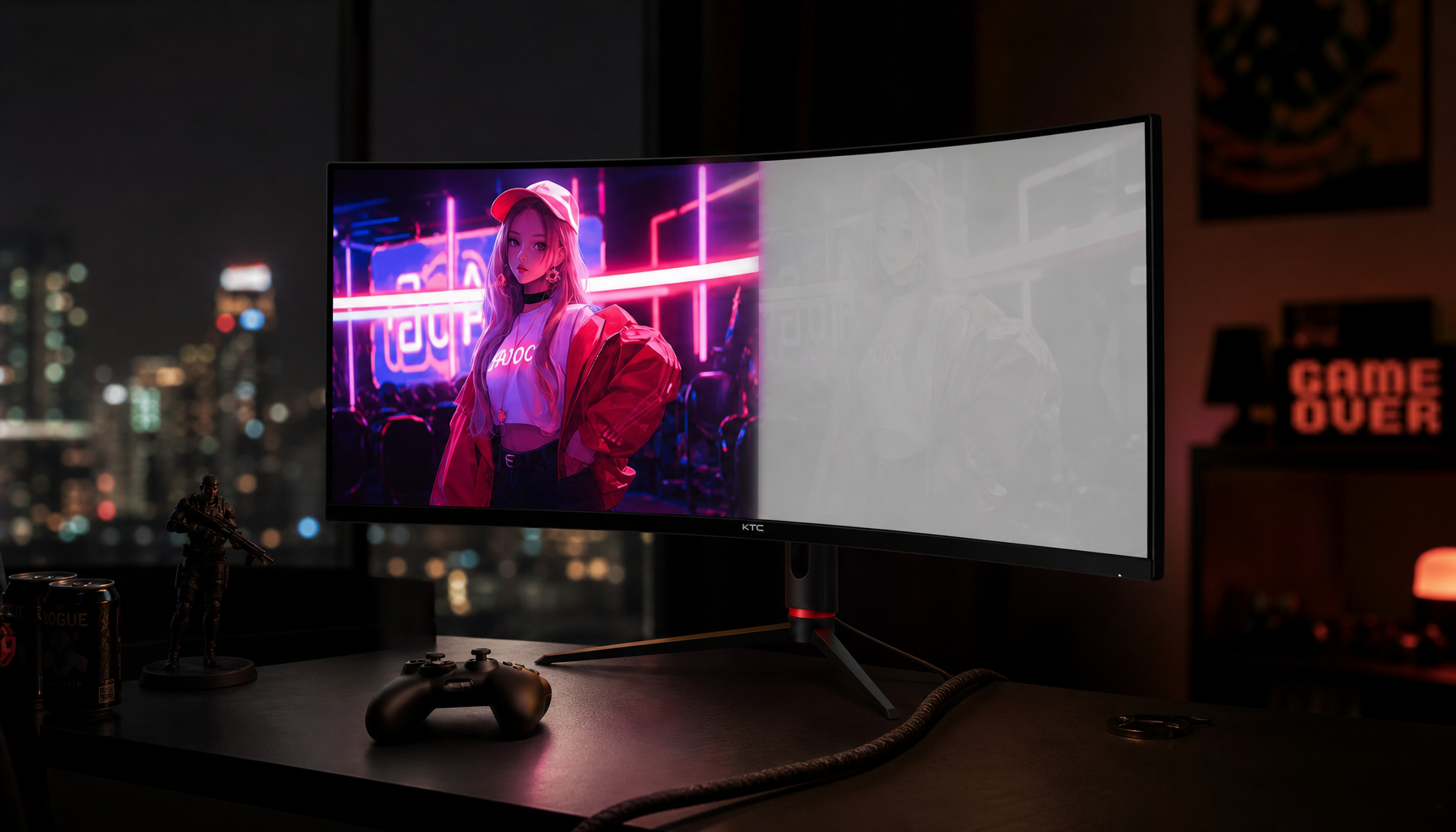
The most visible change is often the brightness curve. Firmware may raise or lower how much a zone brightens when a small highlight appears. In HDR, a more aggressive curve makes specular highlights pop harder: muzzle flashes, city lights, reflections, and UI glints look more intense. The downside is more blooming around those objects, especially on dark backgrounds.
A more conservative curve reduces halo size by holding zones back, but it can make HDR look flatter. Mini-LED guidance often shows this tradeoff clearly: stronger local dimming can deliver deeper blacks, while halo suppression can reduce bloom at the possible cost of peak brightness.
In practice, this means a firmware update might make “High” local dimming feel closer to the old “Medium,” or it may add a custom control that lets you tune between black depth and highlight impact. For a 27-inch or 32-inch Mini-LED gaming monitor, that can change whether star fields look cinematic or subtitles glow like light boxes.
Timing Changes Can Alter Trails, Flicker, and Pumping
Local dimming has to follow motion. If zones activate too slowly, bright objects may develop a dark leading edge. If they deactivate too slowly, they can leave a fading light trail. If the algorithm overreacts, the screen may pulse or flicker as zones rapidly shift brightness.
Firmware can tune those timing windows. A gaming-focused update may prioritize faster transitions in Game Mode so a bright enemy outline or HUD element tracks motion more tightly. A video-focused update may smooth transitions to reduce visible flicker in movies. Neither approach is automatically better; it depends on what you notice most.
For competitive play, the stronger choice is usually the one that keeps motion predictable. A slight reduction in HDR drama is easier to live with than a moving halo that follows a target across a dark map.
Shadow Detail May Be Preserved or Crushed
Local dimming updates can also change near-black behavior. If the algorithm dims zones too deeply, dark textures disappear. This is the classic “inky but blind” problem: black levels improve, but a cave wall, black coat, or night-road detail turns into a flat patch.
Display research reinforces why this happens. Local dimming is a dual-modulation system: the backlight handles broad brightness regions while the LCD panel renders fine detail and color. Research summarized in the notes found that native panel contrast strongly affects perceived HDR quality; more zones help, but they do not fully overcome limited panel contrast. Display-testing guidance makes the same practical point when explaining that LCDs need dimming zones to improve black levels because the backlight otherwise raises dark areas toward gray.
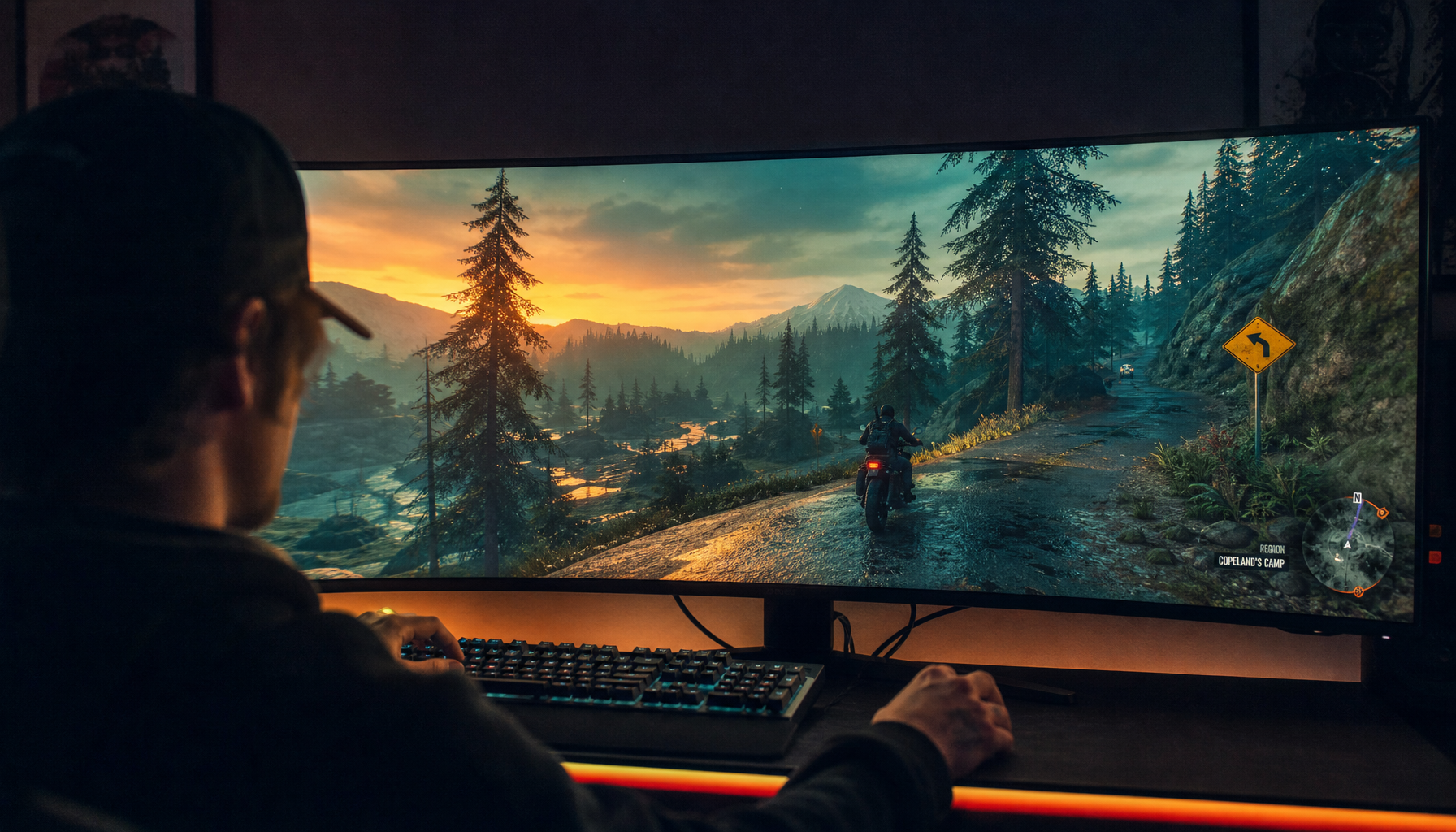
A useful real-world check is a dark game scene with textured clothing, smoke, or stone. If a firmware update makes the image look punchier but removes surface detail, lower the local dimming level or reduce any halo-suppression control before blaming the panel.

Common Artifact Patterns Before and After Updates
Artifact pattern |
What you see |
How firmware can change it |
Tradeoff to watch |
Blooming or haloing |
Glow around bright objects on black |
Narrows or softens zone activation |
Highlights may look dimmer |
Black crush |
Fine dark detail disappears |
Raises near-black output or changes dimming threshold |
Blacks may look less deep |
Pumping |
Whole areas brighten and darken visibly |
Slows or smooths zone response |
Motion may feel less precise |
Light trails |
Glow follows moving objects |
Speeds zone shutoff |
May increase flicker |
Subtitle glow |
Large bright patches around text |
Detects text-like highlights more conservatively |
Text can look less bright |
Desktop unevenness |
Corners or panels shift brightness |
Disables or relaxes dimming in SDR |
HDR contrast is reduced |
Why Zone Count Is Not the Whole Story
Zone count matters, but it is not a complete quality rating. More zones usually allow tighter control, especially with small highlights, but the control algorithm determines how those zones behave. A display with many zones can still show ugly transitions if the firmware is tuned poorly.
Full-array local dimming places LEDs behind the LCD panel and typically offers better control than edge-lit designs, but even full-array local dimming can bloom when a bright object lights up a larger zone than the object itself. Mini-LED improves the equation by using smaller LEDs and more zones, yet it remains zone-based rather than pixel-level like OLED.
A simple way to think about it: if a bright cursor occupies a tiny fraction of one zone, the whole zone may still need to brighten. Firmware decides how much it brightens, how quickly it reacts, and whether it protects black level or highlight intensity first.
Firmware Updates Can Change Presets, Not Just Fix Bugs
Some updates do not advertise “local dimming” in plain language, yet still change artifact behavior through HDR, overdrive, color, or input-mode adjustments. A monitor’s Game Mode may receive different dimming rules than its Movie or Creator mode. After an update, the same OSD label may not behave exactly as before.
This is why professional display setup always includes a post-update reset and retest. After updating, reset the monitor, verify the installed firmware version through the OSD menu, and recalibrate your preferred modes. If your monitor has separate SDR, HDR, console, and PC profiles, test each one because the local dimming engine may use different rules.

For office work, local dimming may be undesirable even on a premium Mini-LED screen. Static windows, spreadsheets, white document panes, and dark UI panels can trigger brightness shifts that feel distracting over an eight-hour day. For SDR office, web, and desktop use, consistent brightness is usually more comfortable than deep contrast.
How to Test Local Dimming After an Update
Start with one controlled environment. Use the same room lighting, same input, same refresh rate, and same picture mode you used before. If you changed Windows HDR, GPU color format, or game HDR calibration at the same time, you will not know what caused the difference.
Open a black background with a white mouse cursor and move it slowly across the screen. Watch for a halo that grows, trails, or flickers. Then test subtitles over a dark movie scene, a star-field video, and a familiar HDR game area with small bright objects. Finally, check a bright desktop app next to a dark panel to see whether SDR brightness shifts bother you.
For a quick scoring method, rate bloom, shadow detail, motion trails, and desktop comfort from 1 to 5 before and after the update. If bloom improves from 4 to 2 but shadow detail drops from 4 to 2, the update is not strictly “better”; it changed the display’s priorities. Your best setting may now be a lower local dimming level, a different HDR preset, or local dimming off for productivity and on for HDR games.
When You Should Install a Firmware Update
Install firmware when the manufacturer identifies a fix you need, adds a control you will use, or resolves compatibility issues with your GPU, console, USB-C dock, HDR mode, or refresh rate. Do not update just because a file exists.
Official update processes are usually strict for a reason. Monitor update instructions commonly tell users to identify the exact product model, download firmware from the official site, connect through the monitor’s USB upstream port, and avoid powering off the monitor during installation. Firmware files are model-specific and should be installed only with official software and proper cables.

Business display firmware management shows how controlled the process can be at scale: a tool may discover networked displays, compare installed and available versions, download and verify firmware, and update supported displays over LAN. That enterprise discipline is a useful model for individual users too: verify the model, confirm the version, read the change notes, and keep power stable.
When You Should Wait
Wait if your display is stable, the changelog is vague, or the update comes from an unofficial source. Also wait if you rely on a monitor for billable color work or daily office output and cannot afford downtime. Firmware failures are uncommon when instructions are followed, but a bad cable, wrong file, power loss, or unsupported updater can create serious problems.
A cautious support position is reasonable: firmware updates can improve performance and resolve known issues, but they carry risk and should be performed to fix a specific issue or when support recommends it. For users managing multiple displays, that conservative approach is operationally sound.
Best Settings After Updating
For HDR gaming, enable local dimming and start with the manufacturer’s recommended HDR preset. If halos are obvious around small highlights, lower the local dimming strength or increase halo suppression if your OSD provides it. If the image looks cinematic but enemies disappear in dark corners, back off the strongest dimming level and re-run the game’s HDR calibration.
For office productivity, disable local dimming in SDR unless your monitor’s firmware now handles desktop content with no visible brightness shifts. Uniformity matters more than absolute black level when you are reading text, comparing spreadsheets, editing documents, or using a browser all day.
For portable smart screens, be more conservative. Many portable displays have limited brightness headroom and simpler backlight systems, so firmware updates are more likely to target compatibility, power behavior, or USB-C stability than dramatic local dimming changes. If the device does not have real zone-based dimming, do not expect firmware to create Mini-LED-style contrast.
Pros and Cons of Firmware-Tuned Local Dimming
Potential benefit |
Potential downside |
Cleaner halos around cursors, subtitles, and stars |
Lower peak brightness in small highlights |
Better shadow detail in dark games |
Shallower blacks in cinematic HDR |
Faster zone response for motion |
More visible flicker or sharper transitions |
New custom dimming controls |
Existing presets may no longer match your old setup |
Improved HDR tone mapping |
Recalibration may be needed across devices |
FAQ
Can Firmware Add Local Dimming to a Monitor That Does Not Have It?
No. Firmware can only control hardware that exists. If a monitor has global backlight control or basic edge lighting without independently controllable zones, an update cannot turn it into a full-array or Mini-LED display.
Why Did HDR Look Worse After Updating?
The update may have changed tone mapping, local dimming thresholds, or preset defaults. Reset the monitor settings, verify HDR is calibrated in the operating system or console, then compare local dimming levels using the same content.
Should Local Dimming Be On for Competitive Gaming?
Use it only if it improves visibility without adding distracting halos or dark smearing. For fast shooters, motion clarity and target visibility matter more than maximum black depth.
Firmware is one of the few ways a display can improve after you buy it, but it is also a change to the monitor’s personality. Treat every update like a performance tune: verify the source, control the test conditions, then choose the dimming behavior that gives you the cleanest balance of contrast, motion, and long-session comfort.