Many professionals pay $1,600 for a premium 5K monitor when a factory-direct model using comparable panel technology sells for around $530. This $1,000-plus gap stems from vertical integration arbitrage: manufacturers like KTC control the supply chain from components to direct sales, eliminating multiple layers of brand, retail, and marketing markups that premium names pass on to buyers.
This approach delivers studio-grade sharpness for coders, engineers, and Mac users at significantly lower cost, but it comes with trade-offs in software polish, warranty convenience, and power delivery that may not suit every workflow. The sections below help you determine whether the savings justify the differences for your setup.

The $1,000 Gap: Why 5K Monitors Cost So Much—and So Little
The pricing paradox is straightforward: Apple's Studio Display or LG UltraFine equivalents often list near $1,600, while the KTC H27P3 delivers 5120x2880 resolution on a 27-inch IPS panel for roughly $530. This gap is not primarily about cutting corners on the glass itself. Instead, it reflects different business models.
Premium brands invest heavily in marketing, retail partnerships, extensive software suites, and premium support networks. Factory-direct makers bypass those intermediaries. As this official KTC company profile outlines, the company operates as a major global OEM supplier with in-house production of panels, backlights, and assemblies for many well-known electronics brands. That vertical control removes the "brand tax" that typically stacks 30-50% or more onto the final consumer price.
For Mac and productivity users, the decision starts here: check whether your workflow truly needs 5K sharpness or can thrive on 4K. If text clarity for long coding sessions or detailed spreadsheets matters most, the hardware value in a factory-direct 5K monitor often outweighs the premium once you understand where the money actually goes.
Vertical Integration Arbitrage: Cutting Out the Brand Tax
Vertical integration allows a single company to handle panel procurement, backlight module assembly, board design, and direct-to-consumer sales. Each traditional layer in the supply chain adds its own margin—typically 15-30%—that compounds into the final price.
KTC's model internalizes these steps. Panel procurement savings come from avoiding third-party markups on open-cell components (roughly 15-25%). In-house backlight (BLU) production trims another 10-15%. The largest cut comes from eliminating brand marketing, retail floor space, and distributor profits, which can account for 30-50% of a premium monitor's cost. Warranty and support models that favor depot repair rather than advanced replacement shave an additional 5-8%.
Where the Price Gap Comes From in Factory-Direct 5K Monitors
A tiered cost breakdown shows how removing brand and retail layers, plus lower component and support overhead, can create a much lower consumer price. The ranges show relative savings, not identical product performance.
View chart data
| Category | Premium brand cost share | Factory-direct savings |
|---|---|---|
| Panel procurement | 1.0 | 20.0 |
| Backlight module | 1.0 | 12.0 |
| Brand / retail overhead | 1.0 | 40.0 |
| Warranty / support | 1.0 | 6.0 |
This chart visualizes the primary sources of the price difference in typical 2026 setups. The largest band usually comes from brand and retail overhead. These figures serve as planning guidelines based on industry value-chain patterns rather than audited per-unit accounting for any specific model. Vertical integration therefore enables the 40%+ reduction without necessarily compromising the core display panel quality, though other factors like firmware and calibration still differ.
As explained in this analysis of vertical integration strategy, consolidating production stages improves cost efficiency and competitiveness for OEMs. A similar value chain optimization overview highlights how such models reduce operational costs and speed iteration—trends that have accelerated in the direct-to-consumer electronics market by 2026.

The Retina Ideal: Why 5K is the Hard Requirement for Mac
For MacBook users, resolution choice directly affects daily comfort. A 27-inch 5K panel delivers 218 pixels per inch (PPI). This density supports perfect 2x integer scaling in macOS, where one logical pixel maps cleanly to four physical pixels with zero interpolation.
By contrast, a 27-inch 4K panel offers only 163 PPI and typically requires 1.5x fractional scaling. This forces the system to render a larger virtual buffer then downsample, introducing slight font shimmer, softer edges, and higher GPU/CPU overhead. Many M4 and M5 systems also face hardware constraints that limit full HiDPI performance on 4K displays, often capping effective width around 3360 pixels.
The result is that 5K feels like true Retina sharpness for text-heavy work—coding, teleradiology, spreadsheet analysis, or design review—while 4K can feel like a compromise. This guide to Mac display scaling details why the 218 PPI standard aligns so cleanly with Apple's ecosystem. Community discussions on optimal external monitor scaling for macOS reinforce that integer scaling on 5K reduces overhead compared with fractional approaches.
If your primary device is a Mac and you spend hours reading small text or working with fine UI elements, 5K is usually the practical minimum rather than a luxury. The factory-direct path makes this resolution attainable without the full premium price.
Hardware Value vs. Software Overhead: What You Give Up for the Discount
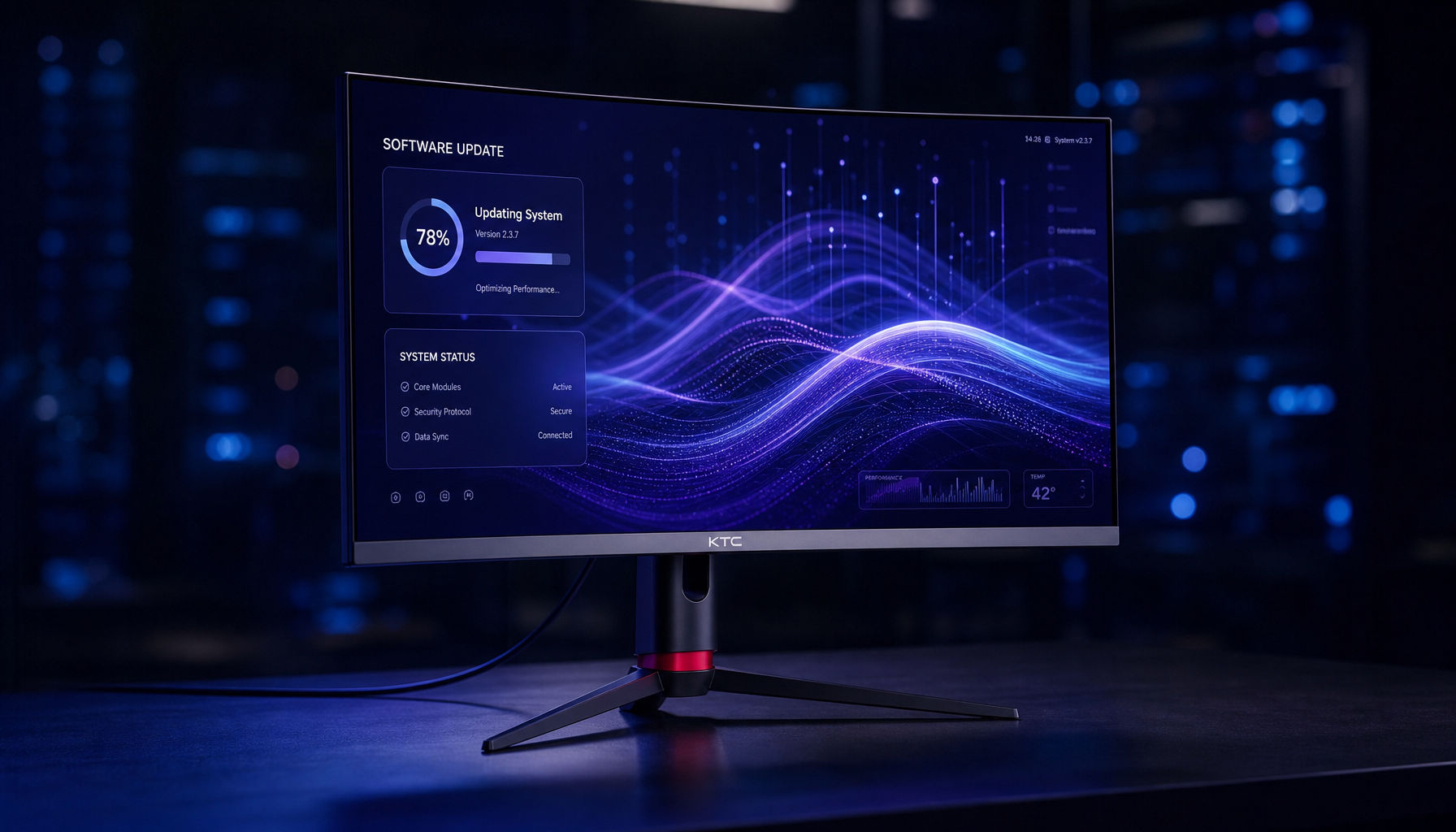
The discount comes from focusing on the display hardware itself. Factory-direct models often ship with more basic on-screen display (OSD) menus that feel dated compared with polished desktop control apps from legacy brands. Firmware updates tend to be less frequent, so compatibility quirks with new Mac chips may persist longer.
Power delivery is another practical boundary. The H27P3 provides 65W USB-C Power Delivery. This suffices for most 13- or 14-inch MacBooks during typical productivity loads. However, a 16-inch MacBook Pro under sustained heavy workloads can draw more than 65W, leading to gradual battery drain even while plugged in. As noted in ecosystem discussions around Mac power users, this limitation affects one-cable docking convenience for high-performance laptops.
Don't buy a factory-direct 5K monitor if you need advanced replacement warranties, rely on sophisticated desktop OSD software, require 90W+ charging, or are particularly sensitive to occasional firmware handshake issues. These are the real friction points that separate raw panel value from the complete premium experience. Many users adapt quickly to manual controls, but others find the difference jarring after years with integrated brand ecosystems.
Our guide to ergonomic monitor selection for home offices and productivity monitor buying advice explore related setup considerations that remain relevant regardless of brand tier.
Factory-Direct vs. Premium Brands: Which 5K Path Should You Take?
Choose the factory-direct 5K route when your workflow prioritizes text clarity, color accuracy, and budget efficiency over software integration and premium support. Coders, writers, analysts, teleradiologists, and value-focused Mac users often find the KTC H27P3 delivers the Retina-level sharpness they need at a fraction of the cost. Its 99% DCI-P3 coverage, low Delta E, and 2000:1 contrast ratio support professional creative and productivity tasks effectively.
Stick with premium brands like Apple or LG when your setup demands 96W+ power delivery for a 16-inch workstation, seamless macOS software controls, advanced on-site warranty replacement, or the reassurance of frequent firmware updates. These conveniences carry real value for certain power users even if the underlying panel technology overlaps significantly.
A practical self-check framework includes:
- Do you primarily need crisp fonts and integer scaling for long reading sessions? → Factory-direct 5K is usually the stronger value.
- Will you run demanding software on a 16-inch MacBook Pro that exceeds 65W sustained draw? → Premium options with higher power delivery reduce friction.
- Is your tolerance for basic OSD menus and depot warranty low? → A branded model may prevent regret.
The KTC 27" 5K Office Monitor (H27P3) represents a strong fit for the first group. For broader options, explore the Office Monitor collection or 27-inch Monitors. Additional reading on subpixel layout effects on text clarity, Delta E for creative work, and verifying monitor calibration can help fine-tune any choice.
Ultimately, vertical integration arbitrage makes high-resolution professional displays accessible to more users. The right path depends on whether the hardware savings outweigh the software and support differences in your specific environment.
FAQs
Are factory-direct 5K monitors using the exact same panels as premium brands?
While many OEM suppliers produce panels that meet similar technical specifications, final calibration, firmware implementation, and quality control processes differ between brands. Factory-direct models prioritize cost-efficient production; premium names often apply additional factory tuning and ongoing software support. Always verify real-world reviews for your intended applications rather than assuming pixel-for-pixel identity.
How does 5K resolution improve productivity on a Mac compared with 4K?
5K at 218 PPI enables perfect 2x integer scaling with zero interpolation artifacts, delivering sharper text and UI elements than the fractional scaling typically required by 27-inch 4K displays. This reduces eye strain during extended coding, document review, or design sessions and lowers GPU overhead on M-series chips. The difference becomes noticeable in small font rendering and fine interface details.
What warranty and support differences should I expect with a factory-direct monitor?
Factory-direct models generally use return-to-depot or mail-in warranty service rather than advanced on-site replacement programs offered by some premium brands. Firmware update frequency is often lower, and dedicated desktop control software is rarely available. These factors reduce cost but may increase downtime or manual configuration effort if issues arise.
Is 65W Power Delivery sufficient for a MacBook with a 5K monitor?
65W works well for 13- and 14-inch MacBooks during normal productivity workloads. However, 16-inch MacBook Pro models under heavy CPU/GPU load can exceed this, causing slow battery drain while connected. Test your specific usage pattern; users who frequently push sustained high power may need a monitor or dock with 90W+ delivery for true one-cable convenience.
How can I tell if a budget 5K monitor is suitable for professional creative work?
Look beyond resolution to measured color gamut (aim for 98%+ DCI-P3), Delta E values under 2, and contrast ratio. Check user reports on uniformity, firmware stability with your OS version, and return policy flexibility. A factory-direct model can deliver excellent hardware value for color-critical tasks if you are comfortable calibrating and managing the display manually.
Does vertical integration affect long-term reliability of the monitor?
Vertical integration primarily influences cost structure and speed of component sourcing rather than inherent durability. Reliability depends on component quality, thermal design, and quality control at the factory. Established OEMs like KTC have decades of manufacturing experience supplying major brands, which can offset concerns about newer direct-to-consumer models, but individual failure rates still vary by specific product and usage conditions.