Uniformity determines whether HDR looks rich and consistent or patchy and distracting. When brightness, color, or black level drift across the panel, the screen loses the clean depth HDR is meant to deliver.
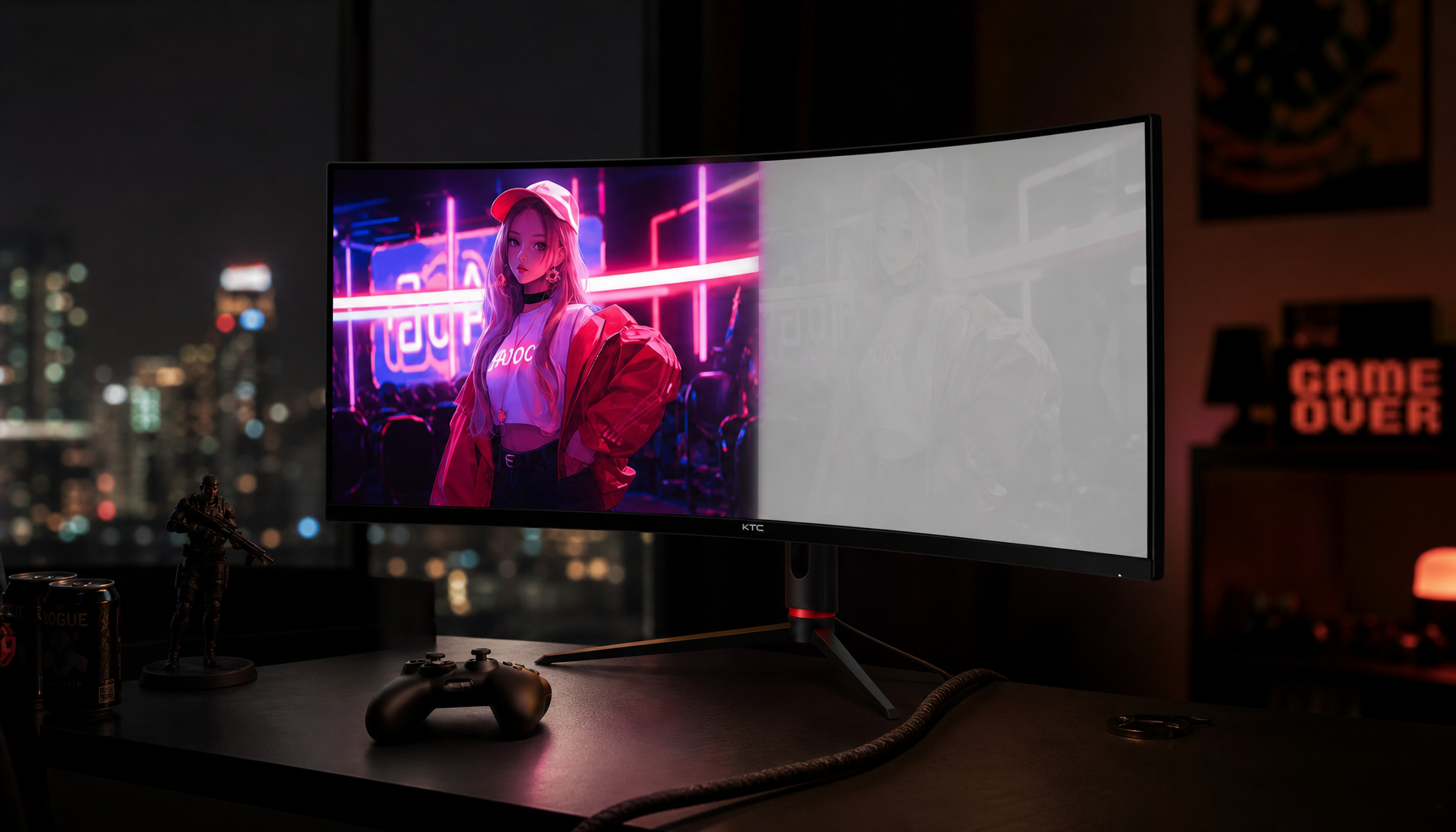
Do the corners of a dark game look hazy while the center stays crisp, or does a gray spreadsheet seem to change tone as you scan it? A simple white, gray, and black test in a dim room can expose corner glow, tint drift, and cloudy patches before they ruin a movie night or a color pass. You will know what those flaws mean, how they change HDR, and what to check before you buy or keep a display.
What display uniformity means
Uniformity is how evenly a monitor holds brightness and color from the center to the edges and corners. Darker corners, brighter hotspots, cloudy gray patches, or color tint shifts are common signs of poor uniformity.
In everyday use, these flaws can be easy to miss at first. Once HDR content starts pushing bright highlights against deep shadows, unevenness becomes much easier to see because the panel has less room to hide its weak spots. If the center of a screen holds 120 nits and a corner slips to 100 nits, that 20-nit gap is enough to make the same gray menu or night scene feel like it is spread across two different displays.
Why HDR exposes uneven panels faster
HDR raises the bar because it is not just brighter. It changes how brightness and color are mapped, which means the display has to keep shadows, midtones, and highlights organized across the whole panel at once. KTC’s HDR10 vs DisplayHDR breakdown gets the key distinction right: HDR10 is the signal format, while DisplayHDR is the monitor’s performance tier.

That matters because a monitor can accept the right HDR signal and still look uneven if the panel itself is not consistent. Tone mapping can adapt content to a display’s limits, but it cannot erase a brighter strip on one edge or a dull corner that keeps stealing attention. The result is usually a less convincing HDR image, with highlights feeling localized instead of spread naturally across the scene.
PC behavior adds another layer. HDR mode only for HDR content remains the practical rule for most desks, because SDR apps and desktop work are not designed to live in HDR all day. Desktop tone mapping may already be doing a lot of work before the image ever reaches the panel. If the panel is uneven on top of that, the flaw becomes even more obvious.
Where you notice it first
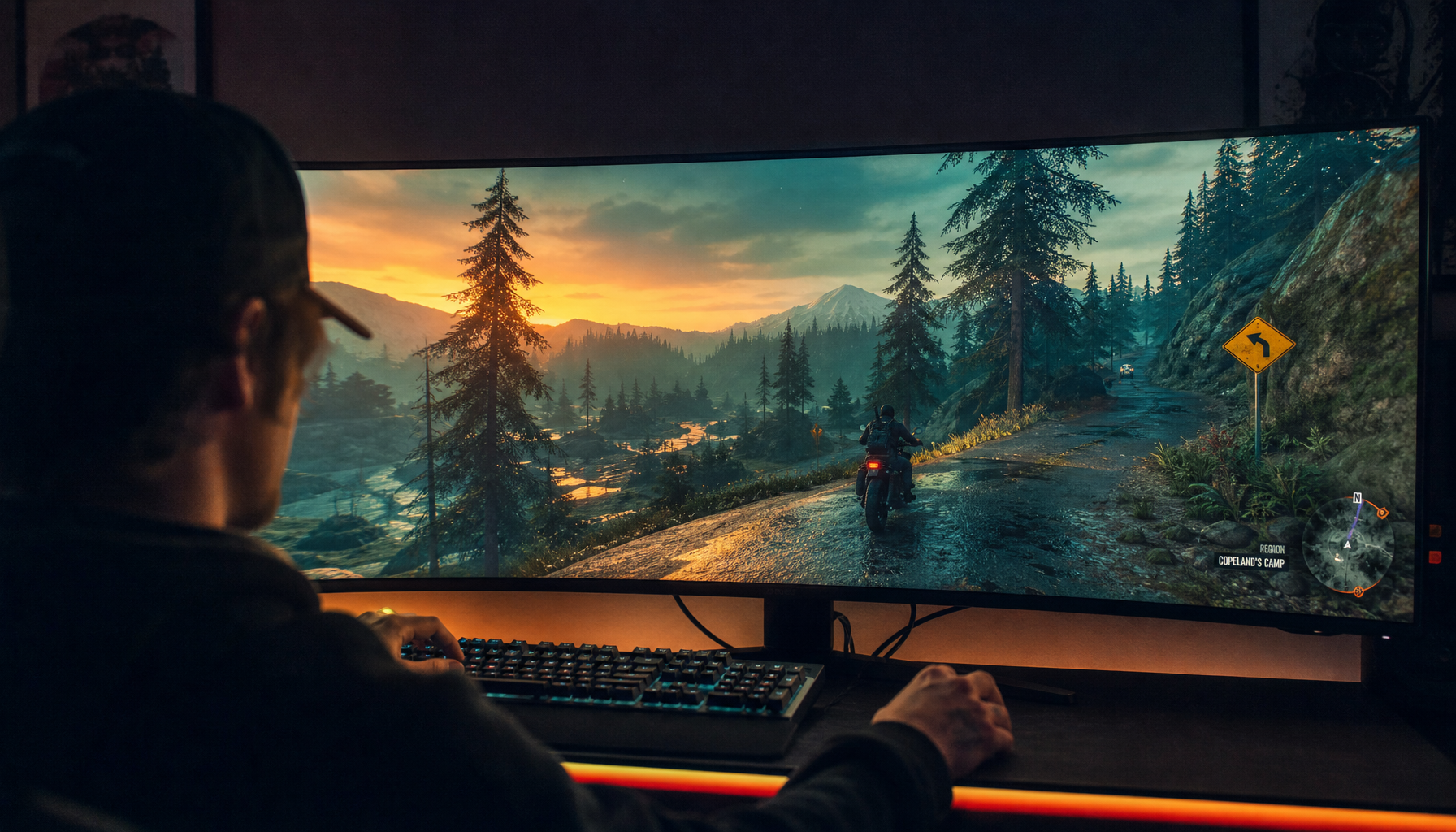
Uniformity issues are easiest to spot in scenes that remove visual clutter. Flat gray backgrounds, black loading screens, and dark movie shots make the uneven parts stand out because there is nothing else competing for your eye. KTC’s guidance on uniformity issues in applications matches real-world use: spreadsheets, word processors, dark-mode apps, and low-light games are where flaws show up first.
Scene or task |
What you notice |
Why it stands out |
Slight tint or brightness drift |
Large flat areas make panel differences obvious |
|
Dark game or movie scene |
Glow, clouding, or brighter corners |
Dark content gives the eye fewer distractions |
HDR highlight on a dim background |
Bright detail looks uneven across the frame |
The panel is trying to hold extremes at once |

That is why HDR can feel amazing in one title and mediocre in another. A display with good uniformity keeps the image coherent even when the content swings from deep shadow to intense highlight. A weaker panel makes those same transitions feel scattered.
The tradeoffs buyers should care about
The HDR monitor market keeps growing, and the global HDR monitor market was valued at $8.4 billion in 2025 and is projected to reach $19.7 billion by 2034. More buyers are moving into HDR, which raises the value of evenness, not just peak brightness.
That creates a practical tradeoff. Uniformity compensation can smooth out visible variation, but it may reduce usable contrast or lock down some controls. In other words, you may get a more balanced image at the cost of a little flexibility. For gamers, that trade can be worth it if the screen becomes more readable. For creators, it is often better to favor the most even panel you can afford, because a reference display that shifts across the screen can lead to wrong edits and more rework.
How to evaluate a monitor before you trust HDR
The simplest check is still the most useful. Open full-screen white, gray, and black images, then look at them in both normal room lighting and a dim room. If the corners stay visibly different when the content is plain and static, the problem is likely the panel rather than the app.

Then test the same display with real HDR content. A dark game scene, a night landscape, or a film with bright specular highlights will tell you more than a spec sheet ever will. If the highlights feel punchy in the center but weak near the edges, or if a neutral gray shifts tone as you move your eyes across the screen, that monitor is not giving you a uniform HDR experience.
For PC users, the cleanest setup is usually SDR for everyday work and HDR only when the content actually deserves it. That keeps desktop apps readable, avoids unnecessary mode switching, and lets HDR do what it is good at instead of forcing it into places where it does not belong.
What matters most in practice
Uniformity is the difference between a screen that looks impressive and a screen that looks trustworthy. HDR depends on evenness because the format lives on contrast, shadow detail, and clean highlight placement across the whole panel.
For gaming, that means deeper immersion and fewer distractions. For office work, it means cleaner gray backgrounds and less eye fatigue. For creative work, it means better judgment and fewer expensive corrections later. Buy for evenness first, peak brightness second, and HDR will hold together when it matters.