Display contrast ratio affects whether shadows stay readable and highlights keep detail. For most uses, native or static contrast matters more than inflated dynamic contrast.
Why Contrast Ratio Changes What You Can See
A contrast ratio compares peak white against deepest black; a 1000:1 display can make white 1,000 times brighter than black under the stated test method, according to the basic definition of contrast ratio. The wider that gap, the more room the display has to separate dark gray from black and bright gray from white.
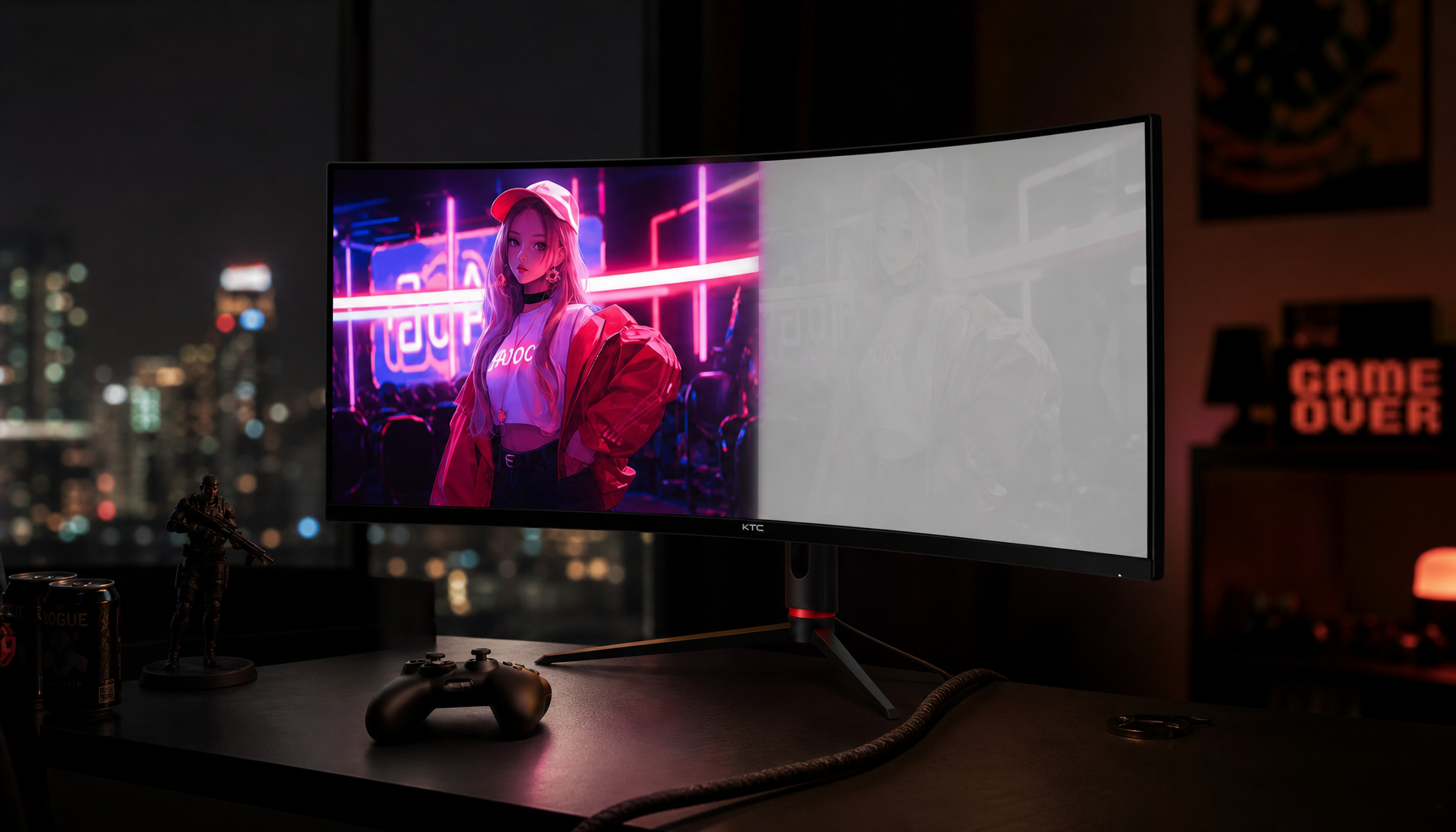
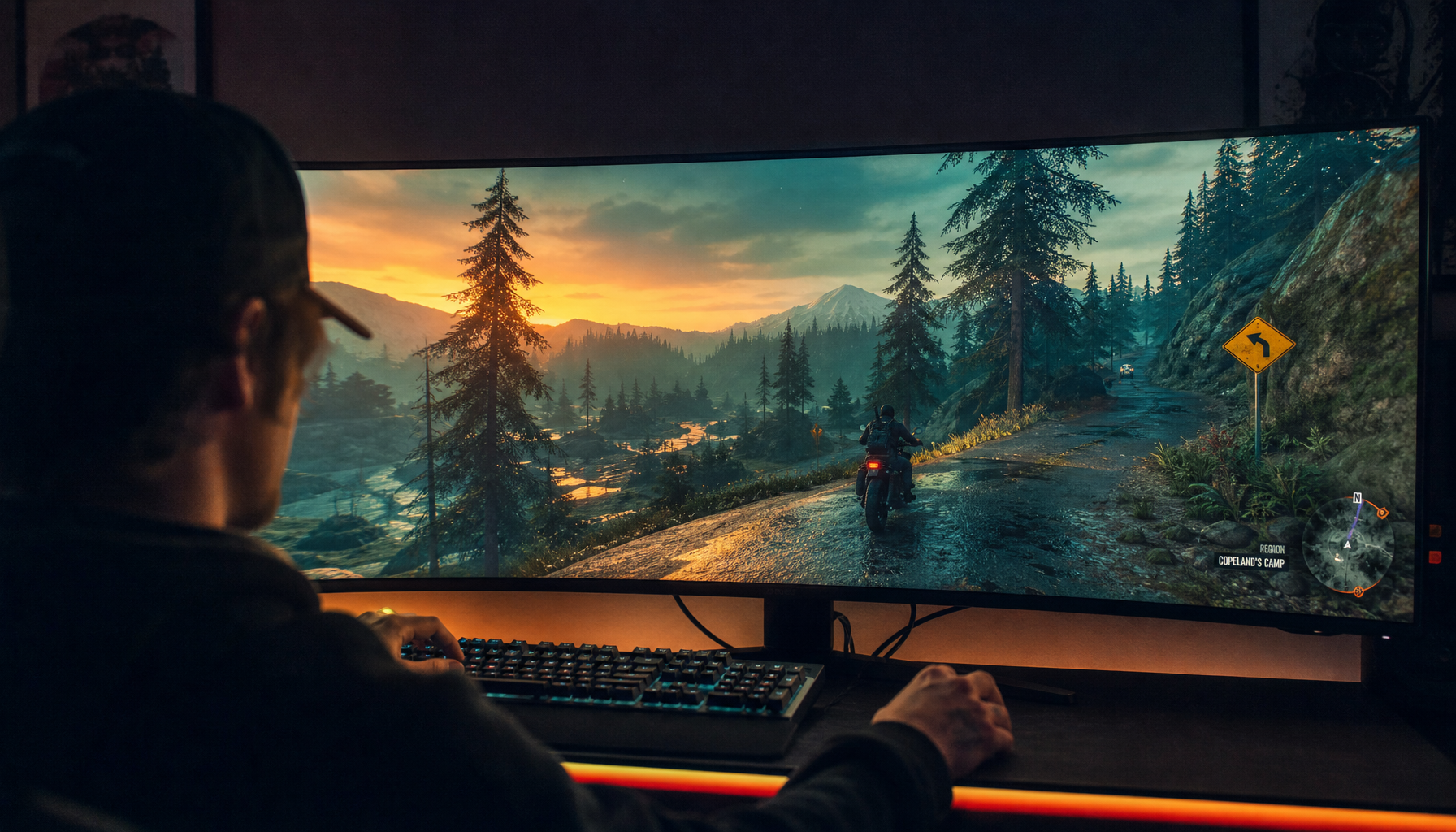
In a dark game level, low contrast can turn a doorway, jacket, and background wall into one flat patch. Higher contrast gives those near-black tones more separation, so edges, texture, and enemy silhouettes are easier to read.

The same happens at the bright end. Clouds, reflections, white UI panels, and specular highlights need tonal spacing too. If the panel clips too aggressively, “bright” becomes a single white blob instead of layered detail.
Shadow Detail: Black Level Matters More Than Big Numbers
For shadow visibility, black level is the foundation. A monitor that reaches 300 nits white with a 0.3-nit black level lands at 1000:1; if black drops to 0.1 nit at the same white level, it reaches 3000:1, and dark scenes gain more depth.
That is why VA panels often feel more cinematic than standard IPS panels in dim rooms. A typical IPS office monitor around 1000:1 can look clean for documents, but a VA gaming monitor around 3000:1 usually gives darker game environments stronger depth.

OLED goes further because individual pixels can switch off, creating extremely deep blacks. The tradeoff is that brightness, burn-in management, price, and text rendering still matter, especially if the display is used all day for spreadsheets, dashboards, or static UI.
Highlight Detail: Contrast Is Not Just Brightness
Brightness helps a screen fight daylight and office glare, but it does not automatically preserve highlight detail. Contrast determines how well the display separates bright tones before they merge into white.
This is especially important for HDR games, video editing, and high-gloss product imagery. A high-brightness display with weak black levels can still look washed out, while a balanced display with strong native contrast can make headlights, sunlit edges, and metallic reflections feel more controlled.

Dynamic contrast can help some scenes by dimming or boosting the backlight, but it may also change the image over time. Since static contrast ratio reflects bright and dark areas within the same image, it is the more reliable spec for mixed scenes like a night city with neon signs.
Static, Dynamic, and Ambient Contrast in Real Rooms
Static contrast is the number to prioritize when comparing monitors. Dynamic contrast often measures different frames or backlight states, so million-to-one claims rarely describe what you see in a real desktop, game HUD, or editing timeline.
Ambient contrast is the practical reality check. Room light reflects off the screen and lifts black levels, which reduces visible depth; display specialists note that ambient light can dramatically lower perceived contrast versus lab conditions.

Small contrast differences may be hard to notice in bright rooms, while the same differences can be obvious during dark gaming or movie viewing.
Choosing the Right Contrast for Your Display
For office productivity, coding, and general browsing, a reliable 1000:1 static contrast ratio is a solid baseline. It keeps black text crisp, white backgrounds controlled, and UI panels readable without demanding premium hardware.
For immersive gaming and media, target around 3000:1 or better when possible. That level gives dark maps, space scenes, horror games, and cinematic cutscenes more depth without relying only on brightness.
For HDR-focused creative work, OLED, mini-LED, or high-quality local dimming becomes more compelling because both black depth and highlight control matter. Verify measured performance from trusted reviews when available, because manufacturer contrast claims are not always measured the same way.
- Prioritize native or static contrast over dynamic contrast.
- Match contrast choice to room lighting and screen coating.
- Choose VA or OLED for deeper dark-room immersion.
- Use IPS when color consistency and viewing angles matter more.
- Calibrate brightness, contrast, and gamma before judging detail.