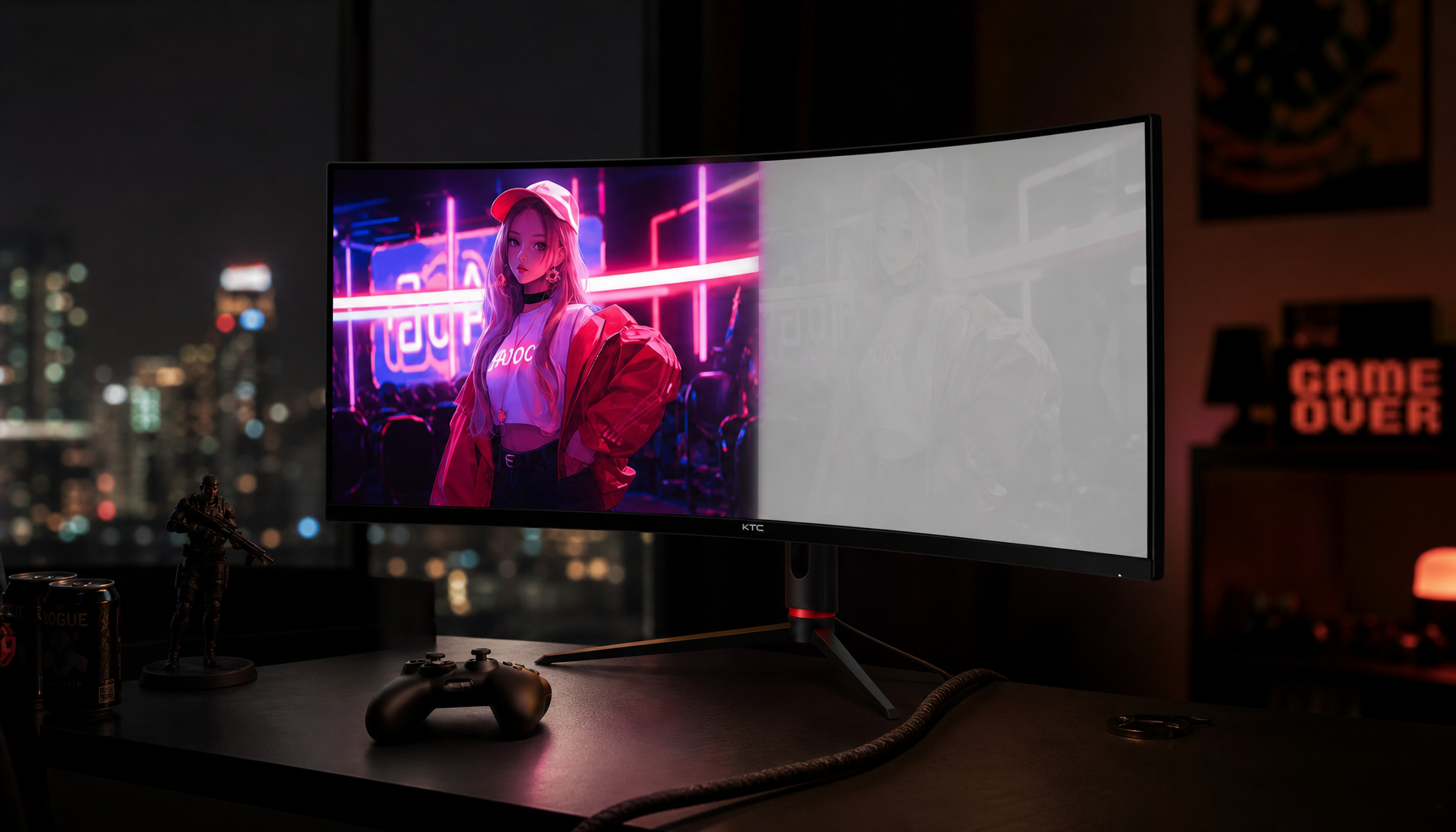
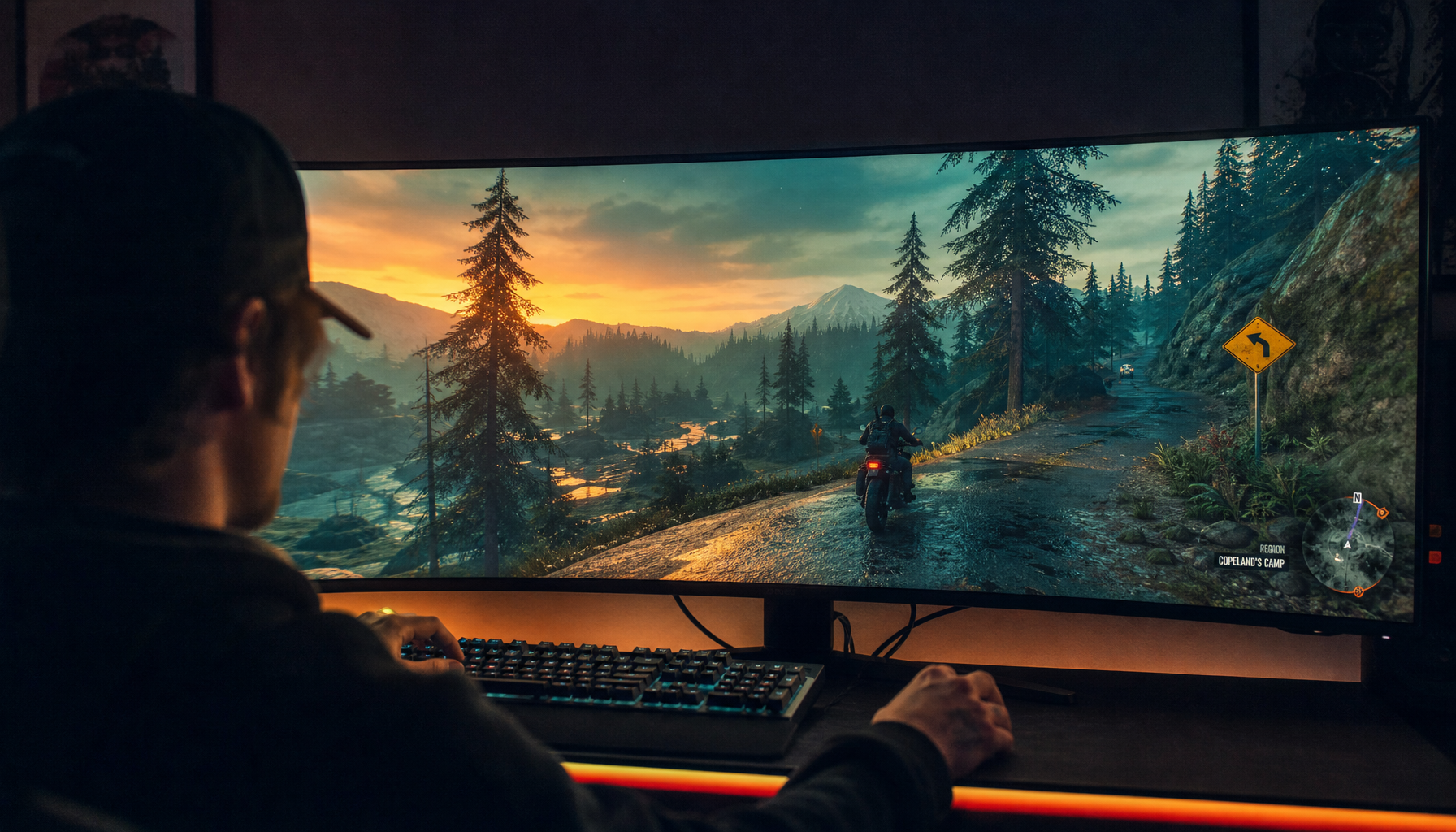
Display contrast ratio changes how bright highlights feel because your eyes judge a sparkle, flash, or reflection against the darkness around it, not just by its nit rating. A lower black level makes the same highlight look cleaner, sharper, and more intense.
Does your new “bright” monitor still make HDR sparks, chrome, sunlight, or game muzzle flashes look flat? In practical screen testing, comparing peak brightness with black level and room glare quickly explains why one 600-nit display can look punchier than another model advertised at 1,000 nits. You’ll learn how contrast, ambient light, panel type, and settings work together so you can choose and tune a screen that actually looks vivid.
Why Contrast Makes Highlights Look Brighter
A display’s contrast ratio is the luminance ratio between its brightest white and darkest black. If a monitor can show a 500-nit highlight while its black level sits at 0.5 nit, the contrast ratio for that range is 1,000:1. If another screen shows the same 500-nit highlight but holds black at 0.05 nit, the ratio becomes 10,000:1. The highlight did not get brighter in raw output, but it feels far more brilliant because the surrounding darkness gives it stronger visual separation.
That is why specular reflections depend so heavily on contrast. A sword glint, wet road, glossy product edge, racing-game brake light, or sun reflection on water is usually a small bright detail against a darker scene. When black levels are elevated, the reflection loses its snap. When blacks stay deep, the same reflection looks more dimensional and more like a real light source.
Brightness Is the Peak; Contrast Is the Punch
Peak brightness tells you how high the display can push a highlight. Contrast tells you how much visual distance exists between that highlight and the dark areas beside it. For HDR gaming and movies, both matter, but they do different jobs.
A 1,000-nit flash on a grayish black background can look less impressive than a 700-nit flash on a near-black background. This is why OLED often looks more dramatic in dim rooms even when some mini-LED LCDs can hit higher short-window brightness. OLED pixels can dim or turn off individually, while IPS LCDs rely on a backlight that can leak through dark areas; that difference is why picture depth often favors OLED when highlights appear in dark scenes.

For office work, the priority shifts. Documents, spreadsheets, dashboards, and browsers are dominated by large bright areas, so sustained brightness and anti-glare behavior often matter more than extreme highlight contrast. A high-contrast OLED can look stunning for HDR, yet an IPS or mini-LED screen may be easier to live with in a bright office because it can hold large white areas more predictably.
Static, Dynamic, and Real-Room Contrast
Not all contrast specs mean the same thing. Static contrast measures bright and dark output at the same time, which better reflects real mixed scenes. Dynamic contrast can compare a bright frame at one moment with a dark frame at another, often producing huge marketing numbers that do not represent a bright highlight inside a dark image.
The problem becomes obvious in HDR. A display may dim its backlight for a dark scene, then raise it for a bright scene, creating a strong dynamic contrast number. But if the image contains a tiny moon, cursor, neon sign, or reflection inside a dark frame, the display must handle both extremes simultaneously. That is where native contrast, local dimming precision, and tone mapping decide whether the highlight looks crisp or smeared.
Spec Type |
What It Suggests |
Practical Risk |
Static contrast |
Bright and dark shown together |
More useful for real images |
Dynamic contrast |
Bright and dark measured across time |
Can inflate expectations |
Ambient contrast |
Contrast under room light |
Best clue for real-world visibility |
Peak brightness |
Short bright highlight output |
May not apply to full-screen work |
Sustained brightness |
Brightness held over time or area |
Critical for productivity |
Ambient Light Can Crush Perceived Contrast
Room light raises the apparent black level of the screen. The display may still be technically capable of deep blacks, but reflected light sitting on the panel turns black into dark gray. A review of digital-device use found that ambient illumination can affect readability, image quality, interaction behavior, and comfort, with bright conditions making screen visibility harder across several device types.

This is why a showroom, office, cafe, or sunny desk can make a premium display feel underwhelming. If a glossy screen reflects a window, your eyes are no longer comparing the highlight against the panel’s true black. They are comparing it against the window reflection, ceiling light, or bright shirt reflected in the glass.
Ambient contrast ratio is especially important for portable smart screens and shared work displays. Ambient contrast ratio describes how contrast holds up in real lighting, where reflected environmental light raises dark areas and reduces perceived depth. A screen that looks incredible in a dim room can lose highlight drama quickly if its coating reflects lamps or daylight.
Specular Reflections Need Local Control
Specular highlights are small, bright, and often surrounded by darker tones. That makes them demanding. On OLED, pixel-level control lets the display place a bright dot beside black with minimal light spill. On mini-LED LCD, local dimming zones brighten behind groups of pixels, so a bright reflection can create a halo if the zone is larger than the highlight.
This does not make mini-LED weak. For gaming, bright-room HDR, and mixed productivity, mini-LED can deliver strong peak and sustained brightness with less concern about static desktop wear. But for star fields, subtitles on black, night racing games, dark RPG scenes, and glossy cinematic highlights, zone count and dimming behavior matter as much as the advertised nit figure.
A simple test is to move a white cursor or small window across a black background in a dim room. If the area around it blooms, the display is adding light where the image should stay dark. That halo reduces the perceived intensity of the highlight because it lifts the surrounding black.

The Eye Comfort Angle
Higher contrast is not only about drama. It can also improve legibility when used responsibly. A 2021 study on display polarity and luminance contrast found that higher contrast was associated with lower visual fatigue in the tested nighttime conditions, with dark mode and high luminance contrast performing well for fatigue measures.
The catch is glare. Very bright highlights in a dark room can feel harsh if the display’s overall tone mapping is aggressive or if your room lighting is poorly balanced. The National Academies discussion of workstation lighting notes that glare can reduce visibility or cause discomfort when bright sources sit too strongly against the viewer’s adapted luminance. In plain terms, a display should create contrast inside the image, not force your eyes to fight the room.
Practical Buying Advice
For HDR gaming and cinematic immersion, prioritize true black depth, measured peak brightness, clean tone mapping, and local dimming quality. A 32-inch OLED can make highlights feel exceptionally intense because the black floor is so low, but buyers should consider static desktop use, taskbars, HUDs, and long work sessions. Current OLED monitor recommendations note that burn-in risk is not eliminated, so pixel shifting, timeouts, and varied content still matter.
For office productivity, choose stable full-screen brightness, low reflectance, good text clarity, and a coating that matches your room. A matte 400-nit productivity display may beat a glossy 500-nit portable screen beside a window because the matte surface keeps blacks from being washed out by reflections. Glossy can look richer in controlled lighting, but anti-glare is usually more reliable for travel, hotel desks, shared offices, and bright apartments.
For competitive gaming, do not chase contrast alone. Shadow visibility, response time, refresh rate, and input behavior matter. Too much contrast enhancement can crush dark detail, hiding enemies or UI cues. Use the monitor’s accurate or gaming HDR mode, then adjust in-game HDR calibration to the screen’s real capability rather than its marketing badge.
How to Tune Your Monitor for Stronger Highlights
Start with the room. Move lamps out of the screen’s reflection path, avoid placing the display directly opposite a window, and reduce bright objects behind you. Lowering reflected light often improves perceived contrast more than raising brightness.
Next, set brightness for the task. For SDR productivity, a moderate level is usually more comfortable than maximum output. For HDR, enable the display’s HDR mode, use accurate tone mapping when available, and avoid dynamic contrast settings that make midtones pump or highlights clip.
Finally, judge with real content. Use a dark game scene with small lights, a movie scene with candles or metal reflections, a spreadsheet in dark mode, and a bright webpage. If highlights pop without halos, text stays readable, and your eyes do not feel pulled between glare and shadow, the contrast system is doing its job.
Bottom Line
Contrast ratio affects perceived highlight brightness by controlling the dark side of the image. Peak nits create the light, but deep blacks, low reflections, good local control, and sensible tone mapping create the impact. For a display that feels immersive and reliable, buy the screen that preserves contrast in your actual room, not the one with the biggest number on the box.