Display age affects contrast in two main ways: OLED pixels can age unevenly and raise visible blacks around static content, while LCD and IPS displays usually lose brightness more gradually as the backlight wears.
Does your once-punchy gaming monitor now make night maps look gray, or does your office screen feel flatter after years of spreadsheets and browser tabs? With a simple dark-room check, brightness reset, and static-image inspection, you can usually tell whether the problem is panel wear, lighting, or settings in under 15 minutes. Here are the practical signs to watch for, what each display type does as it ages, and when an upgrade is actually worth the money.
Why Black Level Changes Matter
Black level is the floor of your image: how dark the display can make black content appear. Contrast is the visible distance between that floor and the brightest white or highlight the screen can produce. When black level rises, a monitor loses depth even if the spec sheet still looks impressive.
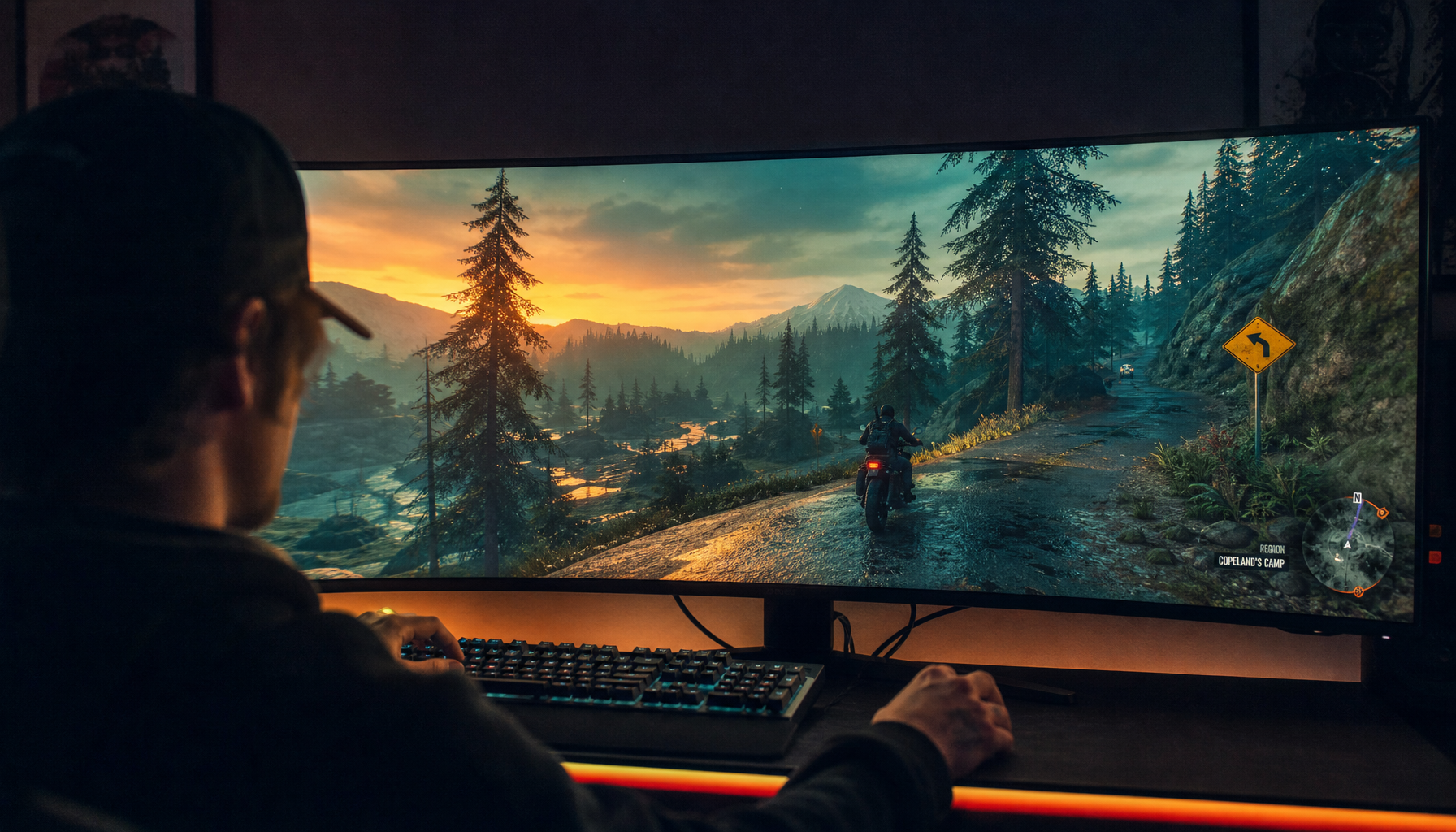
For gaming, this shows up as washed-out caves, gray loading screens, weak HDR impact, and enemy silhouettes blending into the background. For office productivity, it appears as lower perceived crispness in dark mode, duller charts, and more fatigue when text lacks separation from the background. For portable smart screens, it can be even more obvious because changing room light, battery brightness limits, and glossy coatings all affect perceived contrast.
The key is that not every “worse black” problem is age. A monitor can look degraded because of sunlight, matte coating haze, an incorrect black-level setting, HDR tone mapping, or a GPU output mismatch. True aging is slower and usually follows the physics of the panel.
The Main Aging Paths by Display Type
OLED: Excellent Blacks, Uneven Wear Risk
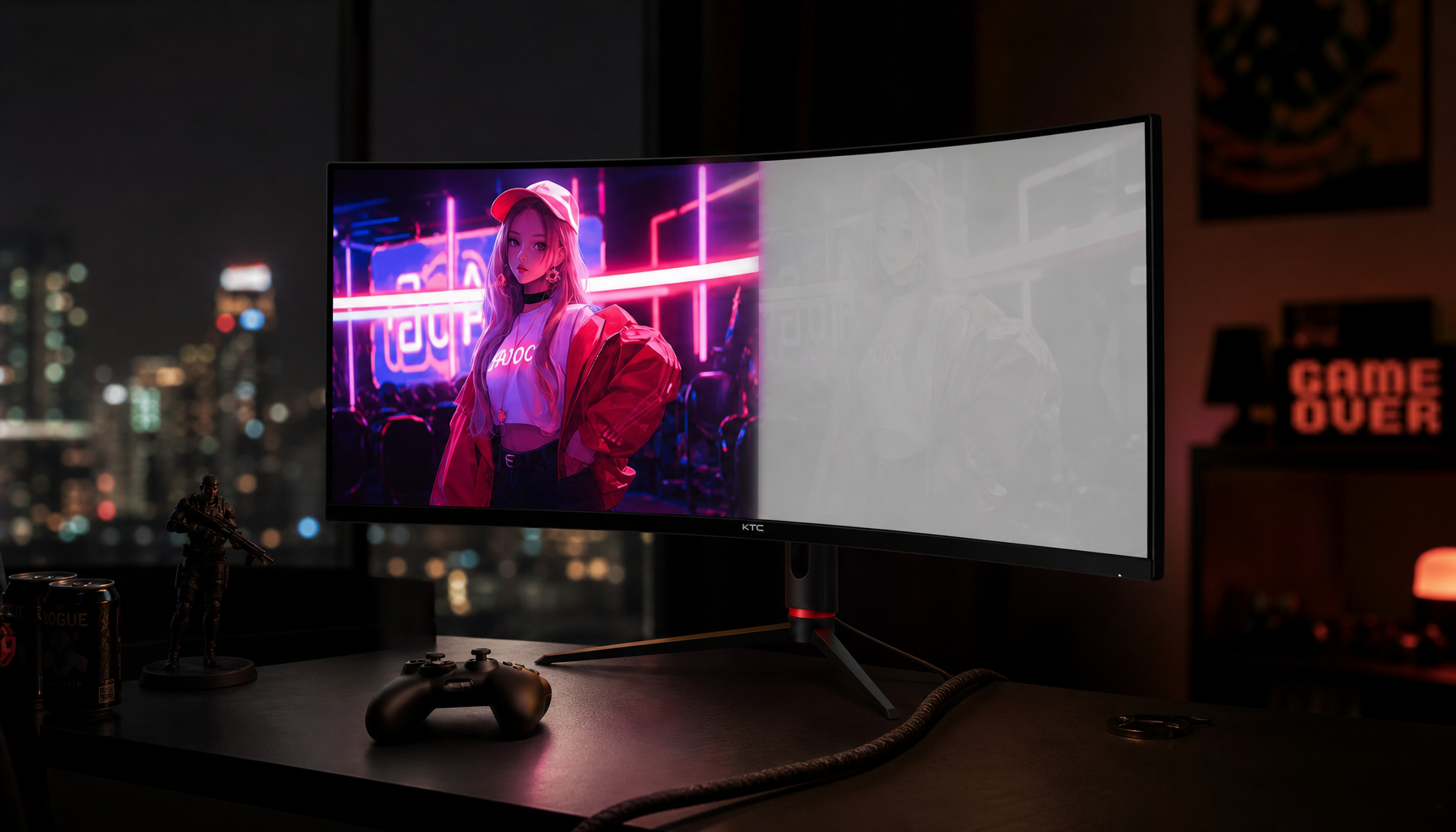
OLED is the contrast champion because each pixel emits its own light and can turn fully off, producing true black in ideal viewing conditions. That pixel-level control is why OLED feels so immersive in dark games, HDR video, and cinematic content. The tradeoff is that OLED uses organic materials, and static UI elements can age parts of the panel faster when brightness, heat, and cumulative hours stack up.

The practical symptom is not that the whole screen suddenly becomes gray. More often, you see faint taskbar outlines, HUD shadows, browser tab bands, or center-screen wear on gray test screens before you notice anything in real content. A long-use OLED monitor account described 2,656 hours of full-time use with little to no burn-in visible during normal gaming and desktop work, while faint marks started to appear on grayscale test images. That is exactly how OLED aging tends to appear: subtle first, then workload-dependent.
OLED is still a strong choice when your content varies. A gamer who alternates between RPGs, shooters, video, and desktop use at moderate brightness may get years of premium contrast. A stock trader, designer with fixed tool palettes, or office user running static dashboards for eight hours a day is asking the panel to age unevenly in predictable zones.
IPS and Other LCDs: Backlight Drift, Glow, and Lower Native Contrast
IPS displays are reliable workhorses. They use a backlight shining through liquid crystals, which gives them stable brightness, good viewing angles, and strong productivity value. The aging pattern is usually gradual backlight dimming rather than permanent logo burn-in. A general screen-technology overview notes that typical LCD monitors can last about 50,000 to 70,000 hours, which helps explain why office LCDs often remain usable long after they stop looking fresh.
The contrast limitation is built in from day one. IPS cannot shut pixels off like OLED, so blacks are filtered backlight rather than true absence of light. Over time, if the backlight dims, the white point and brightness ceiling can fall, making the image feel less punchy. But black level may not improve with that dimming, so the usable contrast can still feel weaker.
IPS also has a visibility issue that owners often mistake for age: glow. If corners brighten when you shift your head or sit too close to a large panel, that is usually viewing-angle behavior, not panel decay. On a 32-inch IPS screen, moving your eyes closer to the center line or sitting a little farther back can reduce the perceived glow immediately without changing the monitor at all.
Mini-LED and QLED LCDs: Better Control, More Complexity
Mini-LED is still an LCD architecture, but it uses many small backlight zones to dim darker areas more aggressively. That can deliver much stronger perceived contrast than a regular edge-lit IPS display, especially in HDR. Some premium Mini-LED displays can reach very high contrast in controlled scenes, and Mini-LED backlighting is often positioned as a bridge between LCD durability and OLED-like punch.
The downside is blooming. A white cursor on a black background may have a halo because the dimming zone is larger than the object. Aging can also affect zone brightness uniformity over time, though the more common user complaint is algorithm behavior rather than sudden degradation.
QLED is often misunderstood. It improves LCD color and brightness using quantum dots, but it does not automatically mean OLED-level blacks. If the backlight system is basic, black level is still limited by LCD light leakage.
How Ambient Light Can Fake Contrast Degradation
Before blaming age, control the room. Ambient illumination can temporarily reduce your ability to read, perceive, and interact with screens, and high ambient light is documented as a situational impairment for digital devices. In plain terms, sunlight or a bright overhead fixture can raise perceived blacks, flatten contrast, and make a healthy monitor look tired.
A useful office target is moderate, indirect light. The research notes a practical comfort range around 200 to 500 lux across multiple media types, while very bright conditions above about 1,000 lux can severely hurt text detection and visibility. For a monitor buyer, that means a glossy OLED in a sunlit room may look worse at noon than an IPS display with strong brightness and anti-glare coating, even if the OLED looks far better in a dark room at night.
Here is a quick field test before calling a panel degraded: open a full-black image in a dark room at night, turn off dynamic contrast, set brightness to your normal level, and check whether the blacks are uniformly elevated or only affected by reflections. Then repeat with a dark gray image. If the problem changes dramatically with room light, placement and coating are the issue. If faint static shapes remain in the same positions, panel wear is more likely.

Black Level, Contrast, and Calibration Are Not the Same Thing
A monitor can have deep blacks and still show poor shadow detail if its gamma is wrong. It can also have average blacks but excellent practical usability if its grayscale tracking, brightness, and viewing conditions are controlled. For creators, this distinction matters because perceived richness is not the same as accuracy.
Color-accuracy guidance for IPS and OLED notes that calibration is essential for both technologies, with IPS often valued for predictable calibration and OLED favored for HDR, shadow control, and cinematic contrast. In real work, that means a five-year-old IPS monitor may still be perfectly serviceable for office productivity after recalibration, while an OLED with visible uneven wear may be less trustworthy for interface design or color grading even if it still looks spectacular in games.
A simple calculation helps frame expectations. If an office LCD is used eight hours per workday, five days per week, it logs about 2,080 hours per year. At that pace, 10 years is roughly 20,800 hours, well below the broad 50,000-to-70,000-hour LCD lifespan range cited in the screen-technology notes. That does not mean it will look factory-new for a decade, but it explains why many LCDs age gracefully enough for productivity.
Pros and Cons as Displays Age
Display Type |
Aging Strength |
Aging Weakness |
Best Long-Term Fit |
OLED |
True blacks and exceptional contrast when healthy |
Burn-in, image retention, uneven subpixel aging |
Premium gaming, HDR video, varied content |
IPS LCD |
Stable, affordable, reliable for static work |
Lower native contrast, IPS glow, gradual backlight dimming |
Office work, coding, design, long daily sessions |
VA LCD |
Better native black levels than many IPS panels |
Slower dark transitions can cause smearing |
Media use, general gaming, contrast-focused buyers |
Mini-LED LCD |
High brightness and strong local dimming |
Blooming and zone artifacts |
HDR gaming, bright rooms, OLED-risk avoidance |
Flexible placement and travel use |
Brightness limits and reflections can dominate perceived contrast |
Hybrid work, second-screen productivity |

Practical Ways to Slow Contrast Degradation
For OLED, the goal is to reduce repeated stress in fixed areas. Keep brightness moderate for desktop use, use dark or auto-hiding taskbars, let pixel-shift and panel-refresh features run, and avoid pausing a static game HUD for long stretches. The most useful lesson from long-term OLED testing is not that burn-in disappeared; it is that mitigation delayed visible impact during normal use.
For IPS and LCD monitors, protect the backlight and preserve calibration. Avoid running maximum brightness all day unless the room demands it. Use a monitor mode close to sRGB for normal productivity, set a comfortable white point, and recalibrate if color or shadow detail starts to drift. If you rely on accurate visuals for photo work, UI design, or product reviews, schedule a quick check every few months instead of waiting until the display looks obviously wrong.
For any display type, fix the environment first. Move the monitor away from direct window reflections, use bias lighting behind the screen, and keep strong overhead lights from hitting the panel face. Screen exposure also affects comfort; research on computer screen use notes that many office workers spend more than six hours per day at a computer, and screen light can contribute to eye strain and circadian disruption, especially in dim evening settings. Better contrast management is not just about image quality; it helps the screen feel easier to use for long sessions.

When Should You Replace the Display?
Replace an OLED when burn-in or uneven wear is visible in your real content, not just in extreme test patterns, and especially if it affects work you bill for or competitive visibility. Replace an IPS or LCD when maximum brightness no longer handles your room, calibration cannot restore acceptable grayscale, or dark scenes have become too flat for your gaming or media expectations.
Do not replace a monitor just because a black screen looks imperfect in a dark room. Large LCD panels often show glow or backlight variation even when new. Also avoid judging from a single app. A software scaling issue, HDR toggle, GPU range mismatch, or driver reset can mimic display aging. A forum case can be a useful reminder that a monitor change may coincide with software behavior problems without proving contrast degradation.
FAQ
Does Every Monitor Lose Contrast Over Time?
Every display ages, but the visible effect depends on technology and workload. OLED can lose uniformity through uneven pixel wear, while LCDs more often lose brightness gradually as the backlight ages.
Is OLED Still Safe for Gaming Monitors?
OLED is a strong gaming choice when you want deep blacks, fast response, and immersive HDR. It is less ideal if your games or work keep the same bright HUD, taskbar, or dashboard fixed on screen for many hours every day.
Why Does My Monitor Look Worse During the Day?
Room light can raise perceived black levels and wash out contrast. Before blaming display age, test the screen at night or with indirect lighting and compare the same dark scene.
Can Calibration Restore Black Levels?
Calibration can improve gamma, grayscale, and shadow detail, but it cannot reverse OLED burn-in or physically fix LCD backlight wear. It is still worth doing because many “contrast” complaints are actually settings or tone-response problems.
Aging does not affect every screen the same way. Choose OLED when immersive blacks and motion matter most, choose IPS or Mini-LED when reliability and static productivity matter more, and judge degradation under controlled lighting before spending upgrade money.