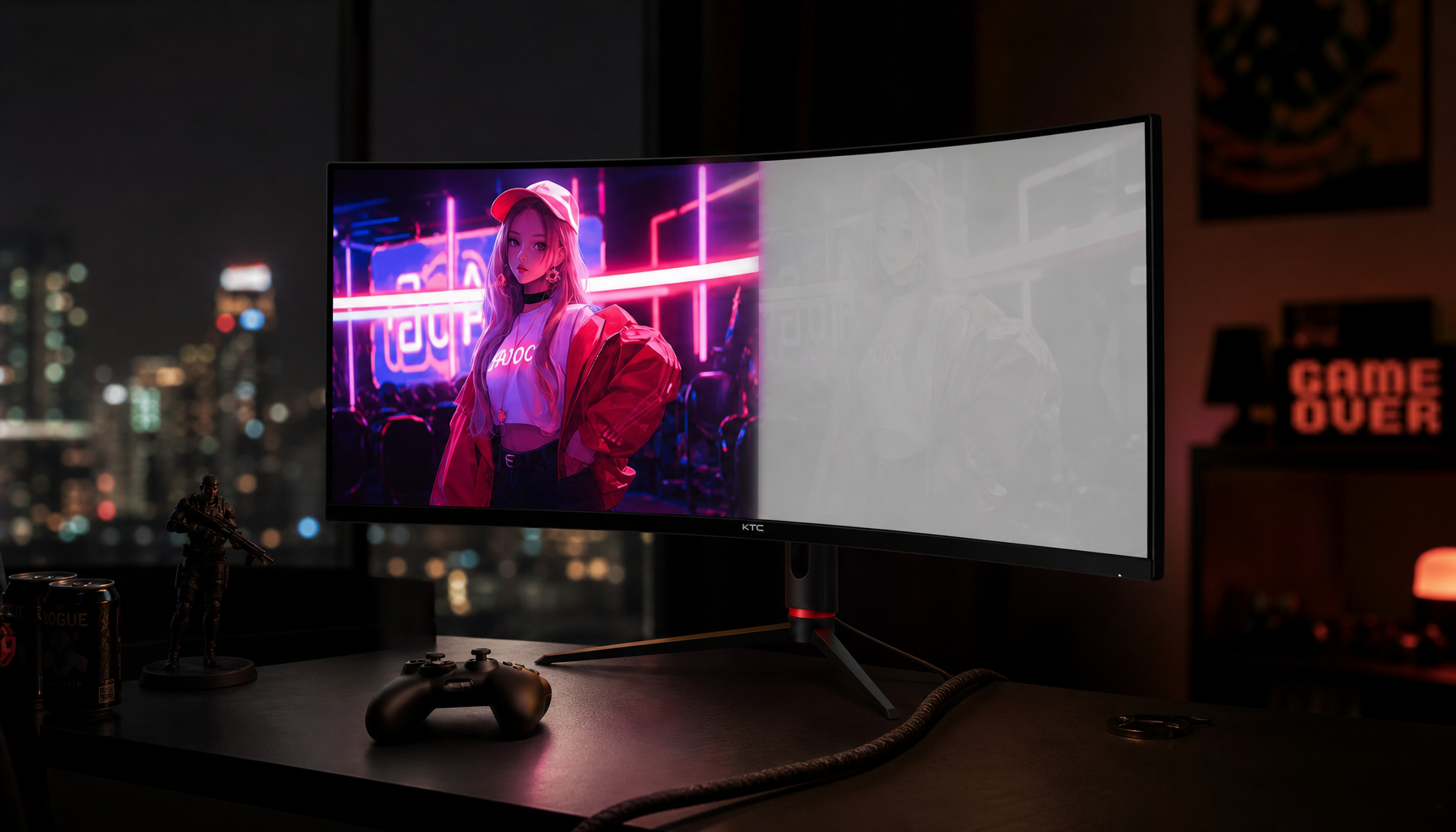
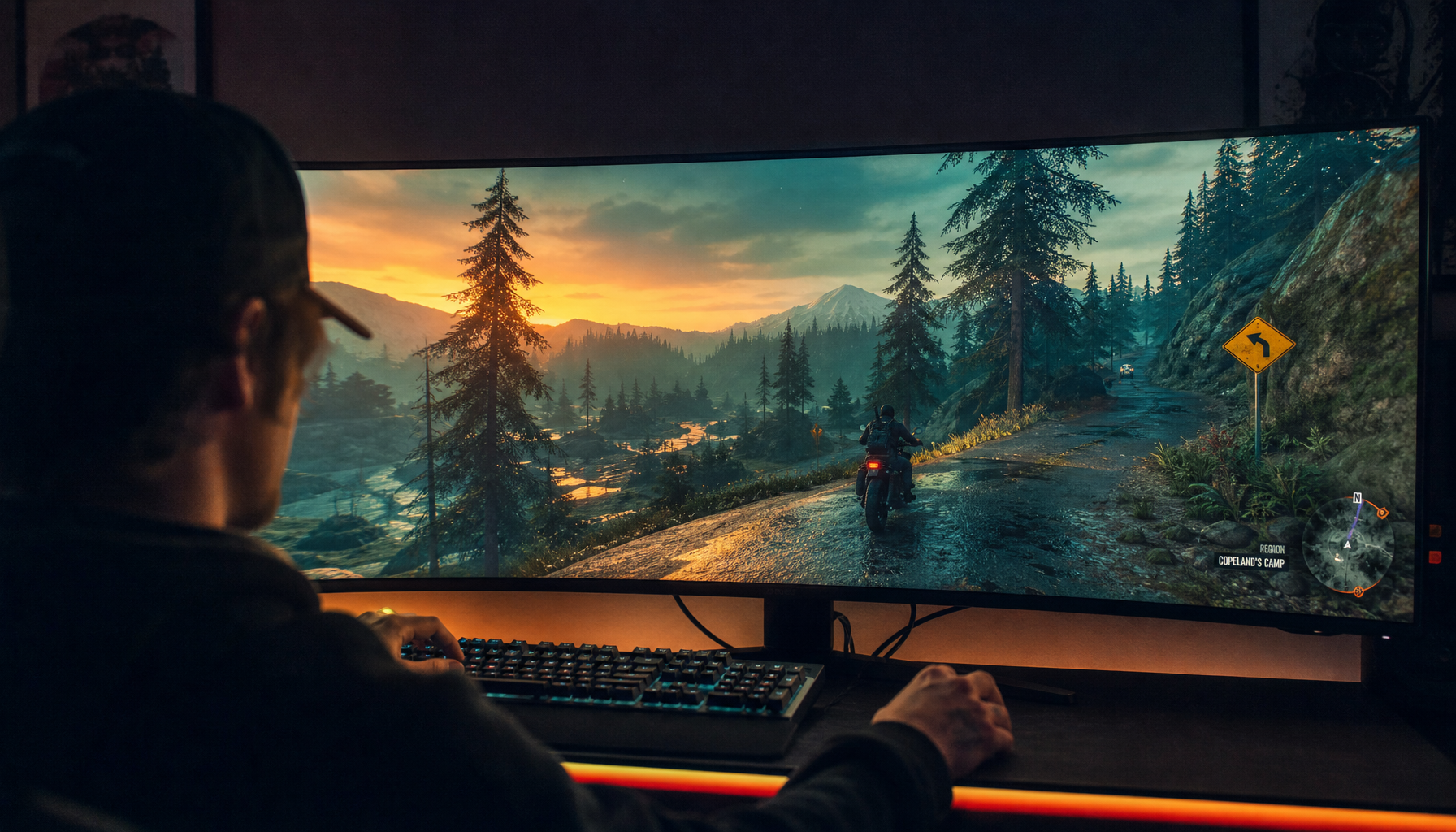
Cinema mode usually makes dimming zones slower, deeper, and more shadow-preserving; Game mode makes them faster and more visibility-driven; Standard mode often creates a brighter everyday compromise that can exaggerate halos or gray blacks.
Ever notice a bright subtitle lighting up half a dark scene, or an enemy disappearing into shadow right when you need the shot? A practical preset check can reveal whether your monitor is prioritizing black depth, response speed, or everyday brightness before you touch advanced settings. You will leave with a clear way to choose Cinema, Game, or Standard based on what you actually do on the screen.
Why Dimming Modes Change More Than Brightness
On Mini-LED and full-array LCD displays, dimming modes change how the backlight zones react to the image. The LCD panel still forms the picture, but the backlight decides how much light is pushed through each region. A strong local dimming system can darken one part of the screen while boosting another, which is why HDR LCDs improve contrast by varying LED backlight brightness instead of lighting the whole panel evenly.
The important part is timing and intent. A Cinema preset may hold zones lower to preserve black depth during a movie scene. A Game preset may lift dark zones so you can see movement faster. A Standard preset may keep more zones moderately bright so documents, web pages, and mixed content look consistent under room light.
In hands-on tuning, the fastest way to expose these differences is a dark scene with one bright object: a white cursor on a black desktop, subtitles in a night scene, a flashlight in a horror game, or a star field. If the object produces a wide glow, the mode is driving a larger zone response than the content needs. If the surrounding area stays deep but fine texture disappears, the mode is crushing dark detail.

The Baseline: What a Zone Is Actually Doing
A dimming zone is a controllable backlight area behind the LCD layer. Global dimming treats the entire backlight as one large zone, while local dimming splits the backlight into independently controlled regions. Full-array local dimming can use hundreds or more zones and can reach much stronger simultaneous contrast than basic global dimming, although cost, heat, processing, and zone count all matter.
The zone algorithm reads the image and decides how bright each zone should be. That decision affects black depth, peak highlights, halo control, shadow detail, and sometimes input feel. More zones help, but they do not guarantee better performance because the processing has to keep up with motion, refresh rate, and changing content.
Mode |
Typical Zone Priority |
Best Use |
Common Tradeoff |
Cinema |
Deeper blacks, smoother transitions, more restrained highlights |
Movies, HDR series, dark-room viewing |
Can hide subtle shadow detail if too aggressive |
Game |
Faster response, brighter dark areas, clearer targets |
Competitive games, fast action, mixed lighting |
Can raise blacks and reveal blooming |
Standard |
Balanced brightness and consistency |
Office work, web, casual media |
Often less accurate and less cinematic |
Cinema Mode: Deeper Zones, Slower Judgments
Cinema mode usually tells the monitor or TV to behave more conservatively. Zones often dim more aggressively in dark areas, highlights are managed with less flashy exaggeration, and motion processing may be reduced or tuned for film content. The result is a picture that feels denser and more immersive in a dark room.
This is where local dimming earns its keep. Dark scenes need strong contrast so shadows do not turn into fog. A useful contrast reminder is that screen contrast ratio describes the gap between the brightest white and darkest black a display can produce, and dark cinematic content benefits when that gap is wide enough to preserve shape, depth, and separation.
The downside is black crush. If Cinema mode drives zones too low, a black leather jacket, dark hair, or a cave wall may lose texture. Calibration advice is practical here: brightness is black level, so you should raise it until shadow detail appears, then lower it until blacks stay deep without swallowing detail.
A real-world check is a night city scene with lit windows. In a good Cinema setup, the sky remains dark, windows stay bright, and building edges do not glow excessively. If the whole skyline pumps brighter whenever a subtitle appears, reduce local dimming intensity if your display allows it, or try a less aggressive dimming mode.
Game Mode: Zones React Faster, Blacks Often Lift
Game mode changes the target. Instead of asking, “What looks closest to the mastered movie?” it asks, “What keeps the player informed with minimal delay?” On gaming monitors, that usually means faster zone updates, reduced processing, brighter midtones, and more visible dark areas.
This can be the right choice. In a tactical shooter, an enemy near a doorway matters more than a perfectly inky corner. Gaming setup advice commonly emphasizes matching settings to the game type, and Mini-LED recommendations often suggest tuning local dimming by content, using it for HDR while adjusting halo control to balance bloom reduction and brightness.
The cost is immersion. Game mode may keep dark zones slightly elevated so you can read the scene faster, but that can make black bars, loading screens, and night scenes look gray. Bright HUD elements can also cause visible halos because the algorithm has to protect readability while reacting quickly.
For competitive play, test a dark training map or night level with a static HUD. If the HUD blooms heavily but target visibility improves, that may be a worthwhile performance tradeoff. If the entire scene looks washed out, lower black equalizer or shadow boost first, then test a medium local dimming setting before abandoning Game mode.

Standard Mode: Comfortable, Bright, and Often Less Precise
Standard mode is built for everyday rooms, mixed content, and quick appeal. It often keeps the screen brighter across more zones, increases perceived contrast, and avoids dramatic dimming swings during web browsing, spreadsheets, streaming menus, and video calls.
That makes sense for office productivity. A dimming system that constantly darkens and brightens around windows, cursors, and white document panels can feel distracting. Mini-LED setup advice often recommends turning local dimming off for SDR office use because consistent brightness is more comfortable for documents and web browsing, while brightness uniformity can help keep edges from looking dim.
Standard mode can also be less faithful. It may lift gamma, boost color, or apply dynamic contrast so the screen looks energetic in a showroom environment. That can help in daylight, but it can also flatten dark scenes and create halos around bright UI elements.
For a practical office example, open a white document beside a dark app sidebar. If the sidebar shifts brightness as you scroll the document, Standard mode is letting zone behavior intrude on productivity. Disable local dimming for SDR work if the monitor allows it, or use a dedicated productivity profile with uniformity enabled.

HDR Makes Zone Behavior More Visible
HDR makes dimming behavior more visible because the display is asked to produce brighter highlights and deeper blacks at the same time. A small torch, sun reflection, explosion, or chrome highlight can demand high brightness from one zone while nearby zones stay dark.
That is why HDR should usually use local dimming on a Mini-LED or full-array LCD. Active dimming can analyze the backlight in real time to improve HDR black levels and reduce power when frame brightness drops, even when metadata does not change. In plain terms, the display should respond to the actual scene, not just a label that says “HDR.”
Peak brightness is not the whole story. HDR quality also depends on color range, tone mapping, and software implementation. For gaming, that means a well-tuned 300-nit display can sometimes feel better than a brighter one with poor HDR handling, especially if the game’s HDR output is sloppy.
A simple HDR check is a bright moon over a dark sky. Cinema should keep the sky clean with minimal glow. Game should keep foreground detail readable without turning the sky gray. Standard may look punchy at first, but if stars disappear or the moon creates a broad haze, it is not the best HDR mode.

Energy and Heat Are Part of Zone Behavior
Dimming is not only about picture quality. When zones dim or shut down, they can reduce power use. A 55-inch local dimming display test showed 0.2 kWh versus 0.41 kWh for a conventional outdoor signage display under the same conditions, presented as about a 50% reduction through local dimming digital signage.
That does not mean every monitor will cut power in half, because content, brightness, panel type, and firmware matter. But it explains why Standard or office-oriented modes may favor stable, moderate backlight behavior, while HDR Cinema or Game modes may drive zones harder for peaks.
Lighting research points in the same direction: smarter dimming can reduce energy while preserving visual experience. A study on optimized dimming solutions reported more than 45% average energy reduction in an office lighting scenario by using advanced control strategies, reinforcing the broader point that dimming quality depends on control logic, not just LED hardware.
How to Choose the Right Mode
Use Cinema when the room is dim, the content is movie-first, and you care about black depth more than competitive visibility. Keep local dimming at medium or high, then verify that near-black details remain visible. If subtitles cause distracting halos, reduce the dimming level or subtitle brightness where the app allows it.
Use Game when reaction time and target clarity matter. Keep HDR enabled only when both the display and game handle it well, then test shadow visibility without over-lifting blacks. If your monitor offers halo dimming or local dimming strength, a middle setting often gives the best balance between cleaner blacks and readable motion.
Use Standard for productivity, browsing, and mixed SDR use. For spreadsheets, code editors, web dashboards, and portable smart screens used near windows, stable brightness beats theatrical contrast. If the display has brightness uniformity, it is usually more useful for office work than aggressive local dimming.
Quick Calibration Without Special Gear
Start with the preset that matches the task, then adjust black level, contrast, and local dimming in that order. Use a dark scene for black level, a bright scene with clouds or white fabric for contrast, and a high-contrast moving object for zone behavior. Calibration advice often recommends turning off extra enhancement features because they can reduce picture quality, and that advice holds up when you are chasing clean zone behavior.
Do not copy another user’s exact numbers unless you own the same unit and are willing to verify by eye. Even two displays with the same model name can behave differently due to firmware, panel variation, room light, and viewing distance. For gaming monitors, also remember that size and distance affect what you perceive; a 27-inch 1440p monitor can feel more immersive than a 24-inch 1080p screen, but close viewing also makes halos and pixel-level artifacts easier to notice.
FAQ
Should I leave local dimming on all the time?
No. Leave it on for HDR movies and HDR games where contrast is central to the experience. Turn it off or lower it for SDR office work if brightness shifts around windows, cursors, or documents become distracting.
Why does Game mode make blacks look worse?
Game mode often raises dark areas and updates zones quickly so you can see threats and motion sooner. That improves visibility but can reduce black depth, especially on LCD monitors with fewer zones.
Is Cinema mode always the most accurate?
It is often the best starting point for movies, but not always perfect. If it crushes shadow detail or creates subtitle halos, adjust black level, gamma, or local dimming strength rather than assuming the preset is untouchable.
The best dimming mode is not the one with the deepest blacks on a pause screen. It is the one whose zones behave correctly for the job: clean depth for Cinema, fast readability for Game, and stable comfort for Standard.