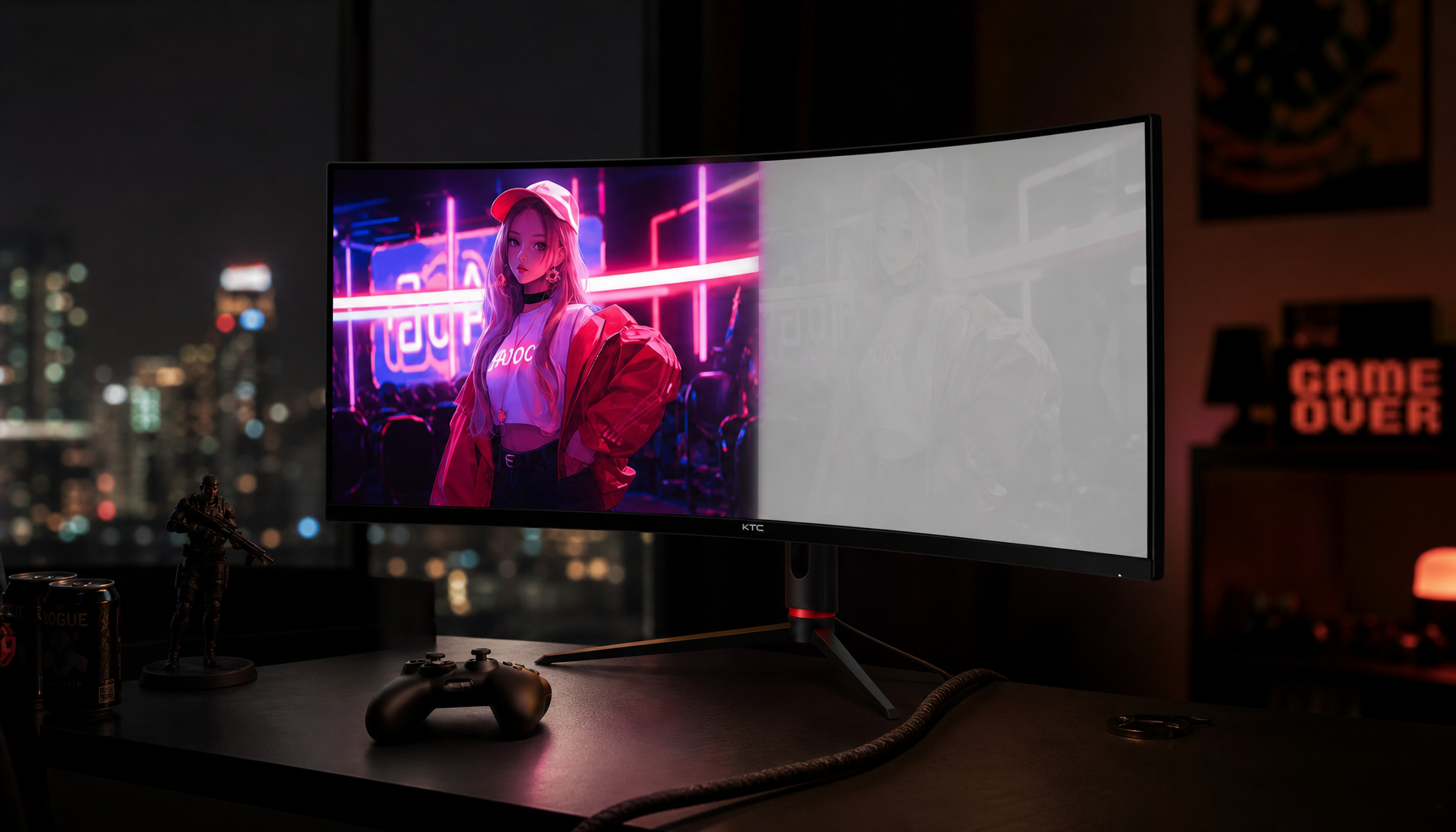
Color gamut coverage tells you how much of a target color space a display can reproduce, while color gamut volume tells you how well it can reproduce those colors across brightness levels. Coverage is about color reach; volume is about color reach plus light output.
Does your new gaming monitor claim “99% DCI-P3,” yet HDR explosions still look flat or neon signs lose color when they get bright? A practical spec check can separate a display that merely reaches wide colors from one that keeps those colors convincing in games, video, and creative work. Here is how to read coverage and volume claims without overpaying for the wrong kind of color performance.
Color Gamut Coverage, Defined
Color gamut coverage is the percentage of a defined color space that a display can reproduce. If a monitor says it covers 100% sRGB, it should be able to show the full sRGB color range used by most web pages, office apps, SDR games, and standard digital images. If it says 95% DCI-P3, it can reproduce most, but not all, of the wider color space commonly associated with cinema, HDR video, modern phones, and premium gaming displays.
The key word is “target.” Coverage is not a universal quality score. A display can have excellent sRGB coverage and still be mediocre for DCI-P3 video. It can also cover a wide gamut but look inaccurate if calibration is poor. Color gamut is commonly mapped against standards such as sRGB, Adobe RGB, DCI-P3, and Rec. 2020, but measurement methods and diagrams vary, so like-for-like comparisons matter.
A useful real-world example is a 27-inch office monitor that covers 99% sRGB and 75% DCI-P3. For spreadsheets, coding, browsing, and video calls, that is usually enough. For HDR gaming or grading cinematic footage, the missing P3 range can make saturated reds, greens, and warm highlights look less rich than intended.
Color Gamut Volume, Defined
Color gamut volume goes further. It describes not only which colors a display can reach, but how bright or dark those colors can be while remaining reproducible. A monitor might technically hit a saturated red point on a color chart at moderate brightness, yet fail to keep that red saturated in a bright HDR highlight. That weakness is a color volume problem, not just a coverage problem.

In display shopping, this is where HDR claims get serious. Color volume combines gamut with dynamic range, which means brightness and black-level capability become part of color performance. A display with strong DCI-P3 coverage but weak peak brightness, poor local dimming, or raised blacks may show wide colors in SDR but still deliver underwhelming HDR.
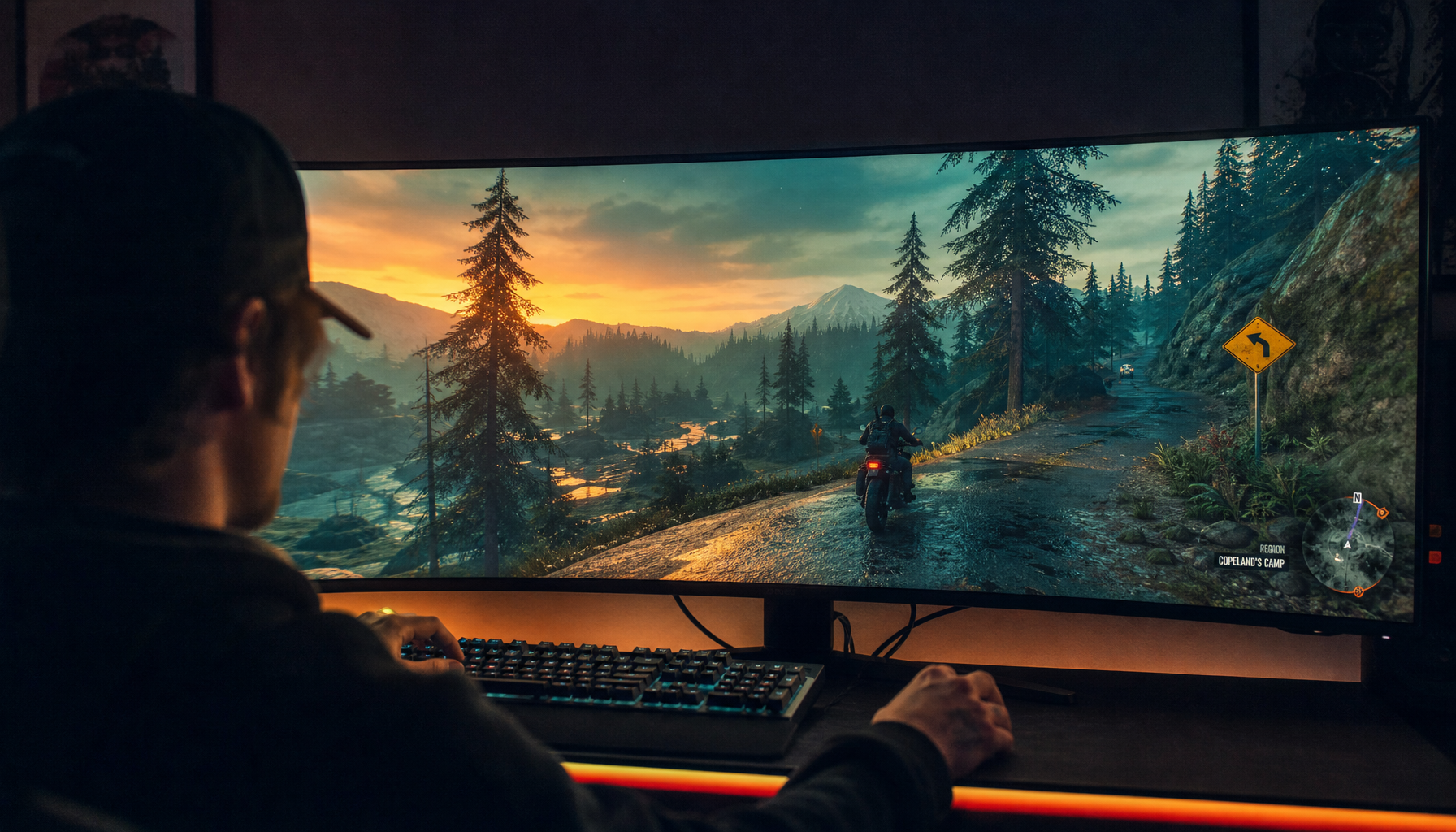
Think of a racing game at sunset. Coverage determines whether the monitor can represent the orange-red sky and teal reflections in the first place. Volume determines whether those colors stay intense in the bright sun, remain distinct in shadows, and avoid washing out when HDR lighting pushes the scene harder.

Coverage vs. Volume: The Practical Difference
Spec |
What It Measures |
Best For |
Common Trap |
Color gamut coverage |
Percentage of a target color space reproduced |
SDR accuracy, web work, print workflows, basic creative checks |
Treating “wide gamut” as automatic accuracy |
Color gamut volume |
Color range across brightness levels |
HDR gaming, HDR video, premium media, bright highlights |
Assuming high P3 coverage guarantees strong HDR |
Area or ratio claims |
Relative size of one gamut compared with another |
Rough marketing comparison |
Mistaking area for actual overlap |
Coverage is the better first check for SDR work. If you edit product photos for an online store, build web graphics, or want consistent office color, 100% sRGB coverage with good calibration is more useful than a vague “wide color” badge. sRGB compatibility is often misunderstood because area comparisons like “72% NTSC” do not prove the display actually covers the same colors as sRGB.
Volume becomes more important when brightness is part of the creative or entertainment intent. HDR is not just a brighter mode; it expands how light and color are represented. A display needs real brightness, contrast, and color control to preserve saturated colors in bright highlights. That is why a basic HDR-compatible monitor can accept an HDR signal yet still look less impressive than a well-tuned SDR mode.
Why 2D Gamut Charts Can Mislead
Most color gamut graphics show a triangle on a chromaticity diagram. This is useful because it shows hue and saturation, but it flattens the problem. Brightness is not represented in the same way, so a color that appears inside the triangle is not always reproducible at every luminance level.

This distinction matters when you compare monitors using only “95% P3” or “125% sRGB.” Chromaticity diagrams factor out luminance, so they can show whether a display’s primaries reach wide color coordinates, but they do not fully explain whether the display can hold those colors when the image gets very bright or very dark.
For example, two portable monitors might both advertise 100% sRGB. On a desk in SDR mode, both may look similar. In a bright room, the dimmer model may need to run near maximum brightness, where uniformity and tone control can suffer. The coverage spec stays the same on paper, but the viewing experience does not.
Which Spec Matters More for Gaming?
For competitive gaming, color coverage is secondary to response time, refresh rate, input lag, and visibility tuning. Still, reliable sRGB or DCI-P3 behavior matters because oversaturated enemies, crushed shadows, or glowing UI colors can reduce clarity. A fast monitor with poor color control may feel exciting for ten minutes and tiring over a long session.
For immersive gaming, color volume matters more. HDR titles use brightness, contrast, and saturated highlights to create depth, from muzzle flashes to reflective armor to neon signage. DCI-P3 is widely associated with richer cinema-style color, but the display must also have enough HDR hardware to make those colors hold up under bright scene demands.
A practical buying rule is simple: for esports, prioritize speed and a clean sRGB mode. For cinematic single-player games, prioritize strong DCI-P3 coverage, meaningful HDR brightness, good contrast, and local dimming or OLED-style pixel control. A “99% P3” spec without HDR muscle is still mainly a wide-gamut SDR feature.
Which Spec Matters More for Office and Creative Work?
For office productivity, coverage wins. Documents, dashboards, email, spreadsheets, and browsers are usually built around SDR assumptions. A stable sRGB mode, sharp text, good brightness control, and panel uniformity will do more for daily work than aggressive HDR claims.

For creators, the answer depends on output. Web designers and social content creators should demand accurate sRGB first, then consider DCI-P3 if their work targets modern phones, HDR displays, or video platforms. Print-focused photographers and designers should look more closely at Adobe RGB because it reaches further into green and cyan tones important to print workflows. Adobe RGB is especially relevant when screen-to-print predictability matters.
For HDR video review, creative approvals, and premium presentation work, color volume becomes a decision-critical spec. A display that cannot maintain color saturation through bright highlights may mislead you about skies, lamps, chrome, glass, or product packaging. Separate SDR and HDR modes are valuable because one profile rarely handles office whites, web color, HDR games, and video review equally well.
Pros and Cons of Prioritizing Coverage
Prioritizing color gamut coverage gives you a clearer, easier-to-verify buying path. It helps you choose the right display for sRGB, Adobe RGB, or DCI-P3 workflows, and it reduces the risk of paying for a display that is wide but irrelevant to your content. It is especially useful for office users, web creators, photographers, and anyone who needs predictable color.
The downside is that coverage can overpromise visual impact. A monitor may cover a wide color space on a chart but still have weak contrast, uneven backlighting, poor factory calibration, or limited HDR brightness. Wide gamut without good color management can also oversaturate standard sRGB content, making skin tones too red, grass too electric, and brand colors unreliable.
Pros and Cons of Prioritizing Volume
Prioritizing color gamut volume is smarter when HDR impact matters. It rewards displays that can preserve saturated colors at different brightness levels, which is essential for HDR movies, modern games, and high-end visual review. It also helps explain why OLED, mini-LED, and quantum-dot displays can look more dimensional than basic wide-gamut panels.
The tradeoff is that volume is harder to compare from marketing sheets. You need to consider brightness, sustained brightness, black level, local dimming behavior, tone mapping, bit depth, and calibration controls. HDR displays can support far more tonal combinations than SDR displays, but only strong hardware and good processing turn that signal into a convincing image.
How to Read Monitor Specs Without Getting Burned
Start by matching the spec to the content you actually use. For office work and web content, look for close to 100% sRGB coverage, an accurate sRGB mode, and comfortable brightness adjustment. For creative print work, check Adobe RGB coverage and calibration support. For HDR gaming and cinematic viewing, look for high DCI-P3 coverage plus credible HDR brightness, contrast, and dimming hardware.
Be cautious with area-based claims such as “72% NTSC,” “125% sRGB,” or “gamut ratio.” These can describe size rather than exact overlap. Coverage tells you how much of a target standard is actually reproduced, which is more useful than a large number that may miss important parts of the color space.
Also check whether the monitor can clamp wide gamut back to sRGB. A wide-gamut display without a usable sRGB mode can make normal content look punchy but wrong. That may be fun for casual media, but it is a liability when editing photos, checking brand colors, or preparing client work.
FAQ
Is 100% sRGB Better Than 95% DCI-P3?
Not automatically. 100% sRGB is better for standard web, office, and SDR accuracy. 95% DCI-P3 is better for wide-gamut media if the content and software support it. For most mixed-use desks, a monitor with both strong sRGB accuracy and high P3 coverage is the more flexible choice.
Does Higher Color Gamut Coverage Mean Better Color Accuracy?
No. Coverage means the display can reach colors within a target range. Accuracy means it places those colors correctly. A wide-gamut monitor with poor calibration can be less trustworthy than a narrower monitor with excellent factory tuning.
Is Color Volume Only Important for HDR?
Mostly, yes. SDR color volume is less of a concern on many modern monitors because sRGB is relatively limited. Color volume becomes much more meaningful with DCI-P3, Rec. 2020, HDR games, HDR movies, and bright highlight-heavy content.
Final Buying Lens
Coverage tells you whether the monitor reaches the right colors for your workflow. Volume tells you whether it can keep those colors vivid when brightness and contrast get demanding. For a reliable display upgrade, buy coverage for accuracy, buy volume for HDR immersion, and never let a single big percentage replace the full picture.