Panel uniformity degrades when heat, aging pixels, backlight wear, pressure stress, and calibration drift keep the screen from producing even brightness and color across the full display. Heavy daily use speeds this up because the same zones, interface elements, and thermal patterns repeat for thousands of hours.
Heat Is the First Performance Tax
Every display panel lives under thermal stress, but gaming and productivity setups often make it worse through high brightness, HDR peaks, long sessions, and poor airflow behind the monitor.
Heat can make the backlight, diffuser layers, polarizers, and liquid crystal behavior age unevenly. Over time, that can appear as dimmer corners, warmer or cooler patches, or cloudy areas on gray and white screens.
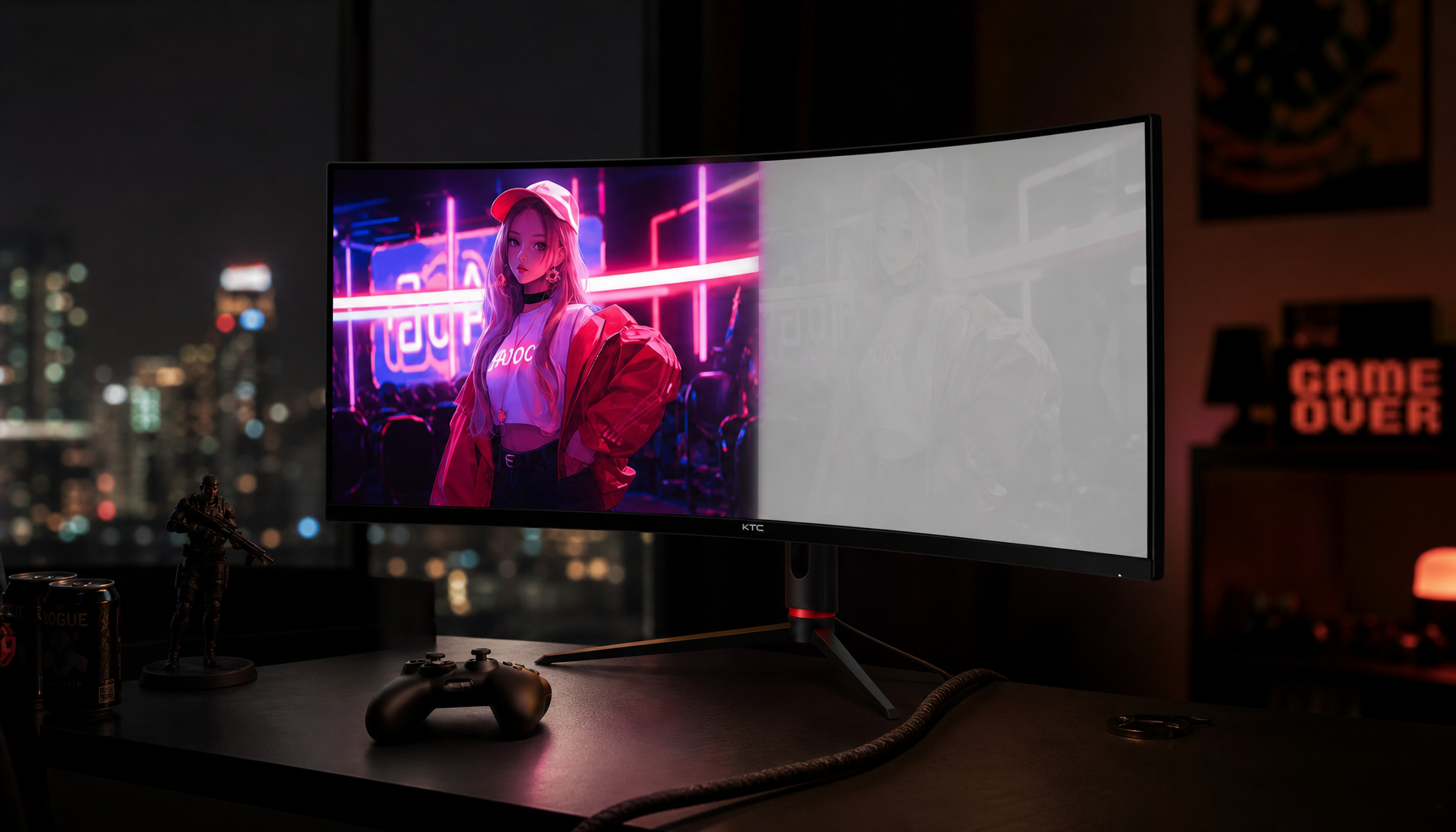
This is why a panel may look fine on day one but reveal uneven tone after years of 8-hour workdays or weekend gaming marathons. A simple screen uniformity check using neutral gray or white backgrounds can make those changes easier to spot before they become distracting.

Backlights and Pixels Do Not Age Equally
LCD monitors depend on a backlight system. As LEDs age, they can lose brightness or shift color at slightly different rates across the panel. Edge-lit displays can be especially vulnerable because light has to travel through guide plates and diffusion layers before reaching your eyes.
OLED behaves differently. Each pixel emits its own light, so uniformity can decline when frequently used pixels age faster than less-used pixels. Static taskbars, HUDs, video timelines, browser tabs, and bright desktop elements can slowly create uneven wear.

Large OLED panels face extra challenges because pixel behavior must stay consistent across a broad surface; research into OLED pixel uniformity focuses heavily on controlling luminance differences and compensation accuracy.
For heavy users, the practical takeaway is simple: mixed content is healthier than static layouts, and moderate brightness usually supports better long-term consistency.
Physical Stress Can Shift the Image
Uniformity is not only an electrical issue. Pressure, chassis flex, panel tension, and repeated heating and cooling can subtly change how layers sit against each other.
If you move a portable smart screen often, clamp a monitor arm too tightly, or press on the bezel while adjusting position, you can create pressure points. These may look like brighter patches, darker smudges, or tint shifts near the edges.

Office displays can also suffer from environmental habits. A monitor parked near a sunny window, heater vent, or cramped wall mount may run hotter on one side than the other. Over months, that uneven environment can become visible on solid backgrounds.
Some dirty screen effect or corner shading may be present from the factory, so degradation should be judged against earlier checks, not memory alone.
Calibration Drift Makes Uniformity Feel Worse
Even when the panel hardware is still healthy, calibration can drift. Brightness, gamma, white point, and color balance change as components age.
That drift does not always happen evenly. A display may measure acceptably in the center while the edges shift slightly green, red, blue, or dim. For creators, analysts, and competitive players, that matters because decisions depend on what the screen is actually showing.
Professional display workflows often separate central calibration from full-panel evaluation because display uniformity affects how consistently brightness and color appear across the screen.
For a quick reality check, open a 50% gray image full screen. If one side looks warmer, darker, or cloudier, calibration alone may not fix it, but it can help you understand whether the issue is color drift, brightness falloff, or panel wear.

How to Slow Uniformity Degradation
You cannot stop display aging, but you can reduce its speed and visibility.
- Use moderate brightness for daily work instead of maxing out the backlight.
- Let OLED pixel refresh and compensation cycles run when prompted.
- Avoid leaving static HUDs, taskbars, or dashboards on screen all day.
- Keep airflow open behind the display and away from heat sources.
- Recheck uniformity every few months with gray, white, and dark screens.
For gaming monitors, office productivity displays, and portable smart screens, the best strategy is simple: manage heat, vary content, avoid pressure, and recalibrate when accuracy matters. A display that works hard can still age gracefully when its operating conditions are controlled.