Usually yes for comfort and sometimes for battery life, but only conditionally for real energy savings. If your room lighting changes often, auto-brightness is useful; if your setup is stable, a well-chosen manual preset is often the smarter, more consistent choice.
If your monitor feels painfully bright after sunset or suddenly too dim when sunlight hits the desk, you are dealing with a screen-to-room mismatch, not just a bad preference setting. In day-to-day use, ambient sensing helps most when light changes around you faster than you want to keep adjusting brightness controls. This guide will help you decide whether to keep the feature on, tune it, or turn it off.
What ambient light sensors and auto-brightness actually do
An ambient light sensor measures surrounding light intensity so a device can react automatically, most often by changing screen brightness. On a monitor, laptop, tablet, or phone, the goal is straightforward: keep the display bright enough to read in a bright room and restrained enough to stay comfortable in a dim one.
Display brightness is best discussed in nits, which describe how bright the screen surface appears to your eyes. That matters because the same 300-nit screen can feel excellent in a softly lit office and harsh in a dark bedroom. In practice, auto-brightness works as a control loop: the sensor reads the room, firmware smooths the change, and the backlight or panel output rises or falls.
On some devices, auto-brightness and color-adjustment features are separate behaviors, which is an important real-world distinction. Auto-brightness changes brightness with room light, while color-adjustment features may also shift color temperature and intensity for a more natural look. If you want stable color for editing but still want less glare, those settings should not be treated as the same tool.
Where the energy savings are real
Because screen brightness is one of the biggest user-controlled energy loads, lowering brightness when full output is unnecessary does save energy. That principle scales from a phone in your hand to a wall-sized LED display, even though the savings are far more noticeable on battery-powered devices than on a single desktop monitor plugged into the wall.

The strongest case appears on mobile devices, where auto-brightness is designed to lower brightness in dark environments and raise it in bright ones. On a phone or tablet, that can extend battery life because the display is one of the most power-hungry components. A portable smart screen used in airports, coffee shops, hotel rooms, and shared offices follows the same pattern: changing environments create frequent chances to avoid wasting brightness you do not need.

The larger lesson also matches broader building-energy logic. Occupancy-driven controls save the most when they react to real conditions rather than fixed schedules, and presence-based HVAC control works for the same reason. Auto-brightness is the display version of that idea. When conditions shift, responsive control can trim waste. When conditions barely change, automation has less to optimize.
Why comfort usually matters more than the power bill
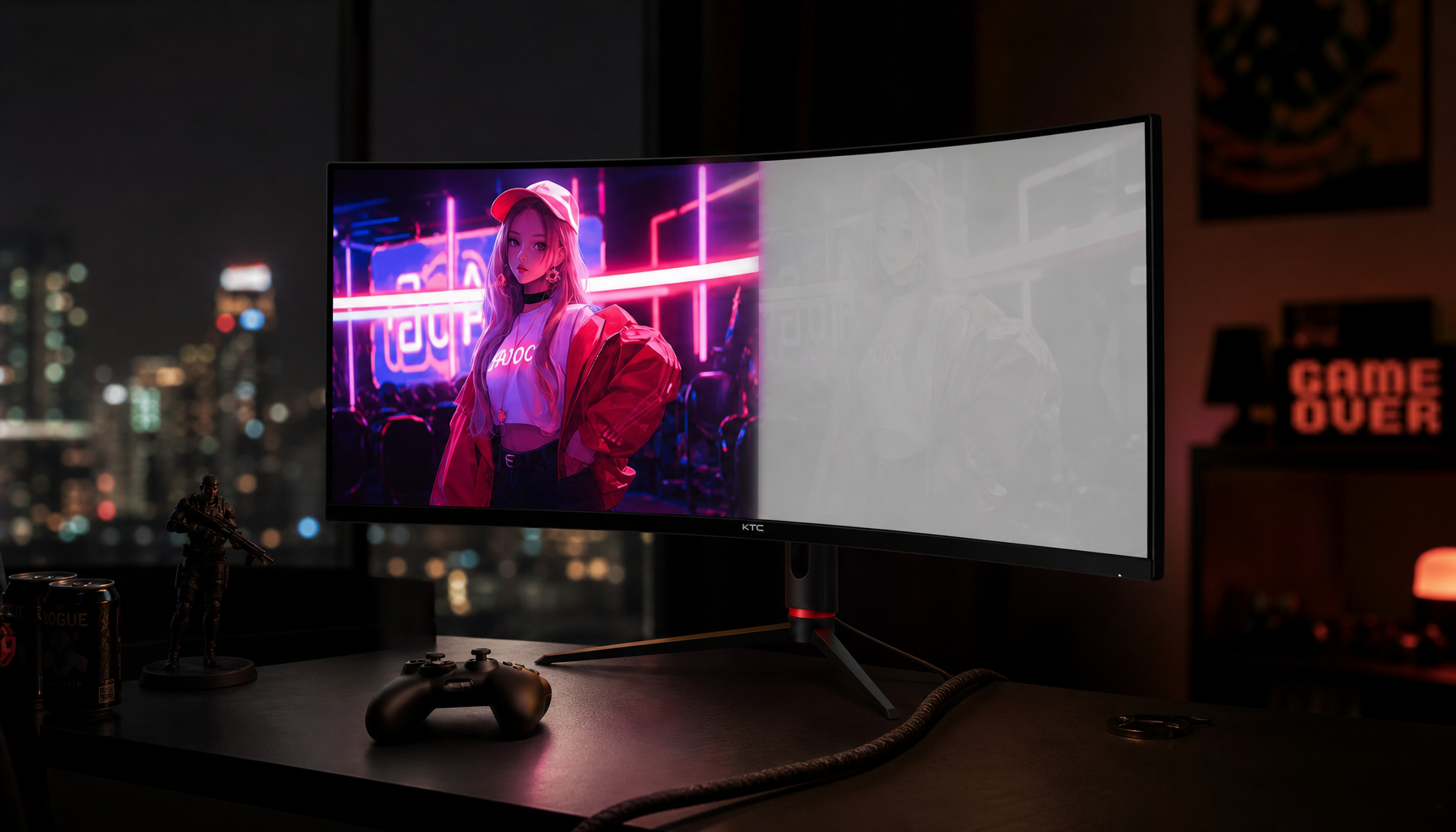
For most desktop users, brightness matching is the more valuable benefit than pure energy savings. A bright screen in a dark room feels harsh, while a dim screen in strong daylight forces your eyes to work harder just to read text and separate interface elements. If you write, code, manage spreadsheets, or review dashboards for hours at a time, that mismatch is what you notice first.

A bias lighting setup often improves comfort even more than auto-brightness alone, especially at night. A soft light behind the monitor reduces the contrast between a bright screen and a dark wall, which can make long sessions feel less fatiguing. In a practical desk setup, a moderate monitor preset plus proper bias lighting often works better than aggressive auto-brightness.
This is where many buyers overestimate the feature. If your room is already controlled, with matte walls, a stable desk lamp, and little daylight shift, auto-brightness may do very little beyond moving the screen away from the setting you already know you like. In that case, the comfort gain shrinks and the energy gain becomes marginal.
When the feature is worth paying for
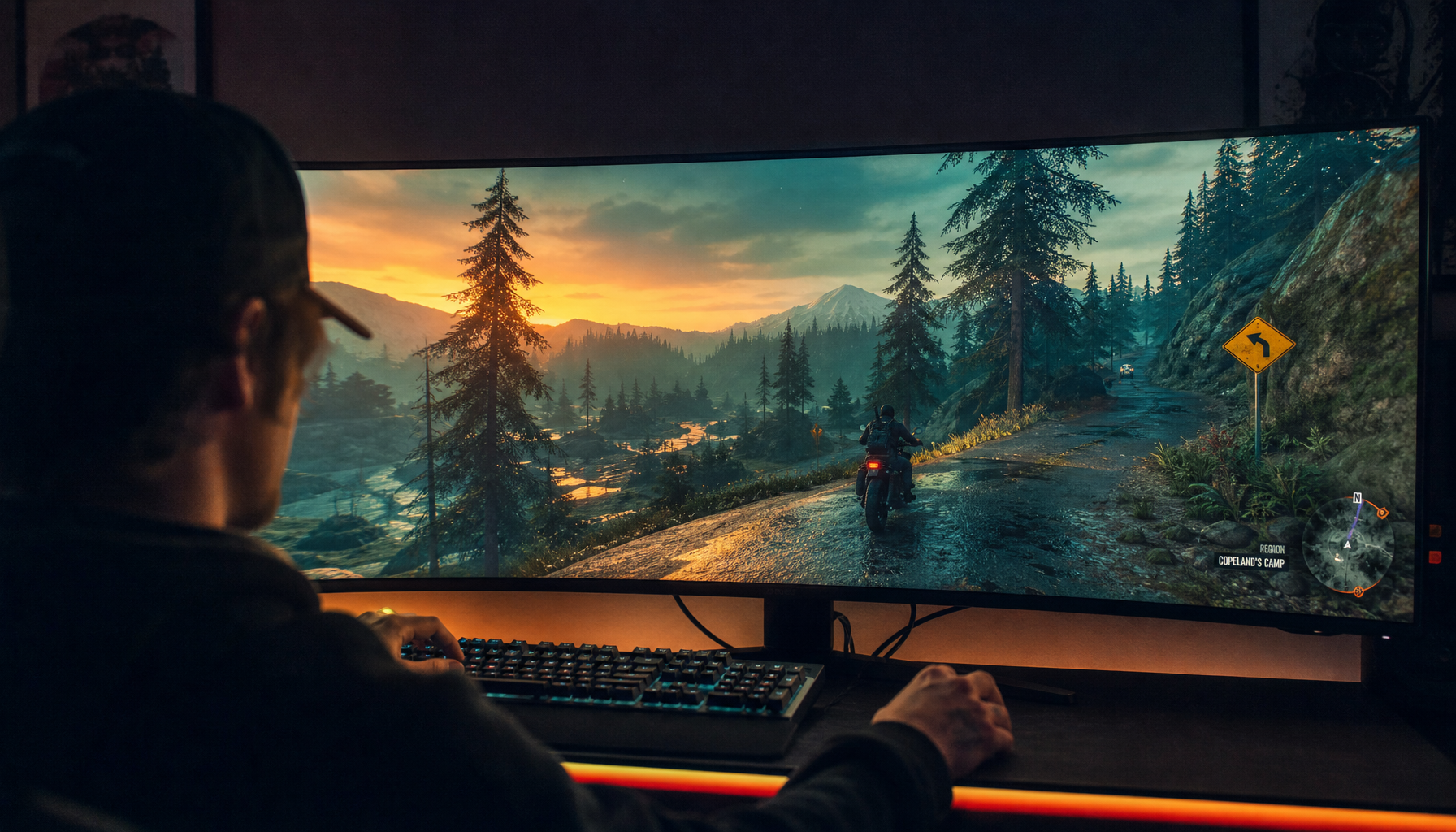
The best use cases are easy to recognize once you look at the room instead of the spec sheet. A window-facing desk, a shared office desk, a portable monitor that moves between rooms, or a large ultrawide that fills more of your field of view will expose brightness mistakes quickly. In those spaces, a good sensor can reduce both manual adjustment and unnecessary brightness overhead.
User reports on desktop monitors with ambient light sensors also show why this remains a niche but valued feature. People who care about eye comfort often like it, but they also care whether the monitor is reacting to the room or merely to the content on the screen. That distinction is critical.
Here is the practical decision frame:

Setup |
Energy value |
Comfort value |
Recommendation |
Fixed home office with stable lighting |
Low to moderate |
Moderate |
A manual preset usually wins |
Window-facing desk with shifting daylight |
Moderate |
High |
Auto-brightness is worth using |
Portable smart screen used in many locations |
Moderate to high |
High |
Auto-brightness is strongly useful |
Competitive gaming setup |
Low |
Often negative if unstable |
Keep brightness fixed |
Photo or color-critical work |
Low |
Useful only outside final checks |
Disable it during critical work |
Where auto-brightness can go wrong
A good monitor implementation should adapt gradually, not snap up and down every time a cloud passes. If the sensor sits near a bright desk lamp, catches reflections, or gets shadowed by accessories, the display can hunt for the wrong level. That does not just look sloppy; it can erase the comfort benefit and reduce the odds of meaningful power savings.
The wider display industry has seen the same tradeoff. Dynamic energy-saving systems can cut power, but rapid lighting or content changes may introduce response lag or less stable image behavior. On a gaming monitor, that instability matters more than a small efficiency gain. On a productivity display, it is tolerable only if the transitions are smooth and infrequent.
For color-sensitive tasks, stable room lighting and fixed brightness remain the safer choice. If you are checking skin tones, product colors, or print proofs, automatic changes undermine the reference condition you are trying to maintain. That is one of the few cases where disabling smart features is not old-fashioned; it is simply correct.
How to test whether it is helping you
A simple 30-second room-light test tells you almost everything you need to know. Put a white document or spreadsheet on screen, change the room lighting, and watch the display. If the shift is gradual, lands at a sensible brightness, and leaves the text easier to read, the feature is doing its job. If it pulses, overshoots, or reacts to your content more than your room, turn it off.
Sensor choice and placement also matter more than marketing suggests. Selection guidance for ambient light sensors emphasizes dynamic range, human-visible response, cover-glass behavior, and resistance to saturation under strong light. In buying terms, that usually means the better implementation is the one with smoother firmware and better placement, not the one with the flashiest automatic-brightness label.
The bottom line for gamers, office users, and portable-screen buyers
For office productivity displays and portable smart screens, auto-brightness is usually worth using because the comfort benefit is immediate and the energy savings are real whenever your environment changes. For gaming monitors, it is a secondary feature at best. Competitive play rewards luminance consistency, not automatic adaptation. For content creation, it is useful during general use and best disabled during final visual checks.
The strongest value comes from pairing the feature with a disciplined setup: a sensible base brightness, stable room lighting where possible, and bias lighting for night sessions. A smart sensor should support your viewing environment, not fight it. If it quietly keeps the screen readable and comfortable without drawing attention to itself, it is earning its place.