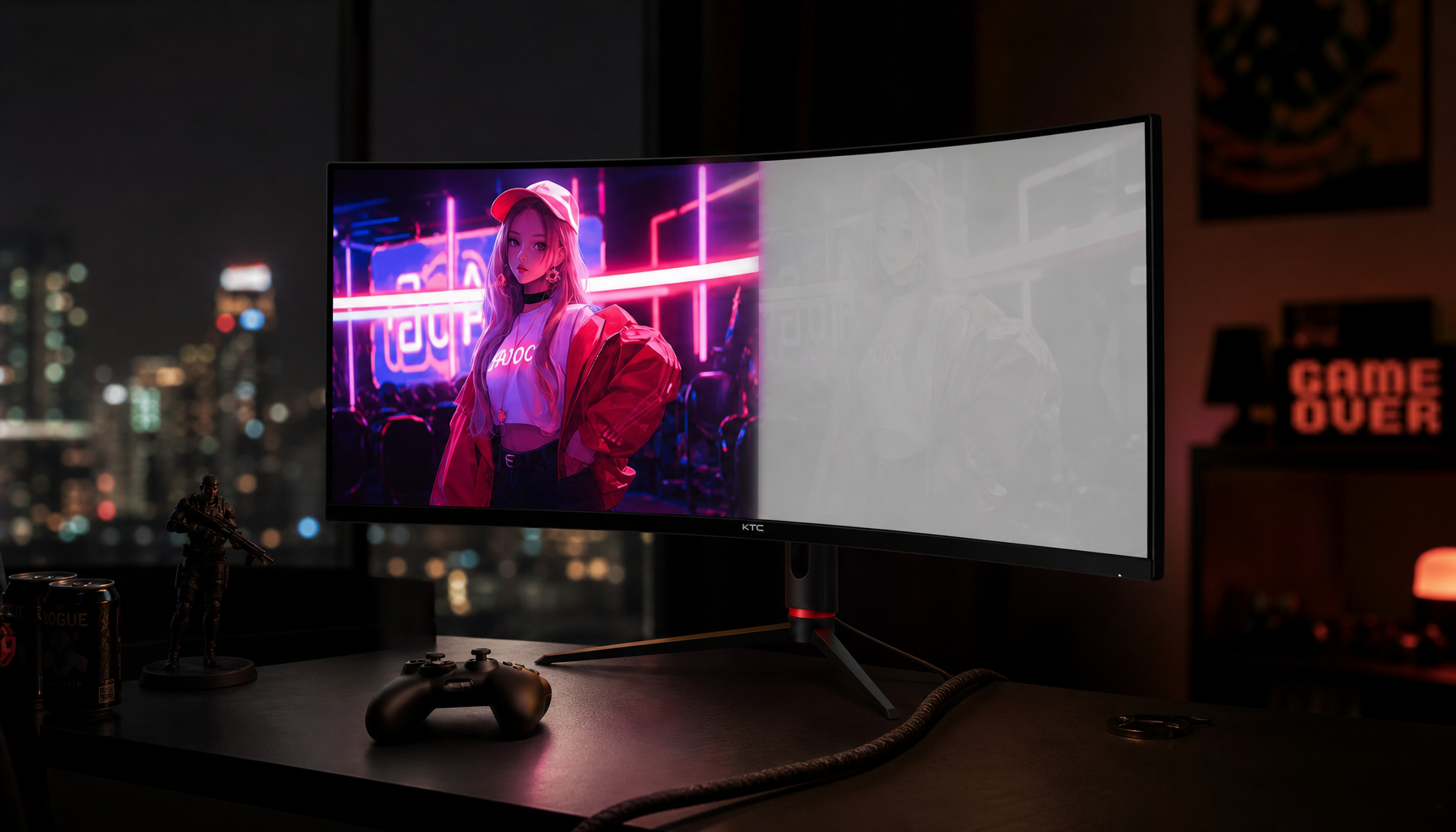
Turning on a monitor’s ambient light sensor can increase perceived or measured lag because the display may route brightness decisions through extra firmware processing, smoothing, HDR tone mapping, dynamic contrast, or backlight control before showing the final image.
Does your aim feel a half-step late right after enabling auto brightness, even though the refresh rate still says 144 Hz or 240 Hz? A practical A/B test with the same game mode, cable, resolution, and refresh rate can reveal whether the sensor mode is adding delay or only changing brightness comfort. Here’s how to separate real display lag from visual feel, then choose the right setup for gaming, office work, and portable screens.
What the Ambient Light Sensor Actually Does
An ambient light sensor is a small light-measuring component near the display bezel that samples the room and helps the monitor decide whether to raise or lower brightness. The core measurement is illuminance, usually expressed in lux, and the Ambient Light Sensor concept is common in cell phones, notebooks, automotive displays, LCD TVs, and modern productivity screens.
On a monitor, the sensor is rarely acting alone. It feeds a control loop: the sensor reads the room, firmware filters the reading, the monitor maps that value to a brightness target, and the backlight or panel drive adjusts. For office work, this is useful because a screen can dim at night and brighten near a window without constant manual tweaking. For competitive gaming, that same loop can be a problem because repeatability matters more than comfort automation.

A simple example makes the trade-off obvious. If your desk lamp turns on and the sensor immediately raises brightness, the screen may appear to pump or flash. To avoid that, firmware often smooths the change over time. That smoothing protects comfort, but it also means the monitor is no longer operating in its most direct, fixed-output path.
Why Input Lag Can Increase
The Sensor May Activate Extra Display Processing
Input lag is the delay between your command and the image appearing on screen, and Game Mode is often treated as a key condition because it reduces display processing delay. When ambient sensing is enabled, some monitors keep Game Mode intact; others quietly enable an image-processing stack that evaluates brightness, contrast, HDR behavior, or power limits before final output.

That extra stack is where latency can creep in. The sensor itself is not usually slow in the same way a wireless display link is slow. The issue is the decisions the monitor makes after reading the sensor. If auto brightness also enables dynamic contrast, local dimming logic, black-level enhancement, or content-adaptive brightness, the display may buffer, analyze, or adjust frames instead of passing them through the fastest route.
This is why two monitors can behave differently with the same setting name. On one gaming monitor, “Auto Brightness” may only adjust backlight level in the background. On another, it may be tied to an “eco,” “AI,” “HDR,” or “smart picture” preset that changes the processing path.
Firmware Smoothing Adds Stability, Not Speed
Ambient brightness lag is often intentional. Displays smooth brightness changes so a passing shadow, moving cloud, or desk lamp flicker does not cause visible brightness pumping. This behavior is typically caused by sensor polling, firmware filtering, HDR tone mapping, content-adaptive dimming, and the physical response speed of the backlight system.
That smoothing may not add one full frame of input delay by itself, but it can make the display feel less immediate. In shooters, a mid-fight brightness adjustment can change perceived contrast around enemies, crosshairs, muzzle flashes, or dark doorways. The mouse click did not slow down, but your visual confirmation did.
Think of a dark game menu opening after a bright webpage. If the monitor is using both ambient sensing and content-based dimming, the screen may dim in stages. During those stages, black levels, highlight visibility, and perceived motion clarity can shift. That instability can feel like lag even when the actual signal delay is unchanged.
Sensor Readings Are Not Always Instant or Clean
Light sensors can report stale, transitional, or noisy values. In a smart-home case, an illuminance sensor showed an irregular delay of several seconds before reflecting a changed light level, creating a race condition where automation evaluated the old reading first. That kind of ambient light sensor delay is not a monitor test, but it illustrates the same engineering reality: light readings often need filtering before a system should trust them.
Sensor selection guidance emphasizes spectral response, measurement range, interface type, accuracy, and a clear optical path because ambient light sensors can be affected by shadows, housing tint, display backlight leakage, and nearby indicator LEDs. On a monitor, a sensor placed near a bright keyboard, window reflection, or bias light can make poor brightness decisions.
A real-world desk example makes the issue clear. If a portable screen sits below a laptop and its sensor faces an overhead lamp, it may think the room is brighter than your eyes perceive at screen level. The monitor raises brightness, then smooths back down when your hand or laptop lid shades the sensor. That is not classic input lag, but it disrupts the stable visual feedback you need for precise cursor work or fast tracking.
Input Lag vs Response Time vs Brightness Lag
Many users blame response time when the real issue is display processing or brightness control. Response time describes how fast pixels change state. Input lag describes how long the display takes to show the result of your action. Brightness lag describes how long the monitor takes to adapt luminance after room or content changes.
Term |
What It Means |
Why It Matters |
Input lag |
Delay from action or signal to visible result |
Critical for esports, rhythm games, fighting games, and fast editing |
Pixel response time |
How quickly pixels transition between shades |
Affects ghosting, smearing, and motion clarity |
Ambient brightness lag |
Delay in automatic brightness adjustment |
Affects comfort, consistency, and perceived responsiveness |
Processing delay |
Time spent on scaling, smoothing, HDR, contrast, or image enhancement |
Often reduced by Game Mode or low-latency modes |

The distinction matters because fixing the wrong problem wastes time. Research on monitor responsiveness notes that refresh rate, pixel response behavior, backlight behavior, frame pacing, and eye-tracking blur all affect how responsive a display feels. A 1 ms response-time claim does not guarantee low input lag if the monitor is also doing heavy image processing.
Pros and Cons of Enabling Ambient Light Sensors
For office productivity, ambient sensing can be genuinely useful. It keeps brightness more comfortable across a long workday, especially if your desk gets morning sun and darker afternoon conditions. On portable screens, it can help preserve battery life by avoiding unnecessary maximum brightness.
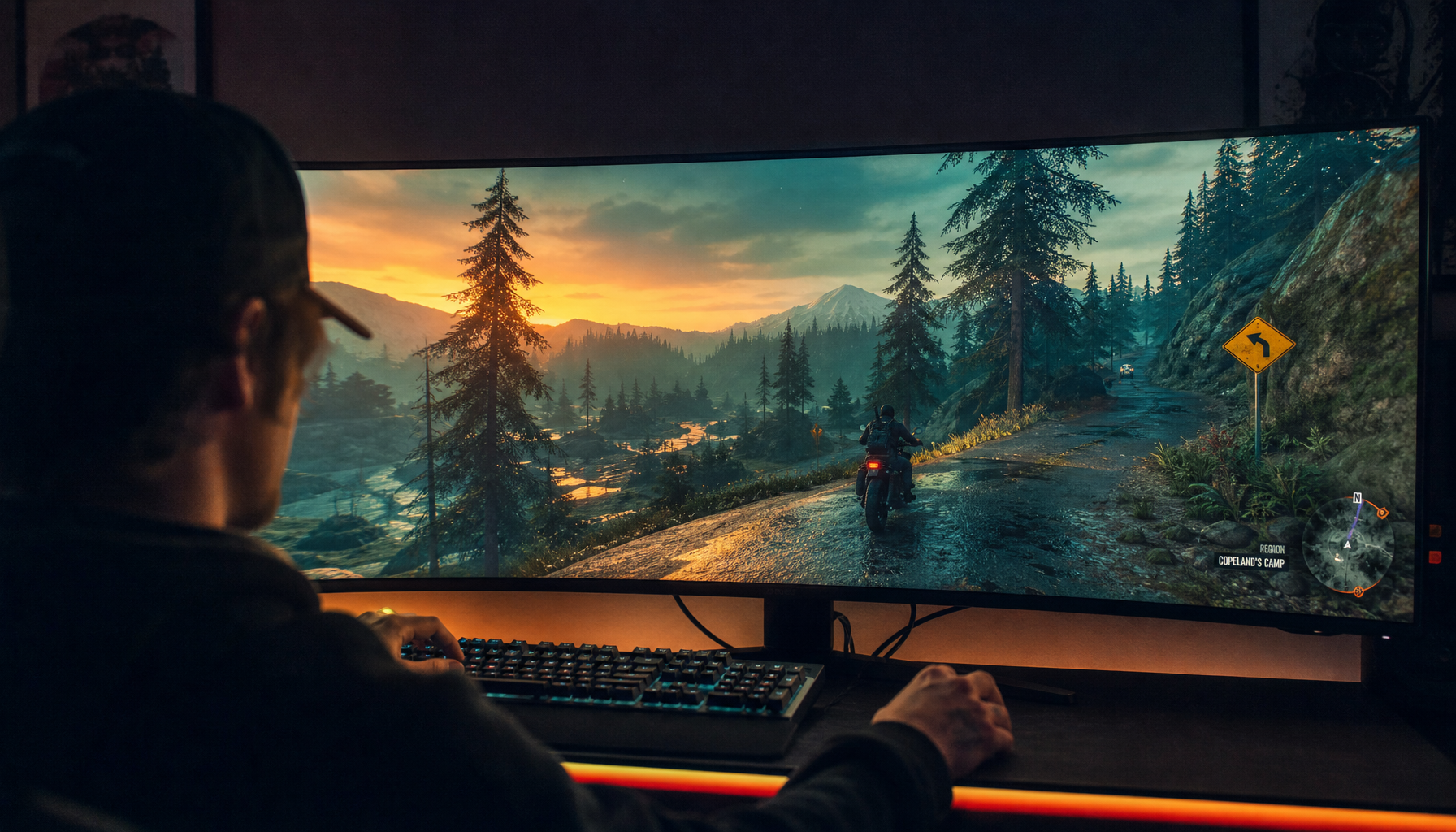
For gaming, the benefit is narrower. Ambient sensing can reduce eye strain during casual play, strategy games, and long RPG sessions, but it can interfere with consistency in esports. A fixed brightness level is easier to train around because the same map, smoke effect, HUD color, or dark hallway looks the same every round.
The best way to evaluate it is by use case, not by preference alone. A spreadsheet-heavy day in a bright room rewards comfort automation. A ranked match rewards stable luminance and the lowest processing path your monitor supports.
How to Test Whether ALS Is Really Adding Lag
Start with a clean A/B test. Keep the same cable, refresh rate, resolution, game mode, GPU settings, and in-game settings. Run one pass with the ambient light sensor off and one pass with it on. Home input-lag testing is most useful when it is repeatable under real play conditions, and monitor input lag at home guidance recommends multiple passes, stable conditions, and avoiding comparisons across mismatched modes.
At 60 Hz, one frame is 16.67 ms. That means a one-frame processing penalty is already meaningful in a shooter or rhythm game. At 240 Hz, each refresh interval is much shorter, but extra processing can still erase part of the advantage you paid for.
Use two practical checks. First, keep room lighting stable and switch between bright and dark content. If the screen changes brightness, the cause is likely content-adaptive dimming, dynamic contrast, or HDR behavior rather than the room sensor. Second, keep the screen image fixed and change the room light quickly. If brightness changes slowly, sensor polling and firmware smoothing are likely involved; if it jumps in coarse steps, the monitor may be using a rough brightness map.
Best Settings for Gaming, Office Work, and Portable Screens
Competitive Gaming
Disable ambient light sensing for ranked FPS, fighting games, rhythm games, and serious aim training. Enable Game Mode or Low Latency mode, use native resolution, keep the refresh rate high, and turn off motion smoothing, noise reduction, frame interpolation, dynamic contrast, and content-adaptive brightness. Gaming-lag guidance consistently points toward bypassing extra processing, and reducing gaming input lag recommendations include Game Mode, wired connections, matched resolution, and disabling post-processing.

Set a manual brightness that works for your room and leave it fixed. If you play both day and night, create two monitor presets if the OSD allows it. The goal is not maximum brightness; it is consistent target visibility without eye fatigue.
Office Productivity
Enable ambient sensing if your screen feels too bright at night or too dim during daylight work. It is especially helpful for writing, coding, email, dashboards, and long spreadsheet sessions where comfort and legibility matter more than millisecond precision.

Still, avoid pairing ALS with aggressive dynamic contrast if text brightness shifts while scrolling documents or switching tabs. A stable office display should feel calm, not reactive. If the monitor offers sensitivity levels, choose a slower or moderate response for general work.
Portable Screens
Portable screens benefit from ALS because battery, brightness, and changing locations are part of the product reality. A screen used in a coffee shop, airport lounge, or shared office may need to adapt frequently. The trade-off is that smaller panels often have fewer OSD controls, so you may not be able to separate ambient brightness from eco modes.
For a portable gaming setup, test the screen on wall power and battery power. Some displays change brightness behavior depending on power source, and that can affect both visibility and perceived responsiveness.
Buying Advice: What to Look For
Choose monitors that let you control ambient brightness separately from HDR, dynamic contrast, black stabilization, eco mode, and local dimming. Separate toggles matter because they let you keep comfort features for office work without sacrificing the lowest-latency path for games.
Look for measured input-lag data, not only response-time marketing. Third-party latency databases and repeatable reviews are more useful than a box that says “1 ms.” If the monitor has a dedicated Game Mode and still allows manual brightness, that is usually a better competitive setup than a smart preset that bundles everything together.
For hybrid users, the ideal monitor has profile memory. One profile can be fixed-brightness, low-latency, high-refresh gaming. Another can be adaptive-brightness productivity. That gives you immersion and comfort without letting automation interfere with performance when timing matters.
FAQ
Does the Light Sensor Itself Cause Input Lag?
Usually, the sensor is not the direct cause. The added delay comes from the monitor’s processing decisions after enabling the feature, especially if ALS is bundled with dynamic contrast, HDR processing, eco behavior, or firmware smoothing.
Should I Turn Off Auto Brightness for Esports?
Yes. For competitive play, fixed brightness and Game Mode are the better default because they keep visibility consistent and reduce the chance of extra processing.
Is Ambient Sensing Bad for Office Monitors?
No. It can be valuable for long work sessions, especially in rooms where daylight changes throughout the day. Just disable any setting that makes documents, webpages, or dashboards visibly brighten and dim while you work.
Can Bias Lighting Replace Ambient Light Sensors?
It can reduce the need for them. A steady light behind the monitor gives your eyes a more balanced environment, so you can use a fixed brightness comfortably instead of relying on automatic adjustments.
Bottom Line
Monitor-based ambient light sensors are built for comfort, not peak latency. Use them for office work, travel screens, and relaxed sessions; turn them off for esports, color-critical work, and any setup where consistent luminance is part of your performance edge.