Ambient light can make HDR look powerful and dimensional or flat, dim, and washed out. The best HDR experience comes from matching screen brightness, black-level control, tone mapping, and room lighting instead of treating HDR as a simple on switch.
Is your HDR monitor blazing in a dark game scene one night, then looking gray and underwhelming in daylight the next morning? With the right room setup and display mode, you can preserve shadow detail, reduce glare, and keep highlights impactful without blindly chasing maximum brightness. Here is how ambient light changes HDR quality and how to tune your screen for gaming, work, movies, and portable viewing.
Why Ambient Light Changes HDR So Much
HDR, or High Dynamic Range, is built to show a wider span between deep shadows and bright highlights than SDR, while also carrying richer color information. That only works when your eyes can perceive the contrast. A 1,000-nit highlight on a sword reflection, sunlit racing track, or sci-fi HUD looks intense because it sits beside controlled blacks and midtones, not because the whole screen is simply brighter.
Ambient light interferes with that relationship. Daylight from a window, overhead LEDs, desk lamps, and even light-colored walls can raise the apparent black level of the screen. Once blacks look gray, HDR loses depth. The image may still be technically HDR, but the visual experience becomes closer to a bright SDR presentation with less precise contrast.
Professional viewing guidance is strict for a reason: HDR reference environments keep the monitor surround very dim and neutral so low-luminance shadow detail remains visible. HDR shadow detail can sit at very low brightness levels, which means uncontrolled room light can overpower the exact information HDR is trying to preserve.
The Core Interaction: Your Eyes Adapt to the Room
Your eyes adapt to the brightest meaningful area in your environment. If your room is bright, your pupils constrict and the screen’s darker tones become harder to separate. If your room is completely black, a small HDR highlight can feel sharper and more intense, sometimes even uncomfortable on a large OLED or high-output mini-LED monitor.
That is why two users can disagree about the same HDR setting. A 1,000-nit mini-LED monitor in a dim office can look cinematic and punchy, while the same monitor beside a sunny window may look less impressive than expected. Conversely, an OLED in a pitch-black room may produce excellent black levels but feel fatiguing during games with sudden flashes, white menus, or snow maps.

The right target is not the darkest possible room for everyone. It is controlled, low-glare, low-reflection lighting that keeps your eyes comfortable while preserving contrast.
HDR Quality Is Not Just Peak Brightness
Peak brightness matters, especially in bright rooms, but it is not the whole story. Strong HDR also needs deep blacks, wide color volume, 10-bit signal handling, accurate tone mapping, and effective local dimming on LCD or mini-LED panels. A monitor that accepts HDR10 input may still deliver weak HDR if it lacks the hardware to reproduce contrast meaningfully.
HDR certification can be useful because higher tiers evaluate more than signal compatibility. HDR certification helps separate basic HDR recognition from displays with stronger brightness, dimming, and color capability. In practical terms, entry-level HDR may be acceptable for casual use, but immersive HDR usually improves most when the display adds stronger brightness and real local dimming.
Display behavior |
Bright room result |
Dim room result |
Best use case |
Low-brightness HDR-compatible monitor |
Highlights lose impact and blacks look raised |
Some HDR effect, but limited depth |
Casual HDR video or budget gaming |
OLED HDR monitor |
Reflections can hurt perceived contrast |
Excellent blacks and strong depth |
Dark-room gaming, movies, color-sensitive viewing |
Mini-LED HDR monitor |
High brightness fights ambient light well |
Very impactful, possible blooming depending on dimming |
HDR gaming, mixed lighting, productivity plus media |
Portable smart screen |
Depends heavily on panel brightness and glare coating |
Often better indoors than outdoors |
Travel, presentations, second-screen work |
Bright Rooms: Fight Reflections Before Raising Brightness
In a bright office or gaming room, the first fix is not always more luminance. Start by controlling direct reflections. A lamp reflected in a glossy panel can destroy perceived contrast more than a modest increase in room brightness. Move the lamp behind the monitor line, angle the screen away from windows, and avoid placing bright light strips where they reflect in dark scenes.

For projector-style setups, the same principle applies at a larger scale. Ambient-light-rejecting materials do not magically remove room light; they redirect or absorb some off-axis light so the viewer sees less washout. The lesson also applies to monitors: contrast survives when stray light is managed before it reaches your eyes.
If you use a desktop HDR monitor during the day, increase brightness only until highlights regain clarity. If whites start looking flat, clouds lose texture, or snow scenes become a white sheet, you have likely clipped highlight detail or pushed the display into a less accurate mode. For a real-world check, open an HDR game scene with a bright sky and dark interior, then adjust the monitor until the sky still has texture and the interior still has visible objects.
Dark Rooms: Preserve Impact Without Eye Fatigue
A dark room gives HDR its best chance to look dimensional, but total darkness is not always the most comfortable choice. The issue is contrast adaptation. When the wall behind the monitor is black and the screen cuts from a dark cave to a bright explosion, your eyes experience a harsher transition.
A soft bias light behind the display can help if it is dim, neutral, and not reflected on the screen. Keep it much darker than the display and avoid saturated colors when evaluating HDR accuracy. Blue or red decorative lighting may look stylish, but it can shift your color perception and make skin tones, gray UI panels, and dark game areas harder to judge.

For OLED users, dark rooms showcase the panel’s strength: pixel-level black control. For mini-LED users, dim lighting helps local dimming look more convincing because blooming is less obvious than in a fully dark room with high brightness. If subtitles, HUD elements, or white menus feel too aggressive, reduce overall HDR brightness slightly before disabling HDR entirely.
PC HDR, Tone Mapping, and Ambient Light
On PC, HDR quality depends on the full chain: the monitor, cable, graphics hardware, driver, operating system, app, and game calibration. HDR must be enabled in the operating system and often inside the game or media app as well. If any part of that chain mishandles metadata or output range, ambient light problems become harder to diagnose because the image may already be tone-mapped poorly.
A practical test is to compare real HDR content against SDR content, not just toggle a simulated HDR effect mode. HDR mode should produce visibly brighter peak whites in HDR applications while keeping SDR desktop content controlled. If the whole desktop becomes harsh, faded, or oversaturated, leave HDR off for normal office work and enable it only for HDR games or video.
Tone mapping is where many gaming setups succeed or fail. A 600-nit monitor receiving content mastered for 1,000 nits must compress those highlights intelligently. If the source and monitor both remap the image aggressively, highlights can wash out and shadow detail can crush. In a bright room, users often compensate by pushing brightness higher, but the better move is to run operating-system HDR calibration, then tune the game’s HDR sliders using test patterns or scenes with both dark interiors and small bright highlights.
Color Volume: Why Bright Light Makes HDR Color Feel Weaker
HDR color is not only about wider gamut labels such as DCI-P3 or Rec. 2020. It is about color volume, meaning the display can keep colors saturated at different brightness levels. In a bright room, saturated colors often look less rich because reflected light adds a pale overlay to the screen.
That is why a vivid HDR racing game can look spectacular at night and oddly muted at noon. The content did not change. Your room raised the black floor and reduced perceived saturation. HDR displays are designed to show more lifelike contrast and color than SDR, and wider brightness and color are central to that benefit, but room light can mask both.
For productivity displays, this matters when switching between HDR media review and office work. A bright spreadsheet environment favors comfortable SDR brightness and clear text. HDR video grading, game capture review, or product visualization favors dimmer, more controlled lighting. Mixing both in one setup is possible, but it requires separate presets rather than one universal mode.
Practical Setup by Use Case
Competitive Gaming
For esports, clarity and response matter more than cinematic HDR. If HDR adds input complexity, crushes dark corners, or makes enemies harder to see, use SDR or a restrained HDR mode. In brighter rooms, prioritize glare control and a stable brightness level over dramatic contrast. A 27-inch or 32-inch high-refresh monitor with decent HDR can still be excellent, but do not sacrifice visibility for spectacle.
Cinematic Gaming and Open-World Play
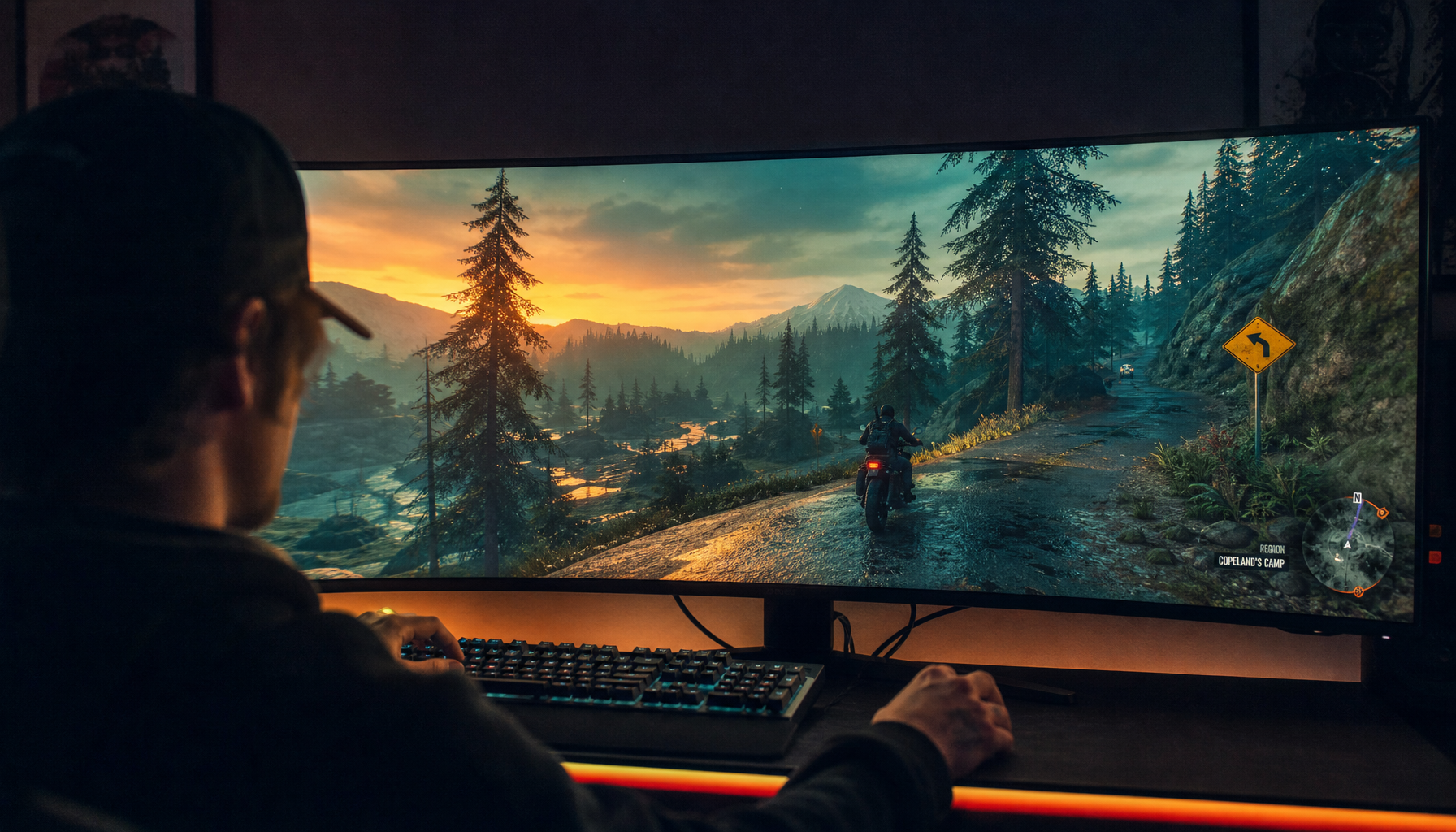
HDR shines in games with controlled lighting, dramatic skies, neon, fire, reflective water, and deep interiors. Use a dim room, disable harsh overhead lights, and calibrate peak brightness inside each game. If the game asks you to adjust until a logo is barely visible, do it in your actual playing environment, not at noon if you usually play at night.
Office Productivity and Creative Work
For documents, coding, spreadsheets, and browser work, SDR is often cleaner and more predictable. HDR desktop mode can make SDR content look too bright or tonally odd on some systems. If you edit HDR video or review HDR product visuals, create a separate preset with dimmer ambient light, accurate color mode, and fewer enhancement features.
Portable Smart Screens
Portable HDR screens are highly sensitive to surroundings because they are often used in airports, coffee shops, client rooms, and hotel desks. Positioning matters more than spec-sheet optimism. Face the screen away from windows, raise brightness only as needed, and use a matte protector or hooded position if reflections dominate the image.
Pros and Cons of Brighter HDR in Ambient Light
Brighter HDR can improve visibility in a sunlit room, make highlights survive office lighting, and help portable displays stay usable outside a controlled setup. It also supports digital signage, shared presentations, and daytime gaming where total light control is unrealistic.
The tradeoff is that brightness can become a blunt tool. Push it too far and HDR loses its layered look: highlights clip, blacks lift, colors look less natural, and eye fatigue rises. On some monitors, the brightest uncertified HDR mode may look more exciting but less accurate than a certified HDR mode. That can be acceptable for entertainment, but it is a poor choice for color-sensitive review.
A Simple Calibration Routine That Works
Start with the room before the monitor. Remove direct reflections, dim overhead lights, and avoid bright objects immediately beside the screen. Then choose the monitor’s accurate HDR, cinema, or game HDR preset and turn off unnecessary dynamic contrast, edge enhancement, and fake HDR conversion.
Next, enable HDR at the source and verify that the system is sending a real HDR signal. Use a scene with a dark room, a bright window, and a small highlight such as a lamp, sun glint, or metal reflection. Raise brightness until the bright object has energy, then back off if the surrounding detail disappears. Lower brightness if dark scenes become uncomfortable or if subtitles feel piercing.
Finally, save separate presets for day and night. A day preset can use higher brightness and more anti-glare discipline. A night preset should favor lower room light, stable blacks, and comfort over raw output.
FAQ
Does HDR always look better in a completely dark room?
Not always. A dark room improves perceived contrast, but pitch-black viewing can make bright HDR highlights feel harsh. A very dim, neutral bias light often gives a better balance of immersion and comfort.
Should I leave HDR on in the operating system all day?
For most office workflows, no. HDR is best enabled when using real HDR games, movies, or creative content. SDR desktop work often looks more consistent with HDR off, especially on monitors with imperfect tone mapping.
Is entry-level HDR enough for real HDR?
It can show some HDR behavior, but it is usually basic. For a stronger HDR experience, look for higher brightness, local dimming, wide color coverage, and good black-level performance, not just an HDR logo.
Can ambient light sensors improve HDR?
They can help when implemented well, especially on TVs or smart displays that adjust luminance and tone behavior to the room. For serious gaming or visual review, manual presets are still valuable because they give you repeatable results.
HDR quality is a partnership between the display and the room. Control reflections, match brightness to ambient light, calibrate tone mapping, and use separate day and night presets; that is how HDR becomes immersive instead of merely bright.