AI can separate gaming from productivity content by reading motion, text density, window structure, and repeated interface patterns, then mapping those signals to the right display preset. For monitor buyers, the real question is not whether the feature sounds smart, but whether it switches to settings that actually improve both play and work.
If you have ever left a fast match on a 240Hz screen, opened a spreadsheet or CAD file, and felt the image suddenly look either too soft or unnecessarily aggressive, you have already seen the mixed-use monitor problem. Current dual-mode displays can shift as far as 4K 240Hz to FHD 480Hz, so the difference between the right mode and the wrong one is not subtle. What follows will help you judge how AI-style switching works, which settings should change, and when it is worth trusting on a gaming monitor, ultrawide, or portable display.

What “AI Mode Switching” Really Means on Monitors Today
Panel Modes Come First
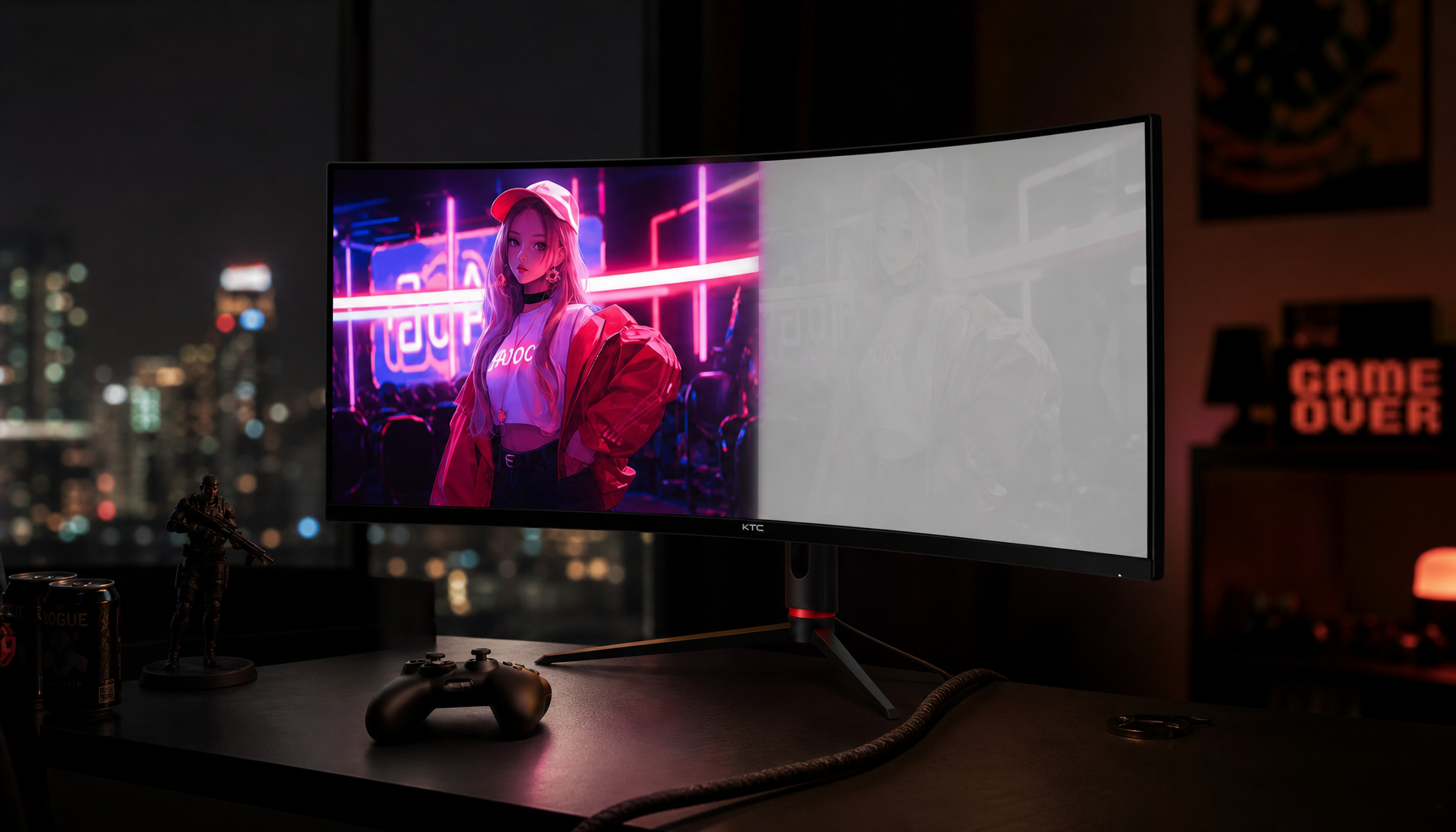
Dual-mode monitors already expose two native display personalities rather than one compromise setting. In practical terms, that means one mode can prioritize higher resolution for reading, multitasking, and creative work, while another mode prioritizes maximum refresh rate for esports and fast-action games. That hardware foundation matters because no software classifier can create a 480Hz experience from a panel that physically tops out at 144Hz.
Dynamic Refresh Rate in a platform shows that part of the switching problem is already handled at the operating-system level. A platform can change refresh rate based on activity when the display supports VRR and at least 120Hz, which is useful for smoothing scrolling and inking while avoiding full-time high-refresh power draw. That is not full content understanding, but it proves that modern monitor behavior is already becoming context-sensitive.
AI monitoring is the better mental model for buyers than science-fiction “smart screens.” The defensible interpretation is that a monitor ecosystem can combine hardware presets, software detection, thresholds, and override rules to keep display behavior aligned with what is happening on screen. In other words, smarter switching is less about one magic chip and more about a monitored decision system.
How AI Tells Gaming from Productivity Content Apart
Text Density, Layout, and Interface Clues
Text detection in computer vision works by finding written content inside images and video, not just in clean documents. Applied to monitors, that same class of vision signal can distinguish a screen full of menus, browser tabs, documents, code editors, and spreadsheet grids from a game scene where text is sparse and usually secondary to motion. A work mode classifier would likely treat dense text blocks, stable toolbars, and repeated window borders as productivity signals.

Screen change detection adds another useful clue: AI does not have to “understand everything” on the panel equally. It can watch selected regions, track pixels and text, and react when a described visual state appears. For a monitor, that suggests a practical approach where the system pays extra attention to likely HUD zones, minimaps, chat overlays, or ribbon menus instead of trying to reason over the whole screen at full cost every frame.
Motion, Sequence, and Time Windows
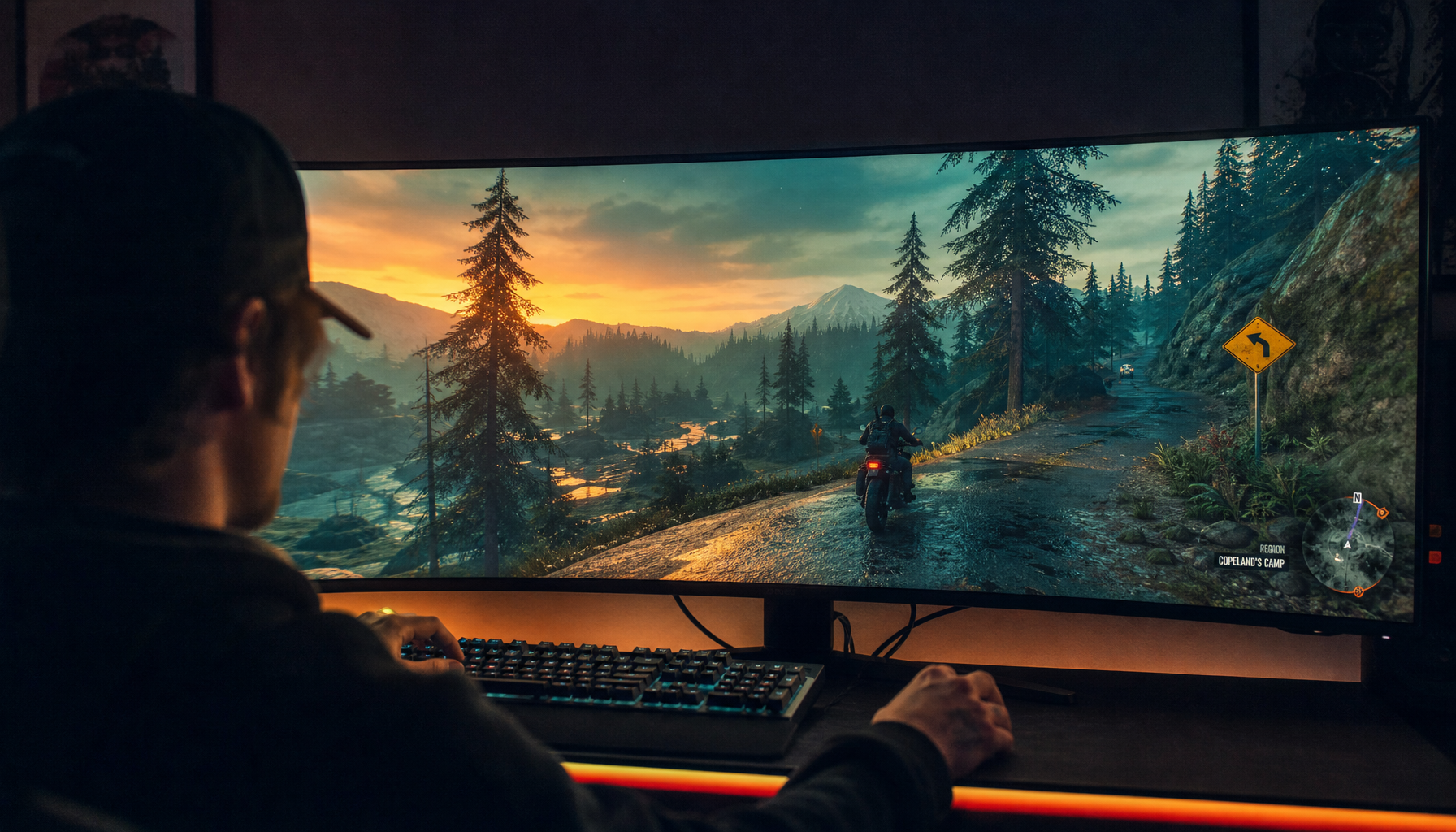
Short action windows in game analysis often reveal more than a single frame. In one study, logs were split into 2-step sections, and scene drops below 20% completion were used to flag pain points; the broader lesson is that sequence matters. For monitor switching, a good classifier should watch a few seconds of interaction, such as rapid camera pans, sustained pointer tracking, repeated WASD-style input patterns, or a persistent crosshair, before deciding that the user has truly moved from work to play.
That time-based approach matters because many edge cases look similar in one still image. A full-screen stock dashboard with live updates, a timeline in video editing software, and a strategy game UI can all contain text plus motion. Reliable switching comes from combining signals over time: how much of the panel changes, how often it changes, and whether the movement looks like content consumption, office work, or gameplay.
Which Monitor Settings Should Actually Change
Resolution and Refresh Rate
Higher refresh rates improve gaming by reducing blur, tearing, and input lag, but they can also make browsing and pen input feel smoother. That is why the right automatic switch is not always “60Hz for work, max Hz for games.” On a mixed-use desk, productivity may still benefit from 120Hz or 144Hz if you spend all day scrolling long documents or moving across a wide ultrawide canvas.
Dual native modes matter most when one panel needs to serve both sharp desktop work and competitive play. A brand describes separate EDID behavior and, for LCDs, separate overdrive behavior for each mode; one example shifts a 4K 240Hz panel into FHD 480Hz by effectively refreshing two lines at a time. That is a meaningful change for a gamer chasing latency, and a meaningful downgrade for someone editing high-resolution photos or working with dense text.
Response Tuning, Clarity, and Comfort
Gaming monitors prioritize speed with 144Hz-and-up refresh rates and fast response times that reduce ghosting. Productivity displays, by contrast, usually lean harder into visual fidelity, text sharpness, workspace, and comfort. A good mode switch should therefore do more than change hertz; it should also select the right response tuning, sharpening behavior, and comfort-oriented preset for long work sessions.
Office-versus-gaming display tradeoffs show why the presets need to be different. Work-oriented screens emphasize higher resolution, readable text, and eye-care features, while gaming displays emphasize low lag, low response time, and motion performance. If a monitor advertises AI switching but only toggles brightness, it is solving the wrong problem.
Use case |
Likely on-screen signals |
Best monitor bias |
Settings most worth switching |
Misclassification risk |
Competitive gaming |
Fast camera motion, HUD, crosshair, repeated full-screen updates |
Speed |
Max refresh, lower-latency overdrive, VRR, lower resolution if dual-mode |
Soft text and reduced detail if left on too long |
Story or open-world gaming |
Moderate motion, subtitles, cinematic scenes |
Balanced gaming |
High refresh, VRR, stronger contrast, native resolution when GPU allows |
Oversharpened desktop behavior after game exit |
Office productivity |
Dense text, multiple windows, stable layout, toolbars |
Readability |
Native resolution, moderate-to-high refresh, comfort preset, accurate scaling |
Eye fatigue or fuzzy text in gaming preset |
Creative multitasking |
Timeline panels, color tools, side-by-side apps |
Precision |
Native resolution, color-consistent mode, stable overdrive |
Lost motion smoothness if switching is too conservative |
Where Automatic Switching Helps, and Where It Breaks
Best-Case Workflows
Continuous monitoring with thresholds and feedback loops is why automatic switching can work well for real desks. If you always launch the same competitive title after work, or always move from a browser-and-spreadsheet stack to a full-screen game, the pattern is easy to detect and easy to map to a preset. In those cases, AI-style switching saves friction and keeps a high-refresh gaming monitor from feeling like an over-tuned office screen all day.
Variable Refresh Rate support also reduces the amount of automation buyers truly need. Many popular games can already adjust refresh behavior dynamically, so the monitor may only need to choose between a work-focused native mode and a play-focused native mode. That is especially useful on shared home-office setups where one panel handles meetings at 10:00 AM and shooters at 10:00 PM.
Common Failure Modes
Lowering resolution alone does not increase a panel’s maximum refresh rate exposes one of the biggest buyer misconceptions. If the hardware is not truly dual-mode, no amount of AI labeling will turn a standard 144Hz display into a 240Hz or 480Hz esports panel. Smart switching is only as strong as the monitor’s underlying mode options.
False positives are also inevitable. A racing replay editor, a streaming dashboard, or a live financial chart wall can look game-like because the screen is moving constantly, while a strategy game with lots of menus can look work-like because the screen is text-heavy. That is why automatic switching should be treated as assistive automation, not as a decision you can never challenge.
What Buyers Should Evaluate Before Paying for This Feature
Start With the Panel, Not the Marketing
Gaming monitor specs still determine whether mode switching is valuable at all. Monitors now span roughly 24 to 49 inches, and some gaming models reach 500Hz, while many premium options sit in the 240Hz to 360Hz range. If the panel does not already offer meaningful separation between “work mode” and “game mode,” AI adds convenience but not capability.
Fast response and high-refresh behavior matter more on gaming-first displays, while higher native resolution and clean text rendering matter more on productivity-first panels. For a single 27-inch or 32-inch desk monitor, that usually means deciding whether you want one balanced panel with modest automation or a true dual-mode screen that can change personality in a noticeable way.
Mixed-Use Desks, Ultrawides, and Portable Monitors
A 49-inch ultrawide is one of the clearest cases for smarter switching because the same panel may spend the day acting like two side-by-side workspaces and the evening acting like an immersive racing or flight display. Buyers in that category should care less about generic “AI” wording and more about whether the monitor can preserve readable text across a very wide desktop while still delivering strong motion handling in games.

Lower refresh rates can reduce power use, which is especially relevant if your setup includes a laptop or portable monitor. In portable scenarios, smart switching is most useful when it keeps office tasks crisp at reasonable power draw, then raises refresh only when gaming actually starts. That is a stronger real-world benefit than trying to identify every app perfectly.
FAQ
Q: Can a monitor really know that I am gaming, or is it just watching refresh rate?
A: The more realistic version is pattern recognition, not true understanding. A smart system can look at motion, text density, full-screen behavior, and repeated interface elements, then infer whether a gaming preset or productivity preset fits better.
Q: Is AI mode switching more useful on a gaming monitor or a regular office monitor?
A: It is usually more useful on a gaming monitor or dual-mode display because the panel has more to gain from switching. If the screen only offers modest differences between presets, the feature is mostly convenience.
Q: Should I trust automatic switching on an ultrawide or portable monitor?
A: Trust it only if you can override it quickly. Ultrawides benefit when the switch respects text clarity across a wide desktop, and portable monitors benefit when the switch also considers battery-friendly behavior, but both categories still need an easy manual fallback.
Final Takeaway
The smartest monitor mode switching does not begin with AI. It begins with a display that already has meaningful modes for work and play, then layers in detection rules that are good enough to save time without taking control away from you.
Action checklist: 1. Buy the panel first: look for true dual-mode behavior or clearly different work and gaming presets. 2. Check the real switching targets: resolution, refresh rate, overdrive, VRR, and text-friendly scaling. 3. Favor monitors with quick manual override through a button, OSD shortcut, or desktop utility. 4. If you use an ultrawide, test text clarity and window scaling before focusing on gaming claims. 5. If you use a portable monitor with a laptop, treat power-saving refresh behavior as part of the value. 6. Assume the classifier will make mistakes, and set your default mode around the task you do most.
For most buyers, the best result is not a monitor that tries to think for you. It is a monitor that can switch fast, switch cleanly, and let you take over the moment it guesses wrong.