Adaptive Sync lets a monitor vary its refresh rate to match the device feeding it, while fixed refresh updates the screen at one constant pace no matter how uneven frame delivery becomes.
Does a fast camera pan make your match look like the picture was sliced in half, even though your PC is powerful? A five-minute check in your display menu and graphics app can usually reveal whether the screen is waiting on the computer or forcing a fixed pace. You’ll learn what to turn on, when to leave it off, and how to buy a monitor that feels smooth without wasting money.
What Adaptive Sync Means
The core idea is simple: Adaptive Sync allows the monitor’s refresh rate to change dynamically so it can track the frame rate coming from the graphics card or connected device. Instead of demanding a new image every fixed interval, the display waits for the next completed frame within its supported range, then refreshes at that moment.
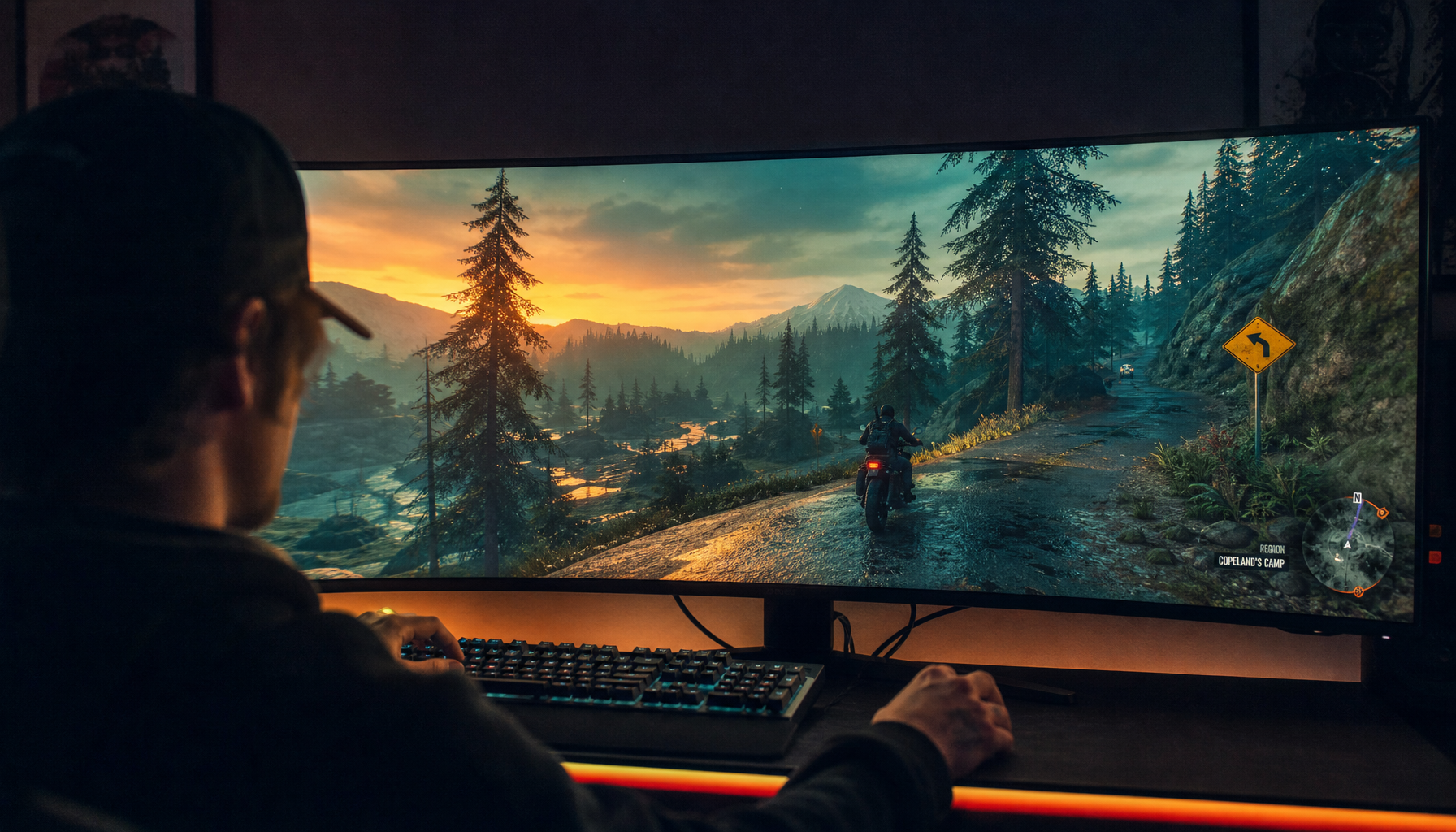
That matters because games, 3D apps, video timelines, and even some browser animations do not always deliver frames perfectly. A game may run at 141 frames per second in a quiet corridor, drop to 88 during an explosion, then rebound to 120 when the scene clears. With Adaptive Sync active, a 144Hz monitor can follow those swings more gracefully, so motion looks more continuous.
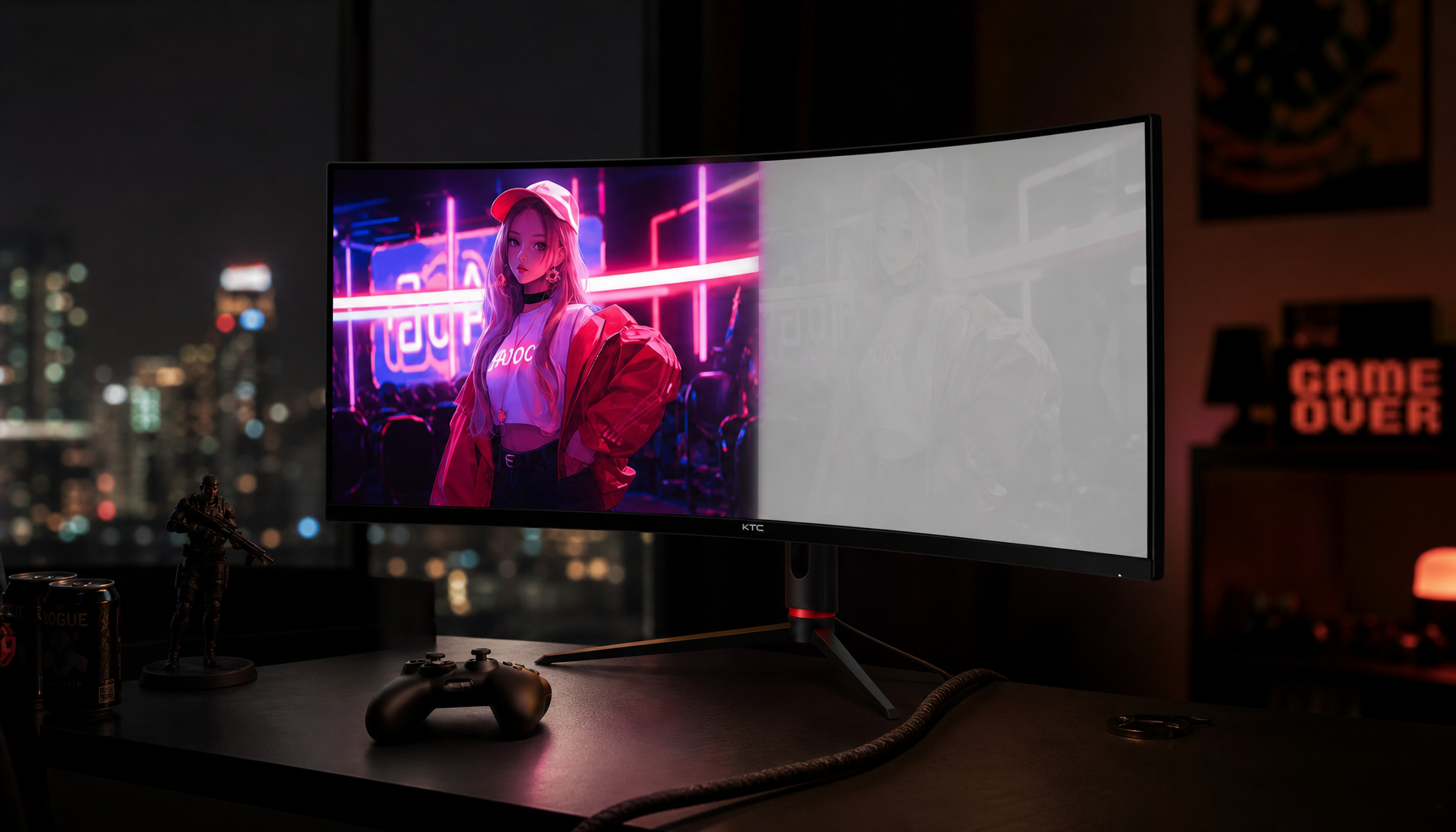
Fixed refresh is the older, simpler behavior. A 60Hz display refreshes every 16.7 milliseconds, a 144Hz display every 6.9 milliseconds, and a 240Hz display every 4.2 milliseconds. That rigid rhythm is predictable, but it can clash with real-world frame delivery. When the graphics card is late, the screen may repeat a frame. When the graphics card is early or out of phase, the display can show parts of two frames at once.
Adaptive Sync vs. Fixed Refresh
Feature |
Adaptive Sync |
Fixed Refresh |
Refresh behavior |
Changes with frame output |
Stays at one set rate |
Main benefit |
Reduces tearing and uneven motion |
Simple, predictable timing |
Best use |
Gaming, high-motion visuals, variable workloads |
Static office work, locked-frame video, basic displays |
Key risk |
Needs compatible hardware and settings |
Can tear or stutter when frame rate fluctuates |
Buying priority |
High for gaming and mixed-use displays |
Acceptable for low-motion productivity |
Why Fixed Refresh Can Look Broken Even on a Fast Monitor
A fixed refresh monitor is not automatically bad. For spreadsheets, writing, coding, dashboards, email, and most office tools, a stable 60Hz or 75Hz panel can feel perfectly usable. The problem starts when the content is moving fast and the source device cannot keep the same rhythm as the display.
Screen tearing happens when the monitor shows portions of multiple frames at once. In a racing game, that might appear as a horizontal split across a guardrail. In a shooter, it may show up when you quickly flick across a doorway. In a video edit preview, it can make motion look less trustworthy when you are judging timing.

Traditional vertical sync can hide tearing by forcing the graphics card to wait for the monitor’s next refresh. That can clean up the image, but it may add delay or create visible judder when the frame rate falls below the display’s fixed target. Adaptive Sync is more flexible because it changes the monitor’s timing instead of forcing the graphics card into a rigid queue.
Certified and Compatible Variable Refresh Explained
Adaptive Sync is the broader concept. Some monitors use open variable-refresh implementations, while others use more tightly controlled certification programs. The practical buying landscape is now more flexible than it used to be.
Some reviews note that variable-refresh monitors tend to be cheaper, while performance can be comparable, though compatibility is not always guaranteed when mixing ecosystems. Other testing makes the same value point, noting that many cross-compatible variable-refresh monitors now work well with major graphics cards.
That does not mean every badge is equal. A monitor labeled “Adaptive Sync” may support variable refresh without holding an official premium or compatibility certification. One KTC H27P3 review found that the monitor offered adaptive sync and worked in testing with a desktop graphics card and a laptop, but it was not officially certified under the major gaming-monitor programs. That is the real buying nuance: basic support can work, but certification gives you more confidence before purchase.
When Adaptive Sync Makes the Biggest Difference
Adaptive Sync matters most when frame rate fluctuates inside the monitor’s variable refresh range. If your 144Hz monitor supports Adaptive Sync from 48Hz to 144Hz, and your game usually runs between 70 and 135 frames per second, you are in the sweet spot. Motion should feel cleaner because the display can keep pace with the game rather than forcing the game into the display’s fixed schedule.
The benefit is smaller when the frame rate is already locked and stable. A console game capped at 60 frames per second on a 60Hz display may look fine if it rarely drops. A video running at a consistent cinematic frame rate does not need the same flexibility as an esports match. For office productivity, Adaptive Sync is nice to have, but it should not outrank text clarity, ergonomics, brightness, USB-C power delivery, or color accuracy.
Resolution also changes the value equation. A 4K display renders 8.3 million pixels per frame, compared with 3.7 million at 1440p, so higher resolutions require more graphics power. That means Adaptive Sync can be especially useful on 4K gaming monitors, where frame rates often swing more than they do at 1080p or 1440p. If your GPU cannot hold 144 frames per second at 4K, variable refresh can make the dips feel less disruptive.
Pros and Cons of Adaptive Sync
The main advantage is smoother perceived motion. It reduces tearing without leaning as heavily on traditional vertical sync, and it helps games feel more fluid when the frame rate moves around. It can also make a midrange graphics card feel more capable because occasional dips are less jarring.
The second advantage is value. You do not always need to buy the highest-refresh-rate panel to get a better experience. A well-tuned 144Hz Adaptive Sync monitor can feel better than a poorly matched 240Hz fixed-refresh setup if your system rarely reaches 240 frames per second.
The tradeoff is compatibility. You need the monitor, graphics hardware, cable, port, driver, and settings to cooperate. DisplayPort is often the safest path on desktop PCs, while HDMI support varies more by monitor, GPU, and console generation. You also need to check the supported variable refresh range, because a monitor that only syncs from 60Hz to 144Hz may not help much if your game often falls into the 40s.
Another tradeoff is that Adaptive Sync does not fix every motion problem. It will not erase slow pixel response, heavy ghosting, weak overdrive tuning, low frame rate, bad game pacing, or blurry upscaling. If a panel has poor response times, variable refresh can make timing smoother while the pixels themselves still smear.
How to Set It Up Correctly
Start with the monitor’s on-screen menu and enable Adaptive Sync or variable-refresh mode. Then open your GPU control panel and enable variable refresh for that display. On Windows, confirm that the monitor is running at its maximum refresh rate, because many high-refresh displays default to 60Hz after first connection.

Use a game you already know for testing. Pick a scene with steady sideways movement, such as a training map, a racing replay, or a camera pan across vertical objects. Turn Adaptive Sync off, observe tearing or uneven motion, then turn it back on and compare. The difference is easiest to see when the frame rate is below the monitor’s maximum refresh rate but still inside the supported range.

For competitive play, cap the game slightly below the monitor’s top refresh rate. On a 144Hz display, a cap around 141 frames per second is a common practical target. This helps the game stay inside the variable refresh window instead of bouncing into behavior where vertical sync, frame caps, and the monitor’s ceiling can interact unpredictably.
What to Look for When Buying
For a gaming monitor, prioritize a clear Adaptive Sync badge, the refresh range, and GPU compatibility before chasing headline refresh rate. A 165Hz display with reliable variable refresh, good response tuning, and strong input behavior is usually a smarter buy than a 240Hz panel with vague support and visible smearing.
For office productivity displays, Adaptive Sync is secondary but still useful if you also game after work, preview motion graphics, or use the same screen with a laptop and console. In that case, look for a balanced panel: sharp text, height adjustment, enough brightness for your room, USB-C if you dock a laptop, and Adaptive Sync as the motion-smoothing layer.

For portable smart screens, check the input path carefully. A USB-C portable monitor may support smooth motion with one laptop but not another if the port, cable, or graphics mode changes. The feature is only valuable when the full chain supports it.
FAQ
Is Adaptive Sync the same as refresh rate?
No. Refresh rate is how many times per second the monitor can update. Adaptive Sync is the feature that lets that refresh rate vary to match the source. A monitor can be 144Hz without Adaptive Sync, and it can also support Adaptive Sync within a range such as 48Hz to 144Hz.
Should I turn Adaptive Sync on for every game?
Usually, yes, especially for visually rich games where frame rate moves around. For esports, test it with your frame cap and latency settings. If the game already runs far above your monitor’s refresh rate and you are tuning purely for minimum input delay, you may prefer a different setup.
Is fixed refresh still worth buying?
Yes, for basic office work, static dashboards, signage, and budget displays where smooth gaming is not a priority. For a monitor that will handle modern PC gaming, console play, or mixed work and entertainment, Adaptive Sync is one of the highest-value motion features to have.
Adaptive Sync is not a luxury label; it is a practical timing tool. Choose it when motion quality matters, verify the range and certification before buying, and pair it with a resolution your hardware can actually drive. The best display is not the one with the biggest number on the box; it is the one that keeps the image stable when your work, game, or media gets demanding.