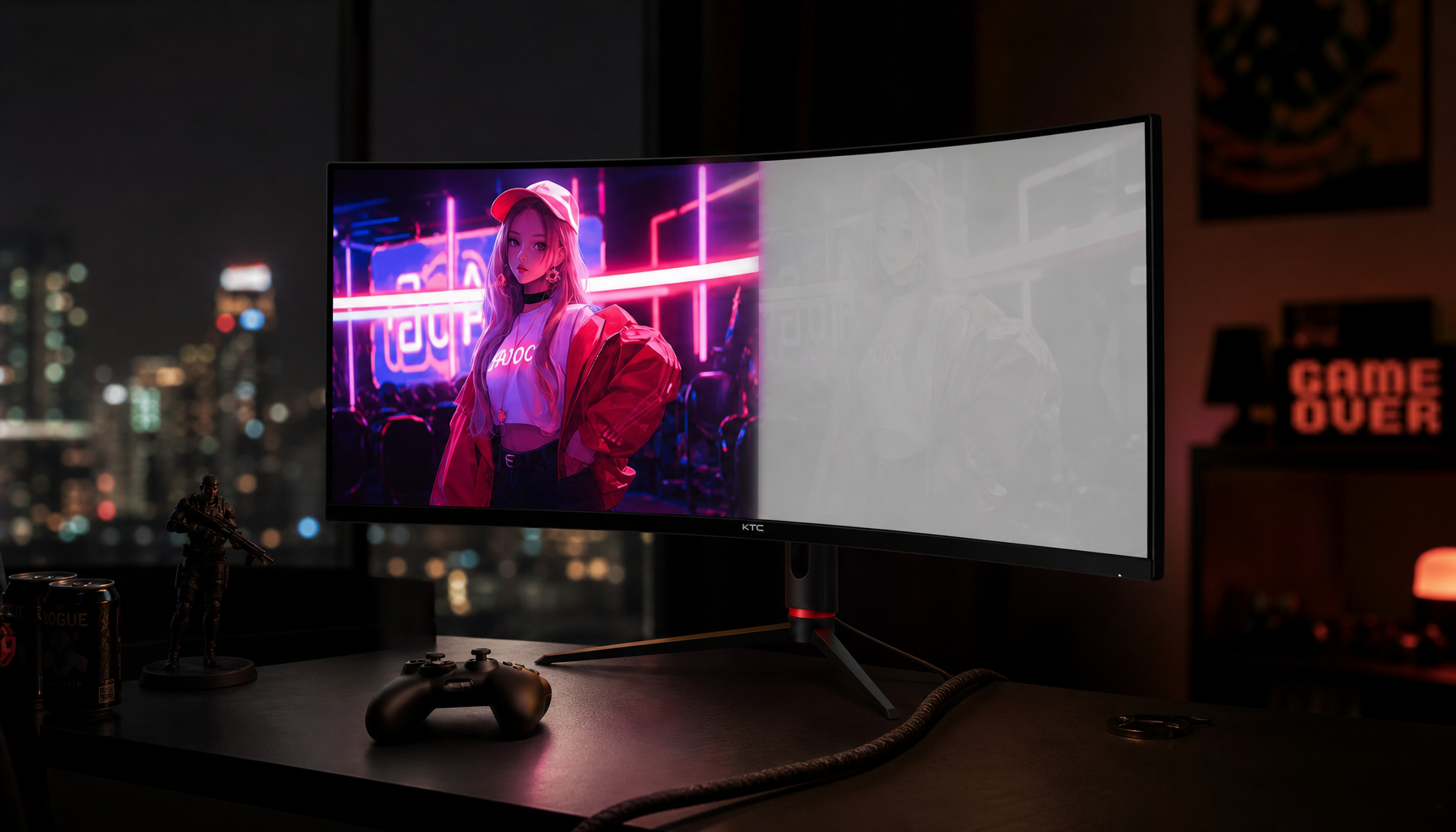
A 3440×1440 ultrawide gives you more horizontal space and a more immersive view than standard 16:9 formats, but it also asks more from your GPU and still runs into some compatibility limits.
If you have ever felt cramped on a 27-inch monitor while gaming, editing, or juggling multiple windows, 3440×1440 is usually the format that makes the biggest visible difference without jumping all the way to 4K. On a 34-inch panel, it keeps the same height as a typical 27-inch 2560×1440 display while adding meaningful width, and it stays far easier to drive than 3840×2160 in most gaming setups. The goal here is simple: help you decide whether an ultrawide gaming monitor is the right upgrade, or whether a standard 1440p or 4K display will serve you better.
Where 3440×1440 Fits Among Common Monitor Formats
Resolution and aspect ratio
A 3440×1440 ultrawide sits in the consumer “21:9” class, although its exact aspect ratio is 43:18. That puts it well outside the standard 16:9 shape used by 1920×1080, 2560×1440, and 3840×2160 monitors. In practical buying terms, it is the format most commonly associated with 34-inch ultrawide gaming monitors and productivity-focused widescreen displays.
The main difference is not height but width. A 21:9 ultrawide monitor typically uses 3440×1440, which keeps the same 1,440-pixel vertical resolution as standard 2560×1440 but adds much more horizontal room. That is why it feels closer to a widened 1440p monitor than a step toward 4K.

Pixel count and what it means
A 2560×1440 panel renders just under 3.7 million pixels, while 3440×1440 renders just under 5 million. That means ultrawide 1440p asks your system to draw about 35% more pixels per frame than standard 1440p, but still far fewer than 4K.
That middle position is why 3440×1440 has become such a common recommendation for high-refresh-rate monitors. It gives a clear jump in usable screen width and gaming immersion without the full rendering cost of 3840×2160, which pushes more than 8.29 million pixels per frame on a standard 4K display.
How 3440×1440 Compares With 2560×1440 and 4K
Format |
Typical Aspect Ratio |
Total Pixels |
Common Monitor Sizes |
Main Strength |
Main Tradeoff |
1920×1080 |
16:9 |
2.07 million |
24–27 in |
Lowest GPU load, low cost |
Least workspace and detail |
2560×1440 |
16:9 |
3.69 million |
27–32 in |
Strong balance for high refresh gaming |
Less horizontal room than ultrawide |
3440×1440 |
21:9 |
4.95 million |
34–39 in |
Wider field of view and better multitasking |
More GPU demand, mixed support in some content |
3840×2160 |
16:9 |
8.29 million |
27–32 in and larger |
Sharpest text and image detail |
Hardest to drive in games |
The sweet spot argument
For many PC buyers, 1440p ultrawide monitors hit a useful middle ground. You get a panel that is often treated like a 27-inch 1440p display with extra width, which works well for immersive games and side-by-side apps without forcing the same GPU class that 4K often demands.
That matters even more if you are shopping for a gaming monitor above 144Hz. Many systems can hold high frame rates at 3440×1440 more comfortably than at 4K, especially in newer AAA titles where native 4K at very high refresh rates can require aggressive upscaling or frame generation.
When 4K still wins
A 4K monitor remains stronger for pure sharpness, fine text, and detailed creative work. On 27-inch and 32-inch panels, the higher pixel density makes spreadsheets, photo detail, and UI edges look cleaner, even when platform scaling is used.
That advantage is most obvious if your work depends on native-detail review, such as 4K video editing or close image inspection. If your priority is maximum clarity over width, a standard 16:9 4K display is still the safer choice than a 3440×1440 ultrawide.
What Changes in Gaming Performance and Immersion
GPU demand is real, but manageable
From a performance standpoint, 4K requires far more render load than 1440p, and 3440×1440 lands between the two. That makes ultrawide appealing for players who want better immersion than 16:9 without cutting frame rates as hard as a jump to UHD.
In real buying scenarios, that means a mid-to-upper-tier GPU often feels more comfortable at 3440×1440 than at 4K if your goal is smooth play on a high-refresh-rate display. It is one reason 34-inch ultrawide gaming monitors remain popular in OLED and fast LCD lineups.
Immersion depends on the game
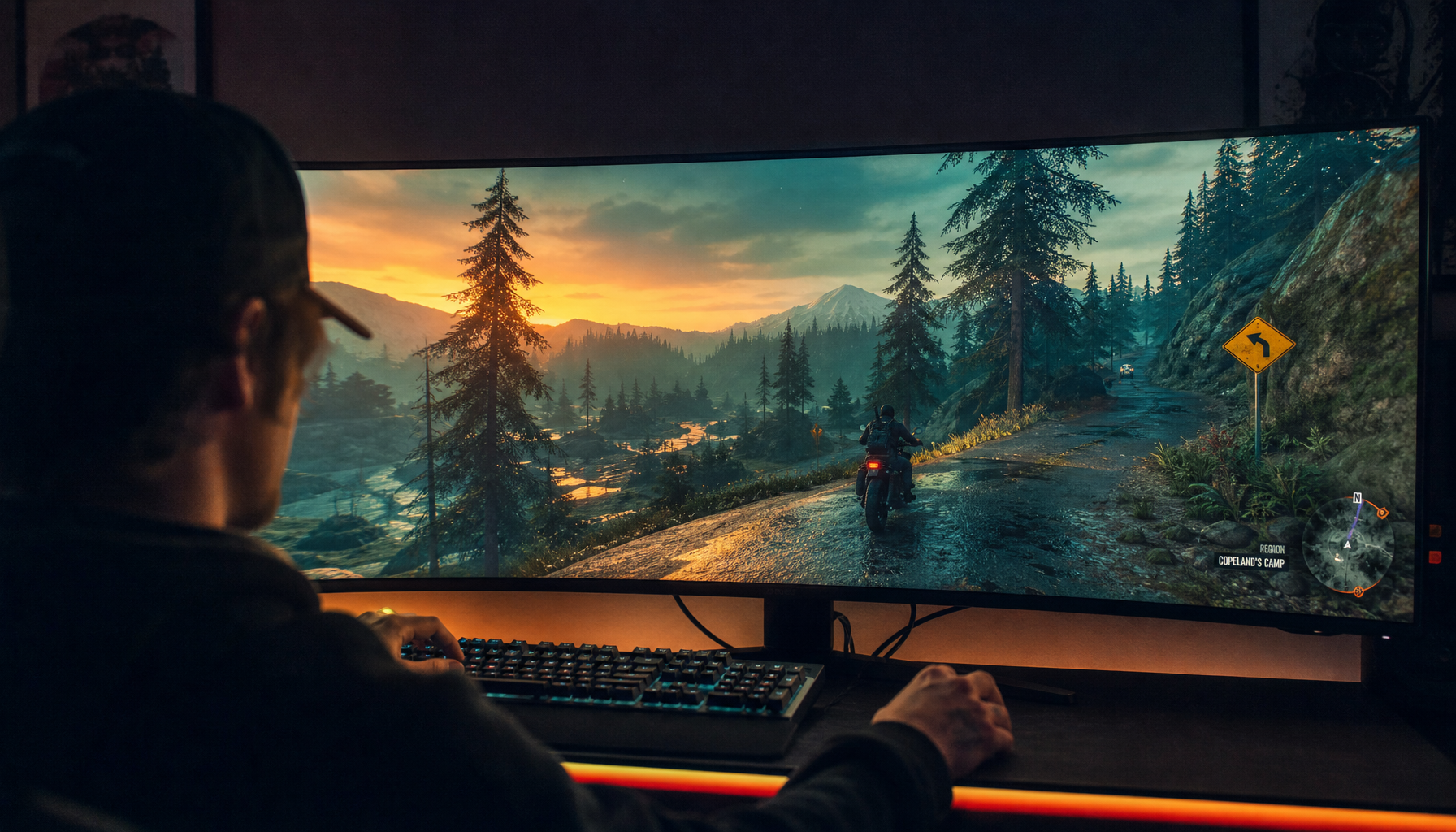
A 3440×1440 ultrawide monitor is especially well suited to racing, simulation, and first-person games, where the added width makes the screen feel more natural and less boxed in. For slower single-player titles and atmospheric games, that extra peripheral image area can be one of the most noticeable upgrades you can make.
Support is better than it used to be, but not universal. A 3440×1440 format is widely supported by many modern PC games, while 32:9 still sees weaker support. When a title does not cooperate, it may fall back to 16:9 with black side bars, which is usually tolerable on OLED because those pixels switch fully off.
Competitive play is more mixed
For ranked shooters and esports-style games, some ultrawide implementations still create drawbacks. A few games lock gameplay to 16:9, push HUD elements too far into the corners, or stretch the image at the edges in ways that can be distracting.
That is why many competitive players still prefer standard 2560×1440 at high refresh rates. If your main concern is focus, consistency, and broad game compatibility, a fast 16:9 1440p monitor is often the cleaner choice than ultrawide.
Is Ultrawide Better for Work and Everyday Use?
More width changes how you arrange windows
A 21:9 ultrawide display is effectively designed to reduce the need for dual monitors by giving you one uninterrupted canvas. In practice, that means two large windows side by side without a bezel in the middle, or even three narrower windows if your apps and eyesight allow it.

For coding, spreadsheets, browser-based work, and timelines in editing apps, that extra width is usually the biggest day-to-day benefit. It is easier to keep a document open next to a spreadsheet, or a code editor next to logs and reference docs, without constantly shuffling windows.
It is not the same as getting a sharper screen
A WQHD ultrawide panel has about 40% fewer pixels than 4K, so it does not match 4K for text crispness or fine image detail. If you sit close to your display and care more about character sharpness than screen width, standard 4K can look cleaner, especially on 27-inch and 32-inch panels.
That tradeoff becomes important in office-heavy or design-heavy workflows. Ultrawide is excellent for room to spread out, but it is not automatically the best answer for every professional desk. Width helps organization; pixel density helps clarity.
Screen sharing and media are common pain points
A 34-inch ultrawide used for productive work can create screen-sharing issues because viewers on laptops or smaller 16:9 screens may struggle to read full-screen shared content. If you spend a lot of time in remote meetings, that is a practical downside worth considering before you buy.

The same issue shows up with video. Most streaming platforms still deliver standard 16:9 content, so movies and shows can look fine, but videos on a platform, sports, and general streaming often leave black bars on the sides rather than filling the whole panel.
Who Should Buy 3440×1440, and Who Should Skip It?
Buy it if you want the best balance
A 34-inch ultrawide makes sense if you want one monitor for both gaming and multitasking, and you are trying to balance immersion, desktop space, and realistic GPU requirements. It is especially strong for PC players who want a high-refresh-rate monitor without paying the full performance tax of 4K.
It also fits buyers who dislike dual-monitor bezels but still want room for multiple apps. In a single-monitor setup, 3440×1440 is often the format that feels immediately more spacious without becoming awkwardly tall or expensive.
Skip it if your priorities are different
A standard 16:9 monitor is usually the better buy if you focus on console gaming, content that is mostly 16:9, or maximum sharpness for office and creative work. Consoles do not properly support ultrawide output, so a 27-inch or 32-inch 4K display is generally the smarter fit for major game consoles or mixed PC-and-console setups.
You may also want to skip ultrawide if you mainly play competitive games or if you are buying around a strict GPU budget. Standard 2560×1440 remains easier to drive, easier to support, and easier to recommend as an all-around gaming monitor format.
FAQ
Q: Is 3440×1440 better than 2560×1440 for gaming?
A: It is better if you want a wider field of view and a more immersive feel, especially in racing, simulation, and single-player games. It is not automatically better for competitive gaming, and it needs about 35% more rendering power than standard 1440p.
Q: Is 3440×1440 closer to 1440p or 4K in performance?
A: It is much closer to 1440p. At about 4.95 million pixels, it sits well above 2560×1440 but far below 4K’s 8.29 million pixels, so high frame rates are usually more achievable than on UHD monitors.
Q: Are ultrawide monitors good for consoles and streaming video?
A: Usually no, at least not as a primary reason to buy one. Consoles do not properly support ultrawide aspect ratios, and much 16:9 video content will show black bars on the sides instead of filling the screen.
Key Takeaways
If you want one monitor that improves both PC gaming and desktop workspace, 3440×1440 is often the most practical ultrawide resolution to buy. It gives you noticeably more room than 2560×1440, stays much easier to run than 4K, and works especially well in 34-inch high-refresh-rate gaming monitors.
Choose 3440×1440 if your main goal is balanced performance, immersion, and multitasking on a single screen. Choose 2560×1440 if you want the simplest high-refresh gaming option, and choose 4K if text sharpness, native detail, or console support matter more than extra width.
References
- Ultrawide formats - a platform
- 1440p ultrawides vs high-end 4K monitors - a platform
- What to know before buying an ultrawide - a platform
- 3440×1440 vs 2560×1440 discussion - a platform
- 1440p vs 4K - a platform
- 21:9 vs 16:9 productivity experience
- 3440×1440 vs 4K gaming discussion
- 1440p vs 4K productivity and gaming tradeoffs