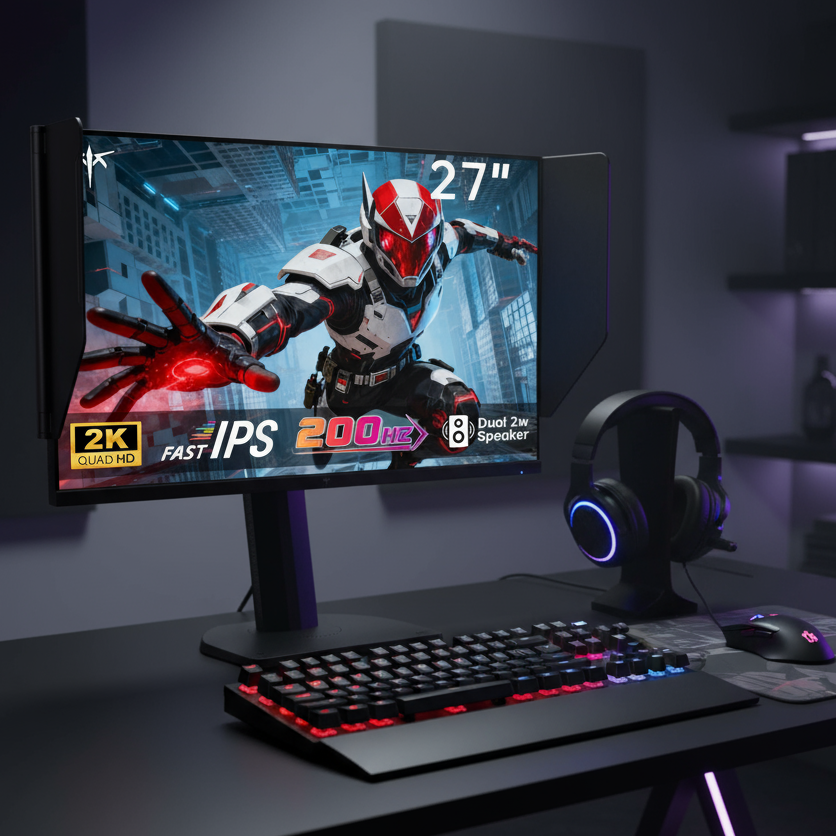
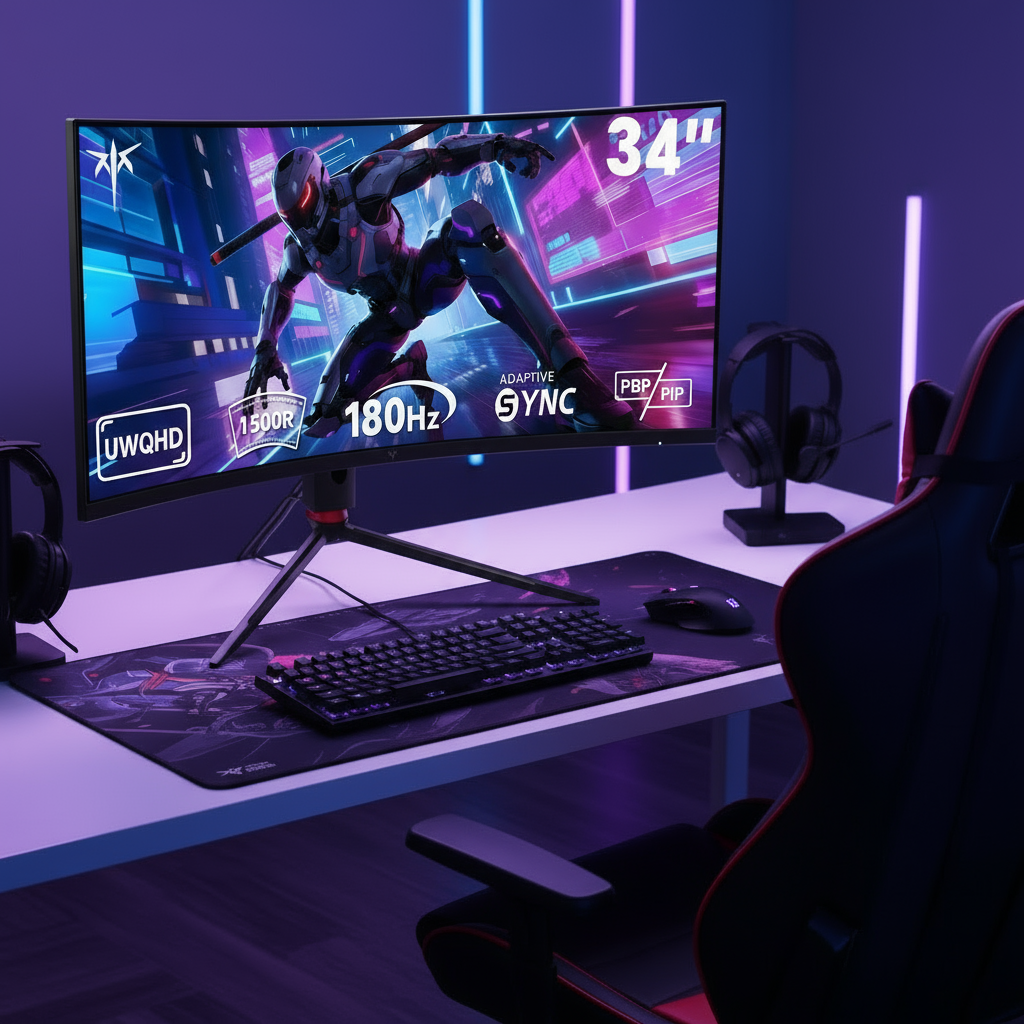


A high-refresh-rate monitor can make motion look clearer, but it cannot fix uneven frame pacing, cadence mismatches, or a weak playback path on its own.
If your timeline preview still looks jumpy on a fast gaming monitor, you are probably seeing a timing problem, not a bad panel. Real-world cases show 60 fps video becoming smoother at 120 Hz or 60 Hz than at 144 Hz, and one dual-monitor editing setup stopped lagging only after the displays were swapped between ports. You can use that pattern to figure out whether the problem is cadence, adaptive sync, or the monitor setup itself.
Refresh Rate Does Not Equal Smooth Playback
More refreshes do not create more frames
FPS and refresh rate are connected, but they are not the same thing. Your GPU or editing app produces frames, and your monitor only redraws whatever frame it receives. A 240 Hz display can repeat the same late frame four times, so a premium gaming monitor or ultrawide panel still looks choppy if the playback engine is delivering frames unevenly.
 High Hz improves clarity, not timing
Frame rate and refresh rate while playing a video also affect how motion feels in different ways. A low or inconsistent source cadence still looks stepwise because the display is not inventing missing frames between edits, pans, or camera switches. In practical terms, 23.98 fps footage still behaves like 23.98 fps footage, and 25 fps clips can still look visibly less fluid during motion even on a high-end desktop monitor.
Why editors misread the symptom
This is why timeline stutter often gets blamed on the display first. The monitor is the most visible part of the chain, but the real failure can sit in decode, GPU output, browser rendering, or the editor’s program monitor. High refresh rate helps when the signal is healthy; it does not repair poor delivery.
 Cadence Mismatch Is the Classic 144 Hz Problem
Why 60 fps can look wrong at 144 Hz
60 fps on a 144 Hz display can produce uneven cadence because 60 does not divide evenly into 144. Some frames stay on screen slightly longer than others, and that uneven hold time shows up as judder. This is one of the most common reasons a fast 144 Hz monitor can make 60 fps timeline playback look worse than expected.
Matching refresh to content often works better
Forcing 120 Hz removed 60 fps judder on a video platform in one real-world test, while forcing about 60 Hz became the most reliable fallback across video, games, and emulators. That lines up with what many editors notice on the desk: once the refresh rate matches the source cadence more cleanly, pans and motion graphics stop looking irregular.
Why 120 Hz and 240 Hz are often easier to live with
Adaptive-Sync playback behavior with 25p and 50p video points to the same lesson from another angle. Refresh rates that map cleanly to the content, such as 100 Hz for 50 fps or 120 Hz for 24, 30, and 60 fps, are often more practical than leaving the desktop at one high but awkward setting. For mixed editing and gaming, that makes 120 Hz and 240 Hz especially useful monitor targets.
 Adaptive Sync Helps Only When the Whole Path Supports It
VRR is not a universal fix for video playback
Adaptive-Sync can fail to follow video frame rate in fullscreen browser playback even when it behaves correctly in other apps. In that example, a 200 Hz monitor matched 25 fps and 50 fps properly in one media player, but fullscreen browser playback stayed tied to the desktop setting or fluctuated badly enough to cause visible judder. VRR helps only when the app, driver, OS path, and monitor all cooperate.
API and app behavior still matter
Adaptive sync behavior can vary by API and workload. One setup reduced judder in some graphics API cases, yet other graphics APIs still showed stutter or tearing, and desktop video remained inconsistent. That matters if you use one monitor for games, another for timeline preview, and a browser for client review: the same panel can look excellent in one path and poor in another.
What this means for monitor buyers
Treat adaptive sync as a useful capability, not as a guarantee. A monitor with adaptive sync compatibility is still worth considering, but the buying decision should also weigh fixed refresh options, stable desktop behavior, and how often you preview 24 fps, 30 fps, 50 fps, or 60 fps content outside games.
Your Monitor Setup Can Be the Bottleneck
Dual-monitor routing can change playback quality
A dual-monitor routing change eliminated timeline lag in one four-camera 23.98 fps edit, even though the same clips played normally in the source monitor and external players. The lag appeared only in the program monitor until the 4K and 1080p displays were swapped between output paths. That is a strong signal that monitor topology and port assignment can matter as much as refresh rate.
 High-resolution and ultrawide layouts add pressure
A 144 Hz monitor can still show laggy video playback when the playback chain is weak or mismatched. Add a high-resolution ultrawide monitor, a second preview display, or a portable monitor connected through an adapter, and the system has more pixels and more output complexity to manage. If stutter appears only after the second screen is attached, isolate the display path before blaming the timeline itself.
Cyclic hitching usually points beyond simple cadence math
High refresh displays are not the root cause of every stutter case. Cyclic stutter every few seconds can come from power management, thermal behavior, or unstable refresh handling rather than from 60-on-144 judder alone. If the playback looks smooth for a moment and then hitches in a repeating pattern, the fix is usually deeper than changing the monitor to its highest advertised Hz.
What to Prioritize When Buying a Monitor for Smoother Playback
Specs that matter more than headline refresh rate
FPS and refresh rate should stay reasonably close if you want a display to feel smooth in both gaming and editing. For timeline work, the better question is not “How high is the Hz number?” but “Which refresh modes, sync behaviors, and output paths make my common footage look stable?”
Monitor factor |
Why it matters for timeline playback |
Better fit for mixed editing and gaming |
Common failure mode |
Fixed refresh options |
Lets you match common cadences more cleanly |
Easy switching between 60 Hz, 100 Hz, 120 Hz, or 240 Hz |
Living at 144 Hz and getting 60 fps judder |
VRR support |
Can reduce mismatch when the app path supports it |
Wide, stable VRR behavior in real apps, not just games |
Works in games but not in browser or editor preview |
Resolution and aspect ratio |
More pixels increase output and GPU load |
A resolution your system can preview smoothly at full desk setup |
Smooth on one screen, choppy on 4K or ultrawide dual displays |
Port layout |
Output path can affect timing and lag |
Direct, reliable connections with flexible routing |
Adapter or port assignment causes program monitor lag |
Multi-monitor flexibility |
Editing desks often use two displays |
Stable mixed-resolution, mixed-refresh behavior |
Playback improves only after disconnecting the second screen |
A safer mixed-use monitor profile
For most readers, a 120 Hz or 240 Hz monitor with VRR, direct cable options, and stable behavior at 60 Hz and 120 Hz is a safer long-term choice than a panel that is optimized around one awkward desktop refresh mode. That is especially true if you split time between 24 fps or 30 fps editing, 60 fps streaming, and high-refresh gaming.
Portable and secondary displays need the same discipline
Portable monitors and secondary preview screens should be judged by stability, not just portability or peak Hz. A smaller display that runs predictably at the refresh rates you actually use is more valuable for client previews and travel edits than a thin panel that advertises high refresh but becomes inconsistent when added to a dual-screen workflow.
FAQ
Q: Should I set my monitor to 60 Hz when editing 60 fps footage?
A: Testing 120 Hz and then about 60 Hz is sensible if 60 fps playback looks uneven at 144 Hz. In practice, 120 Hz is often the better first stop because it also handles 24 fps and 30 fps content cleanly.
Q: Will adaptive sync fix browser video and NLE playback?
A: VRR can work in one playback app and fail in another. It is helpful when the entire playback path supports it, but it should not be treated as a universal cure for timeline stutter.
Q: Is 240 Hz better than 144 Hz for video editing?
A: For cadence matching, often yes. A 240 Hz monitor divides evenly into 24 fps, 30 fps, and 60 fps content, while 144 Hz does not divide evenly into 60 fps. That said, better cadence does not solve poor frame pacing, decoder limits, or a bad dual-monitor output path.
Final Takeaway
When timeline playback stutters on a high-refresh-rate monitor, troubleshoot in this order: cadence match, playback path, then display topology. Most problems come from uneven frame delivery or mismatched refresh behavior, not from the idea of high Hz itself.
- Set the desktop refresh to match your dominant timeline cadence: 60 Hz for 60 fps, 100 Hz for 25 fps or 50 fps, and 120 Hz for mixed 24 fps, 30 fps, and 60 fps work.
- Test the same clip in the source monitor, the program or timeline monitor, a local player, and fullscreen browser playback to isolate the failing path.
- Enable VRR only after confirming the monitor and app actually use it in that mode.
- Disconnect the second display or swap port assignments if stutter appears only in a dual-monitor setup.
- Lower playback resolution or use proxies when a 4K, ultrawide, or portable second screen pushes the system too hard.
- When buying your next monitor, prioritize flexible refresh modes, a usable VRR range, and direct port options over the highest advertised Hz number.
A high-refresh-rate display is still valuable, especially for gaming monitors and mixed-use desks, but the smoothest timeline comes from clean timing and a stable monitor path, not from headline refresh rate alone.
References
- A display technology forum: 60fps Content Stutter and Judder on High Refresh Rate Laptops
- A tech Q&A site: frame rate and refresh rate while playing a video
- A browser community: Struggling to make adaptive sync work properly with video playback in a browser
- A hardware forum: 144hz monitor video lagging or stuttering problem
- An editing software community: Lag in Timeline Playback When Using Dual Monitors
- A hardware brand: Frames Per Second (FPS) vs Refresh Rate (Hz)