Software and on-screen menu settings can sometimes make flicker less noticeable, but they usually cannot remove a hardware-level cause. The most useful fixes reduce triggers, confirm stable signal settings, and show when the monitor itself is the limit.
Do your eyes feel tired, twitchy, or oddly drained after 30 to 60 minutes on a screen that otherwise looks fine? In real display tuning, changing brightness behavior, refresh settings, and motion features can make a monitor noticeably easier to use even when the panel itself is not ideal. The goal is to separate settings that truly help from settings that only mask the problem.
What “flicker” really means on modern monitors
On a modern LCD or OLED display, flicker usually is not the full-screen flashing people remember from older CRTs. It is more often rapid brightness modulation, unstable adaptive sync behavior, motion strobing, or signal instability from the GPU, cable, or driver, as described in modern monitor flicker behavior. A separate overview makes the key point in screen flicker: even when you do not consciously see the screen turning on and off, repeated brightness changes can still feel fatiguing during long sessions.
That distinction matters because software can change some flicker triggers, but it cannot rewrite the backlight hardware. If your monitor uses pulse-width modulation, or PWM, to dim the backlight, the display may still be switching light output on and off rapidly at lower brightness. Settings can make that behavior less aggressive or less visible, but they usually do not turn a PWM monitor into a truly flicker-free display.

When software settings actually help
Software and OSD changes help most when the problem is partly caused by how the monitor is being driven rather than by the panel alone. Windows support guidance in screen flickering troubleshooting starts with display drivers for a reason: if flicker started after an update, or if it appears across apps and monitors, the graphics stack may be contributing. In practice, a driver rollback or clean update can turn a jittery screen back into a stable one without changing the hardware.
Refresh rate is the next setting worth testing, but with realistic expectations. One display-tuning article notes that 75 Hz or higher can reduce visible strain for some users in eye-comfort display settings, and other monitor-setting guidance explains that higher refresh rates improve smoothness and responsiveness. The catch is that smooth motion and low flicker are not the same thing. A 144 Hz monitor that uses PWM at low brightness can still feel worse than a well-behaved 75 Hz monitor.
Brightness settings are another major lever. Display-testing guidance often notes that brightness mainly changes backlight intensity rather than color accuracy, and KTC notes that flicker can become more noticeable around 30% to 40% brightness on some displays. That makes one test especially useful: raise the monitor brightness higher than usual, then reduce perceived glare with room lighting, viewing distance, or a darker wallpaper. If discomfort drops, PWM dimming is a likely cause.
The settings most worth changing first
Disable strobing and motion-blur reduction

KTC is clear here: blur-reduction modes often create flicker by design because they use backlight strobing or black-frame insertion. If your monitor has settings such as MBR, ELMB, ULMB, Aim Stabilizer, or a “1 ms mode,” turn them off first. Competitive players sometimes accept that tradeoff for motion clarity, but for long office work or mixed gaming, these modes are frequent comfort killers.
Test adaptive sync and HDR separately
Variable refresh can reduce tearing, and monitor reviews generally treat G-SYNC and FreeSync as useful features. But KTC also notes that some monitors show VRR flicker, near-black pulsing, or HDR brightness instability. That is not a contradiction. It usually means the feature is useful in principle but poorly implemented on some displays or within certain frame-rate ranges.
A clean test is simple: use your normal game or workload for 20 to 30 minutes with VRR on, then off, then HDR off, changing one variable at a time. If eye strain or brightness pulsing drops immediately, keep the more stable mode even if it looks slightly less dramatic.

Keep native resolution and a supported refresh rate
General Windows setup guides reinforce the same practical baseline: use the monitor’s recommended or native resolution for the sharpest, least distorted image in native resolution and Windows display settings. Native resolution does not directly fix flicker, but mismatched timing can create blur, scaling artifacts, or unstable output that users often describe as flickering. It is also worth checking the monitor tab in Windows to confirm that the refresh rate is set correctly.
What software cannot fix
If a monitor dims through PWM at most brightness levels, software cannot eliminate that underlying on-off cycle. Explanations of flicker-free monitors draw the hardware line clearly: true flicker-free behavior comes from maintaining continuous light output rather than rapidly switching the backlight. That is why some users feel better immediately after moving to a genuinely flicker-free display even when all Windows settings stay the same.
Software also cannot fully solve unstable power, bad cables, or location-specific interference. Troubleshooting guidance commonly points to outdated drivers, incompatible apps, refresh mismatches, and hardware faults, while a documented forum case in a real flicker troubleshooting case shows why environmental factors and individual sensitivity can still matter after major components are swapped. If two cables, two ports, and two systems all behave the same way, the panel design itself becomes the likely ceiling.
A practical tuning workflow that usually gets answers fast
Start in Windows Display Settings and confirm that the monitor is running its recommended resolution and intended refresh rate. Then update or roll back the display driver if the issue began after a recent change, following the Windows support path.

Next, open the monitor’s OSD and switch to a neutral preset such as User or Custom. A neutral starting point matters because flashy presets often stack aggressive brightness, contrast, and image processing. Turn off motion-blur reduction, dynamic contrast, and any picture mode that changes brightness scene by scene. Test the screen at higher brightness than usual, then compare 60 Hz, 75 Hz, 120 Hz, or 144 Hz if your monitor supports them. If you game, test VRR on and off separately from HDR.
A smartphone camera can help verify what your eyes are reporting. KTC and other display makers recommend recording the panel and looking for rolling bars or banding. It is not lab-grade testing, but it is useful for comparing settings on the same screen.
Comfort still depends on the whole setup
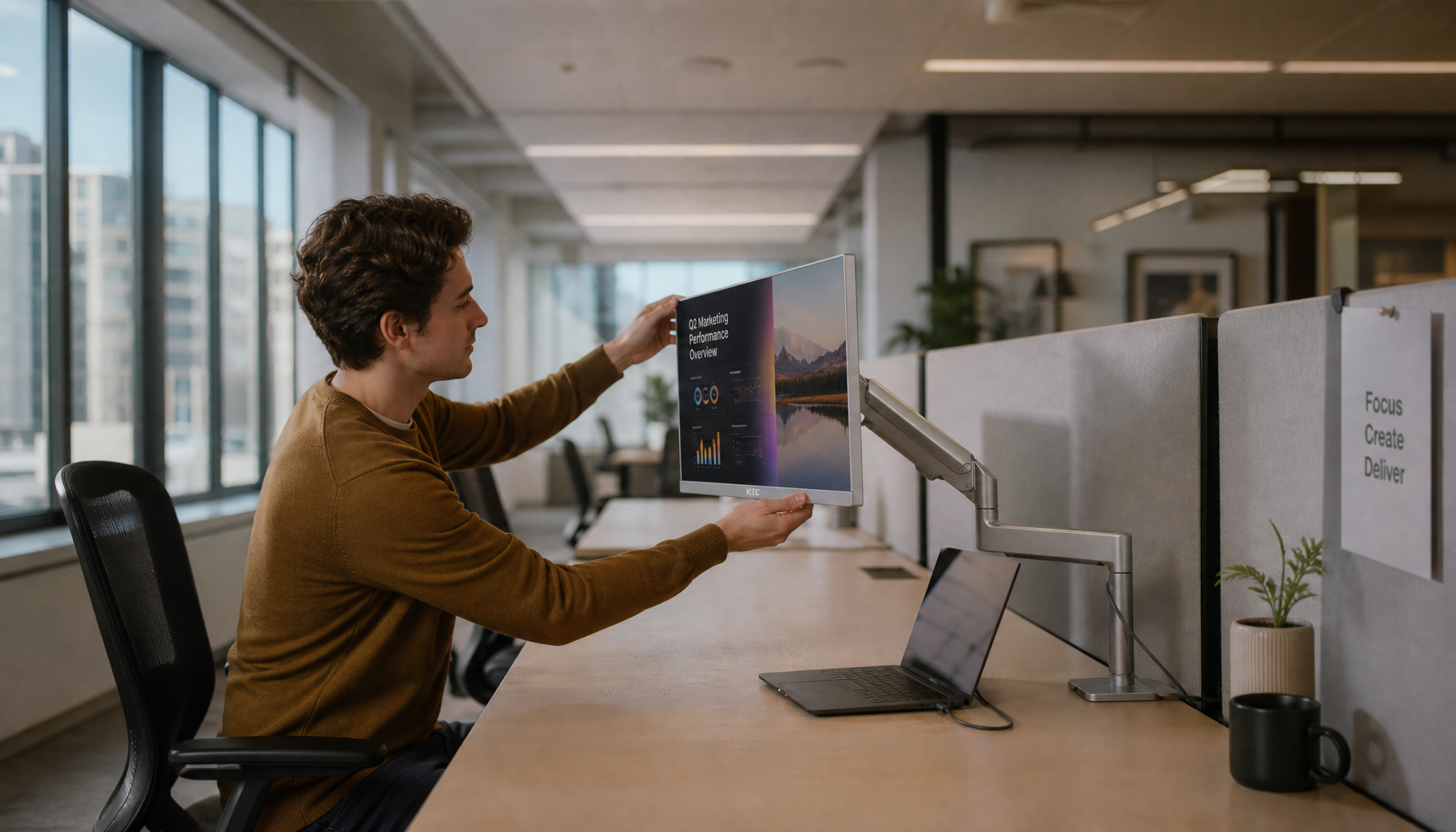
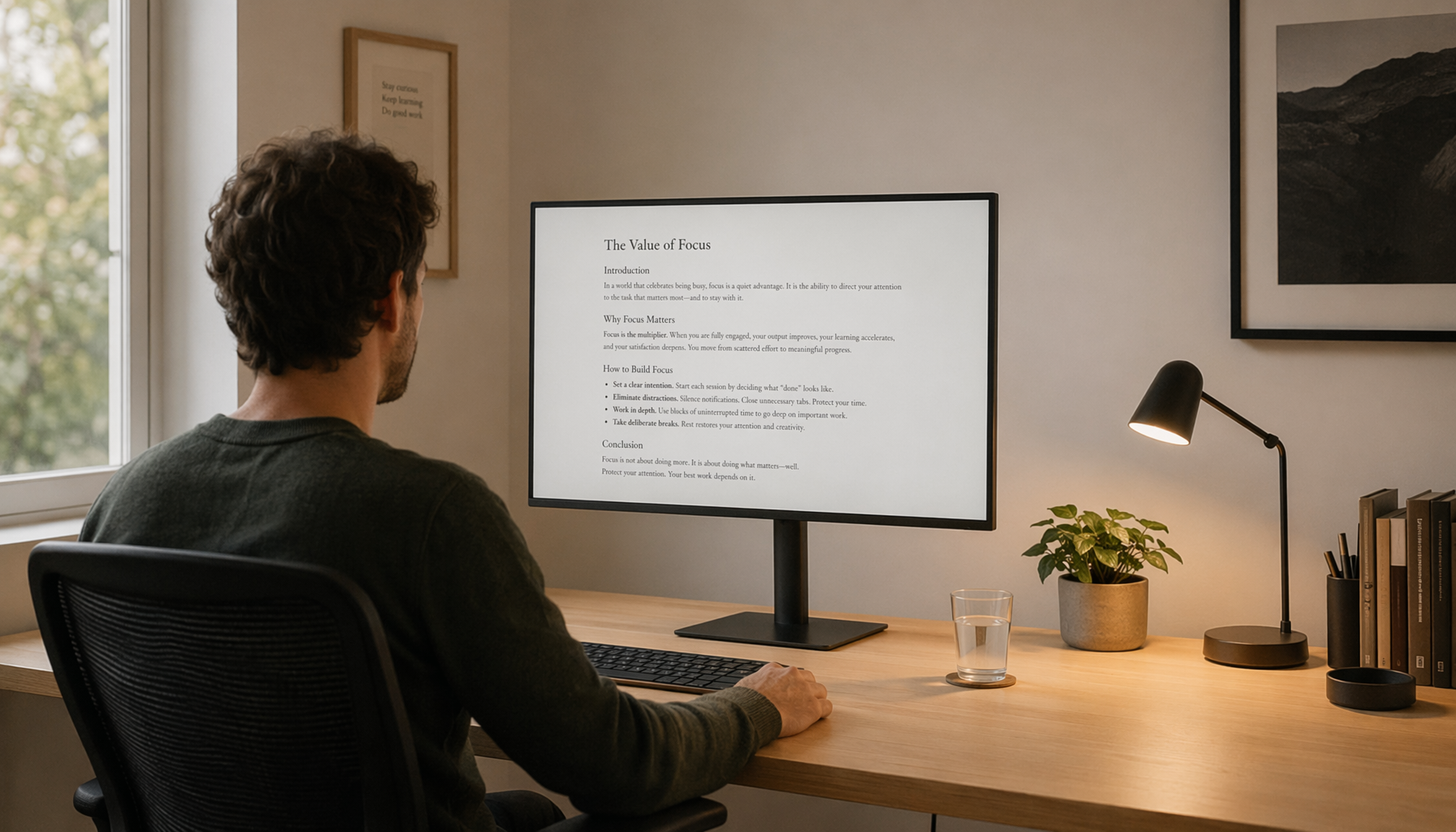
Even a well-tuned monitor becomes harder to tolerate if the workstation is poor. Ergonomics guidance recommends keeping the screen about an arm’s length away and slightly below eye level in screen positioning. The same eye-comfort advice also stresses matching brightness to ambient light and avoiding harsh contrast in a dark room. Those changes do not remove flicker, but they often lower the total visual load enough that a borderline monitor becomes usable.

Software settings can absolutely reduce flicker symptoms on a non-flicker-free monitor, especially by avoiding low-brightness PWM ranges, disabling strobing, and fixing driver or signal issues. If you still feel strain after careful tuning, the most reliable upgrade is not another menu tweak but a display with proven flicker-free dimming behavior and stable refresh control.