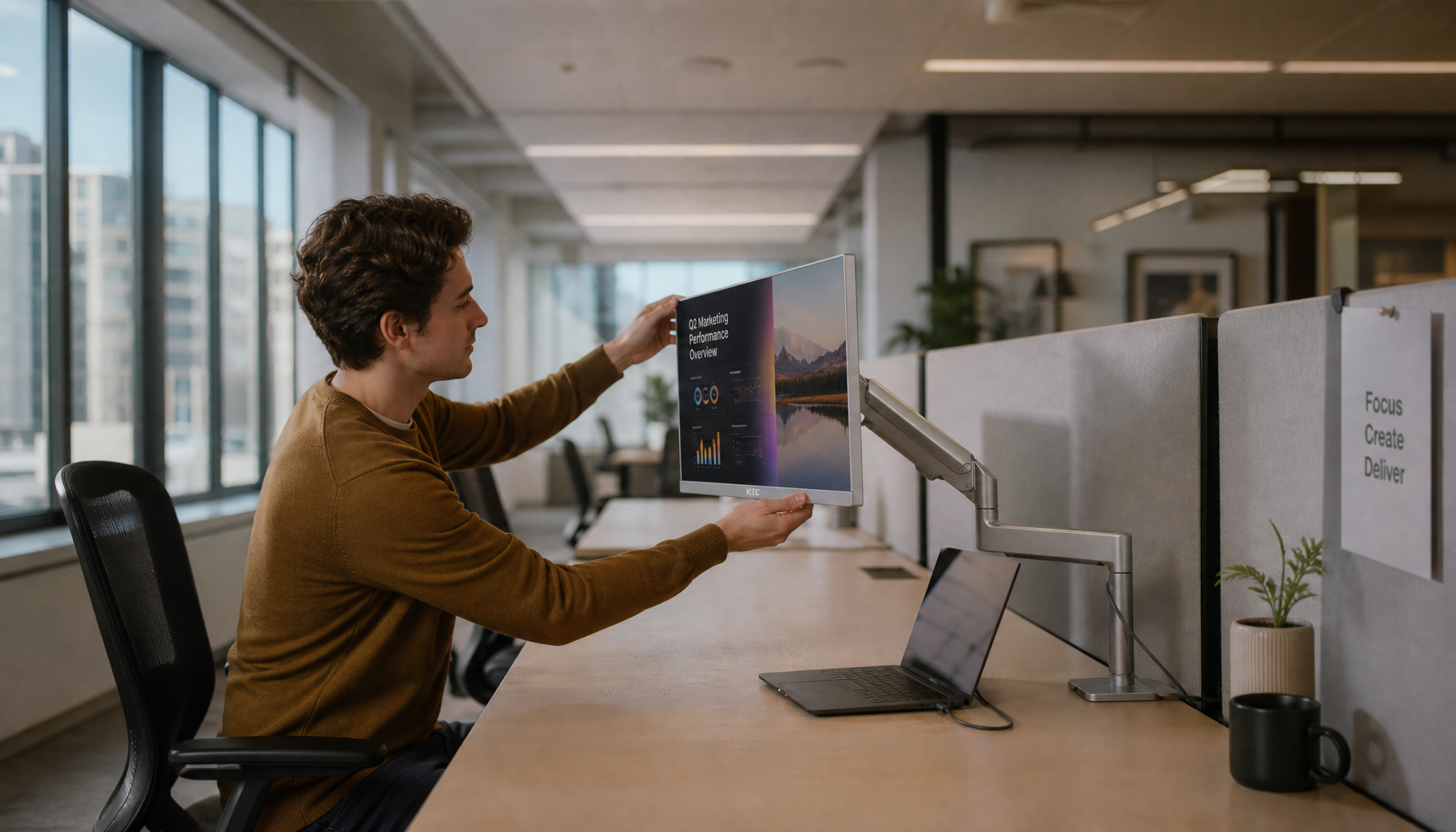
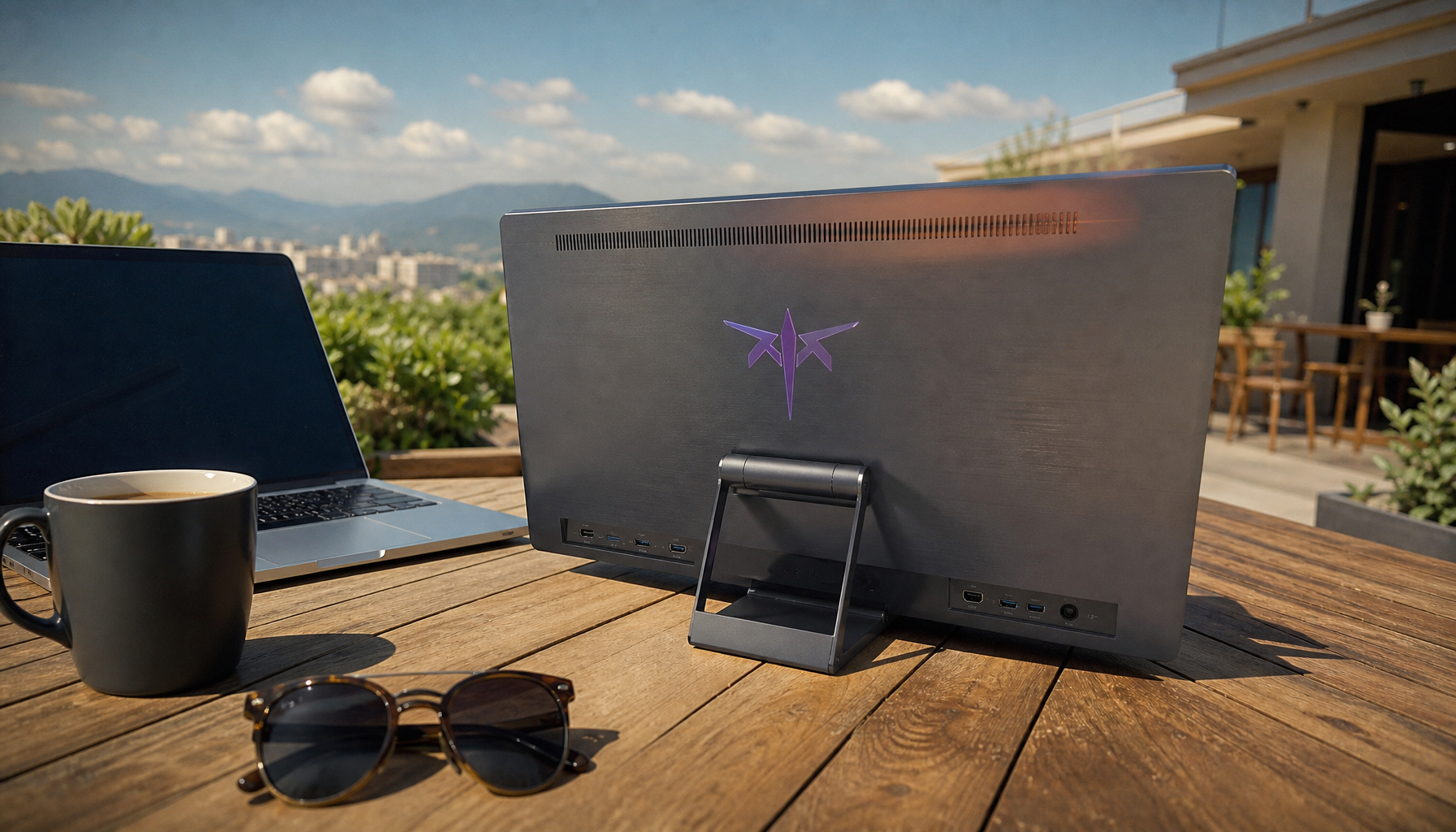
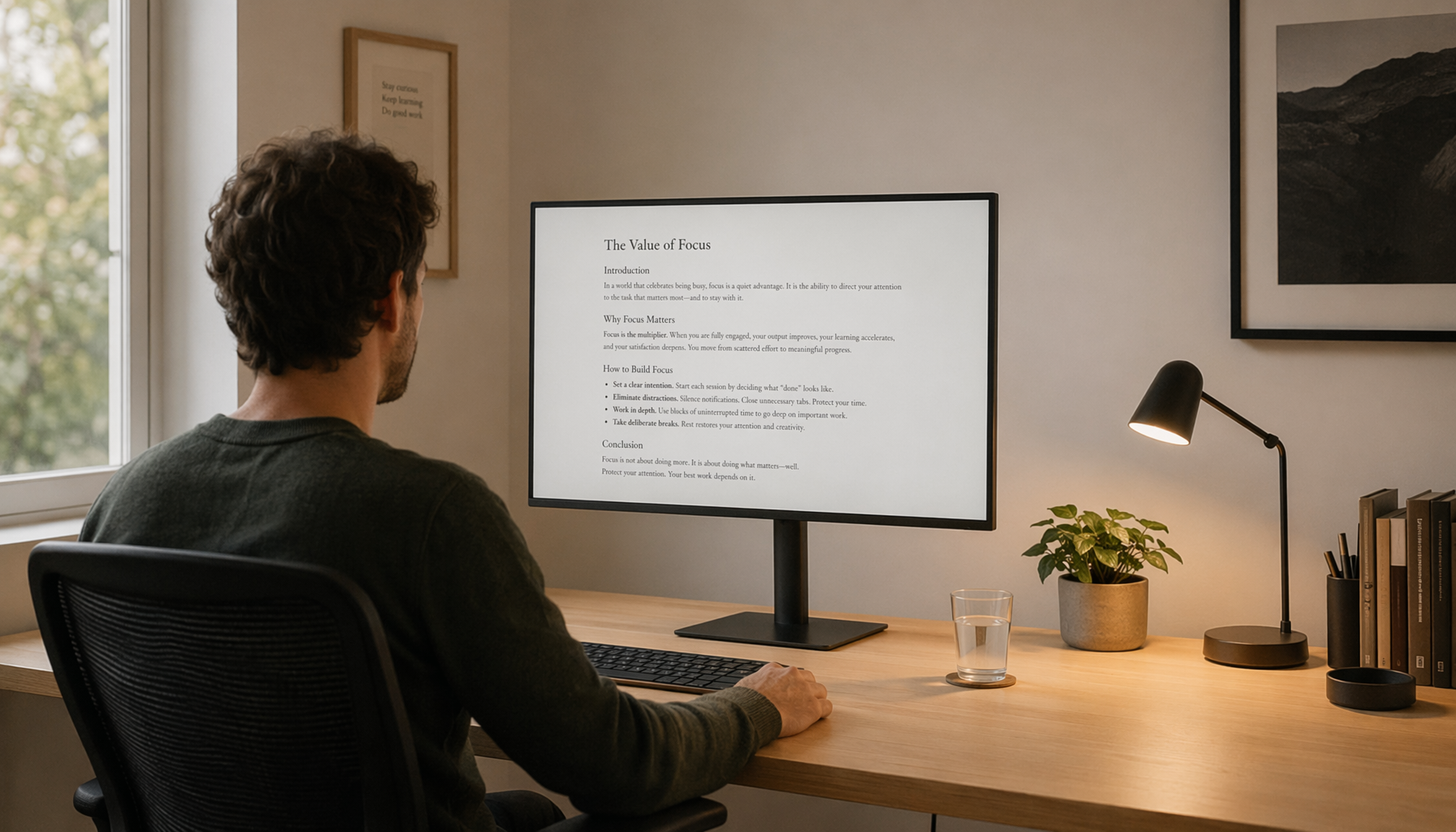
A portable monitor can work very well as a dedicated minimap, stat, chat, or system-monitor screen when it is set up as an extended display and sized and placed correctly. The biggest benefit is keeping critical information visible without crowding the main screen.
Do you keep glancing away from the action and missing pings, cooldowns, or system spikes because everything is fighting for space on one display? A small side screen can solve that problem quickly by keeping one stream of information visible at all times instead of buried behind tabs. Here is when that setup makes sense, how to build it cleanly, and what to avoid before spending money.
Why a Portable Monitor Works So Well for This Job
A portable monitor as a second screen works well here because the role is simple. It does not need to be your fastest, biggest, or most color-accurate display. It only needs to keep one critical layer of information visible without taking space from your main game or work screen. That makes portable displays a strong fit for minimaps in MOBAs and RTS games, stat dashboards for sim racing, chat or streaming panels, and performance overlays for PC tuning.
The real advantage is not raw panel quality but separation of attention. A second display for multitasking reduces tab switching and window shuffling, which is exactly the friction you feel when your minimap, build guide, damage chart, or hardware monitor keeps getting covered up. On a 27-inch main display, moving one always-on element to a 14-inch or 16-inch side screen often feels like reclaiming a meaningful part of your primary workspace without replacing the main monitor.

This setup works best when the portable screen acts like digital scratch paper rather than a second main display. In practice, that means it should hold information you check often but do not actively control every second. Chat, maps, timers, patch notes, raid mechanics, and frame-time graphs fit that role better than the main game window.
The Best Use Cases: Minimap, Stats, or Utility Screen?
The minimap-on-second-monitor workflow is one of the clearest examples of why this idea works. By cropping a game capture so only the minimap remains, you can enlarge that area on the side display and keep your central view cleaner on the main screen. This is especially effective in games where map awareness wins fights before aim does, such as MOBAs, RTS games, extraction shooters, or large-scale battlefield games.
A dedicated stat display is often even easier to set up. Portable monitors are already positioned as travel-friendly secondary displays for dashboards, tools, and reference content, so using one for hardware telemetry, racing data, overlays, or stream controls is a natural extension. If your main display is 27 inches and your side panel is 15.6 inches in portrait mode, you can keep a long stack of sensor data, chat, or logs visible without shrinking the main content.
For productivity, the value is just as strong. A portable screen beside a main display works well for team chat, email, calendars, terminals, and research notes, especially when desk depth is limited. If you work all day and then switch to gaming at night, that same panel can hold a build guide, a map, or music controls without requiring a separate office monitor.
Where the Setup Starts to Break Down
A portable gaming monitor is usually a complement, not a replacement. That matters because some buyers expect too much from a thin travel panel. Portable displays are smaller, often less adjustable, and usually not as fast or as bright as full desktop gaming monitors. If you want your side screen to show tiny text from across the room, or you expect desktop-class HDR and 240 Hz motion clarity, this is the wrong tool for the job.
Brightness and stand quality matter more than many buyers expect. Reviews of portable monitor quality consistently point to brightness, contrast, and stand design as more important than resolution alone. A cheap panel with a floppy folio stand may technically work, but if it sags, reflects overhead light, or sits too low, you may stop using it. For a stat screen you glance at every few seconds, convenience matters more than headline specs.
There is also a real portability-versus-performance split. Some guides promote large, fast options like 24.5-inch portable gaming panels, while others favor lighter 14-inch to 16-inch work-first models. That difference makes sense: larger high-refresh portable monitors feel more like compact desktop displays, while smaller panels are easier to mount, power, and tuck beside a laptop or main monitor. If your goal is a permanent minimap or telemetry screen, bigger is not automatically better. The moment the side display dominates your desk, it stops feeling like a clean auxiliary tool.
How to Set It Up So It Actually Helps
The basic setup process is straightforward: connect the monitor, choose extended display mode, arrange the screens in your operating system to match their physical position, and then fine-tune scaling, brightness, and orientation. For a minimap display, crop the game capture until only the map remains. For stats, pin the telemetry app, streaming dock, or browser dashboard full-screen on the portable panel.
Placement is where most of the benefit or frustration appears. Desktop viewing guidance makes a strong case for keeping screens within a comfortable eyeline and matching size to viewing distance. If your main display is 27 inches and you sit about 28 inches away, a 14-inch to 16-inch portable screen beside it usually works better than placing it underneath, because side glances are less fatiguing than repeated downward head movement. In portrait mode, a 15.6-inch display also gives you a tall, narrow information column that suits chat, logs, or long stat feeds.
Cable choice can make or break the experience. Many portable displays work best with a full-featured USB-C connection that carries both power and video, and some simply will not behave correctly with a charge-only cable. Buyers' guides such as USB-C and mini-HDMI compatibility checks repeatedly stress verifying USB-C DisplayPort Alt Mode, mini-HDMI backup options, and whether your laptop or graphics card can actually drive the panel at its native resolution or refresh rate. In plain terms, one clean cable is ideal, but only when your hardware truly supports it.

What Specs Matter Most for a Dedicated Side Display?
The best portable monitor for this use is usually not the one with the flashiest spec sheet. For a minimap or stat panel, 1080p is often enough on a 14-inch to 16-inch screen because the content is simple and text can be scaled. A 1440p or 1600p model can look sharper, but several reviewers note that the jump is less dramatic on small panels unless you are sensitive to scaling or use the display for dense text all day.
Use case |
Best fit |
Why it works |
Minimap or radar |
14-inch to 16-inch, 1080p or 1440p, matte IPS |
Easy to place, readable, low hassle |
Telemetry or chat |
15.6-inch, portrait-friendly, solid stand |
Tall layout suits long data panels |
Mixed work and gaming |
16:10 USB-C model with good brightness |
Better vertical space for tools and documents |
Fast side gaming panel |
15-inch to 17-inch, 120 Hz+ |
Useful if the screen sometimes doubles for play |
Refresh rate matters less for a minimap than many buyers assume, while panel stability matters more. Portable gaming options with 120 Hz, 144 Hz, or even 300 Hz do exist, and they are useful if the screen must sometimes double as a true gaming display. But for a dedicated map, stat, or utility screen, better brightness, a sturdier stand, and easier mounting usually provide more day-to-day value.
Screen size should match the role. A side display only needs to be large enough to read instantly. If your minimap or dashboard becomes so large that your eyes travel farther than they would on the main screen, the setup is no longer optimized for speed.
The Smart Buy Decision
A portable monitor for work and play is a smart purchase when you want one flexible screen that can travel, support hybrid work, and still serve as a permanent desk-side utility display. It is a weaker buy if you already have room for a normal second monitor and never move your setup, because a standard desktop display usually gives you better ergonomics and better value per inch.
If your goal is pure competitive advantage, keep your budget focused on the main gaming monitor first. A high-refresh primary gaming display affects motion clarity and responsiveness far more than any side screen can. Once that foundation is in place, a portable monitor becomes a high-leverage upgrade because it removes clutter, preserves focus, and adds information without forcing a full desk rebuild.
Used well, a portable monitor is not a gimmick. It is a compact command panel that turns spare desk space into awareness, which is exactly what a strong setup should do.