Quick panel quality verification is worth doing right away because the first day or two is usually when you still have the clearest path to a return or exchange. A simple at-home check can help you notice monitor panel quality concerns like uniformity issues, blooming, text softness, and obvious backlight problems, but it cannot certify the panel or prove a defect by itself.

Why Fast Panel Checks Matter
The main reason to inspect a new display quickly is timing. Once the return window shrinks, a visible concern becomes harder to document and harder to act on. That is especially true when you only have a few chances to compare what looks normal versus what keeps repeating in the same spot.
A good first-pass check focuses on what you can see without gear: uneven brightness, tint shifts, blooming around bright objects, blurry text, stuck or bright pixels, and backlight bleed that does not change with angle. The goal is not to diagnose everything. The goal is to catch issues early enough to retest or return with confidence.
For a broader buying framework that covers quality, support, and what to verify before purchase, see the monitor quality review framework. That kind of check is especially useful when you want a second opinion on whether a concern feels like normal variation or something worth escalating.
A useful rule of thumb: if a symptom is visible once but not repeatable, keep testing; if it comes back in the same place under the same condition, document it. That keeps the process practical and avoids overcalling a panel on a single glance.
Set Up a Simple Inspection
Start with the least distracting setup you can manage. You do not need special tools, only a stable source and a repeatable view.
- Put the monitor in a dim room if possible, because dark backgrounds make glow, bleed, and haloing easier to judge.
- Use a known-good cable and a clean source device so the check is not confused by a flaky input.
- Open plain black, white, and gray screens, plus a normal text page or spreadsheet.
- Let the monitor warm up briefly before judging the image, since backlight behavior can settle after power-on.
- Turn off dynamic wallpaper, unusual picture presets, and other visual extras for the first pass.
- Sit at your normal desk distance before deciding anything, then repeat the same view if one area looks suspicious.
A short warm-up can make checks more useful because some backlight behavior stabilizes after power-on. If the result still looks uncertain, repeat the same test after a few minutes rather than trusting one fast glance.
If text clarity is part of your concern, the subpixel layout note is worth keeping in mind. Sharpness can change when the monitor's subpixel structure does not match the OS rendering path, so soft text is not automatically a panel defect.

Run the Three Core Checks
For a quick monitor panel quality test at home, run the same three checks in the same order. That keeps the routine short enough to repeat, but detailed enough to catch the most common visible concerns.
1) Uniformity and Backlight Patterns
Open full-screen black, white, and mid-gray screens and look for uneven patches, clouding, tint shifts, edge glow, or corners that are much brighter than the center. A dark room helps, because ambient light can hide the very problems you are trying to spot. A simple screen uniformity check is enough for this first pass.
A 5% gray pattern is especially useful when you suspect subtle banding or dirty screen effect. That kind of pattern can reveal texture or stripes that a pure white screen may smooth over. The 5% gray test is a good follow-up when the first pass looks mostly fine but not perfectly even.
What matters most is repeatability. Slight variation is common, but a blotchy area that stays in the same place across black, white, and gray screens deserves a second look. If the issue changes a lot with viewing angle, that points more toward normal glow behavior than a fixed bright patch.
2) Blooming Around Bright Objects
Blooming is easiest to judge when a bright cursor, white subtitle, or small white window sits on a dark background. In that situation, do not ask whether the effect exists. Ask how distracting it is in actual use. The blooming test method is built around that exact kind of scene.
For Mini-LED and FALD-style monitors, some haloing is expected in dark scenes. That does not automatically mean the panel is bad. The real question is whether the halo spreads far enough to bother you during games, movies, or desktop use. If changing room lighting or picture mode changes the effect a lot, it may be more situational than severe.
3) Text Clarity and Fine Detail
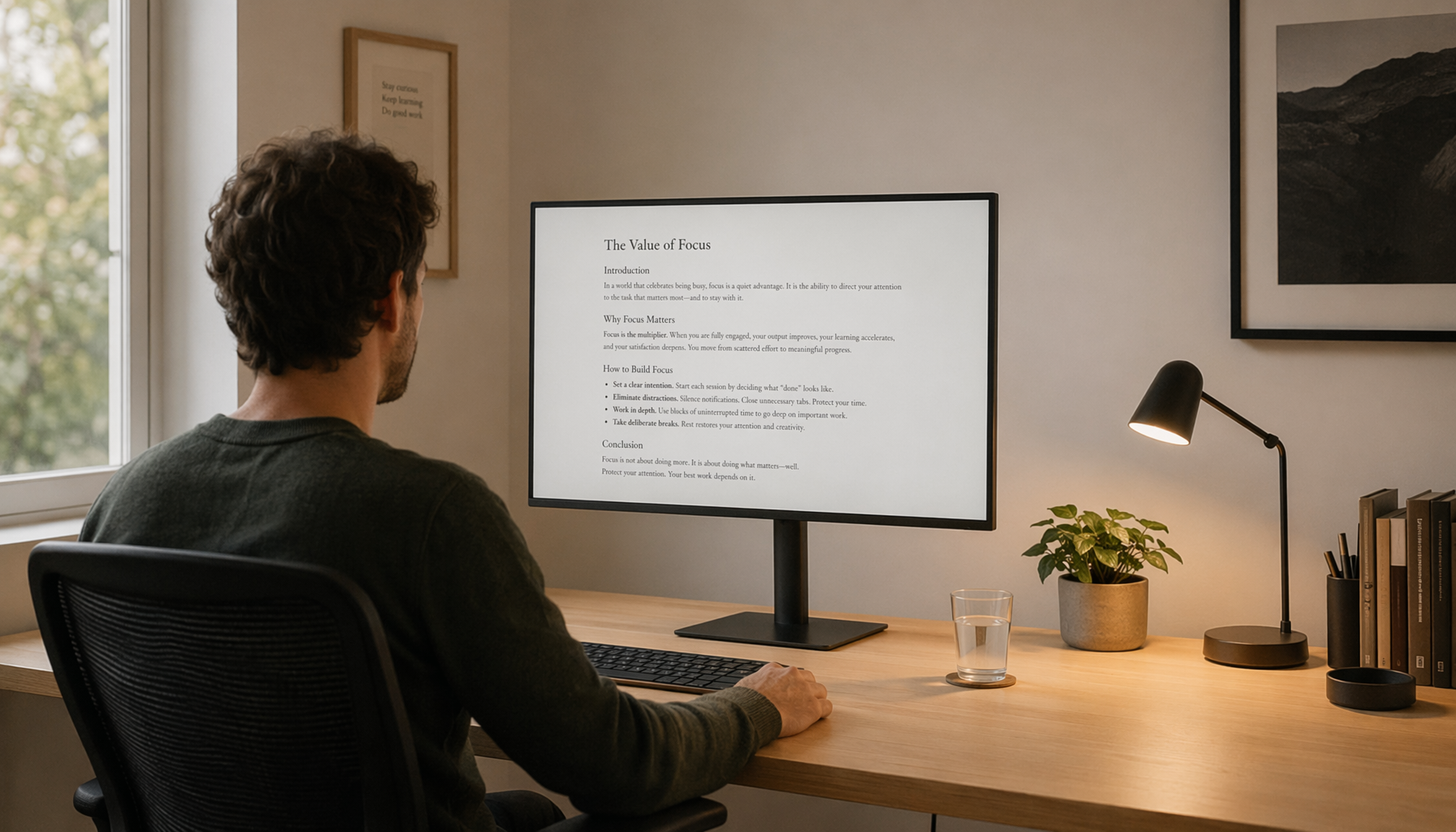
Open a document, browser, or spreadsheet and inspect small text at normal reading distance. Look for crisp edges, consistent sharpness, and color fringing that appears on only one side of the screen. If the same text looks soft in one app but clear in another, the source settings may be part of the problem.
That is why text softness should be treated carefully. It may come from subpixel layout or rendering mismatch rather than the panel itself, which is why a same-source comparison matters before you blame the display. If you want a deeper explanation, this sharpness guide shows how RGB and BGR layouts can change the result.
A quick test routine works best when you compare the same text, the same zoom level, and the same source device. If the softness follows the monitor across setups, it is more concerning. If it changes with the source, that is a clue to check settings first.
For Mini-LED owners, a blooming reduction guide can help you separate what the display is doing from what your room setup is amplifying. That is useful when you want to judge the halo before deciding whether it is worth keeping.
Separate Normal Variation From Red Flags
Some visible variation is normal, and some is worth flagging. The trick is to separate one-off quirks from repeatable issues that stay visible across scenes.
| Visible sign | What it can mean | How to retest | What to do next |
|---|---|---|---|
| Slight corner glow on a dark screen | Often a normal viewing-angle or panel-type effect | View from your usual seat, then shift your head slightly | Usually keep testing unless it is distracting in real use |
| Uneven brightness patch or blotch | Could be uniformity variation or a more persistent backlight issue | Check black, gray, and white screens in the same room light | Document it if the same spot keeps showing up |
| Halo around a white cursor or subtitle | Common on Mini-LED or local-dimming setups | Try another picture mode or a different dark scene | Return only if it is consistently distracting |
| Soft text on one app or one zoom level | May be a rendering or subpixel mismatch, not the panel itself | Compare the same text in another app or source | Retest before assuming the monitor is faulty |
| Bright or dead pixel-like point | May fall within normal manufacturing tolerance in some cases | Check if it stays in the same spot across solid backgrounds | Document it and compare against the seller policy |
| IPS glow that changes with angle | Usually different from fixed backlight bleed | Move your head and watch whether the bright area shifts | Lower concern if the glow moves and the spot does not stay fixed |
This is the most important boundary: a visible issue is not the same thing as a defect verdict. The uniformity angle test helps with that distinction, because IPS glow changes with viewing angle while backlight bleed stays in place. The official tolerance note is also a reminder that minor variation or limited pixel defects may fall within manufacturing tolerance.
| Scenario | Retest | Document | Return |
|---|---|---|---|
| Uniformity / tint shift | 1 | 2 | 1 |
| 5% gray banding / DSE | 2 | 2 | 1 |
| Blooming / halo around bright objects | 2 | 1 | 1 |
| Viewing-angle glow vs bleed | 2 | 1 | 0 |
| Text softness / subpixel mismatch | 2 | 1 | 0 |
| Minor defects / small variation | 1 | 1 | 0 |
| Photos or clips from same setup | 0 | 2 | 2 |
The table is only a decision aid. If a symptom changes with angle, input, preset, or room lighting, retest first. If it stays in the same place and affects normal use, document it. If it is repeatable, distracting, and easy to reproduce in more than one scene, a return becomes more justified.
What to Do Before the Return Window Closes
If something looks off, do not rush to a verdict. First, capture the issue clearly, then decide whether the problem is repeatable enough to keep.
- Take photos or short clips from the same angle and lighting that exposed the issue.
- Include both a close-up and a wider shot if you can, so the symptom is easier to understand.
- Repeat the same test with another input, cable, preset, or source device when the result is unclear.
- Keep the packaging until you are sure, because that makes a return less stressful.
- If the same issue appears again in the same place, document it and contact support before the window closes.
- If the issue changes a lot by mode or viewing angle, retest before you assume it is a defect.
When you need a place to compare office-friendly models after your inspection, the office monitor category is a practical browsing path. If your checklist points you toward a simple, affordable desk display, the H27D9 home office option is one model worth checking against your needs.
If you want a different follow-up path, the H27P22S 4K monitor gives you a higher-resolution reference point for sharpness-focused desks, while the office monitor range is better if you want to compare several non-gaming setups at once. For shoppers who care about support policy and quality-screening before purchase, the monitor quality review framework is the most direct internal read.
Final Takeaway
Quick monitor panel quality verification is about catching visible concerns early, not proving a defect. Run the same simple checks in a dark or dim room, compare black, white, gray, and text scenes, and document anything that repeats in the same spot. If the symptom is stable and distracting, you have a stronger case to return it. If it changes with angle, source, or preset, retest before you decide.