For most desks, deep-clean a high-refresh gaming display every 1 to 2 weeks, while a standard office monitor usually does fine every 2 to 4 weeks.
If your crosshair looks crisp at startup but hazy halfway through a match, while the office screen across the room seems fine for weeks, the difference is usually buildup, not the panel itself. A simple microfiber routine often restores clarity quickly and helps keep dust from settling where heat and glare start working against you.

Why the schedules are different
Dust, fingerprints, and smudges can reduce visual clarity, so gaming displays usually need a shorter cleaning cycle than office monitors. The reason is not refresh rate alone. High-refresh screens are often used for darker scenes, longer evening sessions, and closer viewing, and gaming setups tend to be adjusted, rotated, and handled more often than a fixed office screen.
Dirty screens can make on-screen content harder to read, but a standard office monitor often builds up grime more slowly because it is usually touched less and used in brighter conditions, where problems are easier to spot early and fix with a quick wipe. In real setups, the screens that need the fastest care are usually the ones running bright, sitting close, and sharing desk space with snacks, drinks, pets, or open windows.
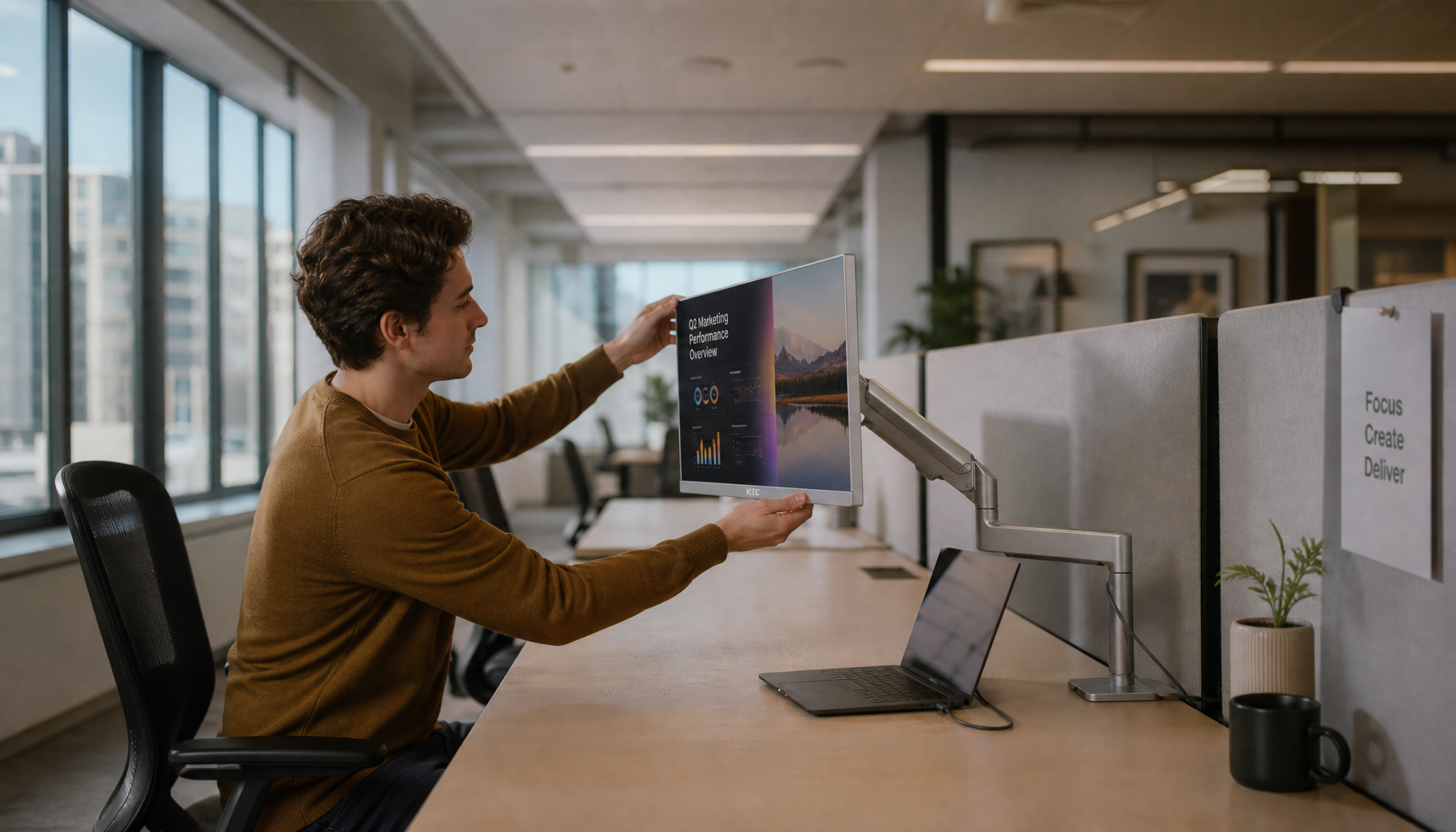
Monitor placement also affects how quickly a screen gets dirty. A 24-inch office monitor is commonly placed about 20 to 24 inches away, while a 27-inch model often sits about 24 to 27 inches back. That reduces accidental touching and face-level mist compared with a gaming panel that gets pulled forward and repositioned more often.
What “deep-clean” actually means
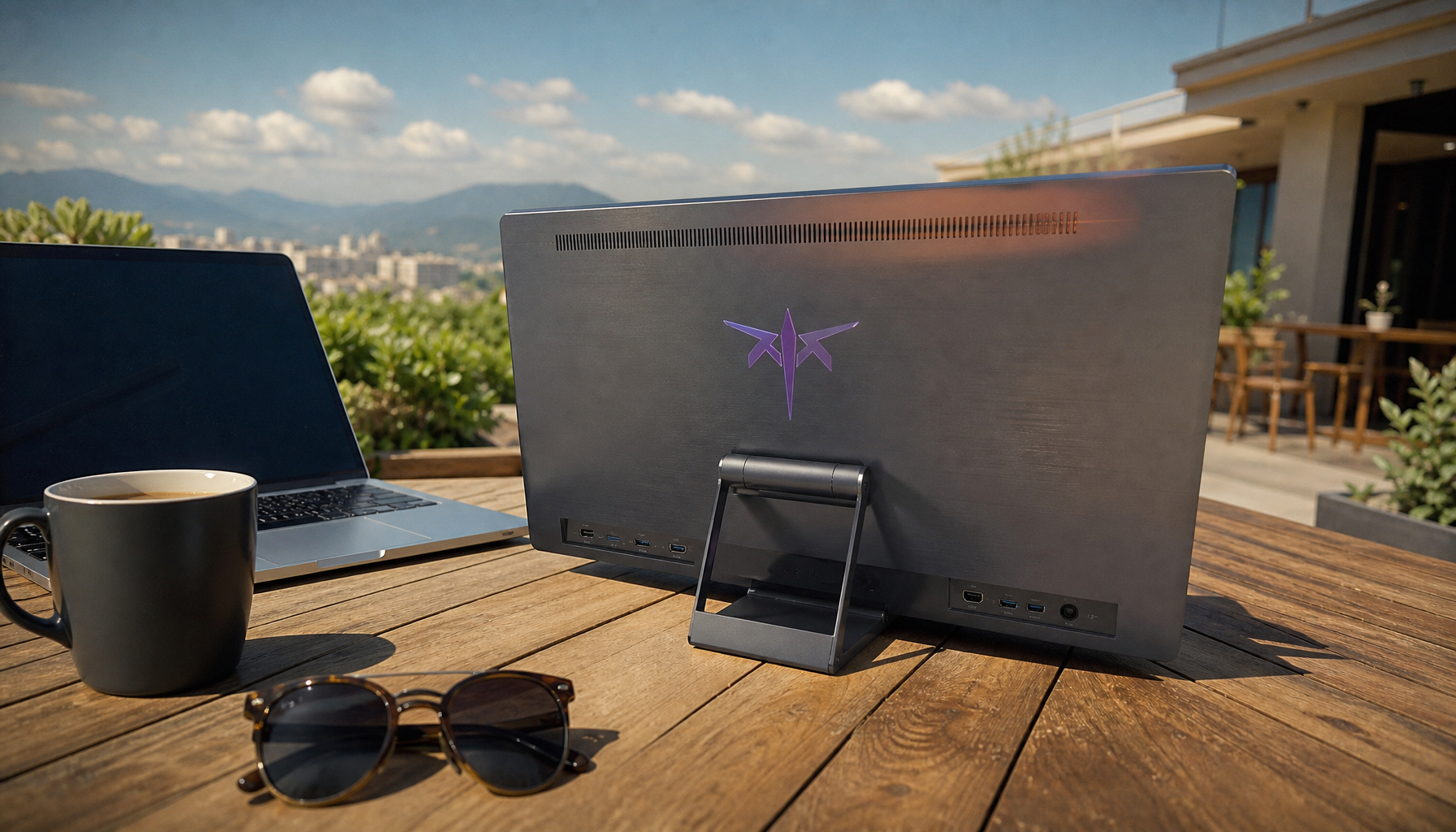
A clean workstation means keeping monitors free of dust, fingerprints, and grime, but a deep clean is more than a quick swipe across the middle of the screen. It means powering the monitor off, unplugging it, removing loose dust first with a dry microfiber cloth, then using a second microfiber cloth that is only slightly damp for smudges. Include the bezel, stand, and rear ventilation area, especially on gaming monitors where heat buildup can pull in more dust.

Consistent basic maintenance can help preserve monitor performance, and the safe baseline is simple: never spray liquid directly on the display, never use paper towels, and never scrub. A proper deep clean is deliberate and low-pressure. If you can see dust only when light hits the panel from the side, that is a good time to clean before those particles turn into streaks.

A practical cleaning cadence that works
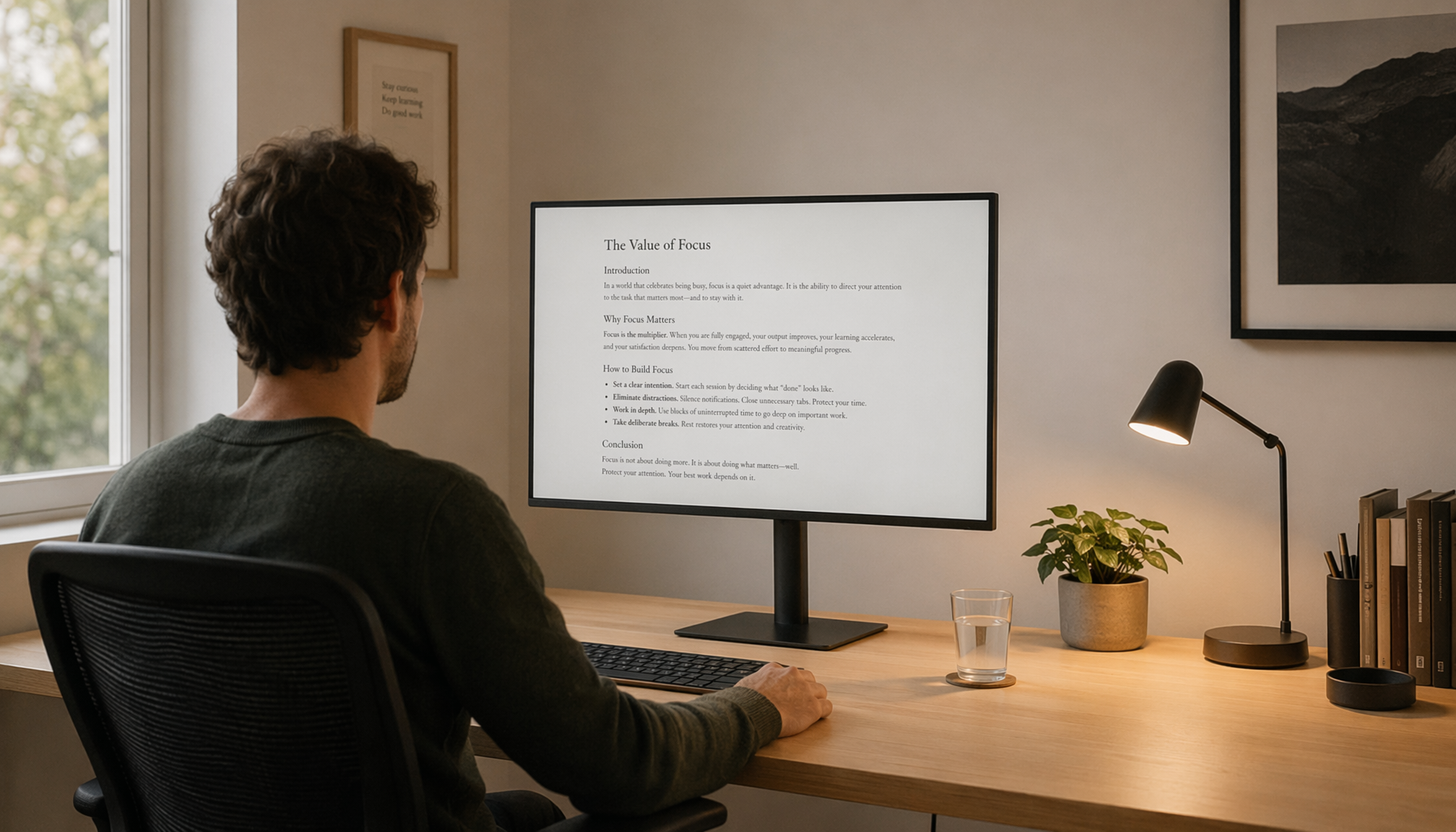
Routine care every couple of weeks is a practical baseline for gaming monitors. A competitive 144 Hz to 240 Hz LCD gaming display usually benefits from a true deep clean every 1 to 2 weeks, with a quick dry pass whenever dust becomes visible. A standard office monitor can often stretch to every 2 to 4 weeks if it is not shared, rarely touched, and kept away from direct sunlight and food splatter.
Display type |
Deep-clean baseline |
Why that pace works |
High-refresh LCD gaming display |
Every 1 to 2 weeks |
Dark scenes and close-up use make haze visible sooner, and rear vents collect dust faster |
High-refresh OLED gaming display |
About weekly, sometimes twice weekly in dusty rooms |
Delicate coatings and glossy surfaces respond better to lighter, more frequent care |
Standard office monitor |
Every 2 to 4 weeks |
Lower touch frequency and brighter work content make spot cleaning easier between deep cleans |
That table is a working schedule, not a warranty rule. If your monitor sits beside a window, under a ceiling fan, near a pet bed, or on a shared workstation, shorten the cycle. If the screen stays cool, untouched, and visibly clean, you can safely stay at the longer end of the range.
The OLED and delicate-coating exception
OLED screens are mechanically fragile, and their coatings need careful handling, so the cleaning method matters even more than the cleaning frequency. A high-refresh OLED gaming panel may need care as often as once or twice a week, but that does not mean harder wiping. It means cleaner microfiber, lighter pressure, and safer chemistry.
Advice can differ once you get past basic dusting. KTC mentions a diluted vinegar mix for stubborn marks on some gaming monitors, while care recommendations for OLED coatings are much stricter and favor distilled or deionized water, a specialized OLED cleaner, and extremely light pressure. The safest conclusion is that panel type and coating change the rules. For a standard LCD office monitor, mild solutions may be tolerated more often. For OLED, glossy anti-reflective coatings, or any screen with unknown coating chemistry, distilled water or a manufacturer-approved cleaner is the safer choice.
Cleaning too often vs. cleaning too aggressively
Safe cleaning chemistry for delicate displays is limited, which is why more cleaning is not always better care. The main benefit of a shorter cycle is that light buildup comes off easily. The downside is that every unnecessary wipe creates another chance to press too hard, drag dust across the surface, or leave residue with the wrong liquid. In practice, frequent gentle cleaning beats rare aggressive cleaning.
For stubborn spots, use a cloth lightly dampened with distilled water or a panel-safe cleaner, then wipe with minimal pressure. If a smudge survives one pass, do not jump straight to harsher chemistry. Try a fresh section of microfiber, a slightly damp corner, and a few light repeated passes. The least aggressive method that works is usually the right one.
How to decide for your own setup
Monitor size and distance affect comfort and posture, and they also affect cleaning needs. A 27-inch office display placed 24 to 27 inches back is less likely to be touched than a gaming monitor pulled forward for an intense session. Likewise, a dual-office-monitor setup may need less panel cleaning than a single gaming display, but more bezel, arm, and cable cleaning simply because there is more hardware collecting dust.
Setup choices influence both productivity and physical comfort, so the right schedule is the one that fits how the screen is actually used. If you spend four nights a week gaming in a dim room, use the tighter 1 to 2 week cadence. If your office monitor mostly handles email, documents, and video calls in daylight, every few weeks is usually enough. When haze shows up in dark scenes or reading starts to feel oddly tiring, the screen is already telling you the schedule needs tightening.

A display that stays clean looks the way it should: sharp, comfortable, and easy on the eyes. Keep the gaming screen on a faster rhythm, let the office monitor run a steadier cycle, and always choose the gentlest method your panel can safely handle.