In 2026, the choice between Tandem OLED and high-zone Mini-LED for premium HDR monitors comes down to your room lighting, daily workflow, and tolerance for minor setup friction rather than raw peak brightness numbers. Tandem OLED delivers perfect blacks and superior micro-contrast for dark-room cinematic and color-critical work, while Mini-LED provides stronger sustained full-screen brightness that holds up better in bright offices or high-key HDR mastering.

The 2026 HDR Landscape: Beyond the Spec-Sheet Nits
The debate has evolved. Tandem OLED stacks multiple organic layers to reach sustained brightness levels that close the historical gap with LCD technology, often delivering 1,500–2,000 nits in small windows while maintaining deep blacks. Meanwhile, premium Mini-LED panels with 2,000+ local dimming zones act as “light cannons,” excelling when ambient light washes out self-emissive displays.
Three practical checks decide the winner for most buyers: (1) Is your workspace sunlit or light-controlled? (2) Do you spend eight or more hours daily on static desktop interfaces? (3) How much OSD toggling or pixel-care routine are you willing to accept? Answer these first, and the panel choice becomes clear long before you compare specific models.
The HDR 2000 Trap: Why Peak Brightness is Not Perceived Quality
Chasing the highest nit rating on a spec sheet often misleads. VESA DisplayHDR performance criteria require local dimming hardware for any certification at HDR 1000 and above, yet the real visual impact depends on black-floor performance as much as peak highlights.
OLED panels certified under DisplayHDR True Black 600 achieve a black level of 0.0005 nits—roughly 40 times lower than the floor allowed for standard HDR 1400 certification. This creates a perceived contrast advantage in moody, high-dynamic-range scenes even when the OLED’s highlight peaks are lower than a Mini-LED’s. In practice, a 600-nit highlight against near-perfect black often looks more vibrant than a 1,400-nit highlight floating on a 0.05-nit gray floor.
Tandem OLED further narrows the brightness gap, routinely hitting 2,500 nits in small APL windows while throttling more gracefully under Automatic Brightness Limiter (ABL) than earlier generations. The takeaway is straightforward: match the panel’s strength to your dominant content. Cinematic or dark-scene work favors OLED’s micro-contrast; high-key, brightly lit mastering benefits from Mini-LED’s sustained output.
The 2026 Toggle Tax: Solving the SDR Productivity Friction
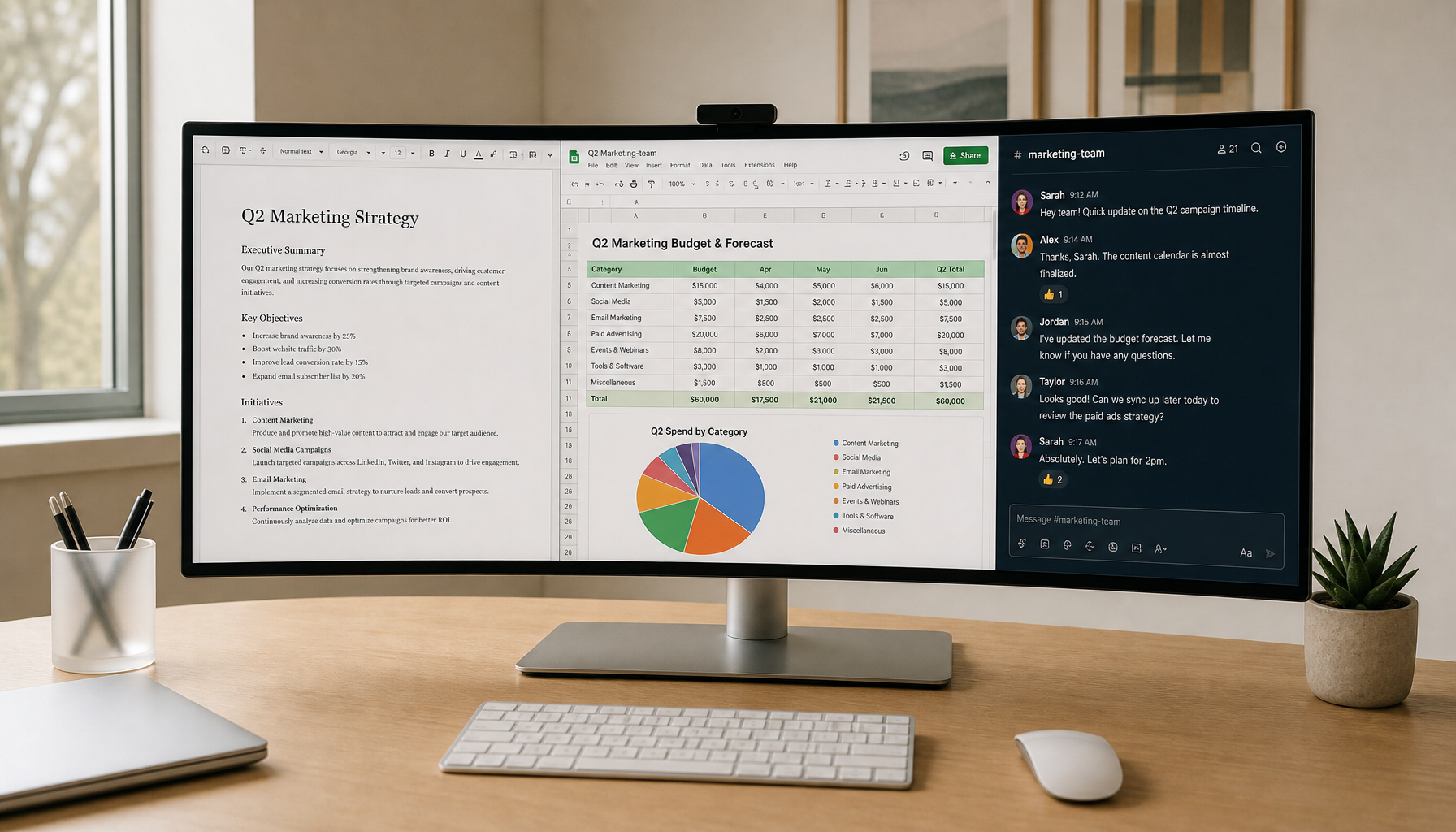
Hybrid users who switch between spreadsheets by day and HDR gaming by night quickly discover that high-end monitors are rarely set-and-forget. Mini-LED panels often rely on a “Desktop Mode” or local-dimming toggle to prevent cursor blooming and subtle pulsing around UI elements. This mitigation typically requires several OSD clicks and, on many budget-to-midrange controllers, can add 3–5 ms of input lag—noticeable in competitive titles but usually irrelevant for creative timelines.
Tandem OLED panels released in 2026 have largely adopted vertical RGB stripe subpixel layouts, eliminating the fuzzy-text complaints that plagued earlier WOLED designs. Text clarity now rivals or exceeds many IPS panels for long productivity sessions, removing one traditional reason to avoid OLED for office work.
Still, burn-in risk remains a real consideration. While Tandem architecture improves longevity by distributing stress across stacked layers, the technology is burn-resistant rather than burn-proof. Static UI elements for 8+ hours daily still warrant screen savers, pixel-shift features, or occasional full-screen refresh cycles. Users unwilling to adopt these habits should lean toward Mini-LED for peace of mind.
Sustained Brilliance vs. Color Volume: The Creator's Truth
For professional creators, the “truth” of a panel depends on the delivery target. Mini-LED monitors with HDR1400 certification must sustain 900 nits full-screen for 30 minutes per VESA guidelines. This makes them excellent stress-test tools when mastering content destined for bright mobile screens or brightly lit living rooms.
5th-generation QD-OLED variants continue to lead in color volume, routinely covering more than 90 % of Rec. 2020 with vibrant, saturated tones ideal for VFX and high-end grading. Tandem OLED strikes a pragmatic middle ground: sufficient brightness for timeline scrubbing, near-perfect blacks for accurate shadow detail, and improved longevity that reduces anxiety during marathon editing sessions.

The Final Decision: Matching Your Environment to Your Tech
Choose a high-zone Mini-LED—such as the KTC M27P6 27-inch 4K HDR1400 model—when your workspace receives direct daylight, you perform extended static productivity work, or you need maximum sustained brightness for consumer-facing HDR deliverables. The 1,152-zone backlight and full ergonomic stand make it a practical daily driver that minimizes blooming in most gaming and office scenarios.
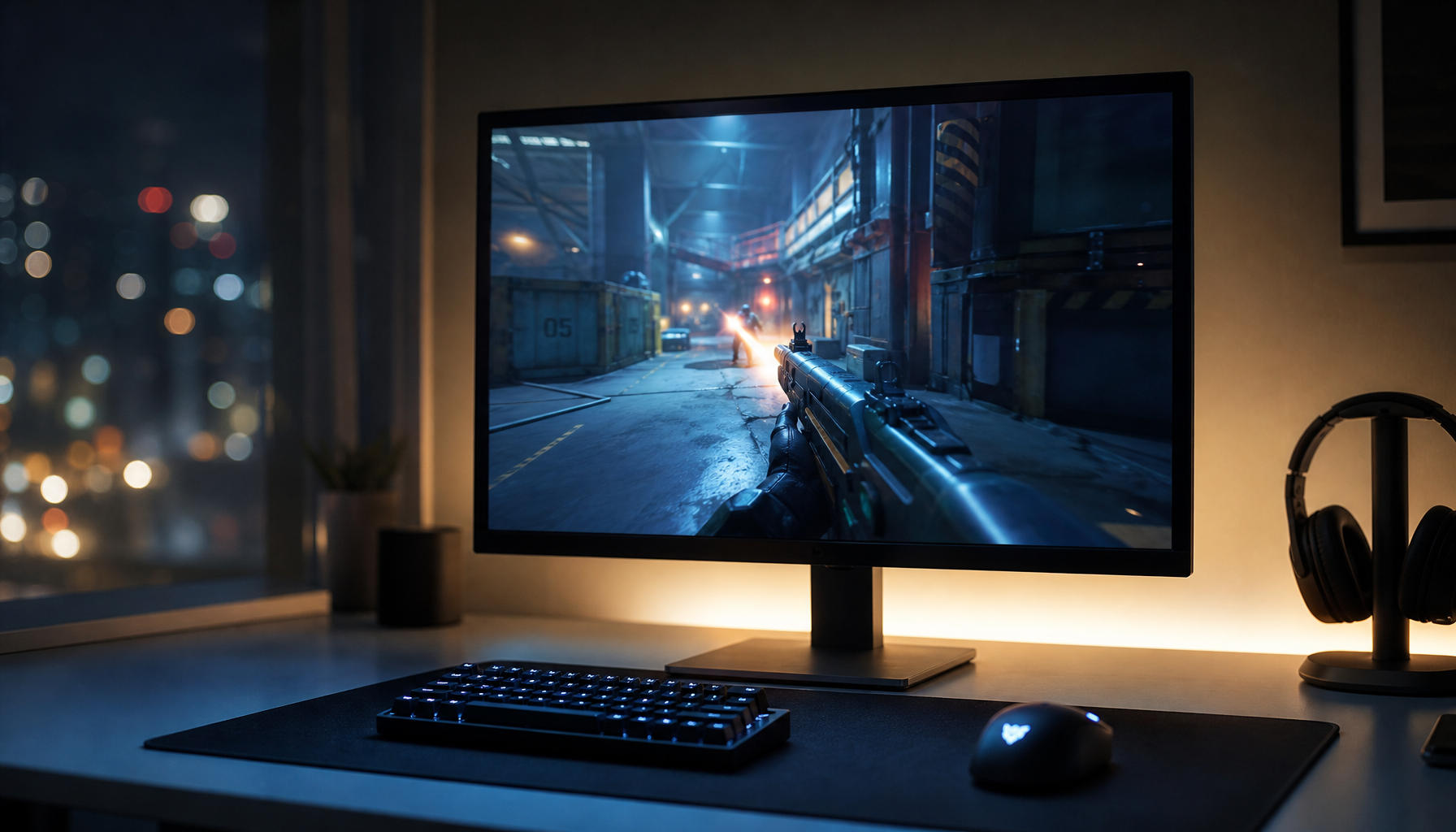
Opt for Tandem OLED or 5th-gen QD-OLED when your setup is light-controlled, your primary tasks involve cinematic content, color-critical grading, or dark-room gaming, and you accept routine pixel-care steps. These panels deliver reference-grade blacks and motion clarity that Mini-LED cannot match.
A practical middle path for many 2026 buyers is a Mini-LED with at least 2,000–2,300 zones paired with easy dimming toggles. This configuration balances brightness, contrast, and usability for hybrid workflows while keeping burn-in concerns off the table. Test your room’s ambient light and run your most common applications for a week before committing—perceived quality in your actual environment will outweigh any single benchmark.
Is Tandem OLED Worth the Premium Over Mini-LED in 2026?
For most hybrid users in mixed-lighting rooms, the added cost of current Tandem OLED panels is hard to justify unless dark-room cinematic performance is your top priority. Mini-LED has matured enough that 2,000+ zone implementations deliver excellent HDR impact with far lower long-term maintenance.
Does Mini-LED Blooming Still Matter for Gaming?
In 2026, blooming on premium Mini-LED monitors is minimized but not eliminated. Starfield scenes or bright UI elements against dark backgrounds can still show faint halos when viewed off-angle. The effect is rarely distracting during fast-paced gameplay yet remains visible in slow, high-contrast desktop work.
How Does Burn-in Risk Compare Between the Two Technologies?
Tandem OLED significantly reduces burn-in risk compared with earlier OLED generations through stacked emissive layers and improved heat dissipation. However, it is not immune. Eight-plus hours of static UI every day still benefits from built-in mitigations and periodic pixel refreshes. Mini-LED carries zero burn-in risk, making it the safer long-term choice for heavy productivity users.
Which Panel Performs Better in Bright Rooms?
Mini-LED maintains higher sustained brightness and resists washout far better in sunlit offices. Tandem OLED’s Automatic Brightness Limiter throttles output aggressively to protect the panel, often dropping to 250–400 nits full-screen. If your workspace has strong ambient light, Mini-LED is usually the clearer winner.
Are Tandem OLED Monitors Suitable for Text-Heavy Creator Work?
Yes. 2026 Tandem and QD-OLED panels use refined vertical RGB stripe subpixel arrangements that deliver crisp, clear text comparable to many IPS displays. Combined with perfect blacks for accurate shadow detail, they suit timeline editing, photo retouching, and color previewing as long as burn-in precautions are followed.