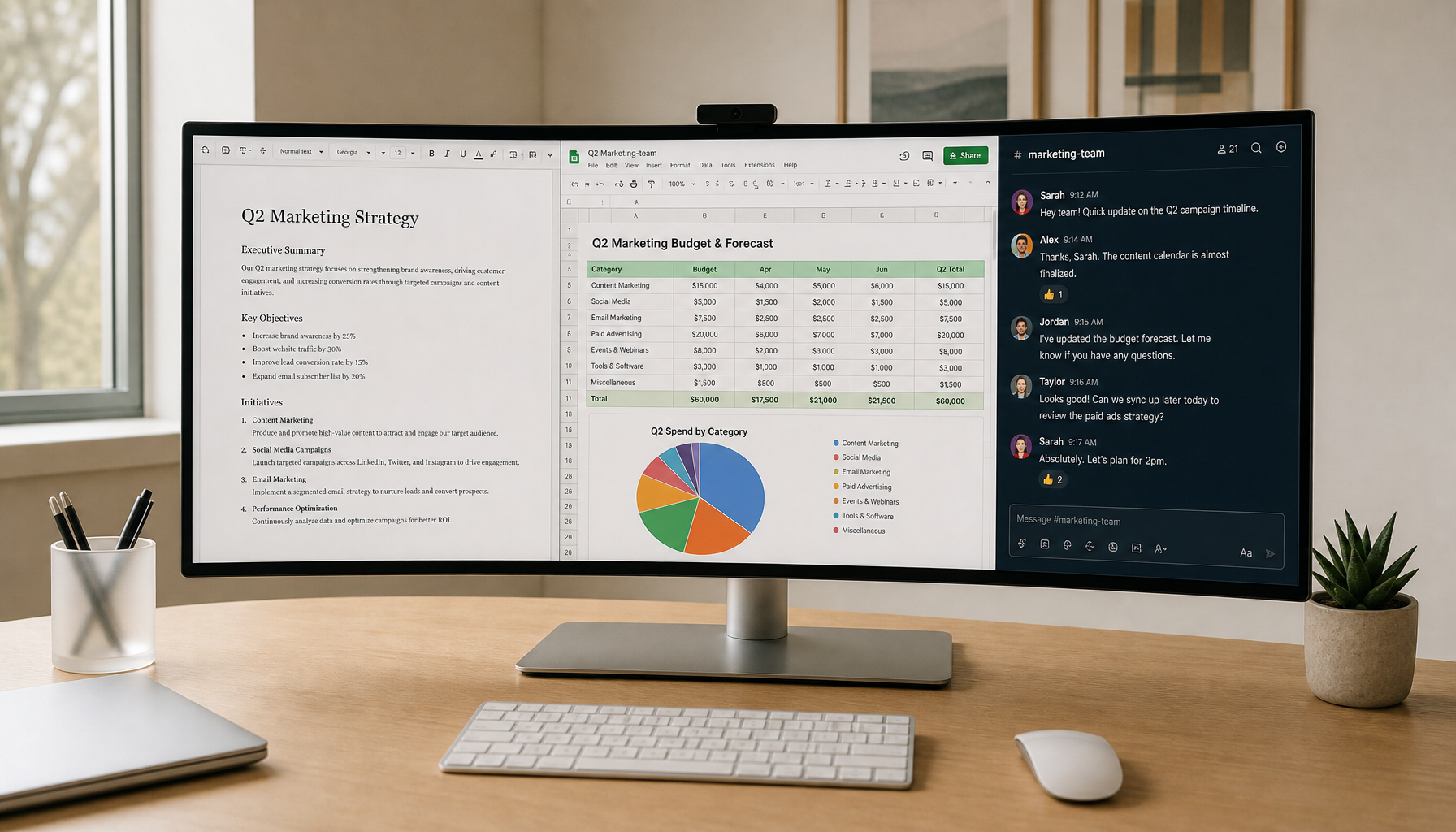
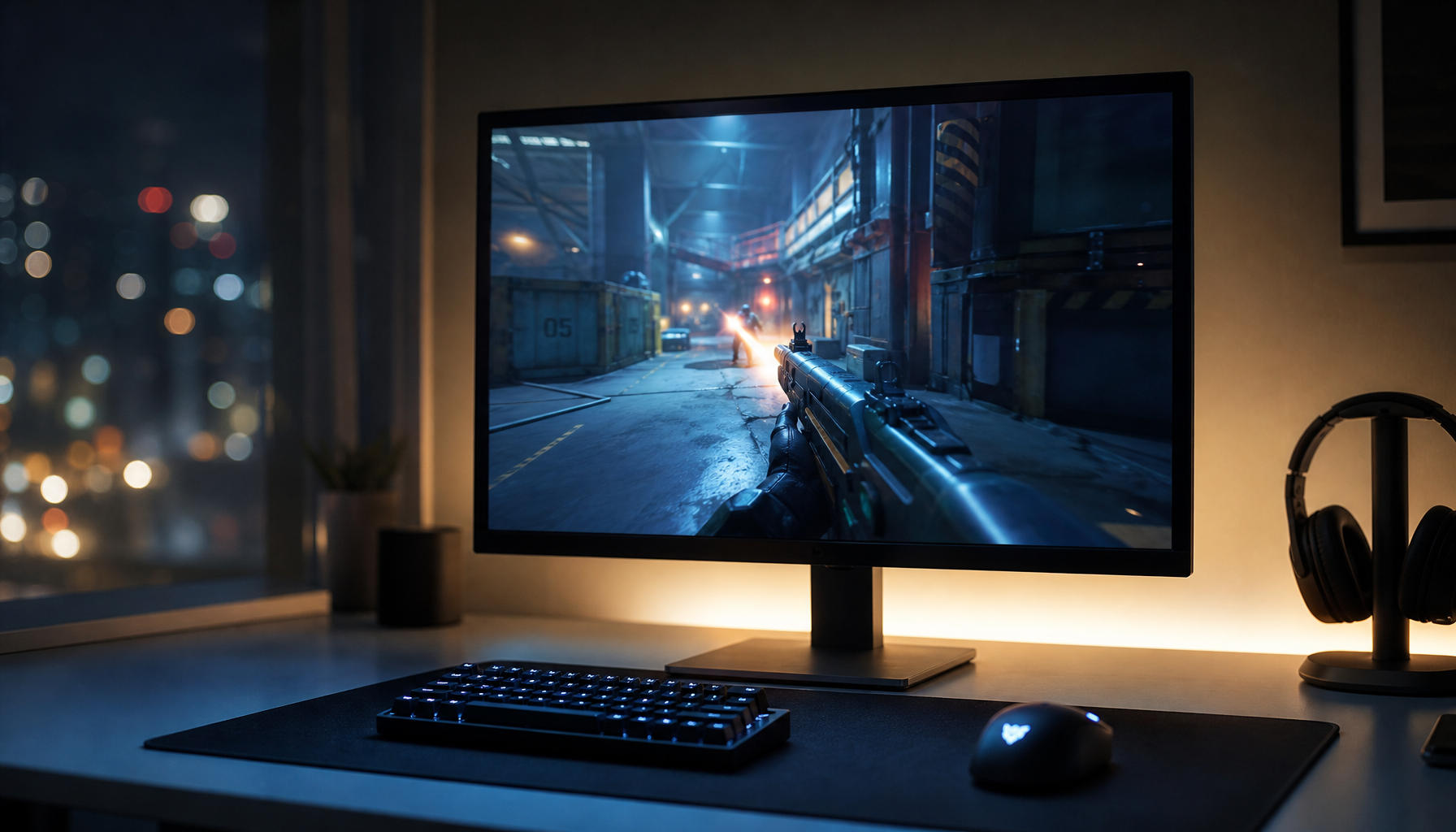
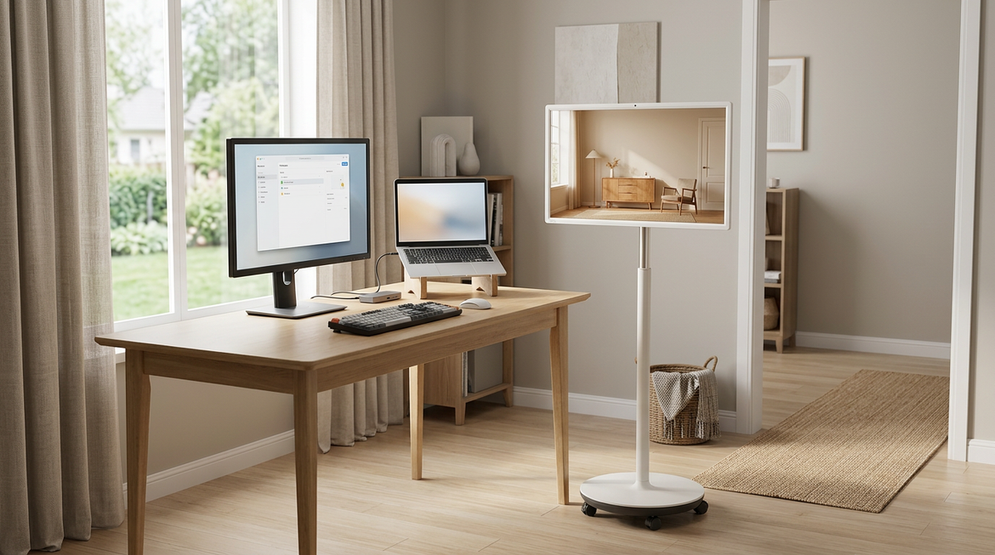
A rolling smart display vs wall TV or tablet comes down to how often the screen moves, how many people use it, and whether your room can stay fixed. If the screen mostly lives in one room, the wall TV route usually fits better. If the use is solo and light, a tablet stand can still be enough. The rolling option sits in the middle when shared, room-to-room use is real.

Quick Verdict by Use Case
For most households, the right answer is not a universal winner. It is a fit decision. A wall TV is usually the better call when you want a permanent viewing spot and the room layout rarely changes. A tablet stand works when one person needs quick access and the screen can stay close at hand. A rolling smart display makes the most sense when the same screen needs to move between rooms without becoming a wall installation.
That middle-ground idea is what makes the category useful, but not for every home. Rolling smart displays are most compelling when shared family routines, hybrid work, or casual entertainment all happen in different spaces. If your screen use is mostly tied to one wall or one desk, you may be paying for flexibility you will not use. For a broader look at that workflow, see multi-room workflow ideas.
What Each Option Is Good At
Here is the shortest way to compare the three options: a wall TV favors permanence, a tablet favors personal convenience, and a rolling smart display sits between them when mobility matters more than a fixed install but more screen presence is still useful. Ars Technica's coverage of giant tablets on wheels captures that middle-ground role well.

| Option | High mobility | Permanent placement | Shared use | Low setup friction |
|---|---|---|---|---|
| Rolling smart display | Strong | Weak | Strong | Medium |
| Wall TV | Weak | Strong | Strong | Weak |
| Tablet stand | Strong | Weak | Weak | Strong |
Read that table as a fit guide, not a scorecard. If mobility and shared use matter most, the rolling smart display usually rises. If the screen should stay put and act like part of the room, the wall TV is cleaner. If the use is quick and personal, the tablet is still the simplest option.
When a Rolling Display Fits Daily Life
A rolling smart display fits best when one screen serves more than one room. That can mean the kitchen in the morning, the home office during the day, and the living room at night. It also helps when the household wants a screen that feels larger than a tablet but does not require a permanent wall commitment.
For shared routines, the benefit is less about novelty and more about friction. You do not have to carry a small device from room to room, and you do not have to give one room a fixed display just to make the setup work. That said, the mobility is only helpful if the room has enough space for the screen to roll and settle where people actually use it.
Kitchen and Family Planning
A rolling screen can make sense in the kitchen or dining area when the household wants recipes, schedules, or quick check-ins in one place. KTC's own kitchen setup example is useful here because it shows the category as a practical family tool, not a trophy display.
The fit is strongest when the screen is part of a routine, not a one-off event. If you only need a timer and a recipe once in a while, a tablet stand is probably enough. If family calendars, video calls, and shared instructions all happen in the same area, a larger movable display can reduce daily juggling.
Remote Work Between Rooms
For remote workers, the rolling display helps when calls, docs, or dashboards need to travel from office to common area. That matters more than it sounds, because it cuts down on the repeated setup that makes a home office feel temporary. KTC's remote team workflow guide fits this scenario well.
The drawback is that mobility still takes some effort. A rolling screen is easier than mounting a TV, but it is not the same as carrying a tablet. If your work is mostly stationary, a normal desk monitor may be simpler. The rolling option is strongest when the same screen has to follow the workday.
Shared Learning and Entertainment
A larger mobile screen can be better than a tablet stand when several people need to view the same content. That can mean family video calls, learning sessions, or streaming in a room that changes function through the day. The screen presence is the point here, not just the apps.
This is also where the Mobile Touch Screen collection makes sense as a browsing path. It is a category built around portable touch displays for work, travel, and home, so it helps if you want to compare the broader range before choosing a size.
Small-Space Homes and Flexible Layouts
In compact homes, a rolling display can help because it avoids committing wall space to one installation. That does not mean it always saves space in a universal way, but it often works better than a fixed TV when the same room has to do several jobs. Wirecutter's freestanding portable monitor review is a useful background reference for that small-space angle.
The regret trigger here is simple: people expect flexibility, then discover the screen is too bulky for the room layout they actually have. If the space is narrow, crowded, or constantly rearranged, the rolling option can start to feel awkward. In that case, the right answer may be a smaller display or a fixed install.
Where Wall TVs Still Win
A wall TV is still the better fit when permanence is the real goal. That is especially true if the room layout is stable, the viewing position rarely changes, and you want the screen to feel like part of the room. The CPSC's TV tip-over safety guidance also matters in homes with children, because mounting or stabilizing a TV is part of the safety conversation.
That said, the safety angle should not be stretched into a blanket claim that wall TVs are always best. Ergonomics still matter, and screen height still needs to make sense for the people using it. OSHA's monitor positioning guidance is a good reminder that a screen should support a neutral neck posture, whether it is fixed to a wall or mounted on a stand.
Use a wall TV when:
- The screen will stay in one room most of the time.
- The room already has a clear viewing zone.
- You want a permanent entertainment anchor.
- Wall mounting or a fixed install is acceptable.
Do not buy the rolling option if the screen is going to live in one room almost all the time. In that case, the extra mobility is unlikely to pay back the added cost or footprint. If you are still deciding whether to drill, this wall-mount planning guide is a practical next step.
When a Tablet Stand Is Enough
A tablet stand is enough when the use is personal, brief, and low-commitment. It works well for solo browsing, quick calls, recipes, and light media. If one person is the only real viewer, a tablet often solves the problem with far less hardware.
The limit shows up when the screen has to do more than one job for more than one person. A tablet feels cramped when a family wants to watch or reference the same screen at once, and it feels limiting when users keep moving it from room to room. That is where the upgrade pressure usually starts.
- Keep the tablet if the use is mostly one person at a time.
- Keep the tablet if sessions are short and casual.
- Keep the tablet if you do not need a larger shared screen.
- Move up only when the setup starts feeling too small or too repetitive.
That is why the decision is not about status. It is about fit. If your current tablet stand already covers the job, the rolling smart display vs wall TV or tablet choice may not require a purchase at all.
How to Decide Without Regret
The easiest way to decide is to separate movement, sharing, and setup friction. If the screen needs to move often, the rolling display becomes more attractive. If the screen stays in one room, the wall TV becomes more attractive. If the use is light and personal, the tablet remains the practical choice.
A few checks help keep the decision grounded. Screen height matters for comfort, because the top of the display should sit around eye level or slightly below it for a more neutral neck position. Viewing distance matters too, and Mayo Clinic's office ergonomics guidance is a good reminder that larger screens may need more room so you are not constantly turning your head.
Ask yourself:
- Will this screen move between rooms often?
- Do several people need to see it?
- Is a fixed install acceptable in this room?
- Is my current tablet already enough?
- Am I trying to reduce setup repetition, or just add novelty?
If the answer is yes to room switching and shared use, the rolling category deserves a closer look. If you want a concrete model path, start with the 25-inch MEGAPAD for lighter mobile touch use or the larger 32-inch MEGAPAD for a room-filling mobile screen. A second 32-inch option is the Android 13 model, which is also aimed at larger shared use.
Choose Based on Room Switching
Buy the rolling option when the same screen needs to move across rooms often. Stick with a wall TV if the screen will stay in one place for most of its life. The key question is not whether mobility sounds useful. It is whether the room actually changes enough to justify it.
Choose Based on Shared Use
Favor a larger movable screen when several family members will view it in different spaces. Stay with a tablet stand when the use is mostly one person, one task, one seat. Screen size matters only when it changes how the room is used.
Choose Based on Setup Tolerance
Choose the rolling display if the household wants to avoid wall drilling and repeated device juggling. Choose a fixed TV or tablet if users prefer a simpler, more permanent routine. In practice, daily friction matters more than one-time setup effort.
Choose Based on the Right KTC Megapad
The 25-inch KTC MEGAPAD is the safer fit when you want a lighter portable touch display with a built-in camera, Android 14, and Google EDLA support. It is the better match for personal or lighter mobile use, not for pretending to be a wall TV replacement.
The 32-inch KTC MEGAPAD models make more sense when you want a larger shared screen for room-to-room use. The Android 14 version is a mobile 31.5-inch 4K touchscreen with an adjustable stand and built-in battery, while the Android 13 version adds wheels and a more explicitly room-to-room setup. Check the model details first, then choose the one that matches your actual movement and sharing pattern.
Final Takeaway
If the screen is staying in one room, choose the wall TV. If the use is brief and personal, keep the tablet stand. If the same screen needs to move between rooms and serve shared routines, a rolling smart display is often the better middle-ground. Go back to movement, sharing, and setup friction if you are still deciding.
FAQs
How Do I Know If a Rolling Smart Display Is Better Than a Wall TV?
The deciding factor is how often the screen needs to move. If the display will serve more than one room and you do not want a permanent install, the rolling option is worth considering. If the viewing position stays fixed, a wall TV is usually the cleaner fit.
What Makes a Tablet Stand Feel Too Limited for Family Use?
A tablet stand starts to feel limited when more than one person needs to view the same screen, or when you keep moving it around the house. It is still a good option for personal tasks, but it loses its edge when shared viewing becomes the real need.
Can a Rolling Smart Display Replace a Kitchen TV or Family Command Center?
It can, if the kitchen or family area is where the screen needs to live part of the day and move elsewhere the rest of the time. The fit depends on room layout, screen size, and how often the household wants to reposition it.
Why Would a Wall-Mounted TV Still Be the Better Buy?
A wall-mounted TV is often the better buy when the room layout is fixed, the viewing distance stays stable, and the goal is a permanent entertainment setup. It is also the simpler answer when the screen does not need to travel anywhere.
Which KTC Megapad Model Should I Consider for Multi-Room Use?
Choose the 25-inch model if you want a lighter portable touch display for simpler mobile use. Choose one of the 32-inch models if you want a larger shared screen for room-to-room routines. The right pick depends on whether you value portability or screen presence more.
Wrap-Up
The best choice is the one that matches how you actually use the screen. If movement matters, a rolling smart display earns its place. If the room is fixed, a wall TV is still the cleaner answer. If the use stays personal and short, a tablet stand may be all you need.