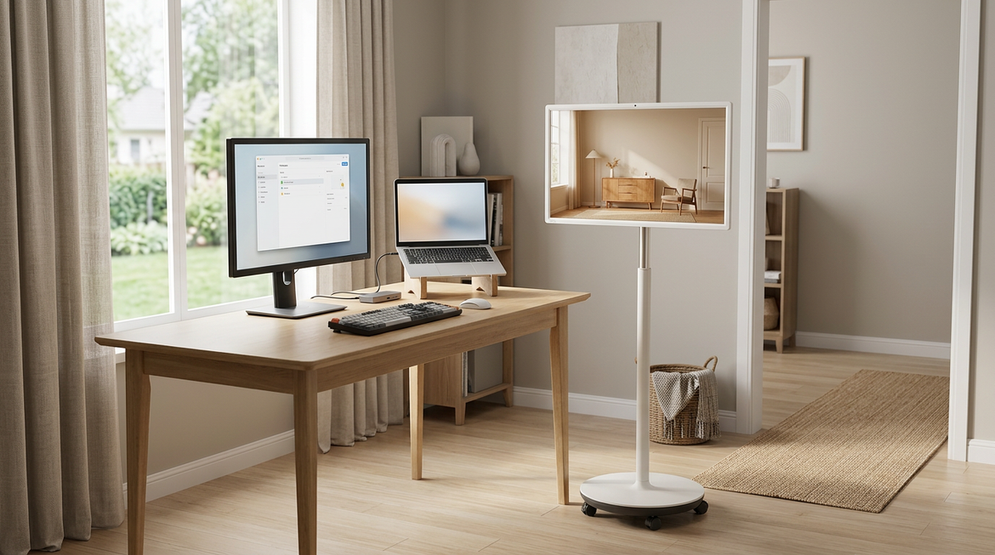
A rolling smart display makes the most sense when the screen needs to move through the home, while a wall tablet fits best when you want a fixed spot with a cleaner, built-in feel. If your setup has to work in the kitchen, home office, and living room, mobility usually matters more than permanence. If the screen will stay in one place, wall mounting can still be the simpler answer.

Why Form Factor Matters
The big choice is not just screen size. It is whether the display should live in one room or follow the activity. A rolling smart display is built for room-to-room use, while a wall tablet trades flexibility for a tidier fixed location.
For renters, that difference can matter quickly. A mounted screen may leave holes or require patching, and renter-focused guidance notes that wall drilling can create damage concerns that affect deposits or move-out friction.[^1] If you expect future layout changes, that risk is part of the decision, not a side note.
In plain terms, choose mobility when the same screen needs to do more than one job. Choose permanence when you already know the screen belongs in one place.
Rolling Smart Display Use Cases
A rolling smart display is strongest when the day is split across different rooms. It can move from a kitchen counter to a desk, then roll into the living room for streaming without a new install each time. That is the main reason buyers consider the category in the first place.
For kitchens, the benefit is obvious: recipes, timers, and quick video guidance are easier when the screen comes to you. Our kitchen command center setup shows how a mobile 32-inch screen can reduce clutter and keep the display visible while you work. That does not mean every kitchen needs one, but it is a strong fit when countertop space is tight.
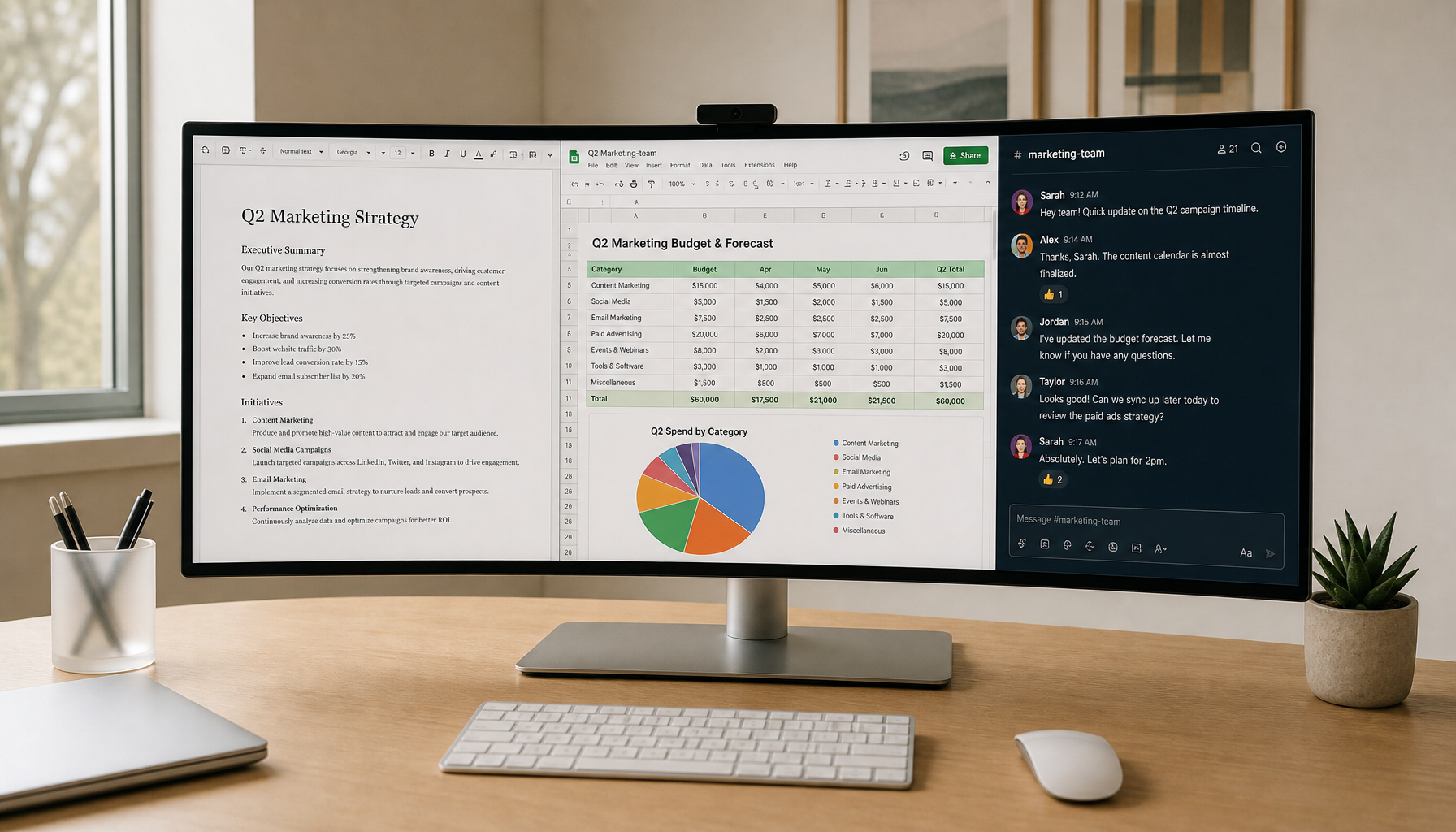
For home offices, the appeal is shared use. A screen can serve as a work display in the day and entertainment screen at night. That flexibility is also why some households prefer a mobile screen over a second fixed TV.
Touch control helps here. Recipes, quick navigation, and app browsing feel easier when you can tap directly instead of hunting for a remote. Remote control still matters for relaxed viewing, though. If you mostly sit back and watch, touch becomes less important.
Portrait mode is another useful edge when supported. It helps with reading, vertical content, and some app layouts. For a setup that changes between recipes, calls, and casual viewing, that kind of rotation can be more useful than a fixed wall position.
One micro-apartment example shows how a single rolling unit can handle work, kitchen tasks, and evening streaming without multiple fixed installs.
Wall Tablet Trade-Offs
A wall tablet usually wins when the screen is meant to feel permanent and out of the way. It keeps counters clear, can look neat in a dedicated spot, and works well as an always-there control point.
That said, a fixed install is only simple if the room will stay stable. If you move furniture often, plan to relocate, or expect a rental turnover, the mount can become the thing you later need to patch or remove. In move-ready households, that is a real trade-off.
This is why wall tablets tend to fit dedicated rooms better than flexible ones. A kitchen wall, mudroom, or hallway control point makes sense when the screen should always be there. If the screen needs to travel with the family, a wall tablet starts to lose its appeal.
The neutral rule is straightforward: if you want the least visual clutter, a wall tablet may feel cleaner. If you want the least installation commitment, it usually does not.
Portable TV Alternatives in Practice
The categories overlap, but they do not solve the same problem. This comparison helps separate mixed-use screens from passive viewing screens.
| Scenario | Rolling smart display | Wall tablet | Portable TV |
|---|---|---|---|
| Room-to-room use | Strong | Weak | Moderate |
| Touch-first, mixed-use | Strong | Moderate | Weak |
| Rental-friendly install | Moderate | Weak | Strong |
| Passive viewing focus | Moderate | Weak | Strong |
A rolling smart display is the best fit when movement and touch interaction both matter. A wall tablet is better when fixed placement is the priority. A portable TV is usually the better passive-viewing option when you mainly want to watch from one place and do not need the screen to act like a touch-first hub.
Here, the practical split is simple: if the screen needs to do work, follow the family, and move between rooms, the rolling option stays strongest. If it mostly needs to sit and play video, the portable TV alternative becomes more competitive.
How to Choose the Right Setup
- Start with the room where the screen will spend the most time. If that room is truly fixed, wall mounting or a stationary display can make sense. If the screen needs to travel, mobility should win.
- Decide whether touch-first use is part of the job. Tap-based recipes, browsing, and shared family use point toward a rolling smart display. Passive streaming points more toward a remote-first screen.
- Map the power path before you buy. Cable slack, outlet placement, and daily charging habits can make a mobile screen feel easy or annoying.
- Check whether the battery has to cover short moves or longer unplugged sessions. Runtime changes with brightness, streaming, and app load, so the real-world number matters more than a headline claim.
- Match size to the room, not just the spec sheet. A larger mobile display can feel great in a family room but awkward if you plan to roll it through tight spaces.
If you want a current product path, the Mobile Touch Screen collection is the broad place to start. For buyers who want a 32-inch mobile setup, the KTC MEGAPAD 32" 4K Android 13 Google EDLA Smart Touch Monitor with 9500mAh Battery includes wheels, touch control, Android 13, and a 9500mAh battery, which aligns with the room-to-room use case discussed above. If you want a more compact option, the KTC MEGAPAD 27" FHD Android 14 Google EDLA Smart Touch Monitor with 9500mAh Battery is the smaller mobile choice to check.
For a shopper deciding between a rolling smart display and a wall tablet, the best filter is still the same: if the screen needs to move, keep mobility first; if it should disappear into one fixed spot, permanence is the better trade-off.
Final Checks Before You Buy
- Confirm the path is clear enough for wheels, cords, and daily movement.
- Check whether the screen will need a fixed outlet or frequent charging.
- Verify the controls you actually want, including touch, HDMI, apps, and remote use.
- Think about what happens if the room changes later, because permanent mounting can reduce flexibility.
Battery runtime and outlet access often decide daily satisfaction more than screen size alone. Test the wheel clearance on your floors and door thresholds before committing.
If you want a screen that works across multiple rooms, a rolling smart display is usually the safer starting point. If you want a cleaner fixed install and do not plan to move the screen, a wall tablet can still be the better match. The right answer is the one that fits your layout now and the way you expect to live with it later.
Related Resources
- fixed screen
- video calls and entertainment
- extend runtime
- interactive prep stations
- KTC MEGAPAD 32" 4K Android 14 Google EDLA Smart Touch Monitor with 8550mAh Battery
FAQs
Q1. How Do I Know If a Rolling Smart Display Is Better Than a Wall Tablet?
If the screen needs to move between rooms, the rolling option is usually the better fit. If it will stay in one location and act like a built-in control point, a wall tablet can be cleaner. The deciding factor is whether mobility or permanence matters more in your home.
Q2. What Rooms Work Best for a Rolling Smart Display?
Kitchens, home offices, and shared living rooms are the most natural fits because the screen can serve different tasks in each space. It works best when you want the same display for recipes, calls, and entertainment instead of buying separate screens for each room.
Q3. Why Would a Renter Choose a Rolling Display Over Wall Mounting?
Renters often prefer a rolling display because it avoids drilling and reduces the chance of wall repair issues later. That matters if you want to protect the deposit, keep move-out simple, or avoid asking for permission before installing a fixed screen.
Q4. Can a Rolling Smart Display Replace a Portable TV?
Sometimes, yes, especially if you want touch control, app access, and room-to-room flexibility. A portable TV still makes sense when the main goal is casual viewing from one spot. The better choice depends on whether you want a screen that behaves like a smart hub or a simple TV.
Q5. What Should I Check for Power and Cable Management?
Check where the nearest outlets are, how much cable slack you will need, and whether moving the screen will create daily hassle. A mobile setup feels great only when power is easy to reach; otherwise, the convenience advantage shrinks fast.
The Better Fit Is the One That Moves, or Stays Put, on Purpose
The choice comes down to how your home actually works. A rolling smart display is the more flexible answer when you want one screen to support recipes, work, and streaming across rooms. A wall tablet fits best when you want a fixed control point and do not want to think about moving it again.