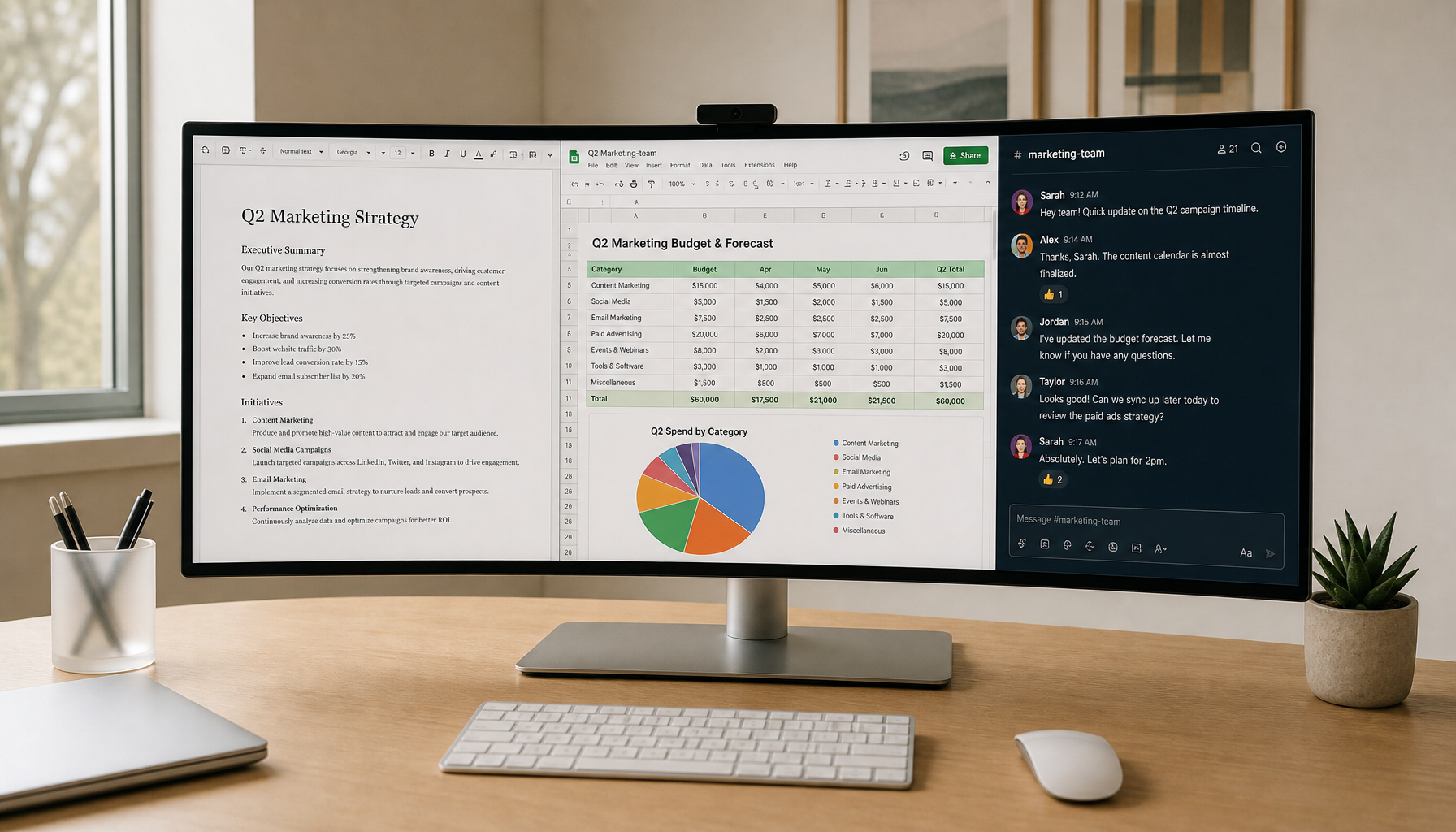
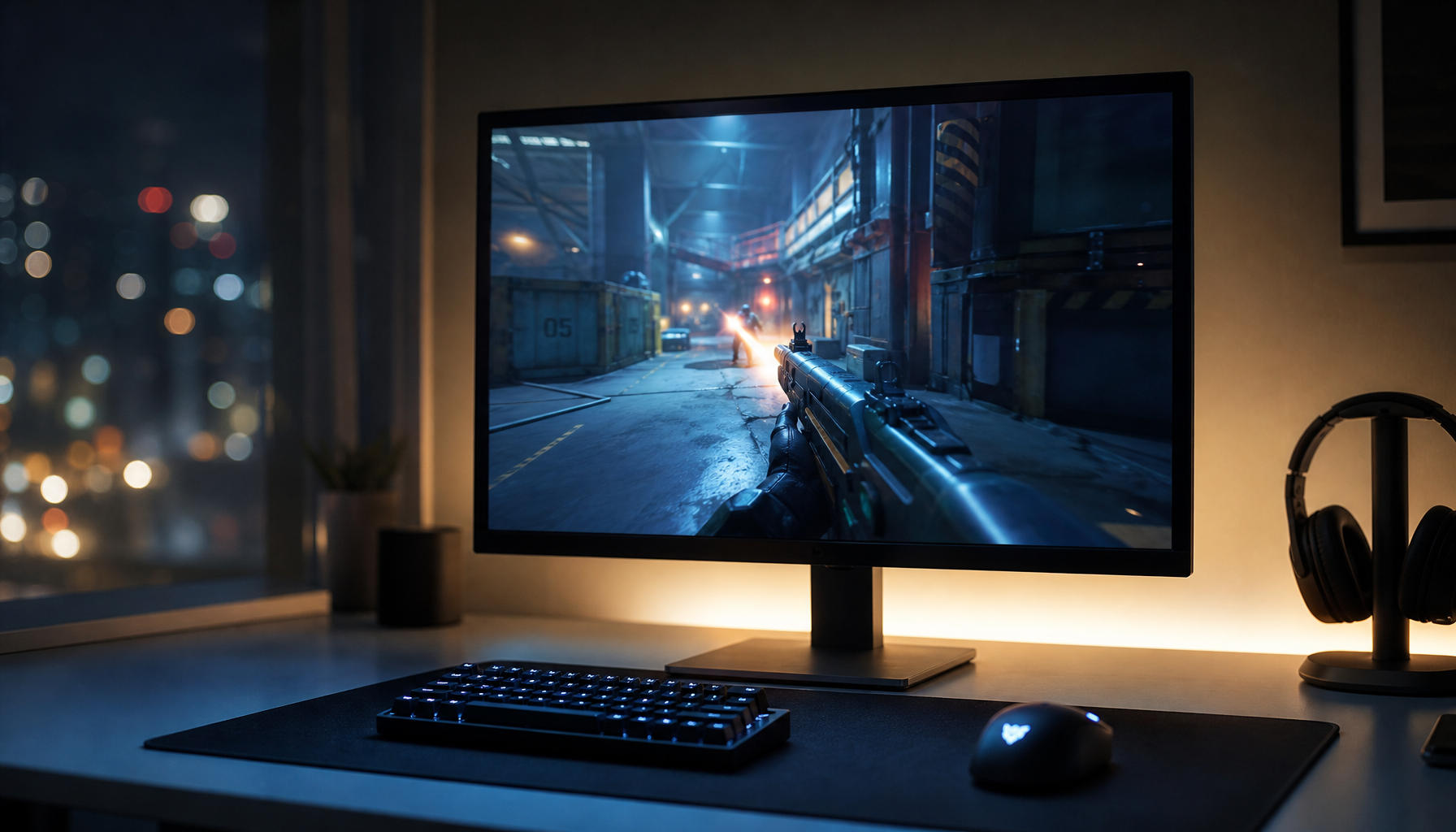
If your main job is reading code, spreadsheets, or long documents, the OLED vs Mini-LED text comparison usually favors Mini-LED as the safer default for text consistency. OLED can still make sense if you also care about gaming or video and you are willing to check how your fonts, scaling, and dark-mode UI look on your own desk first.

Why Text Looks Different on Each Panel
The short version is that OLED and Mini-LED can fail in different ways. OLED text can show colored edges on fine fonts when the subpixel layout and scaling do not line up well, which is why recent writeups on QD-OLED and WOLED fringing issues keep coming back to the same productivity complaint. Mini-LED usually keeps letter edges more familiar, but local dimming can add haloing or glow around bright text on dark backgrounds.
What this means for buyers is simple: if you spend hours in dark-mode IDEs or spreadsheets, you should judge the panel by how it renders small text at your actual scaling, not by the panel label alone.
How OLED Monitors Create Light Without a Backlight
Text Clarity at 27 to 32 Inches
Size and pixel density matter as much as the panel type. RTINGS notes that size affects image clarity and that the 27-inch vs 32-inch choice comes down to viewing distance and needs in many setups, not a universal winner. Their text clarity testing also shows why 4K tends to help fine text more than 1440p at typical desk distances.

| Size and Resolution | What It Usually Means for Text | Best Fit |
|---|---|---|
| 27-inch 1440p | Often fine for general productivity, but can look less dense on tiny fonts | Hybrid use, lighter text demands |
| 27-inch 4K | Usually sharper and easier on small UI text | Coding, documents, spreadsheets |
| 32-inch 1440p | More room, but text can feel soft for long reading sessions | Casual mixed use |
| 32-inch 4K | Usually the most comfortable of the four for dense text work | Text-heavy productivity |
A useful rule is this: if sharp text matters more than motion features, move up in resolution before you get attached to OLED or Mini-LED branding.
OLED Strengths and Trade-Offs
OLED is strongest when your monitor is not just a work screen. For mixed-use buyers, it can make scrolling, motion, and video look very clean, and the contrast can be especially appealing in dark interfaces. That said, the same subpixel behavior that makes OLED visually striking can also make small text look less stable than you expect, especially if your font size is small or your scaling is aggressive.
For that reason, OLED is a better fit when you care about deep blacks, high contrast, and gaming first, then productivity second. If your day is mostly code, terminals, or spreadsheets, OLED is only the better choice when your actual desktop setup looks clean at your preferred font size.
For a 27-inch OLED that is aimed at mixed use, the KTC OLED 27" 2K 240Hz/0.03ms USB-C Gaming Monitor | G27P6 is worth checking if you want gaming and office use in one display. It is still a compromise if your top priority is static text stability, so treat it as a fit check, not an automatic recommendation.
Mini-LED Strengths and Trade-Offs
Mini-LED is usually the conservative choice for long text sessions. It uses a more traditional backlight structure, so text edges tend to feel more predictable in code editors, spreadsheets, and document windows. The trade-off is that local dimming can still create bloom around bright text on dark backgrounds, especially when the interface has hard contrast.
That means Mini-LED is often easier to live with for office-heavy work, especially in brighter or mixed-lit rooms. If you work all day in static apps and want the least surprising reading experience, Mini-LED usually deserves the first look.
The 10,000-Hour Productivity Test: Why Mini-LED Wins for 2026 Workstations
A model like the KTC Mini LED 27" 180Hz 2K HDR1400 Gaming Monitor | M27T6 fits the general Mini-LED productivity case better than OLED if you want cleaner text behavior and still want a gaming-capable refresh rate. It is a stronger fit when the desk is bright, the workday is long, or the screen spends most of its time in static windows.
Choose by Workflow
- Choose OLED if your monitor is split between gaming, media, and work, and you are comfortable checking scaling carefully before you buy.
- Choose Mini-LED if most of your day is code, spreadsheets, dashboards, or documents, and you want the more predictable text choice.
- Choose 4K before you choose panel type if you are especially sensitive to small-font sharpness at 27 inches or you plan to use 32 inches for long sessions.
- Choose OLED only if your preferred font size, dark theme, and scaling look clean on the actual desktop you use every day.
A good decision sentence here is: if your work is mostly static text, Mini-LED is usually the safer pick; if your use is mixed and you care about contrast and motion, OLED can be the better compromise, but only after a real scaling check.
Final Checks Before You Buy
Before you commit, check four things on the exact monitor size you want:
- Resolution and size together, because 27-inch 1440p, 27-inch 4K, and 32-inch 4K do not feel the same.
- Your room lighting, because brighter desks often favor Mini-LED for text readability.
- Your main apps and themes, especially dark-mode IDEs, spreadsheets, and document editors.
- Return policy and warranty, if you want to test text clarity on your own desk before keeping the panel.
If you are leaning toward OLED, browse the All-OLED Monitor collection first. If you are leaning toward Mini-LED, compare it against the KTC Mini LED 27" 200Hz 2K HDR1000 Gaming Monitor | M27T6S as a text-first, gaming-capable fallback.
For most readers, the cleanest answer is this: Mini-LED is the safer choice for all-day text work, while OLED is the better mixed-use choice when you can tolerate a little more setup sensitivity.
Related Resources
Check these targeted guides before finalizing your OLED vs Mini-LED text decision:
- Why Magnification Tools Look Pixelated or Blurry on Different Monitor Resolutions for scaling fixes
- What Monitor Pixel Density Do You Actually Need to Stop Seeing Pixels? for PPI guidance at 27-32 inches
- The Great Display Debate: Glossy vs. Matte Coatings for OLED Monitors for reflection and clarity trade-offs
- 4K Monitor collection for higher-density options
FAQs
Q1. How Does OLED Text Clarity Compare With Mini-LED for Coding?
Mini-LED usually feels more consistent for static code, terminal windows, and spreadsheets. OLED can look excellent, especially at higher resolution, but it is more likely to show fringing on small text depending on subpixel layout, font size, and scaling. If your editor stays open for hours, that difference is worth checking on your own desktop first.
Q2. What Causes OLED Text Fringing?
The main cause is the interaction between the panel's subpixel structure and fine fonts. Small text, thin weights, and low or awkward scaling can make colored edges more noticeable. In practical terms, the smaller the text and the less forgiving the UI theme, the more likely you are to notice it.
Q3. Why Can Mini-LED Text Look Haloed on Dark Backgrounds?
Mini-LED uses local dimming, so bright text on a dark background can sometimes show a glow or halo around letters. That is most noticeable in dark-mode apps and high-contrast interfaces. If you mainly use light themes, the issue is often less obvious.
Q4. Can a Higher Resolution Fix OLED Text Clarity Issues?
Higher resolution usually helps a lot because it makes subpixel structure less visible relative to the text. It does not erase every artifact, but it can move OLED from distracting to acceptable for many people. That is why 4K OLED often makes more sense for productivity than lower-resolution OLED.
Q5. What Is the Best Panel for a Mixed Gaming and Work Monitor?
Mini-LED is the safer choice if work comes first and you want predictable text. OLED is the better mixed-use choice if contrast, motion, and gaming are important enough to justify some text trade-offs. The deciding factor is usually not the brand, but how often you read static text versus how often you switch into games or media.