For creative professionals in 2026, the choice between OLED and Mini-LED comes down to your specific room lighting, delivery format, and tolerance for daily workflow friction rather than a universal “best” technology. In dim studios focused on shadow-critical narrative work, OLED’s perfect blacks usually deliver more reliable grading judgment. In brighter rooms or for high-APL commercial delivery that demands sustained brightness, a high-zone Mini-LED monitor is typically the safer, more stable option.

The 2026 Baseline: What HDR Color Grading Actually Demands
Professional HDR mastering sets clear performance floors that both technologies can meet under the right conditions. According to Netflix’s color-critical display calibration guidelines, a reference monitor should deliver at least 1,000 nits peak luminance, a 200,000:1 contrast ratio, and 99% P3 color gamut coverage to ensure grades translate reliably to consumer screens.
OLED achieves effectively infinite contrast and absolute blacks around 0.0005 nits by turning individual pixels completely off, as outlined in the VESA DisplayHDR True Black standard. This gives colorists precise control over near-black detail without any backlight bleed or haloing.
Mini-LED panels with high zone counts, on the other hand, can sustain full-screen brightness near 1,000 nits while reaching peak highlights of 1,400–2,000+ nits, per VESA DisplayHDR 1400 criteria. The difference matters most when grading content meant for bright living rooms or when average picture level (APL) stays high.
What this means for you is that both panel types can satisfy the technical thresholds on paper. The real decision hinges on which set of trade-offs disrupts your particular workflow less. For deeper context on how these specs translate to creative accuracy, see our guide to what Delta E values actually mean for your creative work and what bit depth means for displays.
Room Lighting and Delivery Format: The Scenario Split
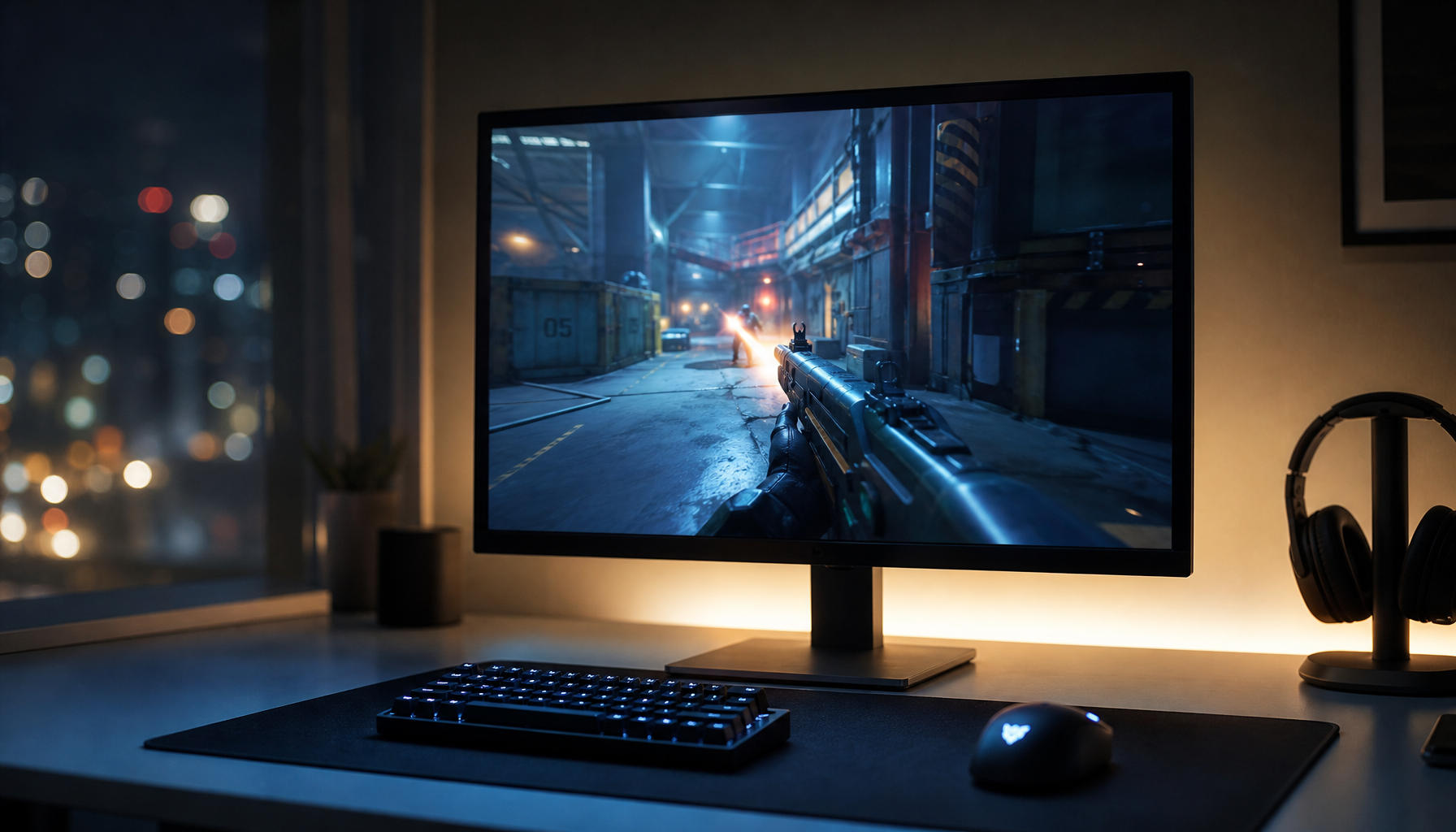
Your studio’s ambient light level and target delivery format often flip the recommendation more than headline specs do. In a very dim room (under roughly 5 lux) where shadow detail in dark narrative scenes is critical, OLED’s pixel-level blacks remain decisive. Any faint local-dimming halo from Mini-LED can pull attention away from subtle near-black transitions that clients expect to see evaluated accurately.
Once ambient light rises above controlled levels—common in client review suites or home offices with windows—OLED’s absolute black advantage largely disappears because the viewer’s own black-floor perception shifts upward. Here, Mini-LED’s higher sustained brightness prevents the grade from looking flat or washed out when the final content plays on consumer HDR TVs in brighter environments.
For Netflix-spec HDR targeting 1,000 nits peak, OLED handles highlights well in low-APL scenes. But content with snowy landscapes, bright interiors, or commercials quickly triggers OLED’s automatic brightness limiter (ABL), forcing the entire screen to dim. Mini-LED maintains output without the same aggressive roll-off, making it the more predictable choice for high-luminance commercial delivery.
The chart below visualizes these practical fit differences across common creative scenarios.
OLED vs Mini-LED for 2026 Color Grading
A practical fit map for creative pros: darker rooms and shadow-critical work tend to favor OLED, while brighter rooms and sustained high-output delivery tend to favor Mini-LED. Use it as a workflow-and-lighting guide, not a strict measurement chart.
View chart data
| Scenario | Very dim room | Controlled room | Bright room | Narrative delivery | Commercial delivery |
|---|---|---|---|---|---|
| OLED | 3.0 | 2.0 | 1.0 | 3.0 | 1.0 |
| Mini-LED | 1.0 | 2.0 | 3.0 | 1.0 | 3.0 |

The Stability Trade-off: Hardware Anxiety vs. Perceptual Artifacts
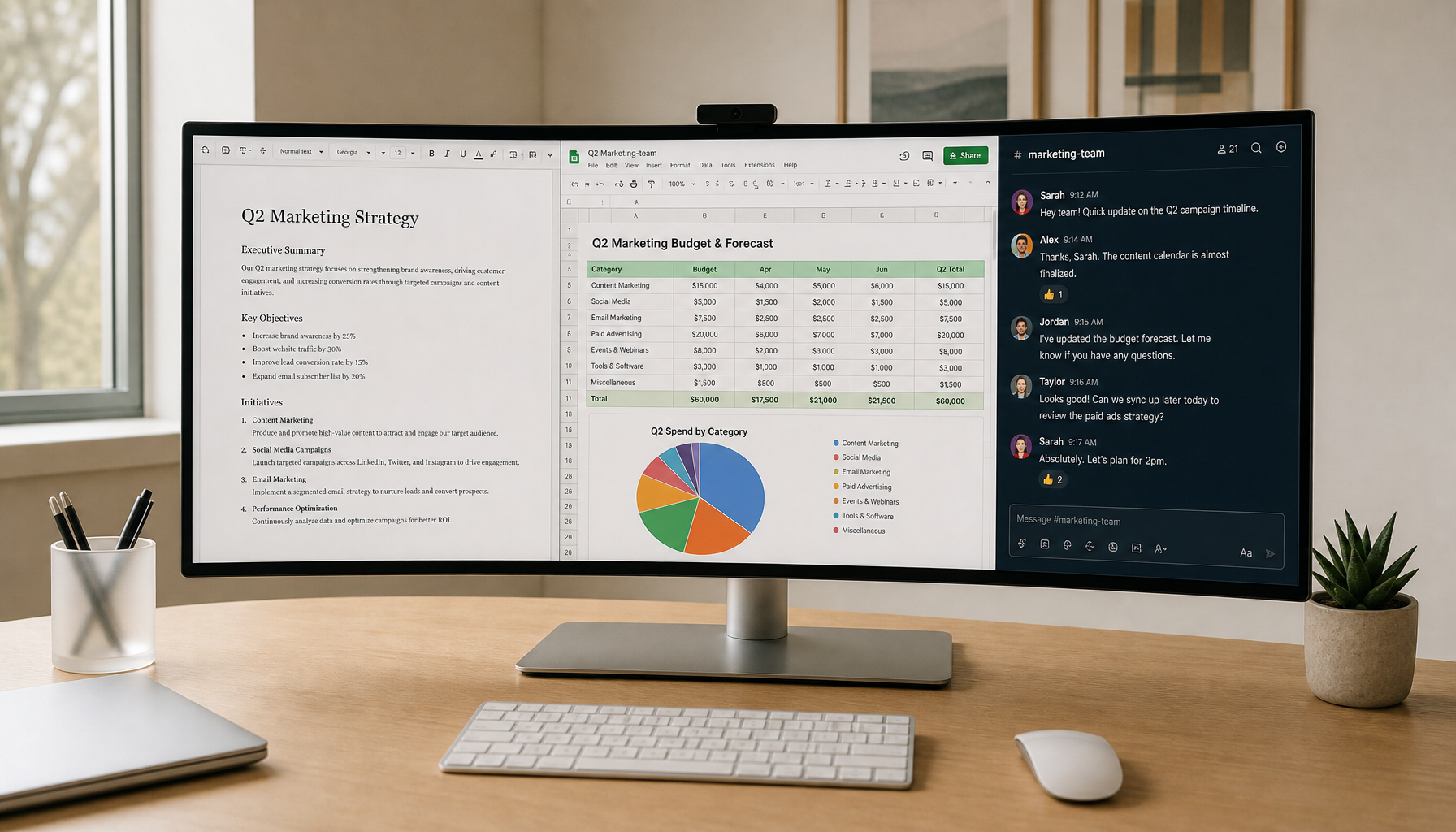
Long editing sessions expose a different layer of friction that pure spec sheets rarely capture. OLED’s risk of permanent burn-in from static user-interface elements—timelines, color wheels, tool palettes—creates constant “hardware anxiety.” Many colorists end up hiding taskbars, dimming the UI, or running pixel-shift and logo-dimming routines, all of which interrupt the deep-focus state needed for consistent grading. While modern OLEDs include improved mitigations, they do not fully eliminate the concern for professionals running 10-hour days at high brightness.
Mini-LED removes that image-retention worry entirely. The panel can display static UI indefinitely without degradation, delivering a true set-and-forget experience. The main drawback is faint haloing or blooming around bright UI elements on dark backgrounds. In a properly lit grading suite, however, this blooming is usually most noticeable around cursors and white text rather than inside the actual video preview window, where color-critical decisions occur.
For most editors, the cognitive load of managing OLED burn-in precautions outweighs occasional Mini-LED perceptual artifacts once the room is calibrated and lighting is controlled. Our related article on what “local dimming zones” mean in monitor backlight technology explains why zone count directly influences how visible those halos become.
The 'Toggle Tax': Why Mini-LED Isn't Always 'Set and Forget'
Many Mini-LED monitors require manual intervention when switching between SDR desktop work and HDR grading. On budget-friendly models, disabling local dimming to eliminate cursor blooming or text halos in dark-mode SDR can involve four or five deep dives into the on-screen display menu. If your day includes more than three of these context switches, the repeated friction becomes a genuine productivity tax.
The threshold is roughly 1,152 zones: below that, blooming around high-contrast UI elements in SDR dark mode is often severe enough that users feel forced to toggle. Higher-zone panels reduce the need for constant adjustment, but input-lag side effects from aggressive local-dimming processing can still add noticeable delay during precise timeline scrubbing.
If your workflow stays mostly in one mode or your monitor offers automatic profile switching via DDC/CI, the toggle tax shrinks. Otherwise, OLED’s consistent contrast without any local-dimming management can become the lower-friction daily driver despite its other limitations. For broader perspective on hybrid use, see our comparison of Mini-LED vs. OLED for gaming in 2025, which shares many of the same mode-switching realities.
Workflow Fit: Choosing the Right KTC Panel for Your Studio
Match the panel to your dominant conditions rather than chasing the highest headline number. For dark-room narrative grading where shadow detail and absolute blacks drive client approval, an OLED panel such as the KTC G27P6 gives pixel-level precision without local-dimming artifacts. Its perfect blacks and lack of blooming support the most critical evaluation of near-black lifts and crushed shadows.
For bright-room client suites, commercial delivery, or extended sessions with static timelines and palettes visible, the KTC M27P6 Mini-LED 4K HDR1400 monitor is usually the more stable choice. Its 1,152-zone backlight, sustained 1,000-nit capability, and immunity to burn-in let you keep the full UI visible for 10+ hour days without anxiety or constant adjustments. The higher peak brightness also better represents how grades will appear on consumer HDR screens in typical living-room lighting.
If you switch between SDR productivity and HDR grading multiple times daily, verify that any Mini-LED candidate has sufficient zones or automatic switching before purchase. When the toggle tax would exceed your tolerance, OLED remains the lower-friction path even if you must manage burn-in precautions more carefully.
In short, neither technology wins outright in 2026. The panel that lets you stay in deep creative flow with the fewest interruptions is the one that wins for your studio.
Frequently Asked Questions
Can modern OLED monitors be used safely for full-time color grading in 2026?
Yes, provided you follow manufacturer-recommended pixel-shift, logo-dimming, and screen-saver policies and keep peak brightness moderated during static UI periods. Many professionals still prefer them for shadow-critical narrative work in controlled lighting, but the residual burn-in risk means you must accept some workflow management that Mini-LED largely avoids.
How many local-dimming zones does a Mini-LED monitor need to minimize blooming in SDR desktop use?
At least 1,152 zones is the practical threshold where most users find blooming around text and cursors acceptable without disabling the feature. Lower-zone panels often force frequent toggling, creating the daily “toggle tax” described above.
Does room lighting really outweigh peak brightness specs when choosing between OLED and Mini-LED?
In most cases, yes. Once ambient light exceeds roughly 20–30 lux, the perceptual black floor rises enough that OLED’s absolute blacks lose much of their advantage, while Mini-LED’s sustained brightness prevents the image from looking flat. Calibrate your specific suite and test both technologies under your actual working lights before deciding.
Are KTC’s current Mini-LED monitors suitable for professional HDR mastering?
The M27P6 and similar high-zone Mini-LED models meet or exceed Netflix and Dolby Vision reference targets for peak luminance, contrast, and color volume in bright-room or commercial workflows. They are especially strong when long sessions with static UI are common. Always verify final calibration with your chosen color-management software, as individual unit variation still exists.
Should I prioritize color accuracy certifications or panel technology when buying a creator monitor?
Prioritize a factory-calibrated panel with low Delta E (under 2) and validated 99%+ P3 coverage first, then choose the technology that best matches your lighting and delivery needs. A well-calibrated Mini-LED in a bright room will usually outperform a poorly managed OLED in the same environment, and vice versa. Our article on how to verify your display calibration is actually working walks through practical checks you can run yourself.
What is the biggest hidden cost of choosing the “wrong” panel for color grading?
Lost productivity from daily friction. Whether it is repeated burn-in anxiety and UI hiding on OLED or constant OSD toggling and blooming distraction on Mini-LED, the real expense appears in interrupted creative flow and extended project times rather than the purchase price alone.