More screen space helps until it multiplies decisions, head movement, cable clutter, and visual noise. For most desk workers, the sweet spot is one excellent main display plus one purposeful secondary screen, not a wall of panels.

More Pixels Are Not Automatically More Focus
Multi-monitor setups can reduce window switching and help users compare information side by side; some sources cite productivity gains of 20% to 50%. That benefit is real when each screen has a clear job: work surface, reference, communication, preview, or monitoring.
The limit arrives when a new monitor does not remove friction. If it mainly holds chat, email, feeds, dashboards, or “just in case” tabs, it becomes a distraction amplifier.
A good test: if the third display does not save more time than it steals in glances, alerts, and window management, it is not productivity gear. It is ambient interruption.
The Two-Monitor Peak
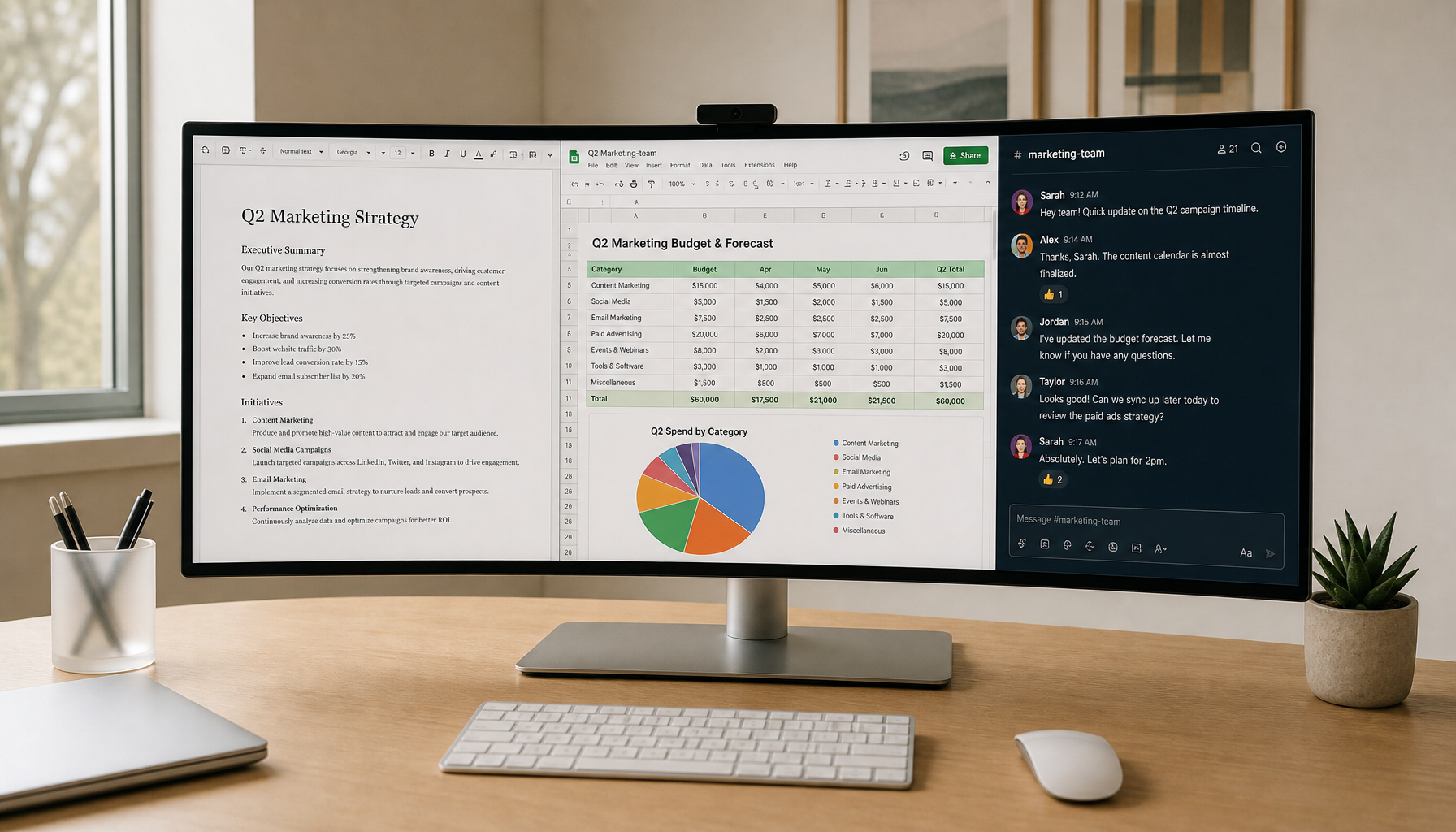
For many professionals, dual displays remain the practical performance baseline. A primary monitor keeps the active task centered, while the second handles reference material, calendar, documentation, chat, or previews.

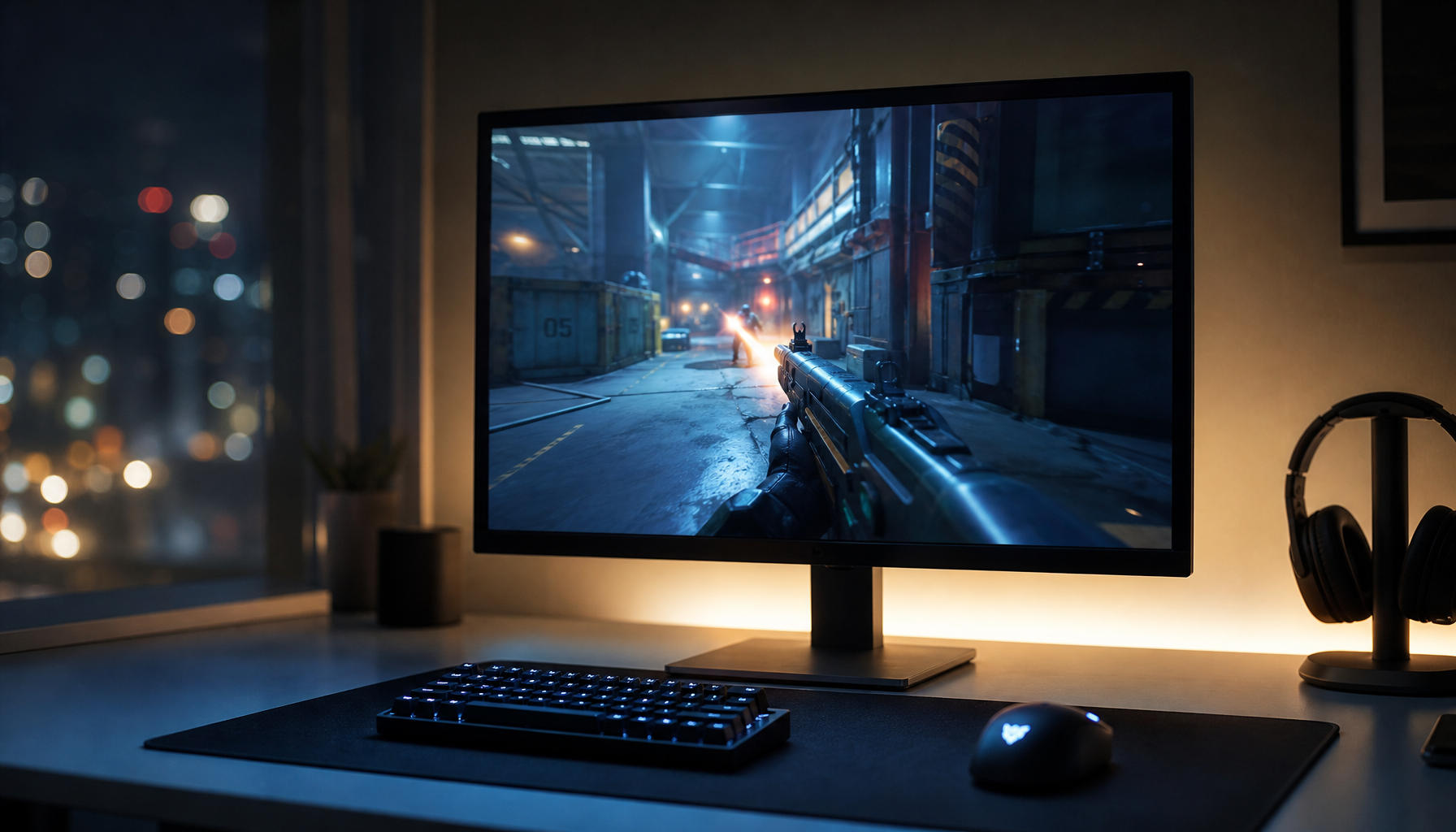
This works especially well for writers comparing sources, analysts checking spreadsheets against dashboards, developers pairing code with documentation, and gamers or streamers monitoring tools without leaving the main screen.
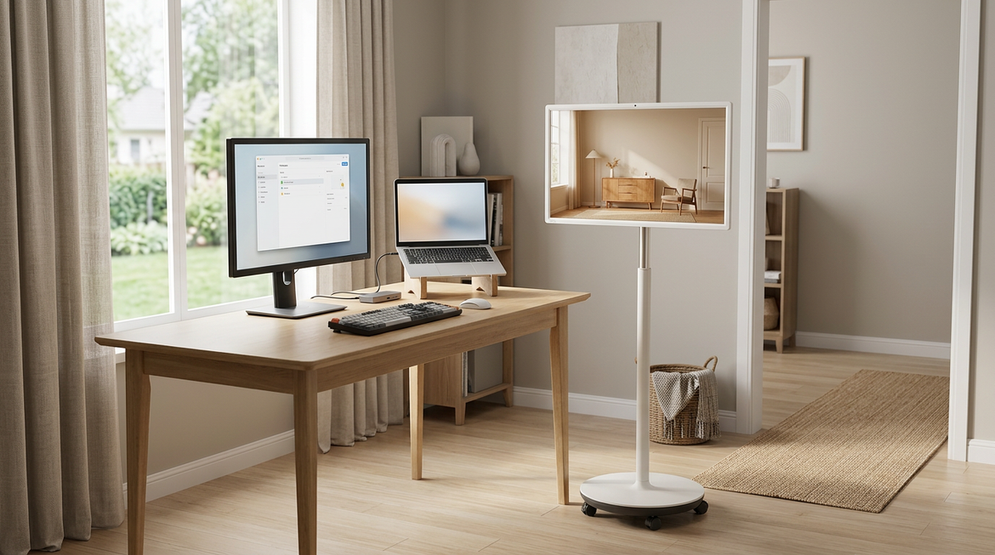
Setup quality matters as much as screen count. A strong dual setup should use extended desktop mode, matched scaling where possible, aligned top edges, and a secondary display angled slightly inward.
If the second monitor constantly pulls your eyes away from the primary task, demote it. Put low-urgency apps there, mute notifications, or rotate it vertically for documents, code, or task lists.
When the Third Monitor Starts Working Against You
A third monitor is powerful for specialized workflows, but it raises the cost of awareness. Every extra panel adds more cursor travel, more brightness matching, more posture management, and more open loops.
The third screen earns its place when it carries persistent, low-interaction information: live system monitoring, trading charts, video scopes, test output, call notes, or a production preview. It hurts when it becomes another full-time app launcher.
Warning signs include losing windows more often than you find them, turning your head instead of your eyes, letting the main task drift off center, keeping messaging apps visible “for productivity,” or adding more desk hardware than the workflow benefit justifies.

Research and vendor claims often show gains from multiple displays, but they rarely prove that three or four monitors beat a well-tuned dual setup for every role.
Ergonomics Set the Real Ceiling
Your body decides the practical limit before your graphics card does. Side monitors that sit too wide can turn every copy-paste action into a neck workout.
A strong baseline is simple: center your most important display, keep screens at a comfortable distance, align heights, and angle side displays inward. Several multi-monitor recommendations emphasize adjustable monitor arms because flexibility protects posture as workflows change.

Resolution also matters. A single 27-inch 4K or 1440p display may outperform two weak panels if it gives sharper text, better scaling, and less visual fatigue. For productivity and mixed use, 4K displays can offer clearer text and more usable workspace when budget and hardware allow.
Choose Screen Roles, Not Screen Count
Before adding another monitor, assign every display a job. If you cannot name the job, you probably do not need the panel.
One monitor is usually enough for deep work, writing, calls, and focused office tasks. Two monitors fit most productivity, coding, research, spreadsheet, and light creative workflows. Three monitors make sense for dashboards, testing, trading, editing, and production control. An ultrawide can suit wide timelines, large spreadsheets, and immersive multitasking with fewer bezels.
The practical limit is not “how many monitors can my desk hold?” It is “how many screens can I use without breaking focus?” For most users, the winning upgrade is not another rectangle. It is a sharper main display, cleaner layout, better ergonomics, and fewer reasons to look away.