Startups scaling in 2026 often face a difficult choice when building monitor fleets: the significantly lower upfront prices of OEM-direct options like those from KTC can free up capital, but the added IT overhead, longer downtime during repairs, and lack of centralized management tools may push total ownership costs closer to those of traditional enterprise brands such as Dell. The right decision depends on team size, technical expertise, primary operating system, and tolerance for manual maintenance. For small, tech-savvy teams under 10 people, the savings frequently outweigh the friction. For rapidly growing teams of 20 or more without dedicated IT support, especially those heavily using macOS, the enterprise support layer can deliver better long-term value.

Why Monitor TCO Matters for Startups in 2026
Total cost of ownership (TCO) extends far beyond the initial purchase price of monitors. As TechTarget explains, TCO in IT includes deployment, management, daily operation, and eventual retirement of assets. For a startup buying 20 to 50 displays, these hidden layers can easily exceed the sticker-price difference between value-oriented and premium brands.
When outfitting new hires or standardizing a hybrid office, founders and procurement leads must weigh capital preservation against operational reliability. A monitor that fails at an inopportune moment creates not only replacement expense but lost employee productivity. Energy consumption across dozens of units also compounds over years. Understanding these factors early prevents budget surprises and supports stronger cases to investors or CFOs.
OEM-Direct Economics: How Startups Avoid the Brand Tax
KTC functions as an original equipment manufacturer for many well-known global brands. This position lets the company sell high-quality panels directly, bypassing the markup that funds brand marketing and extensive support networks. The resulting savings typically range from $150 to $350 per unit compared with equivalent enterprise models.
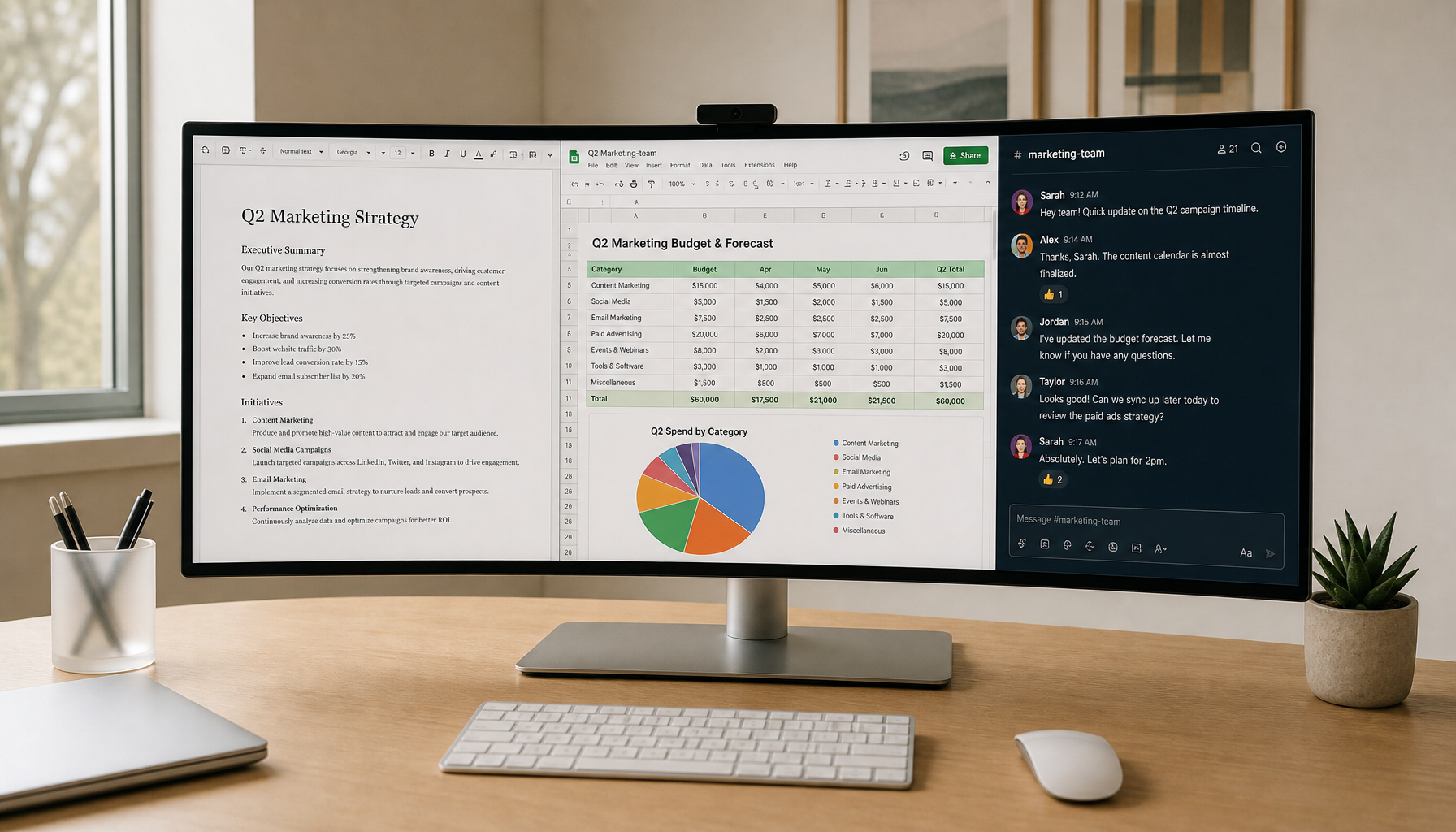
For a fleet of 30 monitors, that gap can translate into $6,000–$10,000 of preserved runway—money that can fund engineering hires or product development instead. Models such as the KTC 27" 4K IPS 60Hz Low blue Light Home&Office Monitor | H27P27 and KTC 27" 2K 100Hz/120Hz Home&Office Monitor | H27D9 illustrate the value-focused hardware many startups standardize on for general productivity.

These displays deliver solid color accuracy, flicker-free operation, and ergonomic flexibility suitable for extended desk work. Yet the lower price reflects a deliberate trade-off: hardware excellence paired with minimal software and support infrastructure. The savings remain real, provided your team can absorb the operational differences.
The Hidden Costs: Warranty, Downtime, and Daily Operations
Enterprise offerings often include rapid replacement programs that ship a working unit before the defective one returns. This approach keeps employees productive. In contrast, standard warranties on many OEM monitors require shipping the faulty unit first, which can leave a desk without a display for days or weeks while processing occurs.
One day of compromised productivity for a mid-level employee earning $40 per hour can exceed the per-unit price gap. When multiplied across a team, these downtime events erode the apparent savings. Business-class monitors are generally engineered for longer daily duty cycles, which can reduce failure frequency in always-on office environments, though exact rates vary by usage and batch.
Energy efficiency also affects long-term TCO. According to Energy Star guidance, certified displays can cut electricity expenses measurably when dozens of units run eight or more hours daily. Over three years the cumulative difference becomes noticeable on utility bills. KTC monitors carry a three-year warranty that provides basic coverage, yet the practical speed of resolution differs from premium enterprise programs. Worry-Free Purchase protection plans can help mitigate some shipping risks, but they do not replicate next-business-day hardware swaps.
For individual users or very small teams the hardware savings often dominate. When scaling to 30-plus seats, the cost of even occasional downtime or manual servicing can shift the equation.
The IT Burden: Software Management and Mac Compatibility
OEM hardware typically ships without centralized fleet-management utilities. IT staff must adjust brightness, color settings, or firmware on each monitor individually using on-screen controls or USB-based processes. For a fleet of 50 units this manual work adds measurable labor hours during initial deployment and future updates.
Firmware updates on many value monitors require specific USB formatting and physical interaction with each screen. The process does not scale cleanly when teams grow quickly. macOS users frequently report additional complications, including inconsistent wake-from-sleep behavior over USB-C and imperfect brightness synchronization. These issues rarely appear in single-user testing but become painful across a distributed workforce.
This heatmap helps show the likely break-even pattern: Dell’s enterprise premium is easiest to justify only when the price gap is small enough that avoided IT overhead and downtime risk can plausibly offset the extra upfront cost.
When Dell's Enterprise Premium Is Worth It
A tiered view of when the higher upfront price is easier to justify against IT time and downtime risk.
View chart data
| Scenario | Low price delta | Medium price delta | High price delta |
|---|---|---|---|
| Low | 3.0 | 2.0 | 1.0 |
| Medium | 1.0 | 2.0 | 3.0 |
| High | 1.0 | 2.0 | 3.0 |
A practical rule of thumb many procurement teams use is that when the price difference falls under roughly $200 per unit, the enterprise support features become easier to justify for most growing startups. Above that threshold the upfront capital preservation from OEM options usually wins unless your environment has unusually high reliability demands.
Choosing Your Fleet Strategy: Value vs. Support
Evaluate your startup’s stage and internal capabilities before committing. Teams of fewer than 10 technically comfortable people who can handle occasional manual updates often benefit most from OEM-direct monitors. The capital saved can be redirected toward product or hiring priorities.
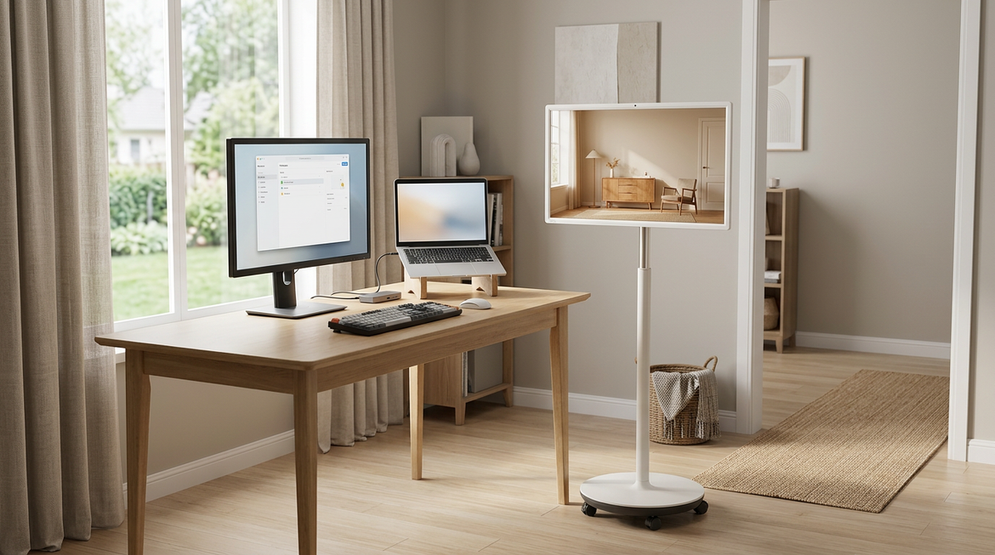
Organizations scaling beyond 20 employees, those without dedicated IT resources, or those whose workflows center on macOS typically find the management layer and rapid replacement services of enterprise brands reduce friction enough to offset the higher price. A hybrid model can also make sense: equip core engineering and leadership stations with premium support monitors while using high-value OEM units for secondary or testing workstations.
Consider piloting 5–10 units of each type before a full rollout. Track actual downtime incidents, IT hours spent on configuration, and employee feedback over 90 days. This small-scale test often reveals the true TCO pattern for your specific culture and operating system mix. Pair any chosen fleet with ergonomic guidance and productivity setup advice to maximize long-term return on the investment.
The KTC 32" 2K IPS 100Hz/120Hz Home&Office Monitor | H32T13 offers a practical middle ground for many hybrid fleets, delivering larger workspace and solid performance without excessive cost. Ultimately the optimal strategy balances immediate cash preservation with the operational reality of how your team actually works.
How Does Monitor Fleet Size Affect TCO Calculations in 2026?
Larger fleets amplify both the benefits and risks. With 50 or more units the upfront savings from OEM monitors can reach five figures, yet the cumulative IT labor for manual configuration and the productivity impact of even a 5% annual failure rate can erase much of that advantage. Smaller fleets of 10 or fewer units usually favor the lowest-cost hardware because support overhead remains manageable by existing staff.
What Warranty and Support Factors Should Startups Weigh Beyond the Stated Term?
Look closely at replacement logistics, shipping responsibility, and turnaround expectations rather than warranty length alone. Rapid-exchange programs reduce downtime to near zero but carry a premium. Standard processes that require shipping first can generate both direct shipping costs and indirect payroll losses. Factor in whether your team has the bandwidth to manage returns without disrupting delivery schedules or employee output.
When Does a Hybrid Monitor Fleet Make the Most Sense?
A hybrid approach works well when core roles require maximum uptime and specialized software compatibility while support or secondary stations can tolerate slightly more hands-on management. Assign enterprise-grade monitors to developers and customer-facing staff, then deploy cost-effective office models for overflow desks or testing rigs. This strategy captures the bulk of available savings while protecting the highest-impact workstations.
How Should Procurement Teams Test TCO Assumptions Before a Large Purchase?
Run a 90-day pilot with 5–8 monitors of each candidate type in real working conditions. Record configuration time, any compatibility issues, failure incidents, and employee satisfaction. Compare the measured labor and downtime costs against projected savings. The data from this limited deployment usually provides clearer guidance than theoretical spreadsheets alone.
Are Energy Efficiency Gains Still Relevant for Modern Monitor Fleets?
Yes. Even with improving panel technology, the difference between certified and non-certified models can still reduce annual electricity spend by hundreds of dollars across a 30-unit office. When combined with proper power-management settings and automatic sleep policies, these savings compound reliably over the three-to-five-year expected service life of the fleet.