In 2026, the choice between Mini-LED and OLED for productivity comes down to your room's lighting, daily workflow, and tolerance for specific visual trade-offs rather than raw gaming specs alone. Mini-LED generally suits bright rooms and light-mode office work because it delivers sustained high brightness without dimming and carries no burn-in risk from static toolbars or spreadsheets, while high-PPI OLED excels in darker environments and dark-mode tasks thanks to perfect blacks and strong contrast, provided you accept some remaining text-fringing risk and long-term durability considerations.

The 2026 Prosumer Dilemma: Beyond Just Gaming
Hybrid workers who spend eight hours on spreadsheets, code editors, and browsers before switching to evening gaming face a tougher decision than in previous years. OLED panel prices have fallen, making premium contrast accessible, yet Mini-LED retains strong advantages in everyday office scenarios. The deciding variables are no longer simply peak HDR performance or refresh rate. Room lighting conditions, text density on screen, preferred UI theme (light versus dark mode), and tolerance for potential long-term panel wear now drive the recommendation. KTC offers competitive models across both technologies, allowing buyers to match the panel to their actual desk environment instead of compromising on a one-size-fits-all choice.
Brightness and Room Lighting: The 300 Lux Threshold
Many home offices receive indirect daylight or overhead lighting that exceeds 300 lux, a level typical of well-lit workspaces. At this brightness, OLED monitors often engage their Auto Brightness Limiter (ABL), which dims the entire screen when large areas of white appear, such as during document editing or web browsing. The result feels like the display is “breathing,” reducing legibility precisely when you need stable luminance most.
Mini-LED monitors avoid this behavior because their backlight can sustain 800–1000+ nits across full-white fields without aggressive throttling. This 2026 technology comparison highlights how Mini-LED’s sovereign-grade sustained output provides a more consistent experience in sunlit rooms. For users in brighter spaces, the practical takeaway is clear: choose Mini-LED if your desk sees regular daylight or strong artificial light. Models like the KTC M27P6 27" 4K HDR1400 Mini-LED Gaming Monitor deliver the necessary headroom while maintaining full ergonomic adjustment for long sessions.
The chart below visualizes how ambient light and workflow type shift the preferred technology.
The Text Clarity Audit: PPI and Subpixel Layouts
Text fringing remains a common complaint with OLED monitors because Windows ClearType expects a standard RGB stripe subpixel layout. Most OLED panels use WRGB or triangular arrangements, which can produce faint colored edges on letters, especially at lower pixel densities. Analysis of current OLED text rendering explains why many users notice softness or chromatic aberration in spreadsheets and code editors.
A widely observed heuristic helps here: at pixel densities above roughly 140–150 PPI (common on a 27-inch 4K panel), the fringing becomes nearly invisible at normal viewing distances. Below that threshold, such as on many 27-inch or 34-inch 1440p displays, Mini-LED’s conventional RGB layout delivers noticeably sharper text. Our guide on subpixel layouts covers how these differences affect everyday readability. For users sensitive to text quality, the safe check is simple: prefer Mini-LED or high-PPI 4K OLED, and test in your specific applications before committing to a lower-density OLED.
KTC’s H27P3 27" 5K Office Monitor pushes pixel density even higher for creators and text maximalists who want maximum sharpness without gaming-oriented refresh rates.
Productivity Comfort: Light Mode vs. Dark Mode Workflows
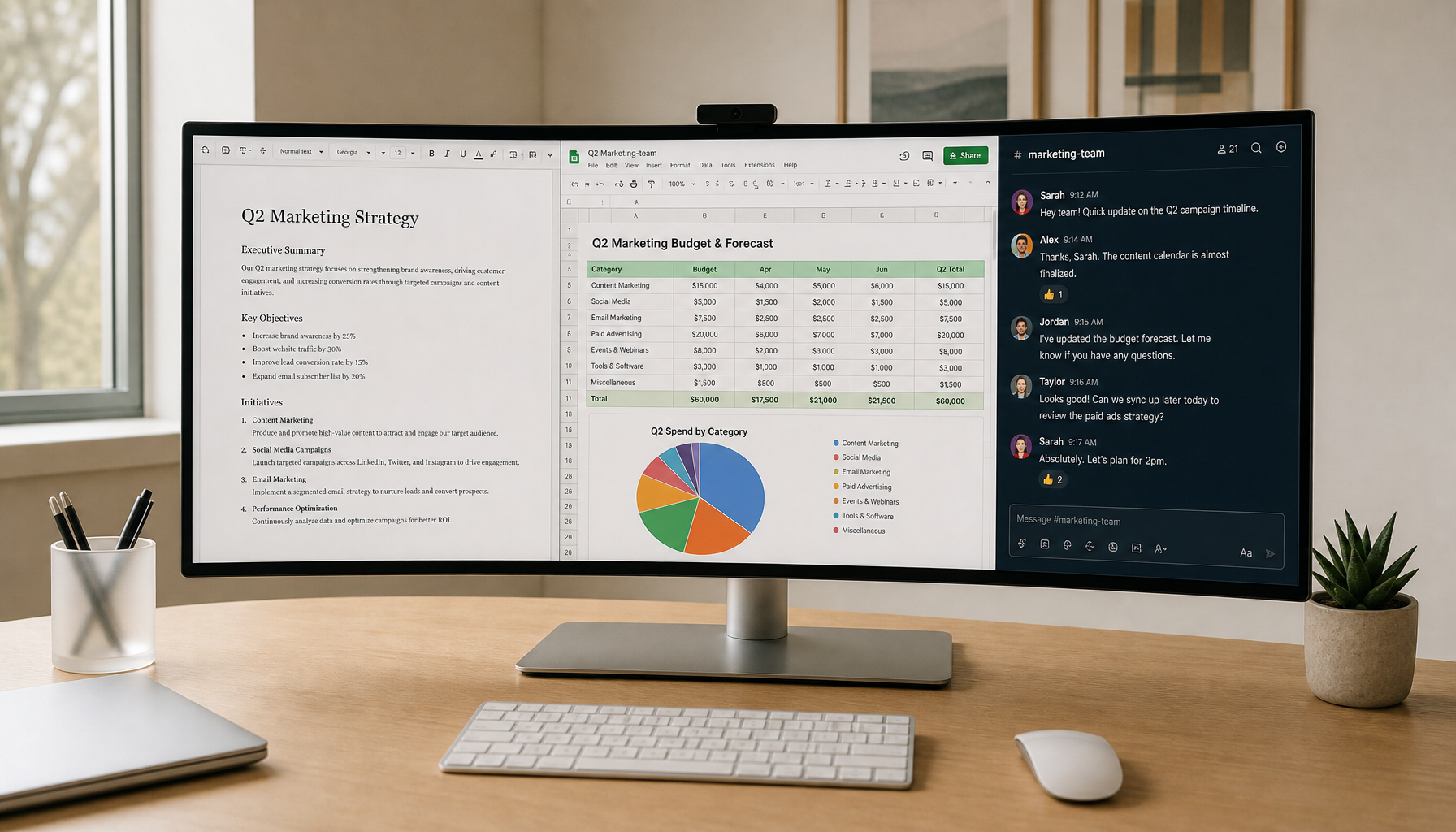
Users who keep light-mode interfaces open for hours—Excel grids, browser tabs, or IDE sidebars—often worry about burn-in on OLED panels. While 2026 OLED warranties have improved and mitigation techniques help, static bright UI elements still carry a physical risk over years of heavy use. Mini-LED backlights eliminate this concern entirely, making them the lower-stress choice for “burn-in fearers.” Long-term reliability comparisons reinforce that inorganic Mini-LED construction avoids the degradation organic OLED emitters can experience.
Conversely, Mini-LED local dimming introduces its own friction. Bright text or cursors on dark backgrounds can produce halos or blooming, even on high-zone-count arrays. Many users end up toggling local dimming off for desktop work, creating a daily “SDR toggle tax.” This 2026 OLED versus Mini-LED overview notes that the artifact is especially noticeable in dark-mode coding. Our article on local dimming zones explains the mechanism behind these halos.
The workflow split therefore becomes practical: light-mode spreadsheet warriors should lean Mini-LED for sustained brightness and zero burn-in risk, while dark-mode developers in controlled lighting may prefer high-PPI OLED for perfect blacks and the absence of blooming. Tools like PureType can partially mitigate OLED text issues for those already committed to the technology, though they remain supplementary fixes rather than complete solutions.

The 2026 Prosumer Decision Matrix
Matching the right panel to your habits removes most regret. The scenarios below translate the earlier thresholds into concrete recommendations using current KTC options.
- Bright-room spreadsheet warrior: Needs sustained nits, stable luminance, and burn-in immunity. A 4K Mini-LED such as the KTC M27P6 fits best.
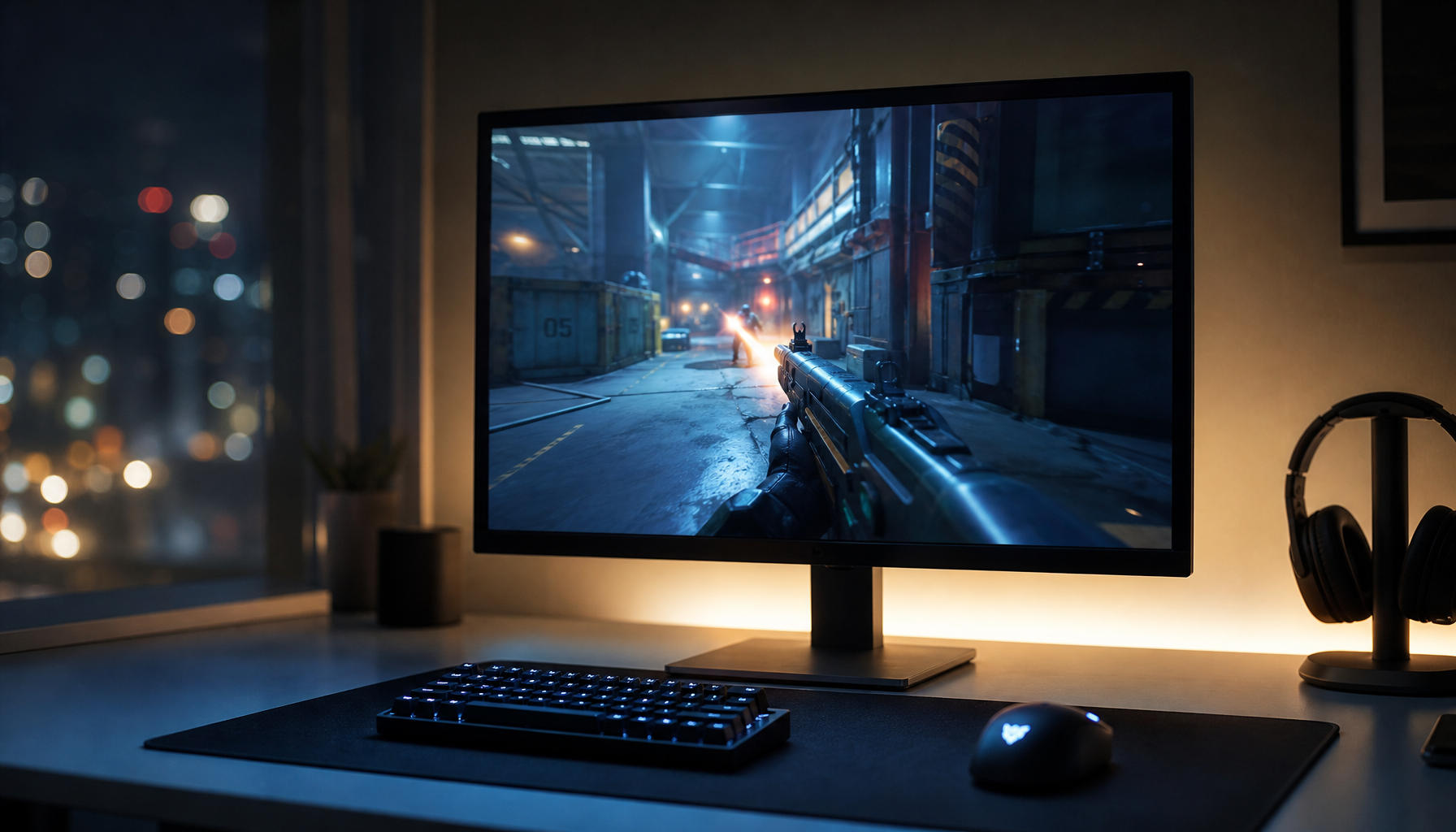
- Dark-mode coder or evening gamer: Benefits from perfect blacks and high contrast in low light, assuming the display exceeds 140 PPI. The KTC G27P6 27" OLED Gaming Monitor aligns well here.
- Budget-conscious hybrid user: Prioritizes strong text clarity without premium pricing. The KTC M27T6S 27" 200Hz Mini-LED offers capable local dimming and full ergonomics at a more accessible tier.
- Mac creator or text maximalist: Values ultimate sharpness and color accuracy over refresh rate. The KTC H27P3 5K monitor provides the density many professionals seek.
Our broader productivity monitor buying guide expands on ergonomic and workspace factors that complement these panel choices.
Frequently Asked Questions
Can Software Fix OLED Text Clarity Issues?
Tools such as BetterClearTypeTuner or the open-source PureType renderer can reduce fringing by adjusting subpixel rendering, yet they cannot overcome the underlying panel layout. High PPI remains the most reliable fix. For users who already own an OLED, these utilities offer meaningful improvement without hardware changes.
Do I Need to Disable Local Dimming on Mini-LED Monitors for Desktop Work?
In dark-mode environments, many owners find blooming around cursors and syntax highlights distracting enough to warrant turning local dimming off during office hours. This step restores uniform brightness but sacrifices some contrast. Test your specific applications; some users tolerate the effect while others prefer the toggle.
Is OLED Burn-in Still a Concern for Office Use in 2026?
Warranties have lengthened and built-in pixel-shifting routines have improved, yet static bright UI elements like taskbars or spreadsheet toolbars still pose a measurable long-term risk. Mini-LED removes this variable entirely, which many long-session users consider worth the trade-off in contrast.
Which Technology Performs Better in a Sunlit Room?
Mini-LED maintains consistent brightness without ABL-induced dimming, making it the clearer choice above 300 lux. OLED can work in controlled lighting but often requires users to adjust curtains or lighting to avoid legibility drops during white-heavy tasks.
Should Hybrid Workers Buy a Single Monitor or Separate Displays?
A single high-quality panel that covers both productivity and gaming reduces desk clutter and cable management. The decision matrix above helps identify which KTC model minimizes daily friction for your particular mix of applications and room conditions.