Mini-LED vs OLED monitor choice is mostly a desk-use decision, not a spec-sheet race. If your screen spends more time on spreadsheets, docs, and browser windows in a bright room, Mini-LED is usually the safer fit. If you game more often, especially in darker rooms, OLED usually delivers stronger contrast and motion feel.
What Mixed Work and Gaming Desks Need
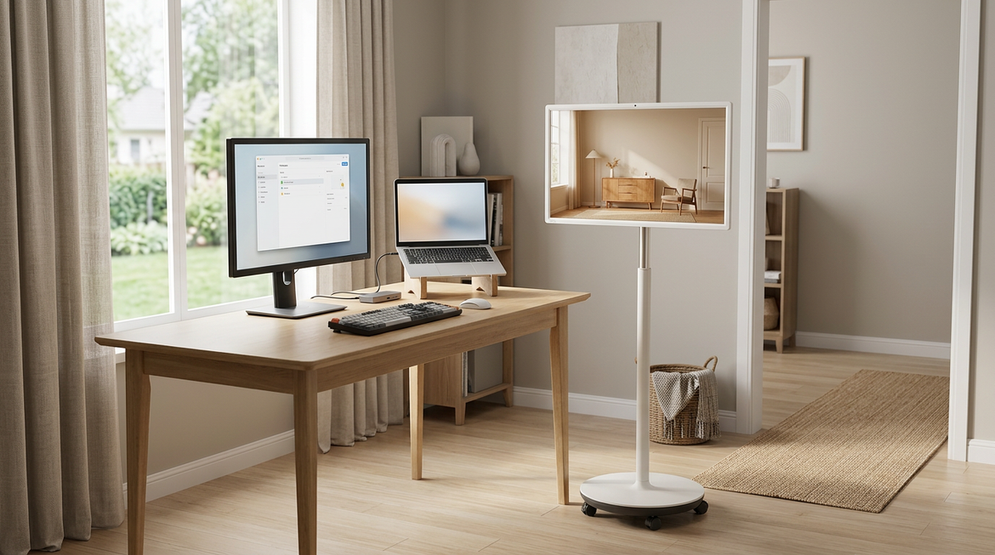
For a single monitor that has to do office work and gaming, the first question is not which panel is "better." It is which tradeoff you will notice every day. Mixed-use buyers should weigh text readability, brightness behavior, contrast, motion, and long-session comfort before they chase refresh rate alone.
A useful rule is simple: if your desk is static-content heavy, lean toward the panel that is easier to live with in documents and windows; if your desk is gaming-first, lean toward the panel that gives the cleaner visual experience in motion. The right answer can flip when the room gets brighter, the UI stays on screen for hours, or you care more about dark-scene immersion than office comfort.
For a broader setup framework, the single-monitor balance guide is a useful follow-up, because the monitor choice only makes sense once you match it to your desk habits.
Text Clarity and Daily Productivity
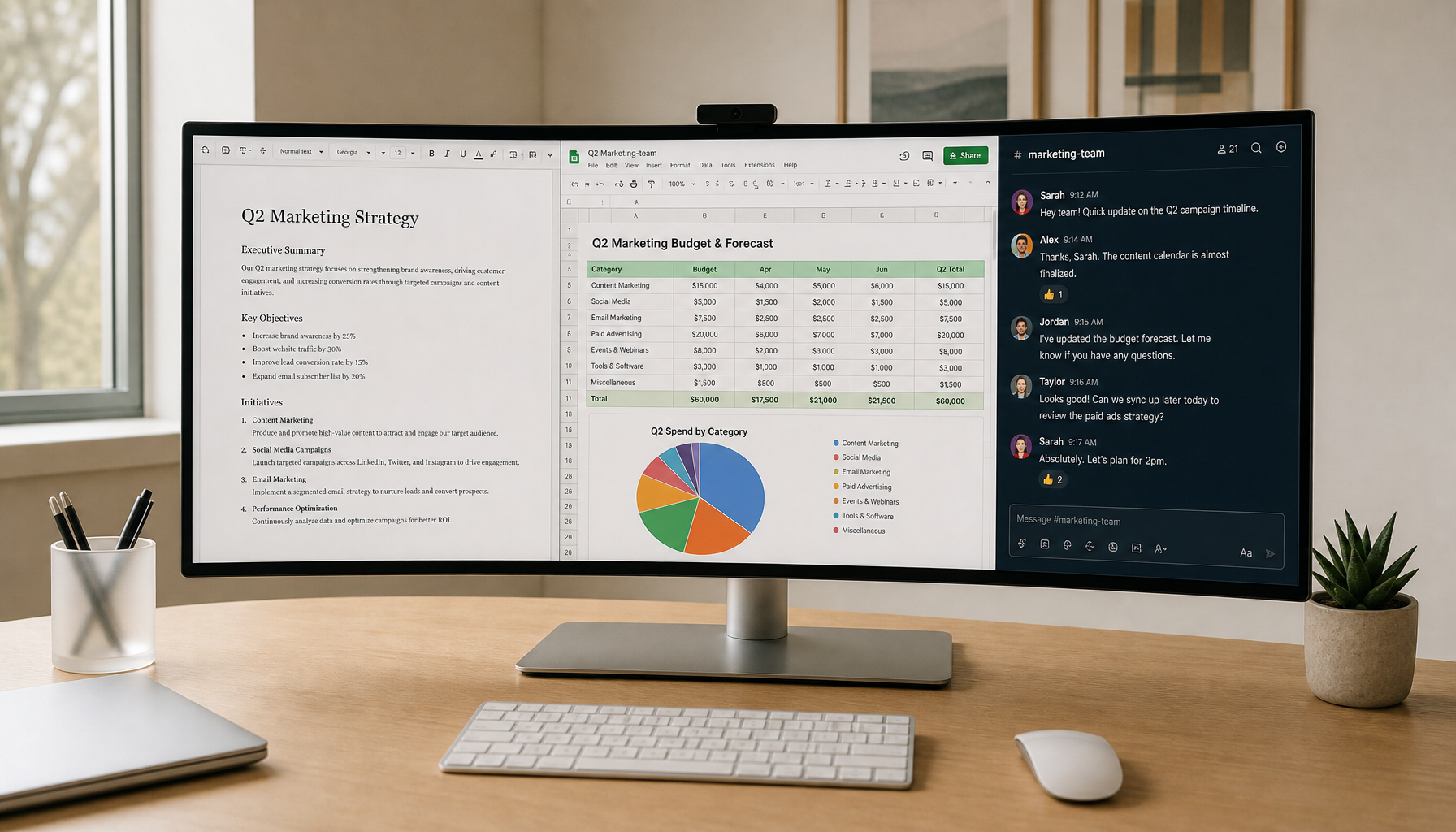
For spreadsheets, docs, and long browser sessions, Mini-LED is often the easier default. RTINGS' Mini-LED vs OLED comparison notes that Mini-LED monitors are often preferred in bright rooms because they can sustain higher brightness, which matters when sunlight or strong overhead light hits the desk. That does not make OLED unusable for work, but it does change the comfort equation.
OLED can still look very crisp, but some panels use non-standard subpixel layouts that can cause minor text fringing or softness in productivity apps. PCMonitors' QD-OLED and WOLED fringing notes explain why this is model-dependent rather than universal. If you sit close, use small UI scaling, or spend hours staring at small fonts, that nuance matters.
Mini-LED has its own visible tradeoff: blooming or haloing around high-contrast edges. Allion's Mini-LED halation analysis shows why white text on a dark background can reveal halos more easily than you expect. So the safer judgment is not "Mini-LED is perfect for office work." It is "Mini-LED usually handles bright, text-heavy desks better, while OLED needs more model and scaling care."

Text scaling and viewing distance can matter as much as panel type. A 27-inch 1440p screen often hits a practical middle ground for mixed use, while 27-inch 4K can make desktop text feel cleaner if you are comfortable with scaling. If you sit close and use a lot of small text, the panel choice matters less than getting the right pixel density and OS scaling first.
If you want a broader buying framework, the work-and-gaming monitor setup guide walks through the same tradeoffs from the desk-first angle.
Gaming Motion, HDR, and Night Scenarios
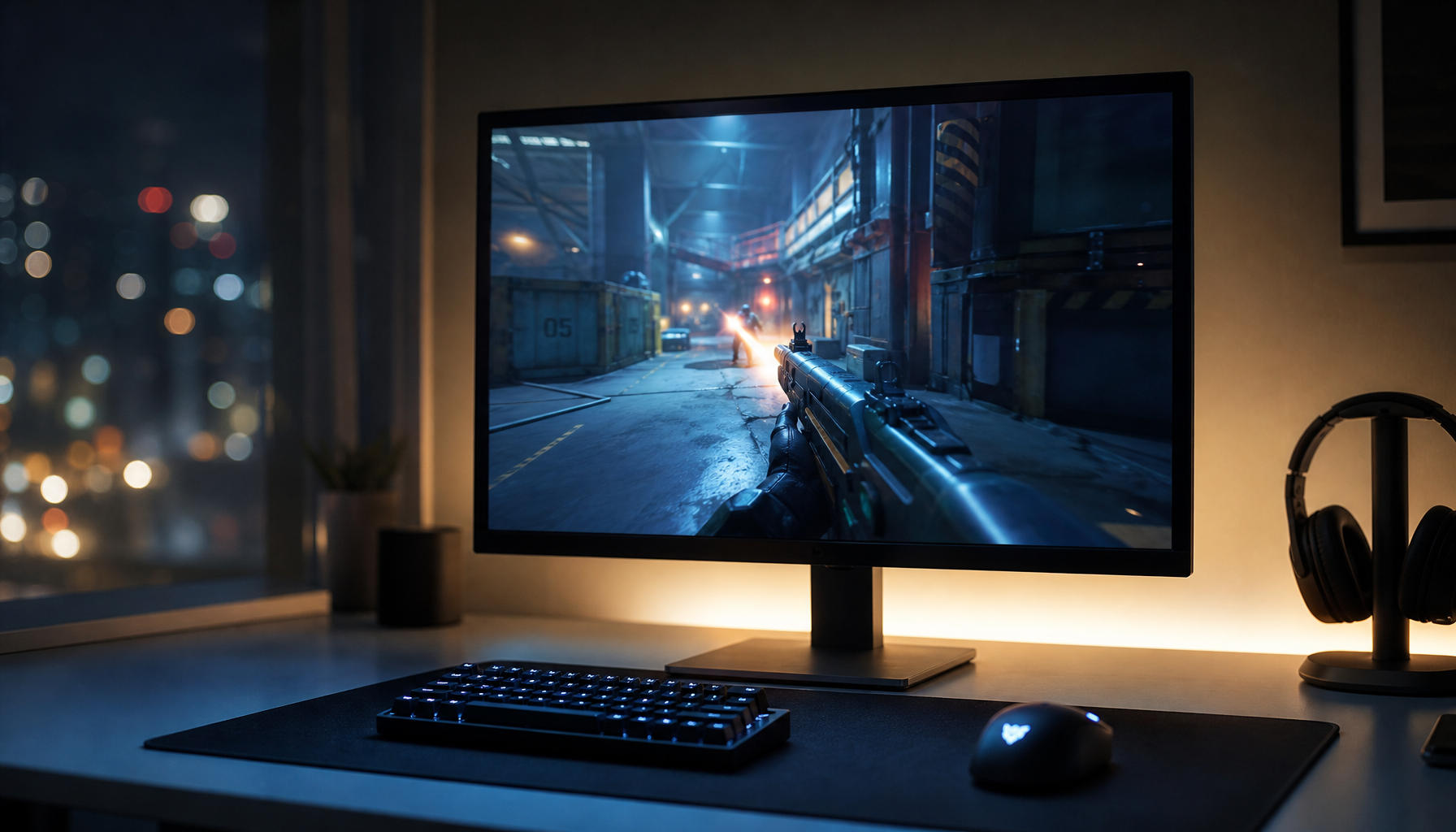
For gaming after work, OLED usually has the edge in dark-room play. RTINGS' Mini-LED vs OLED overview points to OLED's near-instant response and per-pixel dimming as the reason it often feels cleaner in motion and more convincing in dark scenes. That matters most in cinematic single-player games, horror titles, and anything where black levels are part of the experience.
Mini-LED can still be very strong for HDR, especially when you care about brighter highlights or a room that never really gets dim. In practice, this is where the mini LED vs OLED monitor question becomes contextual. OLED tends to win on contrast and motion feel, while Mini-LED tends to win on sustained brightness and bright-room usability.
That tradeoff is why the same monitor can feel ideal for one buyer and merely acceptable for another. If you play mostly at night and want the strongest image depth, OLED is the more compelling gaming choice. If you play in a bright office by day and only game in the evening, Mini-LED may feel more balanced overall.

OLED Burn-In Risk vs Mini-LED Blooming
This is the part that usually decides the purchase. For mixed work, OLED burn-in risk should be treated as a use-pattern concern, not a universal outcome. Static taskbars, app chrome, charts, and repeated desktop layouts are what make the worry feel real. That is why desktop-heavy buyers often hesitate even when they like OLED's image quality.
Mini-LED avoids that burn-in conversation, but it replaces it with visible blooming in some scenes. Allion's explanation of Mini-LED blooming shows that halos are most noticeable around bright text or UI elements on dark backgrounds. That means Mini-LED is not "problem-free," it is just easier to trust for long, static desktop sessions.
So the cleanest way to choose is to ask which flaw you would rather live with. If blooming around white text will annoy you every day, OLED may be the better-looking panel despite the caution around static UI. If burn-in anxiety would always be in the back of your mind, Mini-LED is the calmer buy.
A helpful shortcut: OLED is usually the emotional favorite for contrast, while Mini-LED is often the practical favorite for mixed office use. That does not make either one universally right, but it does explain why buyers keep coming back to this comparison.
When a Featured KTC Model Makes Sense
Once you know which tradeoff you want, the featured models become easier to place. If you want the Mini-LED side of the decision in a 27-inch 1440p format, the KTC M27T6S is a reasonable fit example because it combines 200Hz-class speed, HDR1000 support, and a 27-inch QHD layout. That does not make it the right pick for every desk, but it does match the bright-room, work-plus-play use case well.
If you want the OLED side of the comparison, the KTC G27P6 is the more gaming-first example. Its 27-inch 1440p OLED panel, 240Hz refresh rate, 0.03ms response time, and USB-C charging make sense for buyers who want a sharper entertainment feel and are comfortable managing static desktop concerns more carefully.
If you want to browse the category first, the Mini-LED range and the OLED range are the cleanest starting points. Just keep the decision lens intact: category pages are useful for browsing, but they do not remove the need to check your own room lighting, work pattern, and tolerance for the visible tradeoffs.
Quick Decision Checklist
Choose Mini-LED if your desk is bright, you work in static windows for long stretches, or you want the lower-friction option for mixed use. Choose OLED if gaming quality matters more than office uniformity, your room light is controlled, and you can tolerate more caution around static UI. If you are still unsure, compare the actual model specs, not just the panel name, because implementation matters as much as technology.
FAQs
Is OLED Bad for Mixed Work and Gaming?
Not necessarily. OLED can be excellent for mixed use if your desktop work is lighter, your room lighting is controlled, and you value contrast more than absolute text uniformity. It becomes a weaker fit when static windows, taskbars, and bright office light are part of your everyday routine.
Is Mini-LED Better for Office Work?
Often, yes, especially in bright rooms. Mini-LED is usually easier to live with for long document sessions because it tends to handle sustained brightness well. The tradeoff is that some users will notice blooming around high-contrast edges, especially on dark backgrounds.
Should I Worry About OLED Burn-In for a Work Desk?
Worry less about a fixed timeline and more about your content pattern. If the same UI stays on-screen for hours every day, the risk feels more relevant. If your content changes frequently and you are not leaving static elements in place all day, the concern matters less, but it does not disappear.
Does Mini-LED Blooming Show Up in Real Use?
It can, and the most common place is around bright text or icons on dark backgrounds. Some people ignore it, while others find it distracting in documents or dark games. If you know you are sensitive to halos, that is a real reason to avoid treating Mini-LED as a perfect compromise.
Which Panel Is Better for HDR Gaming After Work?
OLED usually gives the more dramatic dark-scene look, while Mini-LED usually has the stronger bright-room case. If you game at night, OLED often feels more immersive. If your room stays bright and you want the screen to stay punchy during the day, Mini-LED is usually the steadier choice.
Final Takeaway
If your desk does more work than play, Mini-LED is usually the safer default. If your desk is built around gaming first, OLED is often the more satisfying choice. For a deeper comparison, the Mini-LED vs OLED endgame guide is a useful next read.