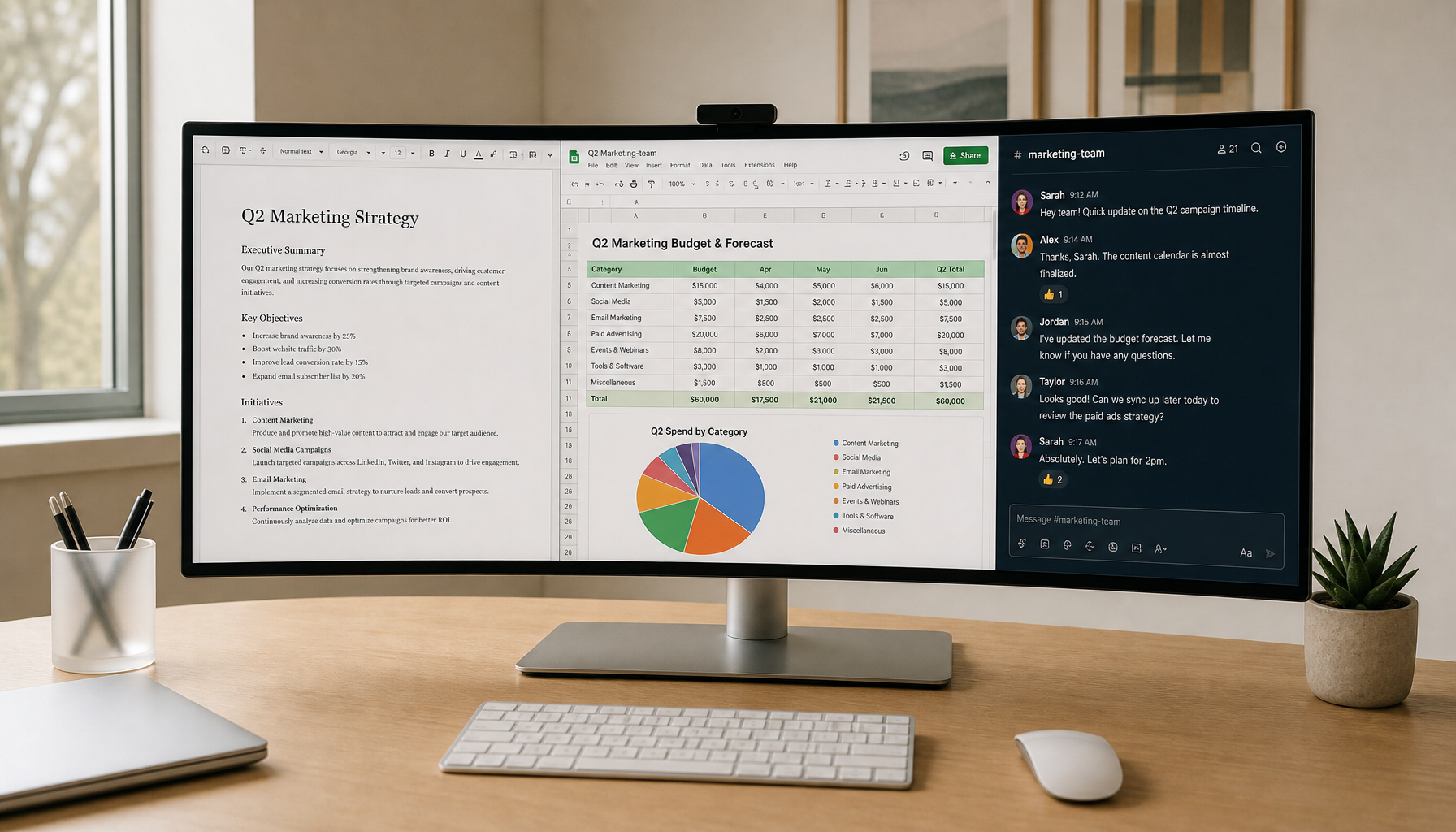
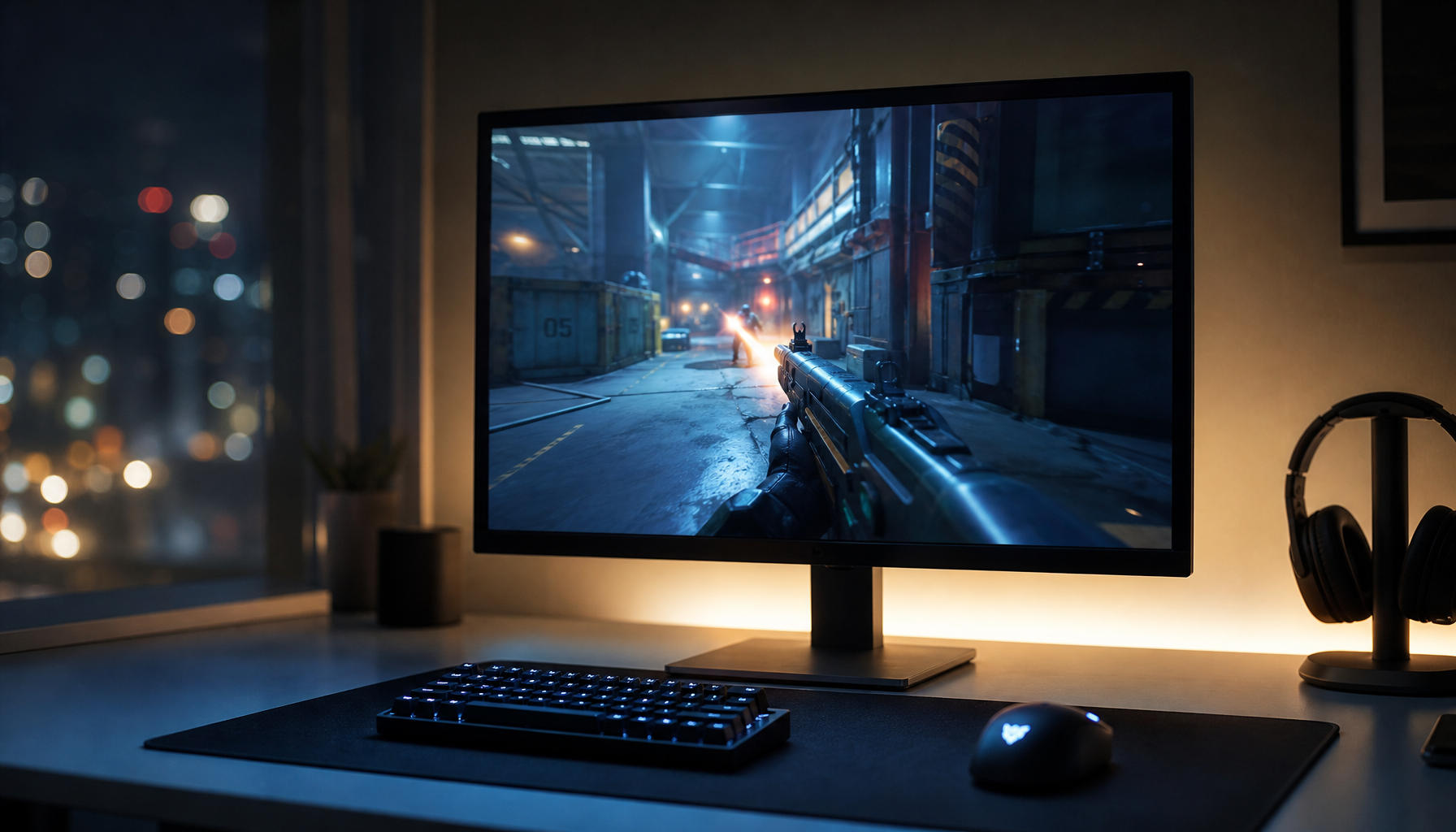
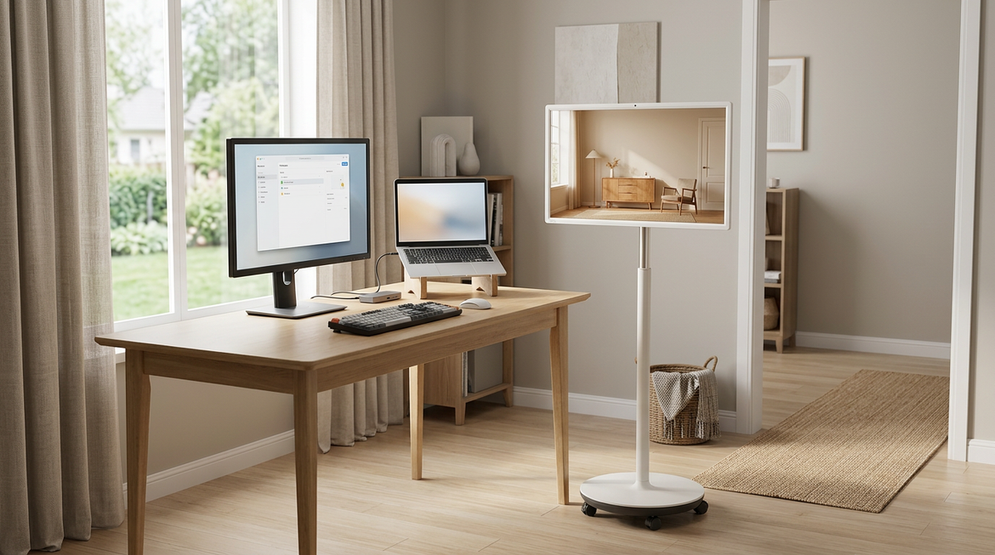
In 2026, the choice between matte and glossy OLED monitors for bright offices is no longer a simple “matte wins” rule. New tandem WOLED panels with reflectance as low as 0.3% and improved anti-reflective films like QuantumBlack have made glossy viable in controlled bright rooms where text clarity matters most, while matte remains the safer pick when direct sunlight or uncontrolled reflections cannot be managed.

The Bright Office Dilemma: Reflections vs. Black Levels
Bright offices expose the classic OLED trade-off in ways dark-room gaming setups never do. Glossy coatings deliver the deepest blacks and sharpest subpixel rendering OLEDs are known for, yet they can turn overhead lights or windows into distracting mirrors. Matte anti-glare layers diffuse those reflections effectively, but the scattering layer often lifts black levels slightly and adds a visible grain that becomes noticeable during all-day text work.
Office users typically spend hours on spreadsheets, documents, and code rather than cinematic content. This makes eye comfort, text legibility, and reduced fatigue more important than peak contrast ratios measured in a dark room. The 2026 generation of high-brightness panels changes the old debate by giving glossy screens more tools to fight ambient light without sacrificing as much black-level purity as earlier models.
How 2026 OLED Improvements Change the Glossy vs. Matte Debate
Three meaningful upgrades have shifted the balance. First, tandem WOLED panels can reach peak HDR brightness up to 4500 nits (these are highlight peaks; sustained full-screen SDR brightness remains lower). Second, new low-reflection films achieve reflectance around 0.3%, reducing mirror-like distractions in moderately bright spaces. Third, coatings such as Samsung’s QuantumBlack neutralize the purple tint that older QD-OLED panels showed under bright office lighting.
As Tom’s Hardware reports, these 2026 films improve ambient black levels while cutting glare. FlatpanelsHD coverage confirms the low reflectance possible with the latest tandem structures. The net result is that glossy OLEDs are no longer automatically ruled out for daytime productivity. They can now maintain usable contrast in rooms with high-lumen indirect lighting or dimmable fixtures, provided direct sun is controlled.
The Productivity Paradox: Perceptual Grain vs. Focal Conflict
The real decision often comes down to which type of visual fatigue you tolerate better during long work sessions. Matte coatings diffuse incoming light but introduce a fine grain that acts like permanent micro-blur. Over eight hours of spreadsheets or code, the brain expends extra effort to resolve sharp edges, which can lead to subtle resolution fatigue.
Glossy coatings preserve the full sharpness of OLED subpixels, yet any reflected object—whether a window, lamp, or colleague moving behind you—creates a competing focal plane. Your eyes constantly accommodate between the screen content and the reflection, producing accommodation fatigue that many users notice as eye strain by mid-afternoon.
The ISO 9241-307 standard treats reflection control as a legitimate ergonomic requirement for visual displays. It does not dictate a single coating; it frames the choice as trading one source of discomfort for another. If your lighting can be managed with blinds, dimmers, or desk repositioning, the text-clarity benefit of glossy often outweighs the reflection risk. When light is variable or uncontrollable, matte’s diffusion usually protects productivity more effectively. See our related guide on The Secret Productivity Issue: How to Remedy Digital Eye Strain for additional ergonomic strategies.
Choosing Your Coating: The 2026 Lighting Scenario Split
The best coating now depends on how controllable your lighting is rather than raw brightness alone.
In a controlled bright office—high-lumen LED panels with no direct windows behind the desk—glossy is usually the stronger choice. The latest panels can overpower typical ambient light while delivering crisp text that reduces cognitive load during document work.
When the setup is sun-drenched, with windows directly behind or beside the user, matte becomes mandatory. No practical panel brightness can overpower direct sunlight reflections; diffusion is the only reliable defense. The same holds for shared open-plan offices where movement and variable overhead lighting create constant distraction on a glossy surface.
OLED Finish by Office Lighting Scenario
A simple guide for choosing matte or glossy OLED finishes based on office lighting, direct sun exposure, and how much text clarity matters.
View chart data
| Scenario | Controlled | Mixed | Uncontrolled |
|---|---|---|---|
| Glossy | 2.0 | 1.0 | 0.0 |
| Matte | 1.0 | 2.0 | 2.0 |
This pattern aligns with testing and industry observations that matte finishes remain the standard for truly uncontrolled bright environments.

The Mini-LED Alternative: Brightness Without Burn-in Anxiety
For users who prioritize eliminating burn-in risk from static taskbar icons or spreadsheets, a high-zone Mini-LED monitor can deliver sustained brightness above 1000 nits that easily handles most bright offices. The KTC M27P6 is one such option, offering 1152 local dimming zones and full ergonomic adjustment suitable for hybrid work and gaming.
However, many budget and mid-range Mini-LED panels require frequent toggling between SDR and HDR modes, and they may lack robust EDID emulation. Switching inputs via KVM can scramble open windows and spreadsheets, creating a daily productivity tax that some users find more annoying than occasional OLED maintenance routines. Our deeper comparison of the two technologies appears in MiniLED vs. OLED: Which Display Technology Wins for Gaming in 2025?.
Will a Glossy OLED Survive Daily Office Cleaning?
Office monitors endure fingerprints, occasional sneezes, and regular dusting. The 2026 glossy films have improved to a 3H hardness rating, offering better scratch resistance than earlier generations. Even so, glossy surfaces still reveal micro-scratches and smudges more readily than thick matte layers and require gentler cleaning with microfiber cloths rather than aggressive wipes.
As Igor’s Lab notes, the new coatings target both glare reduction and durability, yet the inherent nature of a smooth glossy surface means careful handling remains advisable for longevity.
If your workflow involves frequent cleaning or shared desks where accidental contact is common, a matte OLED or a well-built Mini-LED may prove more practical over years of use.
FAQs
Do glossy OLED monitors still suffer from purple tint in bright offices in 2026?
The latest QuantumBlack and similar anti-reflective films have largely neutralized the purple/magenta shift that affected earlier QD-OLED panels under strong ambient light. Most users in typical office conditions will not notice a color cast, though extremely bright direct sunlight can still reveal minor shifts on any OLED.
Does matte coating permanently ruin OLED black levels?
Matte layers do raise black levels slightly compared with glossy surfaces, but 2026 implementations keep the degradation modest in most lighting. The trade-off is usually more noticeable in completely dark rooms than in the bright offices these coatings target. If absolute black depth is your top priority, glossy paired with strong light control remains preferable.
Which coating is better for mixed office work and evening gaming in 2026?
For users who can control their lighting during the day, a 2026 glossy OLED often provides the best of both worlds—crisp text for productivity and deep contrast for media or gaming after hours. When lighting cannot be managed, matte avoids daytime distractions even if it introduces a small amount of grain during focused work.
How important is ISO 9241-307 when choosing an office monitor?
The standard provides a recognized framework for measuring and limiting reflections to protect visual comfort. It does not mandate matte over glossy; instead it encourages evaluating real-world reflection behavior in your specific environment. Use it as a checklist rather than a strict pass/fail rule.
Are 2026 glossy OLEDs durable enough for a busy office environment?
Improved 3H hardness helps resist minor scratches, but glossy screens will still show fingerprints and require more careful cleaning than matte alternatives. For high-traffic shared desks, matte or a robust Mini-LED panel may reduce long-term maintenance effort.
Should I choose a KTC OLED or consider Mini-LED for a bright home office?
If burn-in anxiety from static UI elements is high and your budget allows a well-featured Mini-LED like the KTC M27P6, it can deliver strong sustained brightness without the same image-retention concerns. For users comfortable with basic OLED care routines, the latest glossy or matte OLEDs often provide superior contrast and motion clarity for the same screen size.
Can window film or desk repositioning make glossy OLED usable in a sun-drenched office?
Yes. Applying UV window film, adding adjustable blinds, or simply rotating the desk so windows are to the side rather than directly behind the monitor can dramatically reduce reflection intensity. Many users find that these inexpensive changes allow them to enjoy glossy text sharpness instead of accepting matte grain.