Yes. With 4K at 120Hz, longer HDMI runs usually cause instability, such as flicker, sparkles, black screens, HDR or VRR failures, or a fallback to 60Hz, rather than a slightly softer image.
Bought a 4K 120Hz monitor, ran a longer cable across the room, and now the screen keeps blinking out or refusing to hold full refresh? That pattern is common because short runs leave room for error, while longer runs quickly expose weak cables, finicky ports, and marginal signal strength. This guide explains when a simple cable is enough and when it is time to move up to active or optical HDMI.

Why 4K 120Hz is much harder than ordinary 4K
At the cable level, 4K at 120Hz sits in the Ultra High Speed HDMI class, which is the category built for 4K120 and 8K60. That matters because 120Hz refreshes the image twice as often as 60Hz, so the cable has far less headroom for loss, weak shielding, or messy routing.
With standard passive HDMI, the signal travels over copper, and signal strength drops as distance rises. In a real desk setup, that usually means a 6 ft or 10 ft run is easy, while a much longer run can turn a stable gaming monitor into a stubborn one even when the monitor and console both support the mode.
The key point is that digital video does not usually fade gracefully. When a 4K120 link is on the edge, the failure signs look more like pixelation, color errors, or dropouts than a mild reduction in sharpness. On a gaming display, that often shows up as random sparkles in dark scenes, a sudden fallback to 60Hz, or a blank screen when HDR or VRR is enabled.

How far can passive HDMI really go at 4K 120Hz?
This is where buyers get confused, because “4K” by itself hides a huge range of signal loads. General passive 4K runs often land around 25 to 30 ft, which sounds generous until you notice that not all 4K formats are equally demanding.
About 23 ft for 4K UHD 60Hz 4:4:4 is a more conservative estimate, and that is before you jump to 4K at 120Hz. This is not really a contradiction. It is a reminder that 4K60 office output, 4K60 full-color desktop output, and 4K120 gaming do not stress a cable in the same way.
That is why practical passive HDMI 2.1 guidance often shrinks to much shorter runs for 4K120. Lighter 4K modes may survive much farther, but the cleanest results for very high-bandwidth formats are far more dependable at shorter lengths. If you are connecting a console or gaming PC to a 4K 120Hz monitor on a desk, the safe choice is usually a short certified cable, not a heroic passive run.
What “degraded” looks like on a monitor
For display buyers, the practical question is not whether the signal degrades in a lab. It is how that degradation appears when you are actually using the screen. Wrong cables, handshake problems, and monitor limitations can all block 4K 120Hz, and that matches what shows up in real monitor troubleshooting.
A handshake is simply the quick negotiation between the source and the display about what both sides can run. When the cable is marginal, the system may still produce an image, but it settles for a safer mode. That is why a monitor can report 3,840 x 2,160 yet still run at 60Hz. The fastest reality check is the monitor’s own on-screen display. If the OSD is not reporting 120Hz, you are not actually getting 4K120, no matter what the box says.

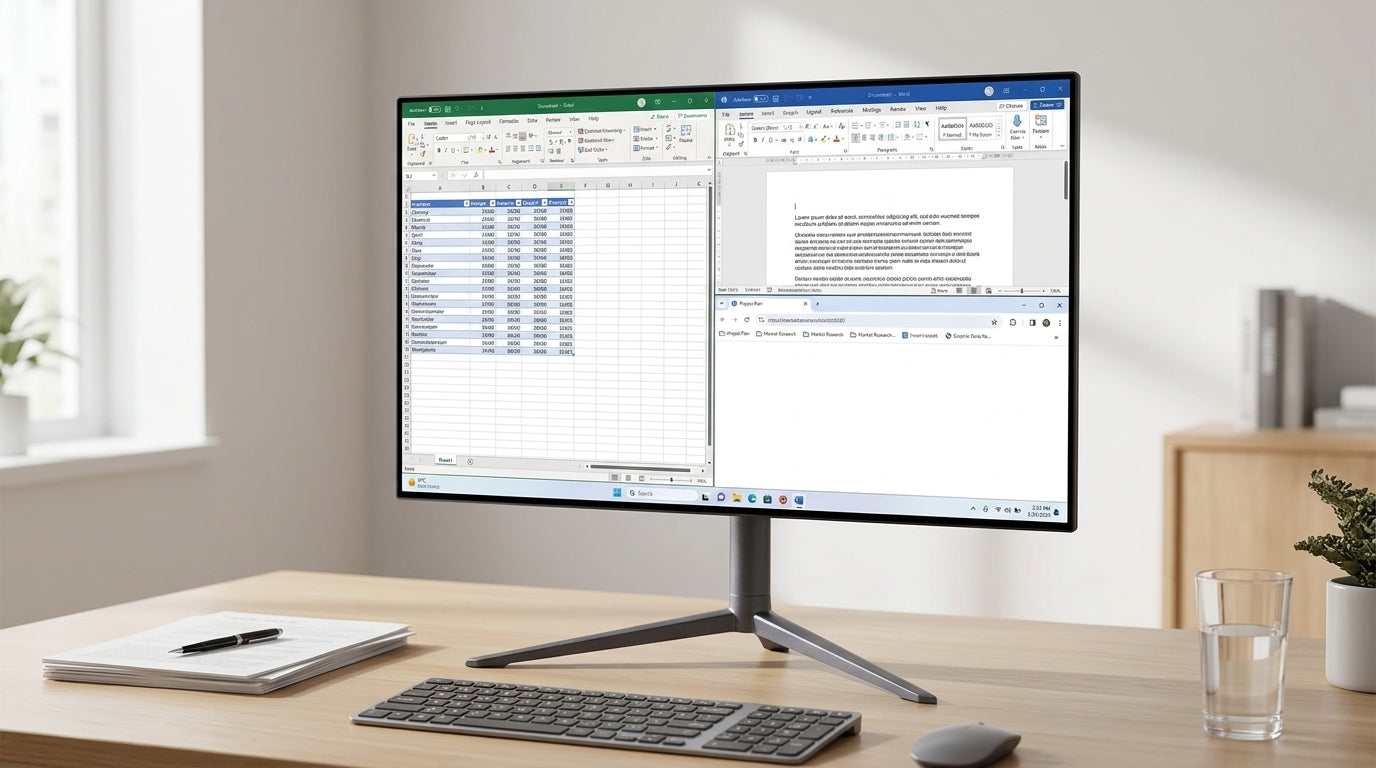
This also explains why office and productivity displays feel less sensitive. A 4K60 desktop monitor used for spreadsheets, design review, or a docking station has more cable margin than a 4K120 gaming panel pushing HDR and variable refresh. If your use case is static work rather than high-refresh play, longer passive runs may be acceptable. If your goal is full-speed gaming, the cable path has to be much tighter.
Which cable type makes sense for each distance
Cable type |
Best fit |
Strength |
Tradeoff |
Passive copper HDMI |
Short desk and console runs |
Lowest cost and simplest setup |
Least margin for 4K120 as length increases |
Active copper HDMI |
Medium room runs |
Better signal stability than passive copper |
Can be directional or compatibility-sensitive |
Active optical HDMI |
In-wall or across-room 4K120 |
Strong long-distance performance for high bandwidth |
Higher cost and more care with bends |
Structured room or office installs |
Useful for long routed paths |
Requires transmitter and receiver hardware |
Active optical HDMI is the strongest long-distance option because it moves the main signal over fiber instead of relying only on copper. The tradeoff is that many optical HDMI cables are directional, cost more, and should not be kinked or bent aggressively during installation.

For room-scale runs, Cat6-based HDMI extenders and related long-distance methods exist. That is especially relevant in conference rooms, clean desk setups, and wall-mounted displays where the route is longer than the straight-line distance.
How to buy the right cable without wasting money
For most buyers, more expensive HDMI cables are not automatically better. If a short cable is correctly certified and supports the mode you need, paying more does not magically improve image quality. The picture is either transmitted correctly or it is not.
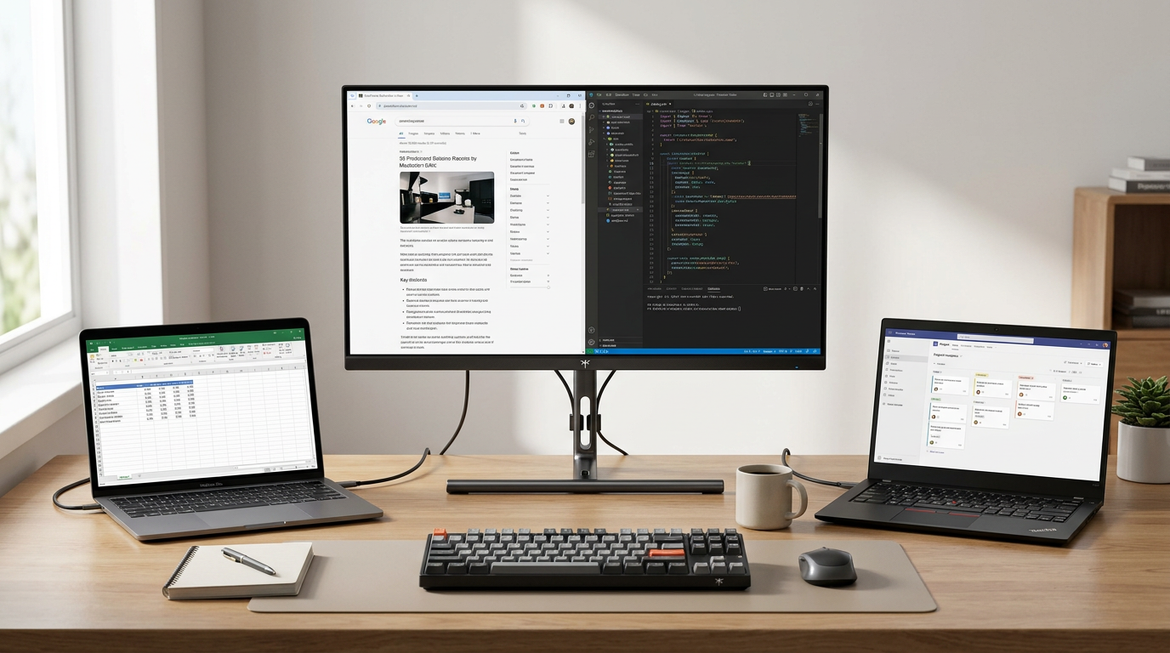
What does matter is matching the cable to the actual job. If you want 4K120, buy a certified Ultra High Speed HDMI cable and keep it short. If the run is leaving the desk, crossing a living room, or going inside a wall, treat that as a different class of problem and move to active or optical hardware sooner rather than later. Avoid chaining cables together, avoid tight bends behind a monitor arm, and keep the run away from large power bundles when possible.
The practical value is simple. Spend modestly on a short certified cable for a nearby monitor. Spend deliberately on active or optical HDMI when distance stops being a convenience issue and starts becoming part of the signal path.
When to stop blaming the cable and check the rest of the chain
A cable is often the problem, but not always the only one. Console and monitor setup errors can look exactly like cable failure. Many monitors support high refresh on only one HDMI input, some require an “Enhanced” or “Game” mode, and some AV receivers or adapters quietly break the full path even when the cable itself is fine.
If a new 4K120 link refuses to behave, test it in the cleanest possible chain: source straight to display, shortest cable available, correct HDMI port, correct monitor mode, then verify the live refresh rate in the OSD. That isolation step is often more useful than swapping through several mystery cables and hoping one works.
The bottom line
HDMI cable length does degrade 4K 120Hz signal quality in the real world, but the damage usually appears as instability rather than a gently worse picture. For a premium monitor experience, keep passive HDMI short, insist on certification, and once the cable run stops being desk length, move to active or optical solutions before the signal starts making the decision for you.