Your annual display cost comes from four inputs: monitor wattage, hours used, days used, and your electricity rate. Multiply watts by usage time, convert to kilowatt-hours, then multiply by your local cost per kWh.
Is your dual-monitor desk quietly adding more to the power bill than your keyboard, dock, and speakers combined? A simple usage log plus a plug-in watt meter can turn guesswork into a testable annual estimate in less than a week. You’ll walk away with a practical way to price a gaming monitor, office display, portable screen, or full multi-screen setup before the next bill lands.
Why Display Energy Cost Is Worth Calculating
Displays are not usually the biggest energy load in a home or office, but they run for long stretches. A productivity monitor used eight to ten hours per weekday can cost more over a year than its spec sheet suggests, especially when brightness stays high, sleep mode is disabled, or several screens are chained into one workstation.
The core unit is the kilowatt-hour, or kWh, because electric providers bill by energy consumed over time. The kilowatt-hour is the practical bridge between a monitor’s watt rating and the dollars on your bill. For display owners, that means a 30-watt monitor is not “cheap” or “expensive” by itself; its real cost depends on how many hours it stays active and what your utility charges.
The Basic Annual Energy Cost Method
The display-cost calculation is straightforward once you have realistic usage inputs. First, find the display’s typical wattage, not just its maximum rating. Then estimate how many hours per day it is active, how many days per year you use it, and your actual electricity rate from your utility bill.
The Department of Energy recommends estimating electronic energy use from daily operating time, and a usage log is especially useful when habits vary from day to day. That matters for displays because a gaming screen may run two hours on weeknights and eight hours on weekends, while an office monitor may be on all workday but asleep outside business hours. The daily operating time should reflect how the screen is truly used, not how long it is plugged in.
Here is the plain-language version: annual kWh equals display watts multiplied by hours used per day multiplied by days used per year, then divided by 1,000. Annual cost equals annual kWh multiplied by your electricity rate.

Display Setup |
Typical Wattage |
Usage Pattern |
Annual Energy |
Annual Cost at $0.16/kWh |
Portable 15-inch screen |
8 W |
4 hr/day, 250 days |
8 kWh |
$1.28 |
24-inch office monitor |
30 W |
8 hr/day, 260 days |
62.4 kWh |
$9.98 |
27-inch performance monitor |
60 W |
6 hr/day, 365 days |
131.4 kWh |
$21.02 |
Dual 32-inch setup |
140 W total |
9 hr/day, 260 days |
327.6 kWh |
$52.42 |
These numbers are examples, not universal values. The right answer for your desk comes from your wattage, your schedule, and your rate.
Finding the Right Wattage for Your Monitor
Use the Label, Spec Sheet, or Energy Label
Start with the manufacturer’s specification page or the label on the back of the display. Many monitors list typical power, maximum power, standby power, and sometimes energy use over a standardized number of hours. Typical power is usually the best first estimate for annual cost, while maximum power helps you understand worst-case draw when brightness, refresh rate, HDR, USB hubs, or speakers are active.
Efficiency labels can help compare efficient models before purchase. The monitor product category is useful as a buying reference because it points shoppers toward efficiency as a product attribute, not an afterthought.
Measure Real Use With a Watt Meter
For a serious workstation or gaming setup, measurement beats the spec sheet. A plug-in electricity usage monitor sits between the outlet and the display, showing watts and often accumulated kWh over time. Home energy guidance commonly recommends this method for individual electronics because it captures real behavior, including brightness settings and standby draw.
A watt meter is especially valuable when your display has variable power states. A 4K gaming monitor may pull more during HDR gameplay than during spreadsheet work. An office display with a USB-C hub may consume extra power when charging accessories. An OLED screen may vary by image brightness. The electricity usage monitor approach captures those details instead of flattening every display into a generic watt estimate.

Usage Patterns Change the Result More Than Most Buyers Expect
A monitor that uses 70 watts is not automatically expensive; a monitor that never sleeps is. Usage pattern is the performance variable you control every day.

For example, a 70-watt ultrawide used for four hours per day costs about $16.35 per year at $0.16/kWh. The same display used ten hours per day costs about $40.88 per year. Add a second screen, and the cost doubles unless one screen sleeps or stays off during focused work.
The display technology and size still matter. Display energy use varies by manufacturer, screen size, brightness, image type, and power-saving settings, and older display technologies can be dramatically less efficient than modern LED-backlit LCD monitors. A 22-inch LED-backlit LCD display example is estimated around 30 watts, while older CRT and plasma examples are much higher. In practical buying terms, a modern efficient monitor usually wins over an aging spare screen if that spare is used daily.
Building a Realistic Cost Profile for a Multi-Screen Desk
Office Productivity Setup
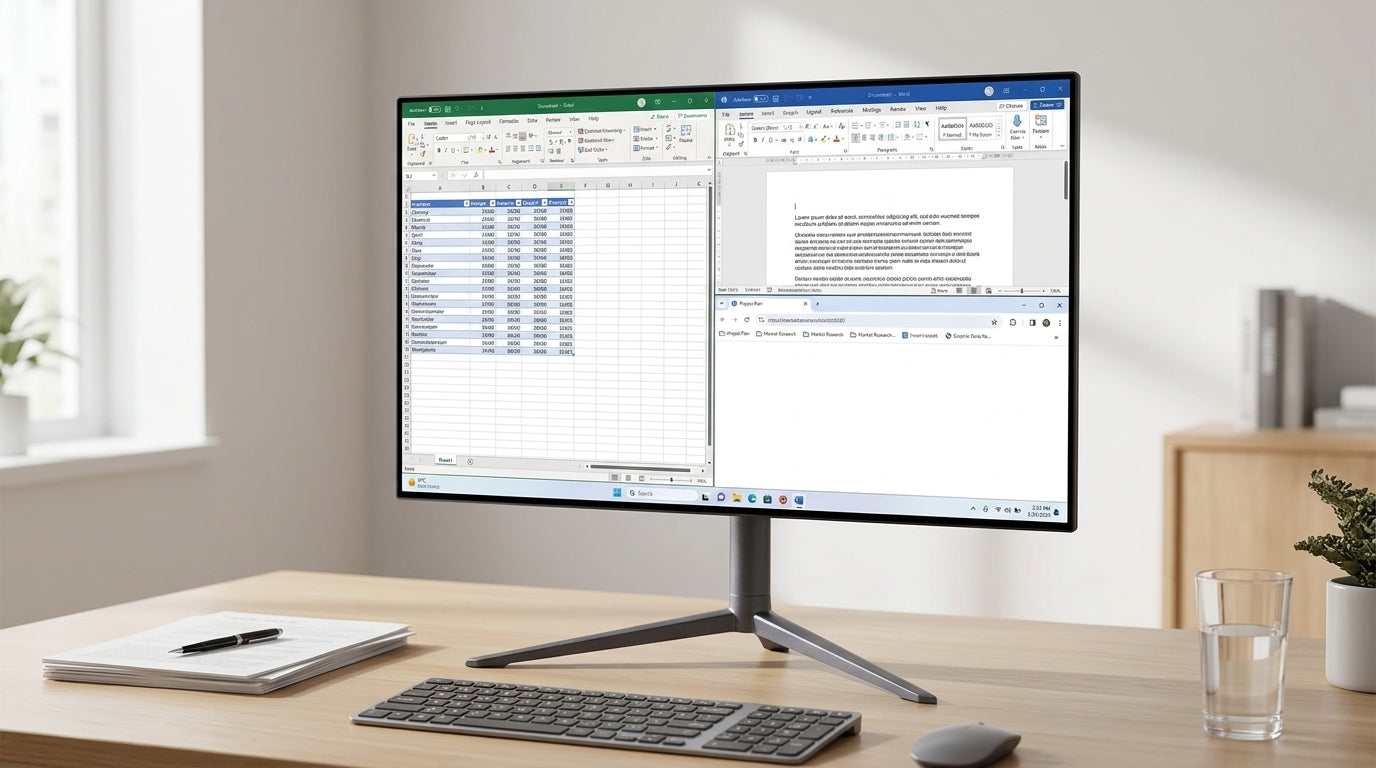
A typical office setup might include a laptop screen plus one or two external monitors. If each external monitor averages 30 watts and both run eight hours per weekday, the pair consumes about 124.8 kWh per year across 260 workdays. At $0.16/kWh, that is about $19.97 per year for the external displays.
That is not shocking, but it becomes actionable. If one monitor is only needed for review tasks, turning it off for half the day cuts the display portion close to half. If the screen sleeps after five or ten minutes of inactivity, the savings happen automatically during calls, lunch, and away time.
Gaming and Creator Setup
Gaming and creator displays often draw more power because of higher refresh rates, brighter panels, larger sizes, and performance features. Portable-screen research places small portable monitors around 4 to 10 watts, while larger 27-inch and above displays may range from 30 watts to over 100 watts depending on configuration. The monitor power consumption range is wide enough that two visually similar screens can have very different annual costs.
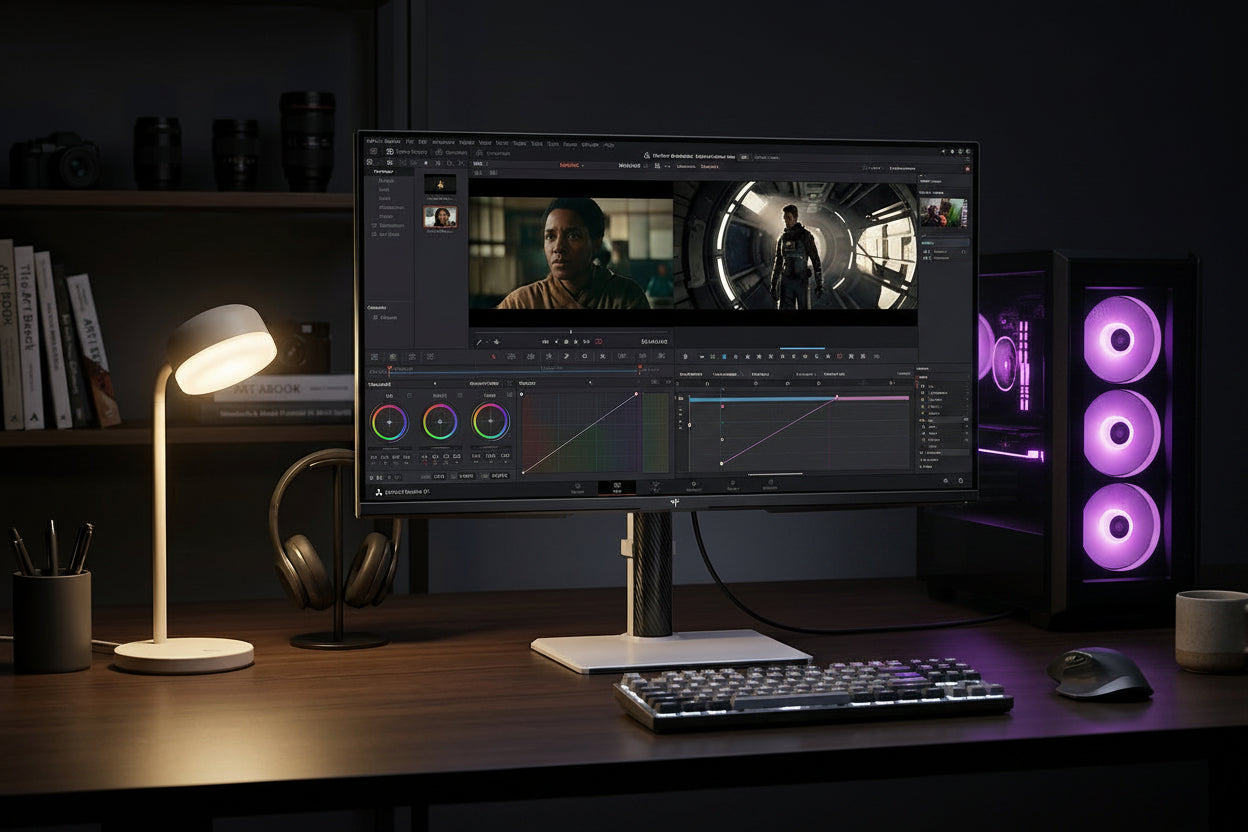
Consider a 32-inch 4K gaming monitor averaging 95 watts for three hours on weekdays and seven hours on weekends. That is about 1,405 hours per year, or roughly 133.5 kWh. At $0.16/kWh, the annual display cost is about $21.36. If HDR brightness and high-refresh operation push real draw higher, a watt meter will reveal it quickly.
Portable Smart Screen Setup
Portable monitors are usually efficient, but they are often powered through laptops, docks, or battery stations, which can hide their true draw. A 10-watt portable display used five hours per day for 220 travel or hybrid-work days uses about 11 kWh per year, or $1.76 at $0.16/kWh. The bigger issue is not annual utility cost; it is battery runtime, heat, and whether the screen forces your laptop charger to work harder.
For portable setups, measure the whole chain when possible. If the monitor pulls power from a laptop, compare laptop energy use with and without the display attached. That gives a truer picture than pricing the screen alone.
Don’t Ignore Standby Power and Sleep Settings
Standby power is the quiet cost that appears when a screen looks off but remains plugged in and ready. Display standby draw may be small, but multiply it across multiple monitors, docks, speakers, and chargers and it becomes visible.

The practical fix is to enable sleep mode, shorten inactivity timers, and use a switched power strip for long absences. Display energy guidance notes that screens can still draw power in sleep or off states, and the standby consumption range can matter when devices remain connected all year.
A realistic example: two monitors drawing 1 watt each in standby for 16 hours per day use about 11.7 kWh per year. At $0.16/kWh, that is only $1.87, but in a multi-desk office with 40 monitors, it becomes about $37.38 per year. The bigger value is discipline: the same monitoring habit that catches standby draw often catches full-power screens left awake overnight.
Pros and Cons of Estimating Versus Measuring
Approach |
Best For |
Strength |
Limitation |
Spec-sheet estimate |
Pre-purchase comparison |
Fast and free |
May not match your brightness or workload |
Energy label comparison |
Choosing efficient models |
Good for side-by-side shopping |
Uses standardized assumptions |
Plug-in watt meter |
One display or desk setup |
Captures real behavior |
Requires a short test period |
Whole-home monitor |
Home office plus major loads |
Shows broader patterns |
Costs more and may need installation |
Home energy monitors can provide real-time visibility into power use, cost, and usage patterns, but they do not save money by themselves. The value comes from acting on the data. A home energy monitor can make energy use visible at the moment you turn devices on or off, which is useful when you want to tune a workstation instead of guessing.
How to Lower Annual Display Energy Cost Without Hurting the Experience
Lowering energy cost should not mean ruining the visual experience. The smarter approach is to preserve performance when it matters and reduce waste when it does not.
Start with brightness. Many monitors ship brighter than a typical office or gaming room needs. Reducing brightness to a comfortable level can lower draw while also reducing eye strain in dim environments. Next, enable automatic sleep after a short inactivity window. For office work, five to ten minutes is usually aggressive enough to matter without becoming annoying.
Then match the display mode to the task. Use high refresh rate, HDR, and peak brightness when gaming or editing demands it, but consider a calmer profile for documents, email, dashboards, and static productivity work. If you use multiple monitors, set the least-used screen to sleep sooner or turn it off during single-task work.
Finally, compare efficiency before buying. A low-cost monitor that uses significantly more power may still be a good value if usage is light. For a full-time desk, a more efficient model can be the better long-term choice, especially when it also improves ergonomics, readability, and standby behavior.
A Practical Annual Cost Worksheet in Plain English
Create a simple row for each screen in your setup. Write down the model, typical watts, active hours per day, days used per year, standby watts, standby hours, and your electricity rate. Calculate active cost and standby cost separately, then add them.
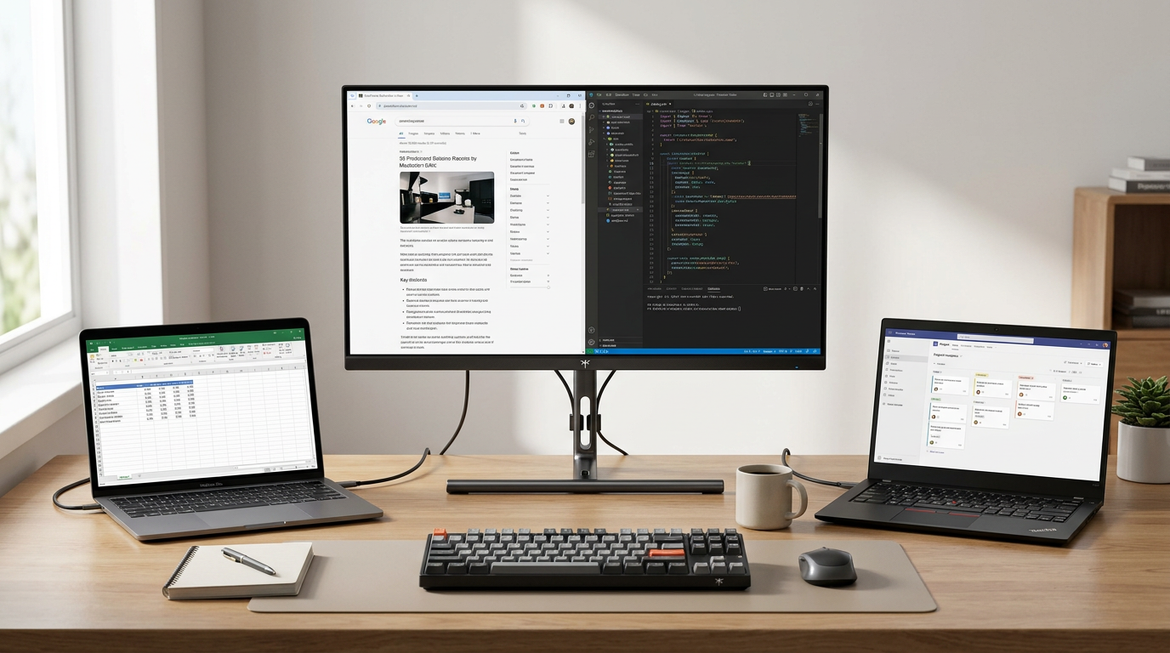
For a dual-monitor office desk, one 27-inch monitor might average 45 watts and the second 24-inch monitor might average 25 watts. If both run eight hours per weekday for 260 days, the active annual energy is 145.6 kWh. At $0.16/kWh, that is $23.30. If both also sit in 1-watt standby for the remaining hours, standby adds about $1.92 per year. The full annual display estimate is about $25.22.
That number gives you control. You can test whether lower brightness changes measured watts, whether sleep mode actually engages, and whether the second screen deserves to stay on all day.
FAQ
Is a bigger monitor always more expensive to run?
Usually it uses more power, but not always in proportion to size. Panel technology, brightness, refresh rate, resolution, USB-C power features, and efficiency design all matter. A modern larger LED-backlit monitor can be more efficient than an older smaller display.
Should I use peak watts or typical watts?
Use typical watts for your main annual estimate and peak watts for a high-side estimate. If the display is used for HDR gaming, high-brightness creative work, or USB hub charging, measure it under those real conditions.
Does the monitor matter compared with the computer?
The computer often matters more, especially for gaming desktops. Laptops commonly use far less energy than desktops, while gaming PCs can be a major load. Still, the computer energy use profile and the display profile should be estimated together because a premium screen can add meaningful draw to an already power-hungry setup.
Final Word
A display setup is not just a visual investment; it is a small electrical system you control every day. Measure watts, map real usage, price it with your local kWh rate, and tune brightness, sleep, and screen count around how you actually work or play. The result is a sharper setup with fewer wasted hours on the bill.