In 2026 the $300 price ceiling has become the point where 1440p resolution and high-refresh panels finally overlap for mainstream gamers. Factory-direct brands now deliver panels and features that once required a much larger budget, shifting the conversation from whether a monitor is affordable to which specific trade-offs fit your setup.

The $300 Sweet Spot: Why 2026 is the Year of the Budget Powerhouse
The long-standing barrier between resolution and refresh rate has largely collapsed at this price. Most gamers upgrading from 1080p 60 Hz or 144 Hz displays can now reach 1440p at 180 Hz or higher without crossing $300. The practical result is that 1440p has replaced 1080p as the default choice for 27-inch screens unless the buyer is strictly focused on maximum frame rates in competitive esports.
Modern mid-range GPUs handle 1440p high-refresh workloads comfortably in most titles, removing the old assumption that higher resolution always demands a flagship card. This convergence creates a genuine decision point: accept the extra pixel density for sharper text, better productivity, and more immersive single-player games, or stay at 1080p only when every extra frame matters more than image clarity.
Resolution vs. Speed: Why 1440p is Winning the Budget War
At 27 inches, 1080p now shows visible pixelation for desktop use and many game interfaces. The 77 percent increase in pixels at 1440p improves text legibility and reduces the need to sit farther from the screen. For hybrid users who work during the day and game in the evening, this density advantage often outweighs the marginal refresh-rate gain of a 1080p 360 Hz panel.

The niche case for 1080p remains narrow. Only players who compete at the highest levels in fast-paced titles and already own hardware capable of sustaining 300-plus frames per second see a consistent benefit. Even then, the difference between 240 Hz and 360 Hz is smaller than the jump from 144 Hz to 240 Hz, so the value depends on whether the rest of the system can actually deliver those frames.
This guide to refresh rates explains how frame-rate gains translate to perceived smoothness and helps set realistic expectations for different game genres.
The Factory-Direct Advantage: Decoding "Too Good to be True" Specs
Lower prices at this performance level often trace back to vertical integration rather than corner-cutting. When a manufacturer controls panel production, assembly, and distribution, it removes multiple layers of markup that traditionally inflate retail cost. Research on vertical integration shows this structure can reduce consumer prices while maintaining or improving quality control through tighter supply-chain oversight.
For buyers, the main practical difference appears in software polish and menu navigation rather than panel longevity or basic performance. A 3-year warranty from the manufacturer provides a stronger long-term signal than shorter brand warranties that rely on third-party service networks. The trade-off is accepting occasional firmware updates or less refined on-screen displays in exchange for the hardware value.
Price Components Behind Similar-Spec Monitors
Comparison of cost drivers between factory-direct and traditional-brand monitors with comparable panels and refresh rates.
Show data table
| Component | Factory-Direct Share | Traditional Brand Share |
|---|---|---|
| Panel & Electronics | 55% | 45% |
| Brand & Distribution | 15% | 30% |
| Software & Support | 20% | 10% |
| Retail Margin | 10% | 15% |
Avoiding the "Budget Trap": Panel Types and Real-World Friction
IPS and VA Mini-LED panels each carry distinct strengths at this price. Fast IPS prioritizes motion clarity and wide viewing angles, suiting competitive play and mixed desk use. VA Mini-LED adds local dimming zones that improve contrast in darker scenes, though it can introduce minor blooming in some HDR content. The choice depends on whether motion precision or cinematic contrast matters more for the games you play most.
Many budget monitors require manual switching between HDR and SDR modes through on-screen menus. This extra step, sometimes called the toggle tax, becomes noticeable for users who alternate between desktop productivity and gaming. Checking VESA DisplayHDR certification helps separate marketing claims from verified luminance and color performance. The updated DisplayHDR 1.2 standard sets clearer requirements for peak brightness and gamut coverage, giving buyers a more reliable benchmark than raw spec sheets alone.
IPS versus VA panel differences and how to match a monitor to your graphics card offer deeper comparisons for readers evaluating specific panel behaviors.
Top Picks: The Best Gaming Monitors Under $300 in 2026
The following models illustrate the current balance of resolution, refresh rate, and HDR capability available near or below the $300 mark. Each targets a different priority while staying within realistic budget constraints.
Best HDR impact under $300 — The KTC M27T6S pairs a 27-inch 1440p Fast IPS panel with Mini-LED backlighting rated for HDR 1000. It reaches 200 Hz native with overclock headroom and delivers strong color volume for both gaming and light creative work. Full ergonomic adjustment on the included stand supports extended sessions.
Best high-speed value — The KTC H27E6 offers 1440p at a native 300 Hz refresh rate on a Fast IPS panel. It includes height, swivel, and pivot adjustments plus dual HDMI 2.1 and DisplayPort 1.4, making it suitable for users who want both clarity and competitive frame rates without moving to 1080p.
Best esports specialist — The KTC H25X7 provides a compact 24.5-inch 1080p display capable of 360 Hz native and 400 Hz overclock. Its smaller size and high refresh rate suit players who prioritize minimal motion blur and maximum responsiveness in fast-paced titles.
Best compact 1440p option — The KTC H24T7 delivers 1440p on a 24-inch screen at 180 Hz with HDR400 support. Its smaller footprint and high pixel density appeal to desk setups where space is limited yet sharper text and interface elements are desired.
These selections emphasize verifiable panel performance and stand features over marketing positioning. Browse the full gaming monitor range or filter by 2K resolution and high-refresh collections to compare current pricing and availability.
Frequently Asked Questions
1080p or 1440p for a 27-Inch Gaming Monitor?
At 27 inches, 1440p provides noticeably sharper text and interface elements for both work and play. Most users upgrading in 2026 will find 1440p the better long-term choice unless they specifically need the highest possible frame rates in competitive titles.
Does 240Hz or Higher Refresh Rate Justify the Cost Under $300?
Higher refresh rates deliver measurable motion clarity in fast-paced games. The benefit is most consistent when paired with a GPU that can sustain those frame rates; otherwise the upgrade from 180 Hz or 200 Hz yields diminishing returns for many players.
What HDR Performance Should I Expect at This Price?
Certified Mini-LED models can produce meaningful contrast improvements over standard IPS or VA panels. Standard HDR400 or HDR600 implementations on budget displays often serve more as brightness boosts than true high-dynamic-range experiences.
How Important Is VESA Certification for Budget Monitors?
VESA DisplayHDR 1.2 certification supplies clearer benchmarks for peak brightness and color coverage than manufacturer claims alone. It helps separate panels that meet consistent technical standards from those relying primarily on marketing numbers.
Can These Monitors Handle Both Gaming and Productivity?
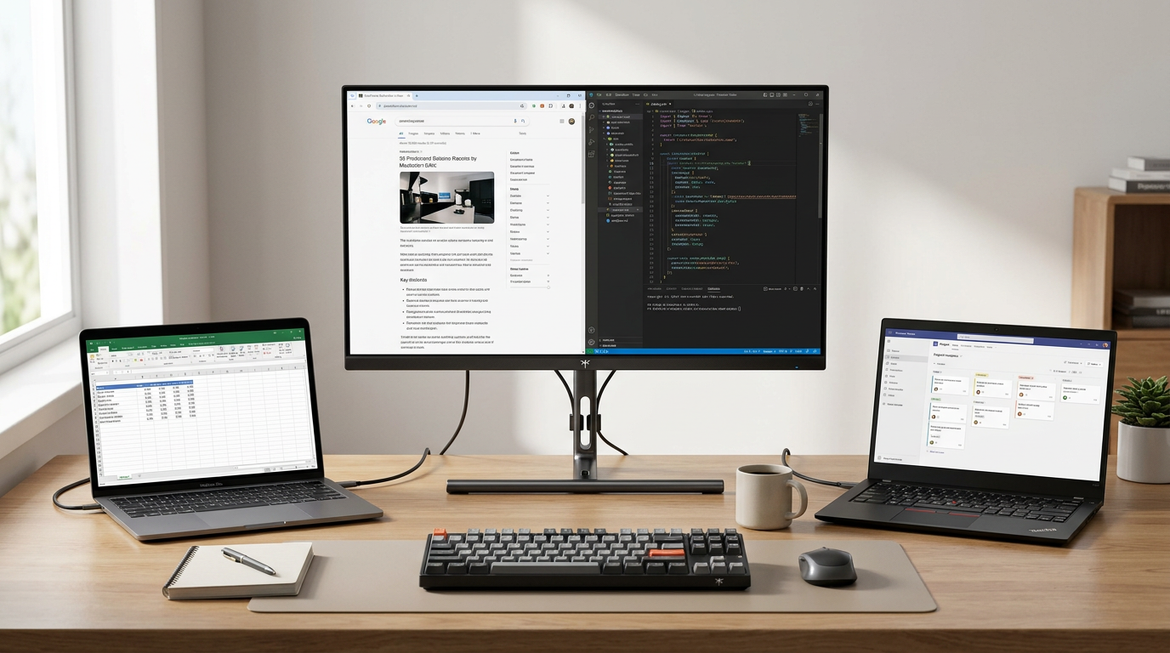
Most 1440p models in this range include enough ports and ergonomic adjustments to support mixed use. Users who switch frequently between desktop work and gaming should verify stand height and swivel range before purchase.
Should I Prioritize Response Time or Refresh Rate?
Refresh rate usually has a larger visible impact on perceived smoothness than small differences in response time. A 1 ms or 4 ms gray-to-gray specification is adequate when the panel maintains stable high refresh performance.
What Warranty and Support Factors Matter Most?
A direct 3-year manufacturer warranty provides clearer long-term coverage than shorter third-party arrangements. Checking firmware update processes and regional service availability reduces potential friction after purchase.